Connect with us
What Is Strategic Planning? A Complete Guide for Businesses and Teams
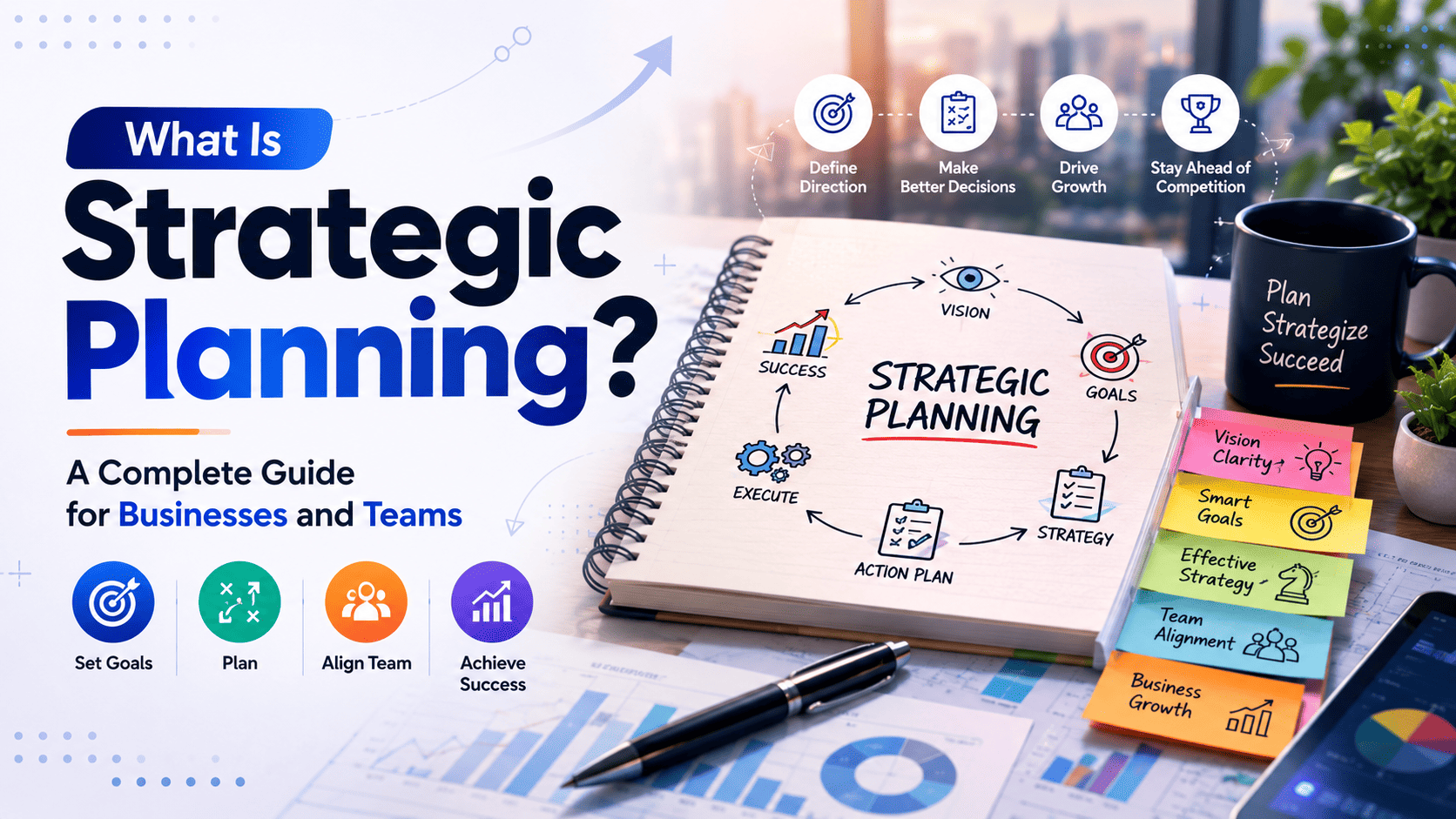
Strategic planning is how organizations set long-term goals, allocate resources, and create a structured path from where they are today to where they want to be. Without it, teams operate without direction and resources get spent on the wrong priorities.
This guide covers:
- What strategic planning is and what it means in a management context
- The step-by-step strategic planning process
- Strategic workforce, financial, supply chain, and procurement planning
- Real-world examples, software tools, services, and consulting guidance
If you are looking for a clear, complete explanation of strategic planning from definition to execution — this guide covers all of it.
What Is Strategic Planning?
Strategic planning is the process by which an organization defines its long-term direction and determines how to allocate resources, people, time, and budget, to achieve that direction.
It answers three fundamental questions:
- Where are we now?
- Where do we want to be?
- How do we get there?
A strategic plan is not a wish list. It is a documented, actionable framework that connects an organization's vision to the day-to-day decisions its teams make. Done well, it ensures that everyone across the organization is moving in the same direction with clarity on priorities and accountability for outcomes.
What Is Strategic Planning in Management?
In a management context, strategic planning is how leadership translates organizational goals into structured plans that departments and teams can execute.
It involves:
- Setting organizational priorities at the executive level
- Translating those priorities into departmental goals
- Assigning ownership and accountability across teams
- Establishing timelines, milestones, and success metrics
- Reviewing progress and adjusting course as conditions change
Strategic planning in management bridges the gap between high-level vision and ground-level execution. Without it, teams operate in silos, resources get misallocated, and organizational energy gets scattered across competing priorities.
Strategic Planning Process — Steps Explained
The strategic planning process follows a structured sequence. While frameworks vary across organizations and industries, the core steps remain consistent.
Assess your current position — Conduct a SWOT analysis to understand your organization's strengths, weaknesses, opportunities, and threats. This gives you an honest baseline.
- Define your vision and mission — Clarify where your organization is headed and what it stands for. These statements guide every decision that follows.
- Set long-term strategic goals — Identify three to five broad goals your organization wants to achieve over the next three to five years.
- Develop objectives and action plans — Break each goal into specific, measurable objectives with clear owners, deadlines, and resource requirements.
- Allocate resources — Align your budget, headcount, and technology investments with your strategic priorities.
- Implement and communicate — Roll out the plan across the organization with clear communication so every team understands their role.
- Monitor, measure, and adjust — Track progress against defined KPIs and hold regular review cycles to course-correct when needed
Strategic Planning Meaning and Definition
The meaning of strategic planning goes beyond creating a document. It is a discipline, a recurring organizational habit of stepping back from daily operations to ask whether the direction, priorities, and resource allocation still make sense.
- Strategic planning gives organizations:
- A shared language for discussing priorities
- A framework for making resource allocation decisions
- Clarity on what success looks like and how it will be measured
- Alignment between leadership vision and team-level execution
What Is Strategic Workforce Planning?
Strategic workforce planning is the process of ensuring an organization has the right people, in the right roles, with the right skills, at the right time — aligned with its long-term strategic goals.
It involves:
- Analyzing current workforce capabilities and gaps
- Forecasting future talent needs based on strategic direction
- Building hiring, training, and retention plans to close gaps
- Aligning human resources strategy with business strategy
Organizations that skip workforce planning often find themselves executing a solid business strategy with the wrong team composition — either overstaffed in the wrong areas or critically understaffed where growth is happening.
Strategic Financial Planning — What It Means for Businesses
Strategic financial planning connects an organization's financial resources to its strategic goals. It ensures that the money being spent reflects the priorities in the strategic plan.
Key components include:
- Multi-year revenue and expense forecasting
- Capital allocation aligned with strategic priorities
- Scenario planning for different market conditions
- Financial risk assessment and contingency planning
- Budget review cycles tied to strategic milestones
Without strategic financial planning, organizations often end up with strategic plans that look good on paper but have no realistic path to funding.
Supply Chain Strategic Planning
Supply chain strategic planning involves designing and managing the flow of goods, services, and information in a way that supports long-term business objectives.
It focuses on:
- Mapping current supply chain structure and identifying vulnerabilities
- Aligning supplier relationships with long-term volume and quality needs
- Building resilience through diversification and contingency sourcing
- Integrating supply chain decisions with product, sales, and financial strategy
For manufacturing, retail, and logistics businesses, supply chain strategic planning is often as critical as the core business strategy itself.
Procurement Strategic Planning
Procurement strategic planning ensures that how an organization sources goods and services directly supports its broader strategic goals, not just its immediate purchasing needs.
It covers:
- Vendor selection and long-term supplier relationship management
- Cost optimization aligned with financial strategy
- Risk management across the supplier base
- Sustainability and compliance considerations in sourcing decisions
- Technology investments to improve procurement efficiency
Strategic Planning Examples for Businesses and Organizations
Seeing strategic planning in action makes the concept tangible. Here are practical examples across different contexts:
- A technology startup uses strategic planning to prioritize product-market fit in year one, geographic expansion in year two, and enterprise sales in year three — allocating engineering and sales resources accordingly.
- A healthcare organization uses strategic planning to identify a workforce gap in nursing over the next five years and builds a recruitment and training program three years in advance.
- A nonprofit uses strategic planning to align its fundraising, program delivery, and community outreach goals under a single three-year mission framework.
- A retail business uses supply chain strategic planning to diversify its supplier base after identifying over-dependence on a single region.
Strategic Planning Software — Top Tools for Teams
The right software makes strategic planning easier to build, communicate, and track. Key capabilities to look for include:
- Goal setting and OKR tracking
- Visual roadmap and timeline tools
- Team collaboration and commenting
- Progress dashboards and KPI reporting
- Integration with project management and communication tools
Popular strategic planning software options include Cascade, Quantive, Planful, Workboard, and Aha!,each suited to different organization sizes and planning styles.
For teams that need communication and collaboration built into the same platform where strategy gets executed, tools like Troop Messenger connect strategic direction to day-to-day team communication without switching between apps.
Strategic Planning Services — What to Look For
Many organizations bring in external strategic planning services to facilitate the process, challenge internal assumptions, or provide industry-specific expertise.
When evaluating strategic planning services, look for:
- Experience in your industry or business size
- A structured facilitation process with clear deliverables
- Capability to support both planning and implementation phases
- References from organizations with similar strategic challenges
- Transparent pricing and engagement model
External consultants are most valuable when leadership is too close to daily operations to think long-term objectively, or when the organization lacks internal strategic planning expertise.
Strategic Planning Consulting — When and Why You Need It
Strategic planning consulting differs from general business consulting in that it focuses specifically on the planning process itself — helping organizations build the frameworks, habits, and tools to plan and execute strategy effectively.
You likely need strategic planning consulting when:
- Your organization has grown quickly and lacks a formal planning structure
- Your leadership team has misaligned views on priorities and direction
- Previous strategic plans were created but never executed effectively
- You are entering a new market, launching a new product line, or undergoing a significant business transformation
- Your industry is shifting and your current strategy feels outdated
Good strategic planning consultants do not just hand you a document. They build your organization's internal capacity to plan, execute, and review strategy on an ongoing basis.
Conclusion
Strategic planning is not a one-time event. It is an ongoing discipline that separates organizations that react to circumstances from those that shape them. Whether you are building your first formal strategic plan, improving an existing process, or looking for the right software and services to support execution, the fundamentals remain the same, clarity of direction, alignment of resources, and consistent measurement of progress.
The organizations that plan strategically do not just perform better. They adapt faster, align more effectively, and build the kind of internal clarity that makes execution possible at every level of the team.
Frequently Asked Questions
1. What is the difference between strategic planning and operational planning?
Strategic planning focuses on long-term direction, where the organization is going over the next three to five years. Operational planning focuses on the short-term execution of that strategy, what specific teams will do in the next quarter or year to move toward strategic goals.
2. How long does a strategic planning process take?
For most organizations, a full strategic planning cycle takes four to twelve weeks. Larger enterprises with complex stakeholder structures may take longer. The ongoing review and adjustment cycle typically runs quarterly or annually.
3. Who should be involved in strategic planning?
Senior leadership must own the process, but effective strategic planning includes input from department heads, frontline managers, and in some cases customers or external advisors. Broad input leads to better plans. Narrow ownership leads to better execution.
4. How often should a strategic plan be updated?
Most organizations review their strategic plan annually and conduct lighter quarterly check-ins to assess progress and adjust priorities. Major external disruptions economic shifts, market changes, or significant competitive moves, may trigger an unscheduled review.
5. What makes a strategic plan fail?
The most common reasons strategic plans fail are lack of clear ownership, poor communication across the organization, no system for tracking progress, and plans that are too rigid to adapt when circumstances change.