Connect with us

What Is Asynchronous Communication and How Can It Help Your Team Work Better
Think about the last time you were deep in focused work building something, writing something, solving something and a notification pulled you out of it. A message that needed an immediate reply. A meeting that could have been an email. A quick call that turned into 45 minutes.
This is the reality for most teams today. The expectation of always-on, always-available communication has quietly become one of the biggest productivity killers in modern workplaces. Teams are spending more time responding than actually working. Meetings fill calendars. Notifications interrupt thinking. And somehow, despite being constantly connected, important things still fall through the cracks.
Asynchronous communication offers a fundamentally different approach one that is changing how the world's most productive teams operate. Instead of expecting everyone to be available at the same time, async communication lets people send messages, share updates, and collaborate on their own schedule without disrupting anyone's focus or forcing unnecessary meetings.
In this guide we cover everything you need to know about asynchronous communication — what it means, how it differs from synchronous communication, real workplace examples, the key benefits, and the best tools to help your team make the shift. Whether you manage a remote team, a hybrid team, or simply a team that wants to work smarter, this guide gives you a clear and practical foundation to build on.
What Is Asynchronous Communication?
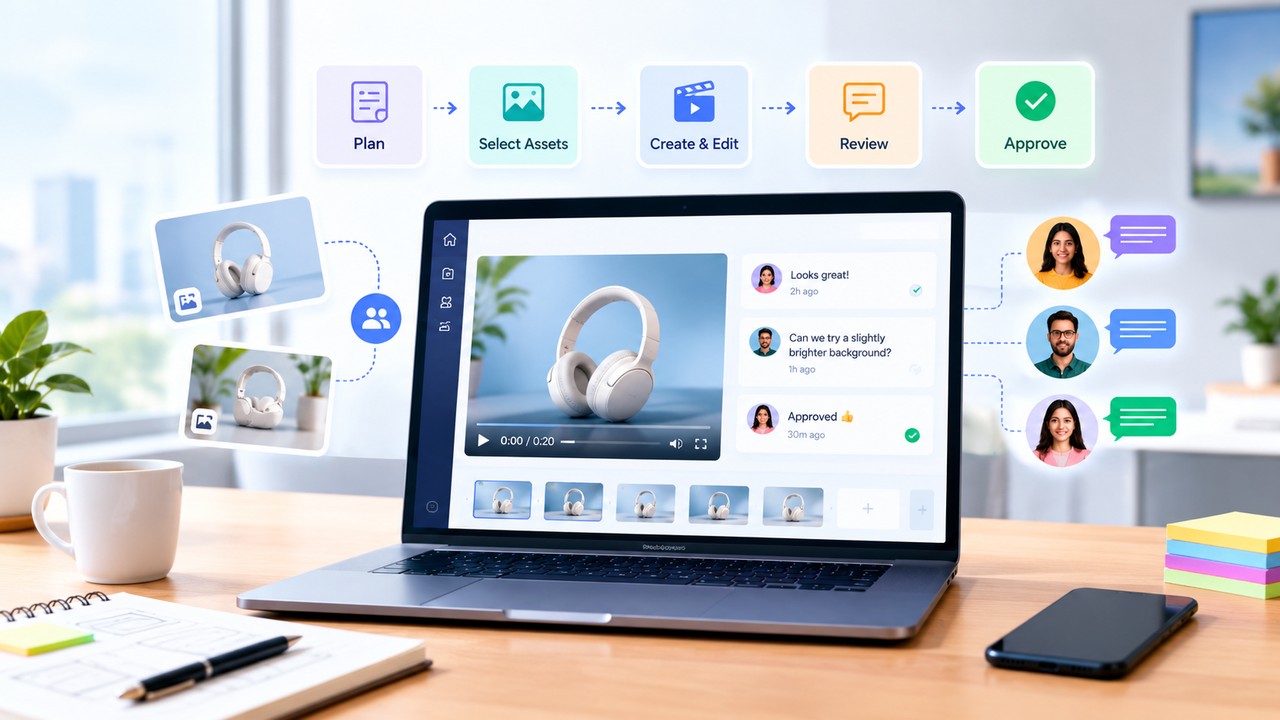
Asynchronous communication is a communication method where participants do not need to be present or available at the same time. Messages, updates, documents, and feedback can be shared and reviewed whenever it is convenient for each person. This approach helps teams reduce interruptions, improve focus, minimize unnecessary meetings, and collaborate effectively across different locations and time zones. Asynchronous communication has become an essential workplace strategy for remote, hybrid, and distributed teams seeking greater productivity and flexibility.
Asynchronous Communication Definition
The formal asynchronous communication definition is straightforward: communication that does not require real-time interaction between participants. The sender transmits a message and the recipient engages with it at a later time that suits their schedule and workflow.
In practice this means:
- You send a message the other person reads and responds when they are ready
- You record a video walkthrough your team watches it when they have time
- You write a detailed document your colleagues review and comment on it at their own pace
- You leave a voice note your manager listens to it between meetings
The key characteristic of asynchronous communication is that time is decoupled from the message. The conversation can happen and often happens better without everyone being online at the same moment.
Why the Asynchronous Communication Meaning Matters for Business
Understanding the asynchronous communication meaning goes beyond a simple definition. It represents a shift in how organizations think about availability, productivity, and respect for people's time and focus.
When teams default to synchronous communication for everything every update becomes a meeting, every question becomes an instant message that demands an immediate response, every decision requires a live call the result is fragmented workdays, burnt-out employees, and work that only happens in the narrow gaps between interruptions.
Asynchronous communication restores those gaps. It gives people the space to think before responding, the ability to contribute on their own terms, and the freedom to do deep focused work without constant interruption.
Synchronous vs Asynchronous Communication
Understanding the difference between synchronous and asynchronous communication is essential before deciding which approach works best for your team. Most organizations need both the key is knowing when to use each one.
What Is Synchronous Communication
Synchronous communication requires all participants to be present and engaged at the same time. Both parties are online and interacting in real time. Examples include:
- Live video meetings on Zoom, Google Meet, or Microsoft Teams
- Phone and voice calls
- In-person meetings and face-to-face conversations
- Live chat conversations where both parties are actively typing
- Real-time brainstorming sessions
Synchronous communication works well when decisions need to be made quickly, when the discussion is complex and nuanced, when relationship building is the primary goal, or when the topic requires back-and-forth clarification that would take too long over written messages.
What Is Asynchronous Communication
Asynchronous communication allows participants to engage on their own schedule. There is no expectation of immediate availability or instant response. Examples include:
- Emails and written messages
- Recorded video walkthroughs shared via a link
- Voice notes and audio messages
- Comments and feedback on shared documents
- Project updates and task management posts
- Team messaging platforms used without instant-reply pressure
Key Differences at a Glance
| Factor | Synchronous | Asynchronous |
| Timing | Both parties online simultaneously | Each party engages on their own schedule |
| Response time | Immediate | Delayed when ready |
| Best for | Complex discussions, decisions | Updates, documentation, focused work |
| Risk | Meeting overload, interruptions | Delayed responses if not managed well |
| Ideal team | Co-located or same time zone | Remote, distributed, across time zones |
The most productive teams in 2026 do not choose one over the other they use synchronous communication intentionally for the conversations that genuinely need it, and asynchronous communication as the default for everything else.
Asynchronous Communication Examples in the Workplace
Understanding asynchronous communication examples in real business contexts helps teams see how to apply this approach practically. Here are the most common and effective examples:
Email — The most widely used form of async communication. A team member sends a detailed project update, proposal, or question and the recipient responds when they have reviewed it fully. No interruption required on either side.
Recorded video messages — Tools like Loom allow team members to record a screen walkthrough or camera explanation and share it as a link. The recipient watches the video at a convenient time and leaves comments or questions. A five-minute Loom video can replace a 30-minute scheduled meeting.
Team messaging platforms — Platforms like Troop Messenger used in an async-first mode allow team members to post updates, questions, and project information in channels without expecting instant replies. Messages are read and responded to when the recipient is ready.
Shared documents and collaborative notes — Google Docs, Notion, and similar tools allow multiple team members to contribute to, comment on, and edit documents without needing to be online at the same time. Version history keeps a clear record of who said what and when.
Voice and audio notes — Audio messages sent through a messaging platform allow for the nuance of spoken communication without requiring a live call. The recipient listens when they have time and responds in kind or in text.
Project management updates — Tools like Asana, Trello, and ClickUp allow team members to post task updates, flag blockers, and share progress notes without needing a status meeting. The team sees what is happening across all projects at any time.
Pre-recorded onboarding and training — Rather than running live onboarding sessions that require new hires and trainers to be available simultaneously, teams record walkthrough videos and written guides that new members can consume at their own pace and revisit as needed.
Discussion threads and comment chains — Threaded conversations in messaging platforms or document comments allow teams to have structured discussions where each person contributes their thoughts when they have had time to reflect often resulting in higher-quality input than a rushed live meeting.
Benefits of Asynchronous Communication for Teams
The shift toward async-first communication brings measurable benefits for individuals, teams, and entire organizations. Here are the most significant advantages that teams experience when they make the transition:
Deeper focus and higher quality work — When team members are not constantly interrupted by messages that demand immediate replies, they can enter and maintain the focused states where their best work happens. Research consistently shows that it takes over 20 minutes to regain full focus after an interruption — every unnecessary ping has a real productivity cost
Better quality responses — When people have time to think before responding they give more considered, accurate, and useful answers. The rushed replies that come from instant messaging pressure are replaced by thoughtful contributions that actually move work forward
True flexibility for remote and distributed teams — Asynchronous communication is the foundation that makes remote work genuinely functional for teams spread across different time zones. When communication does not require simultaneous availability, geography stops being a barrier to collaboration
Reduced meeting overload — One of the most immediate benefits teams report after moving to async-first communication is a dramatic reduction in the number of meetings on their calendars. Updates that used to require a 30-minute call become a two-minute voice note or a shared document
Permanent searchable record — Every async message, document, and recorded video creates a searchable reference that team members can consult at any time. Important decisions, project context, and institutional knowledge stop living only in people's memories and start living in the team's shared record
More inclusive and equitable participation — In synchronous meetings, the people who speak first or loudest often dominate the conversation. Async communication gives every team member the same opportunity to contribute regardless of their communication style, time zone, or working hours
Reduced burnout and stress — The constant pressure to be available and responsive is one of the most commonly cited sources of workplace stress. Async communication removes the expectation of instant availability and gives people genuine control over their own time and attention
Stronger documentation culture — Teams that communicate asynchronously naturally develop better habits around writing things down, creating records, and building shared knowledge — skills that compound in value as organizations grow
Better work-life balance — When communication does not require real-time presence, team members in different time zones or with different working schedules can contribute meaningfully without working outside their normal hours
Best Asynchronous Communication Tools for Business Teams
Choosing the right tools is essential for making async communication work well in practice. The best asynchronous communication tools combine reliable messaging, clear organization, and features that make it easy to communicate fully without needing a live conversation. Here are the tools worth knowing in 2026:
1.Troop Messenger — Best for Secure Async Business Communication
For business teams that need a secure, reliable platform purpose-built for professional communication, Troop Messenger is the strongest async communication tool available. It combines all the channels your team needs messaging, voice notes, file sharing, and video in a single platform that works as a cloud-based SaaS solution or as a fully on-premise deployment for organizations that need complete data ownership.
Troop Messenger's Respond Later feature is one of the most directly useful async features available in any business messaging platform. Team members can flag messages they cannot address immediately ensuring nothing gets lost in the flow of the day and every important message gets a proper response when the time is right. This single feature removes one of the biggest practical challenges of async communication: the fear that messages will be forgotten or overlooked.
The Forkout feature allows managers to send a single message to multiple individuals simultaneously without creating a group perfect for async updates that need to reach several people without generating a shared conversation thread. And Burnout Messaging allows for confidential self-destructing messages for sensitive communications that should not leave a permanent record.
Key Features:
- Messaging channels and direct messages with unlimited searchable history
- Respond Later flag messages for follow-up when ready
- Forkout send one message to multiple users without a group
- Burnout Messaging self-destructing messages for sensitive conversations
- Voice notes and audio messages for richer async communication
- File sharing, screen sharing, and collaborative tools
- End-to-end encryption across all channels
- Available as SaaS or on-premise and air-gapped deployment
- Works on Windows, Mac, Linux, iOS, Android, and browser
Best for: Business teams, enterprises, and organizations in regulated industries that need a secure, full-featured async communication platform with deployment flexibility.
2. Loom — Best for Async Video Communication
Loom turns video into a genuinely practical async communication tool. Record your screen, your camera, or both then share a link. Your team watches when they are ready and leaves timestamped comments without scheduling a call.
Key Features:
- Screen and camera recording with instant shareable link
- Viewer engagement tracking see who watched and when
- Timestamped comments for precise async feedback
- AI-powered transcription and automatic summaries
- Works in browser — no download required for viewers
- Loom paid plans from $12.50 per user per month
Best for: Managers communicating with distributed teams, product walkthroughs, design feedback, and any situation where showing is faster than writing.
3. Notion — Best for Async Documentation and Knowledge Sharing
Notion creates a shared workspace where your team's knowledge, projects, and decisions live in one organized, searchable place. For async-first teams, Notion replaces the scattered emails and meeting notes that make it hard to find context when you need it.
Key Features:
- Flexible pages combining docs, databases, and project boards
- Inline comments for async feedback on any piece of content
- Team wikis and knowledge bases built into the same workspace
- Real-time and async collaboration contribute when ready
- Notion plans $10 per user per month
Best for: Teams that need a shared knowledge base, documentation hub, and collaborative workspace that supports both async and real-time contribution.
4. Asana — Best for Async Project and Task Management
Asana keeps every project organized with clear ownership, due dates, and progress tracking so teams stay aligned without needing constant status meetings. Task comments replace many update calls entirely.
Key Features:
- Task management with assignees, due dates, and priorities
- Task-level comment threads for async discussion
- Project timelines and progress views without live meetings
- Automated notifications and status updates
- Works alongside any messaging platform
Best for: Teams running multiple projects who want to replace status meetings with structured async task management.
5. Google Workspace — Best All-in-One for Async Collaboration
Google Workspace gives teams a complete set of async collaboration tools Docs for collaborative writing, Sheets for shared data, Drive for file management, and Gmail for email all integrated in one ecosystem that most teams already know how to use.
Key Features:
- Real-time and async editing in Docs, Sheets, and Slides
- Inline commenting and suggestion mode for structured feedback
- Version history see every change and who made it
- Gmail for professional async email communication
- Integrated with Google Meet for when sync is needed
Best for: Small to medium teams that want a reliable, familiar all-in-one platform covering both async communication and collaboration.
How to Implement Asynchronous Communication in Your Team
Knowing what asynchronous communication is and why it matters is one thing. Making it actually work in your team requires a thoughtful approach. Here is a practical step-by-step guide:
Start with clear response time expectations The biggest concern teams have about going async is that messages will be ignored or responses will take too long. Set clear expectations from the start for example, all messages are responded to within four hours during working hours. This removes urgency anxiety without bringing back always-on pressure.
Choose the right tools and stick to them Pick one platform for team messaging, one for documents and knowledge, and one for project management. Too many tools fragment communication and make async harder, not easier. Troop Messenger, Notion, and Asana together cover everything most business teams need.
Document decisions and context in writing — Every important decision, project update, and piece of context should be written down in a place the whole team can access. This is the foundation that makes async communication sustainable. When knowledge lives only in people's heads, async breaks down quickly.
Default to async — use sync intentionally — Make async the default for updates, questions, and non-urgent discussions. Reserve live meetings for complex decisions, sensitive conversations, and relationship-building moments where real-time interaction genuinely adds value.
Create async-friendly communication norms — Encourage team members to write complete messages that include all the context the recipient needs. A message that requires three follow-up clarifications defeats the purpose of async. Front-load context so the recipient can act on the message without a back-and-forth exchange.
Use the right format for each message type — Written text works for quick updates and structured information. Voice notes work for nuanced or emotional context that text can flatten. Video recordings work for walkthroughs and visual explanations. Matching the format to the message type makes async communication significantly more effective.
Review and adjust regularly — Async communication requires iteration. Check in with your team every four to six weeks about what is working, what is creating confusion, and what needs adjustment. The right async system for your team in month one will look different from the right system in month six.
For a broader look at how the right tools support both async and real-time collaboration, the guide on best apps for productivity covers the full range of tools worth considering alongside an async communication platform.
You can also explore how team collaboration tools complement an async-first communication approach the two work together to create a complete and effective modern workplace communication system.
Conclusion
Asynchronous communication is not a trend or a remote work experiment it is a fundamental shift in how productive teams operate. The evidence is clear across industries and team sizes: when organizations stop treating constant availability as a proxy for productivity and start giving people the space to communicate thoughtfully and work without interruption, output improves, stress decreases, and teams become more resilient.
The transition does not require abandoning live meetings or real-time conversation entirely. The most effective teams use synchronous communication when it genuinely serves the moment for complex decisions, relationship building, and nuanced discussions and asynchronous communication as the default for everything else.
Start small. Choose one type of meeting your team holds regularly and replace it with a well-structured async update for one month. Measure the difference in time saved, quality of input, and team satisfaction. The results will make the case better than any framework or theory.
The right tools, the right norms, and the right mindset make async communication one of the most powerful investments a business team can make in how they work.
Frequently Asked Questions (FAQs)
Q1. What is asynchronous communication and why is it important?
Asynchronous communication is a method of communication where people do not need to respond immediately or be available at the same time. Messages, documents, videos, and updates can be reviewed and answered when convenient. This approach is important because it reduces interruptions, supports focused work, improves flexibility, and allows teams across different time zones to collaborate effectively. As businesses increasingly adopt remote and hybrid work models, asynchronous communication has become a key strategy for improving productivity and reducing unnecessary meetings.
Q2. What is the difference between synchronous and asynchronous communication?
Synchronous communication happens in real time and requires all participants to be present simultaneously. Examples include phone calls, video meetings, and face-to-face conversations. Asynchronous communication allows participants to engage at different times through emails, recorded videos, shared documents, project updates, or messaging platforms. Both approaches have value, but many organizations now use asynchronous communication as the default method for updates and collaboration while reserving synchronous communication for discussions that require immediate interaction or complex decision-making.
Q3. What are the benefits of asynchronous communication for remote teams?
Asynchronous communication provides remote teams with greater flexibility, reduced meeting fatigue, improved focus, and better work-life balance. Team members can review information and respond during their most productive hours rather than being required to attend constant meetings. It also creates a searchable record of conversations, decisions, and project updates, making knowledge easier to access. By reducing the pressure of instant responses, remote teams can produce higher-quality work while maintaining effective collaboration across multiple time zones.
Q4. Which tools are best for asynchronous communication?
Several tools support asynchronous communication effectively. Troop Messenger helps teams manage messaging, voice notes, file sharing, and collaboration without requiring instant replies. Loom allows users to share recorded video explanations instead of scheduling meetings. Notion provides a centralized workspace for documentation and knowledge sharing, while Asana helps teams manage projects and updates asynchronously. The best solution often combines communication, documentation, and project management tools to create a complete asynchronous workflow for teams.
Q5. How can organizations successfully implement asynchronous communication?
Successful implementation starts with establishing clear communication guidelines and response time expectations. Organizations should encourage employees to document decisions, provide complete context in messages, and use the appropriate communication channels for different situations. Selecting reliable tools that support messaging, documentation, and project management is also important. Teams should regularly review communication practices and adjust processes as they grow. When implemented correctly, asynchronous communication improves collaboration, reduces distractions, and creates a more productive work environment.