Connect with us
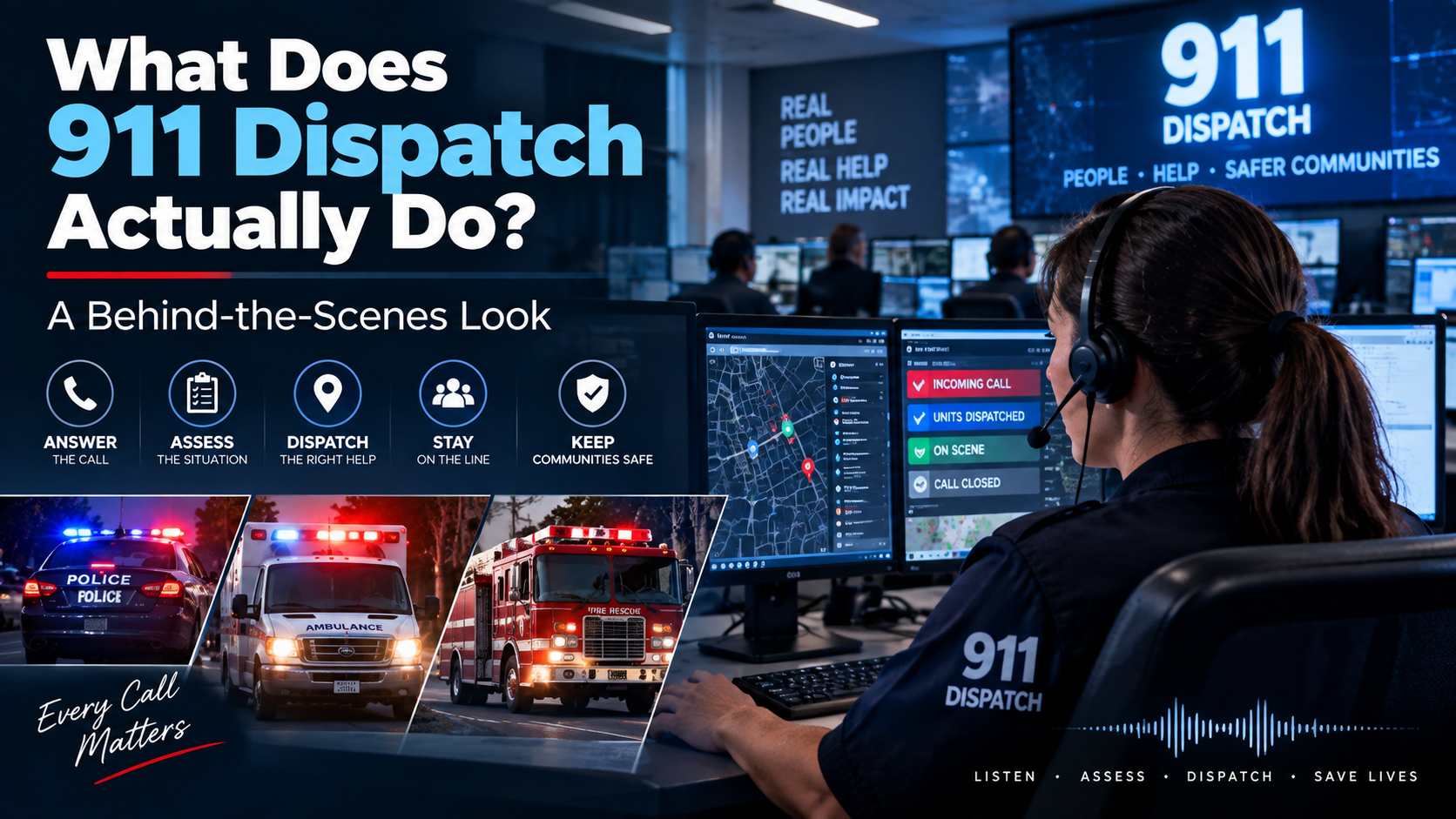
What Does 911 Dispatch Actually Do? A Behind-the-Scenes Look
What does 911 dispatch do? A 911 dispatch center answers emergency calls, determines what kind of help is needed, and coordinates police, fire, or medical response, all typically within seconds of the phone being picked up. Law enforcement software supports many of the digital systems used across dispatch, records, communication, and field operations.
This guide covers exactly what you need:
- What happens the moment you dial 911 and how your call gets routed
- What a dispatcher actually does during and after a call
- The real requirements, training, and salary behind the job
- The emotional toll rarely discussed outside the profession
- How modern technology is changing dispatch centers today
What Does 911 Dispatch Actually Do?
A 911 dispatch center, formally staffed by public safety telecommunicators, is the single point of contact between someone in crisis and the emergency responders who can help them. Dispatchers answer the call, gather critical details, determine the appropriate response, and stay connected to both the caller and responding units until the situation is resolved. Roughly 240 million calls are made to 911 in the US each year, and more than 70% of those now come from wireless devices.
What Happens the Moment You Call 911
When you dial 911, the call routes to the nearest Public Safety Answering Point, or PSAP, based on your location. A dispatcher answers, typically within seconds, and immediately begins asking a structured set of questions, starting with the location and nature of the emergency, since that information determines which agency gets notified first.
How 911 Calls Are Answered and Routed
Calls are routed based on the caller's location, determined either by the cell tower or, in more advanced systems, by GPS data transmitted directly from the phone. There are close to 6,000 primary and secondary PSAPs across the country, and calls are directed to whichever center covers that specific address or coordinate, which is why calling 911 while traveling can sometimes connect you to a dispatch center in a different county than expected.
What Does a 911 Dispatcher Do During a Call
During the call itself, a dispatcher follows a structured protocol: confirm the location, identify the emergency type, ask targeted follow-up questions, and relay real-time information to responding units, often while the caller is still on the line. For medical emergencies, dispatchers certified in Emergency Medical Dispatch can walk callers through CPR or basic first aid before paramedics even arrive on scene.
Inside the 911 Dispatch Center — What It Looks Like
A typical dispatch center is a room full of multi-screen workstations, each dispatcher managing call-taking software, a computer-aided dispatch system tracking unit locations, and radio communication with responding officers simultaneously. Centers operate 24 hours a day, seven days a week, with no closures for holidays, weather, or staffing shortages,someone is always answering.
911 Dispatcher Responsibilities Beyond Answering Calls
Beyond taking calls, dispatchers monitor and track the status of every unit in the field, relay updates between responders and hospitals, manage non-emergency lines, and maintain detailed logs of every incident for legal and reporting purposes. Coordinating this volume of simultaneous information across multiple channels is not unlike the demands of any high-stakes team communication environment, where the right tools for tracking and relaying updates directly affect outcomes.
How Dispatchers Decide What Help to Send
Dispatchers rely on standardized protocols, often built into their CAD software, that guide which units to send based on the type and severity of the emergency. A reported structure fire triggers a very different response than a welfare check, and dispatchers are trained to recognize red flags in a caller's tone or wording that might indicate the situation is more serious than initially described.
911 Dispatcher vs Police Officer — What Is the Difference
The two roles are often confused but are fundamentally different jobs. A dispatcher works entirely from the communications center, coordinating the response rather than physically responding. A police officer is the one arriving on scene. Dispatchers require no law enforcement academy training, though many departments consider prior public safety or customer service experience valuable during hiring.
A Day in the Life of a 911 Dispatcher
Most dispatchers work 8- to 12-hour shifts, and overtime is common given the 24/7 nature of the job. A single shift can swing from hours of routine, low-urgency calls to a sudden cluster of simultaneous emergencies with no warning, a pace that requires sustained focus and rapid context-switching for an entire shift, often without a predictable break.
911 Dispatcher Training and What It Takes to Get the Job
New hires typically go through weeks of classroom instruction followed by months of supervised call-taking before working independently. Many departments require or strongly prefer Emergency Medical Dispatch certification, which qualifies dispatchers to give pre-arrival medical instructions over the phone. Additional voluntary credentials, such as the Emergency Number Professional certification from NENA or the Registered Public-Safety Leader certification from APCO International, signal deeper expertise in the field.
911 Dispatcher Requirements and Qualifications
Most agencies require a high school diploma or equivalent, a clean background check, and the ability to pass typing and multitasking assessments used to simulate the pace of the job. Some departments also require candidates to complete a probationary period, often six to twelve months, before receiving full certification and independent call-taking status.
911 Dispatcher Salary — What the Job Actually Pays
According to the Bureau of Labor Statistics, the median annual wage for public safety telecommunicators was $53,040 as of May 2025, with entry-level pay typically starting lower and experienced dispatchers in high-cost metro areas earning significantly more. Pay varies substantially by state and agency size, dispatchers in California, Washington, and Alaska tend to earn well above the national median, while smaller rural agencies generally pay less. Employment in the field is projected to grow 4% from 2025 to 2035, with roughly 9,000 openings expected each year, mostly from workers transferring out of the high-stress role or retiring.
The Emotional Reality of Being a 911 Dispatcher
This is the part of the job least visible from the outside. Dispatchers regularly stay on the line through the worst moments of a stranger's life, accidents, violence, medical emergencies, with high responsibility but little control over the outcome once help is dispatched. Research on the profession has documented signs of post-traumatic stress among dispatchers at rates comparable to first responders who physically attend the scene, despite dispatchers never leaving their desk. This sustained exposure, combined with the physical toll of rotating shifts, contributes to the high turnover the field consistently reports.
How Technology Supports Modern 911 Dispatch Centers
Many centers have upgraded to Next Generation 911 systems, which shift call handling from legacy analog infrastructure to internet-based platforms capable of receiving text messages, photos, and video alongside voice calls. This modernization also raises the stakes for how dispatch data is secured and handled, an issue covered in more depth in our guides to data security and privacy in policing technology and CJIS compliance, since dispatch centers increasingly handle the same categories of sensitive data as other public safety systems.
What Happens After You Call 911 — From Dispatch to Response
Once a dispatcher determines the appropriate response, they transmit the call details to the relevant unit, police, fire, or EMS, through radio or a computer-aided dispatch terminal in the responding vehicle. The dispatcher typically remains available throughout the incident, relaying updates between the caller, responders, and any additional units that get pulled in as the situation develops, until the call is formally closed out in the system.
Conclusion
What does 911 dispatch do? Far more than simply answering the phone, it is the coordination layer that turns a stranger's worst moment into an organized, tracked, multi-agency response, often within seconds and almost always without the caller ever seeing the person managing it all.
Quick summary:
- Dispatchers answer, assess, and coordinate — they do not respond to the scene themselves
- Training and certification, especially EMD, are central to the role
- Median pay sits at $53,040 nationally, with significant variation by state
- The emotional toll is real and well documented, contributing to high turnover
- NG911 technology is reshaping how modern centers operate
The next time you dial 911, the calm voice on the other end is managing far more, technically and emotionally, than the call itself ever reveals.
Frequently Asked Questions (FAQs)
Q1. What does a 911 dispatcher actually do?
A 911 dispatcher answers emergency calls, determines the location and nature of the emergency, and coordinates the appropriate police, fire, or medical response. They stay connected throughout the incident, relaying real-time updates between the caller and responding units, tracking unit status, and maintaining detailed incident logs. Dispatchers work entirely from the communications center rather than responding to the scene, often managing multiple simultaneous calls and radio channels during a single shift.
Q2. How do 911 calls get routed to the right location?
Calls are routed to the nearest Public Safety Answering Point based on the caller's location, determined by the nearest cell tower or, in more advanced systems, GPS data sent directly from the phone. There are close to 6,000 primary and secondary answering points across the US, so a call made while traveling can sometimes connect to a dispatch center outside the caller's home area. Next Generation 911 systems are improving this accuracy by using more precise location data than older analog systems could provide.
Q3. What qualifications do you need to become a 911 dispatcher?
Most agencies require a high school diploma, a clean background check, and the ability to pass typing and multitasking assessments that simulate real call conditions. Many departments require or prefer Emergency Medical Dispatch certification, which allows dispatchers to give medical instructions over the phone. New hires typically complete weeks of classroom training followed by a supervised probationary period of six to twelve months before working independently.
Q4. How much does a 911 dispatcher get paid?
According to the Bureau of Labor Statistics, the median annual wage for public safety telecommunicators was $53,040 as of May 2025. Pay varies significantly by state and agency, with dispatchers in states like California, Washington, and Alaska typically earning above the national median, while smaller rural agencies often pay less. Entry-level dispatchers generally start lower during their probationary period, with pay increasing after full certification.
Q5. Is being a 911 dispatcher a stressful job?
Yes, significantly. Dispatchers regularly handle the most traumatic moments of a caller's life while carrying high responsibility but limited control over the outcome once help is on the way. Research on the profession has documented signs of post-traumatic stress among dispatchers at rates comparable to first responders who attend the scene in person. Combined with rotating 8- to 12-hour shifts and mandatory overtime, this makes turnover a persistent challenge across the field.