Connect with us
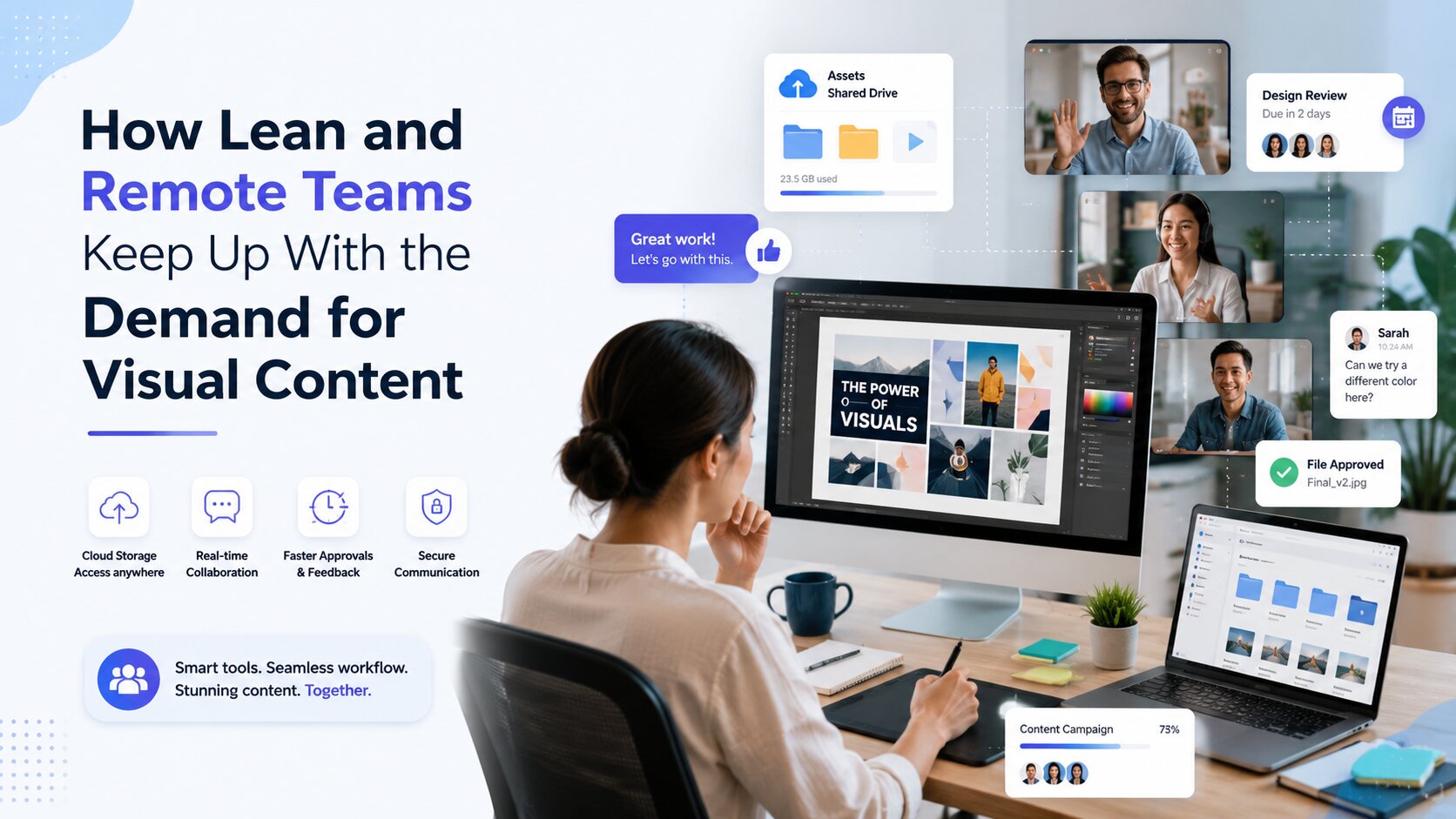
How Lean and Remote Teams Keep Up With the Demand for Visual Content
The modern team is expected to produce more visual content than ever: social posts, ad creative, product images, presentations, newsletters, and more, across a growing list of channels. For large companies with in-house studios, that is a staffing question. For lean and remote teams, it can feel like an impossible one. The good news is that the gap between what small teams need and what they can produce is closing fast, thanks to smarter workflows and a new generation of tools.
The rising tide of visual content
Content expectations have only moved in one direction. Every platform rewards fresh, eye-catching visuals, and audiences have grown accustomed to a steady stream of them. A single campaign can require dozens of image variations sized for different placements, and that is before anyone touches video.
For a small marketing team, or a founder doubling as the marketing team, this creates relentless pressure. The work never really stops, and falling behind on visuals often means falling behind on visibility. Keeping pace is less about working harder and more about working differently.
The bottleneck for small and distributed teams
Distributed teams face an added layer of complexity. Files live in different places, feedback happens across time zones, and there is rarely a dedicated designer sitting a desk away to knock out a quick edit. What might be a five-minute favor in an office becomes a multi-day back-and-forth when everyone is remote.
These friction points add up. A surprising amount of a small team's time disappears into the logistics of creating and sharing visuals rather than the creative work itself. Removing that friction is where real productivity gains hide, and it is often a bigger win than adding another person to the team.
Smarter workflows, not just harder work
The teams that thrive treat visual content as a system rather than a series of emergencies. That means agreeing on shared tools everyone can access, such as an image model like flux 3 for quick drafts, keeping source files and brand assets in one findable place, and setting clear, asynchronous review steps so work does not stall waiting for a live meeting.
Good communication habits underpin all of it. When a team documents how visuals should look, where they live, and who signs off, the whole process speeds up. Clarity upfront prevents the endless revision cycles that drain remote teams, and it frees people to focus on the ideas rather than the handoffs.
Where AI tools fit in
Within that system, AI has become the great equalizer. An AI photo editor such as Pixelcut can remove backgrounds, upscale low-resolution files, retouch product shots, resize images for every channel, and process whole batches at once, all without a designer on call. Tasks that used to require specialized software and skills are now a few clicks that anyone on the team can handle.
For a remote team, that accessibility is transformative. A community manager in one country and a founder in another can both produce polished, on-brand visuals from their laptops, using the same tool, without waiting on a specialist. The bottleneck of relying on a single skilled person simply dissolves, and no one has to wait for a design queue to clear before a post can go out.
Why image quality still matters
It would be a mistake to treat all this speed as an excuse to lower standards. Quality still sells. The importance of strong visuals is reinforced by research cited by GrabOn, showing that approximately three-quarters of online shoppers rely on product images when deciding what to buy. The same findings indicate that high-resolution images convert substantially better than lower-quality alternatives. Fast content that looks cheap can do more harm than good.
The aim, then, is speed without sacrifice: workflows and tools that let a small team move quickly while still shipping visuals that look professional. When those two things come together, a lean team stops looking lean to the outside world. Customers see a polished, consistent brand, not the two people behind it.
These versions vary the authority integration while maintaining an editorial tone and avoiding the repetitive formula your client noticed.
Building a visual content habit
Ultimately, keeping up with visual demand is about building a sustainable habit rather than surviving one campaign at a time. That means choosing a small set of capable tools, documenting how the team uses them, and creating repeatable routines so producing good visuals becomes second nature rather than a scramble.
Lean and remote teams will never out-staff their larger competitors, but they can out-organize them. With the right systems and the right tools, a handful of people scattered across the map can produce a volume and quality of visual content that once required a whole department. Consistency is what makes an audience trust a brand, and it is far easier to sustain when producing each new asset is quick and low-effort. In a content-hungry world, that ability is no longer a nice-to-have; it is how small teams stay in the game.