Connect with us
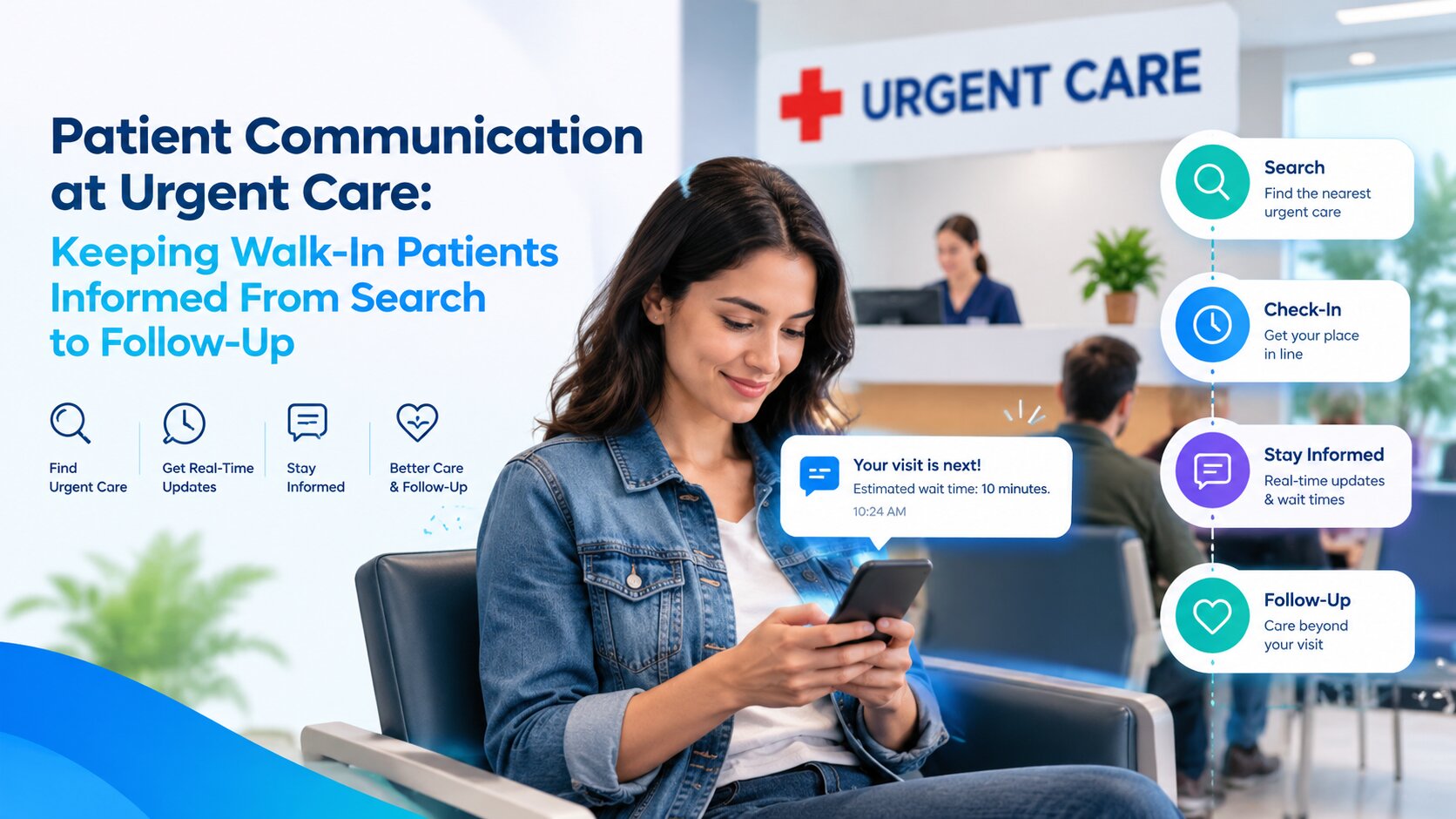
Patient Communication at Urgent Care: Keeping Walk-In Patients Informed From Search to Follow-Up
Urgent care runs on a promise most healthcare settings never make: come in now, no appointment needed. That promise brings patients through the door, but it also creates a communication problem that scheduled practices rarely face. Patients arrive without warning, wait without knowing how long, leave with instructions they may not remember, and often never hear from the clinic again.
Every one of those gaps is a messaging gap. Clinics that close them run smoother shifts, field fewer frustrated calls, and earn the kind of reviews that bring the next patient in. This guide walks through the four moments where communication makes or breaks the urgent care experience, and what good messaging looks like at each one.
Why Urgent Care Communication Is Different
A primary care office knows who is coming tomorrow. An urgent care clinic does not. Volume swings with the season, the weather, and the time of day, and the patient in the waiting room is usually anxious, uncomfortable, or both. That combination makes silence expensive.
Most urgent care marketing focuses on the first step: being found when someone searches for care nearby. Clinics that invest in urgent care marketing quickly learn that visibility is only half the job. The patient who finds the clinic still has to decide to walk in, stay through the wait, and come back next time, and each of those decisions depends on what the clinic tells them along the way.
Moment 1: Before the Patient Arrives
The first message a patient sees is usually not a text at all. It is the information on the clinic's website and listing: hours, location, accepted insurance, and what the clinic can and cannot treat. When those details are accurate, fewer patients arrive for care the clinic cannot provide, and fewer are surprised at the front desk.
Clinics that offer online check-in or a place in line can go further. A confirmation that tells the patient roughly when to arrive, what to bring, and what to do if symptoms worsen turns an open-ended wait into a plan.
- Confirm the essentials. Location, expected arrival window, and what to bring.
- Set expectations honestly. An estimate that turns out longer is better than one that turns out wrong.
- Include a safety line. Tell patients when to go to an emergency department or call 911 instead of waiting.
Moment 2: The Wait
Moment 3: Discharge Instructions
Before and after: the same message, rewritten
| Situation | Unclear version | Clear version |
| Wait update | We are experiencing high volume. Thank you for your patience. | We are running about 20 minutes behind. We will text you when a room is ready. |
| Discharge | Follow up with your PCP as needed. | Call your regular doctor within 3 days, or sooner if the fever returns. |
| Follow-up | How was your visit? Click here. | Checking in after your visit. Reply 1 if you are feeling better, 2 if you have questions. |
Moment 4: The Follow-Up
Most urgent care relationships end at the exit door, which is a missed opportunity for both care and loyalty. A single follow-up message a day or two later catches patients whose symptoms have not improved, answers questions they were too tired to ask, and shows that the clinic cares about the outcome rather than just the visit.
That same follow-up is the natural moment to ask for a review. Patients who feel looked after are far more willing to share their experience, and those reviews are what the next anxious patient reads before choosing where to go.
Keep Privacy Front and Center
For clinics, that means a HIPAA-conscious approach to every channel. Keep diagnoses and test results out of general text updates, confirm patients have agreed to receive messages, use platforms built for healthcare communication, and train staff on what belongs in a message and what belongs in a secure portal or a phone call.
Train the Team, Not Just the Tools
Messaging platforms only work if the people using them are consistent. Front desk staff, medical assistants, and providers should share a small set of approved templates for common situations, a clear rule for when to switch from text to a call, and an understanding of response times patients can expect. Consistency is what turns individual good messages into a reputation.
Frequently Asked Questions
Q: How often should urgent care clinics update waiting patients?
A: Whenever the estimated wait changes meaningfully, and at least once during a long wait. Short, honest updates reduce frustration far more than frequent generic ones.
Q: What should never go in a text message to a patient?
A: Diagnoses, test results, and anything else that reveals the reason for the visit should stay out of general text updates. Use a secure portal or a phone call for clinical details.
Q: Should urgent care clinics follow up after every visit?
A: A brief check-in a day or two later is worthwhile for most visits. It catches patients who are not improving and gives satisfied patients an easy moment to share feedback.
Q: How can clinics make discharge instructions easier to follow?
A: Use plain language, one instruction per sentence, and a clear statement of warning signs. Sending the instructions by text or portal as well as on paper helps patients who lose the printout.
Q: Does better communication really affect patient volume?
A: It affects the decisions that drive volume: whether patients stay through the wait, whether they come back, and what they tell others in reviews. Communication is where the experience patients remember is built.
Conclusion
Urgent care patients arrive unannounced and leave quickly, which makes every message count. Clear information before arrival, honest updates during the wait, plain-language discharge instructions, and a thoughtful follow-up turn a stressful visit into a trustworthy one. Clinics that get these four moments right do more than reduce complaints. They become the place patients choose first the next time something goes wrong.