Connect with us
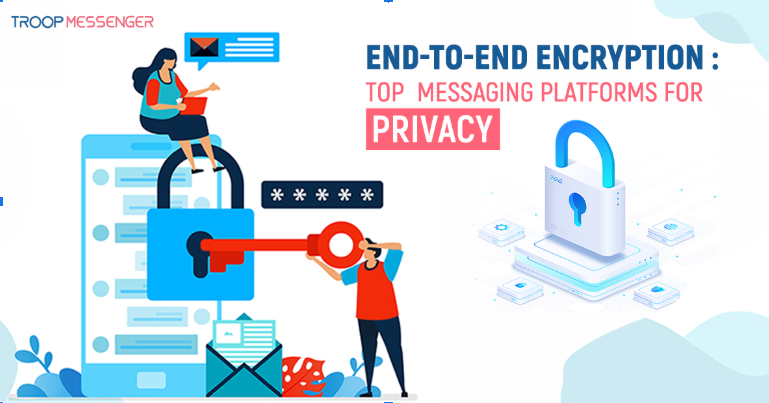
End-to-End Encryption: Top Messaging Platforms for Privacy
End-to-end encryption (E2EE) is a security method that protects messages so only the intended participants can access their contents. It encrypts communication on the sender’s device and keeps it encrypted while it travels to the recipient, preventing the messaging provider and other unauthorized parties from reading the message content. However, not every messaging platform applies E2EE in the same way.
This guide explores the top encrypted messaging platforms for privacy, comparing their encryption approach, privacy features, device support, business capabilities, and deployment options. Whether you need private personal conversations or secure workplace communication, understanding how each platform handles encryption can help you choose the right solution for protecting sensitive information.
What is End-to-End Encryption Messaging?
End-to-end encryption messaging is a security method in which a message is encrypted before it leaves the sender’s device and can only be decrypted by the intended recipient’s device. The messaging service transports the encrypted data but is designed not to have access to the readable message content.
E2EE is different from ordinary encryption in transit. With transport encryption, data is protected while moving between your device and a server, but the service may be able to access the message when it reaches that server. With E2EE, the message remains encrypted throughout the communication path and is decrypted only at authorized endpoints.
For example, Signal states that its conversations are always end-to-end encrypted, while Telegram uses E2EE specifically for Secret Chats rather than its regular Cloud Chats.
However, E2EE does not make every aspect of communication completely anonymous. Metadata, account information, device security, backups, screenshots, and compromised endpoints can still affect overall privacy depending on the platform and its configuration.
E2EE vs Encryption in Transit vs Encryption at Rest
Encryption can protect data at different stages, and understanding the difference is important when comparing secure messaging platforms.
| Encryption Type | What It Protects | Who May Be Able to Access the Content? |
| Encryption in Transit | Data while moving between devices and servers | The service may be able to access content on its servers |
| Encryption at Rest | Stored data on servers or devices | Authorized systems may decrypt it when needed |
| End-to-End Encryption | Message content from sender to recipient | Only authorized endpoints are designed to decrypt it |
Features to Look for in an Encrypted Messaging Platform
Before diving into the top encrypted messaging platforms, it’s important to know what to look for:
- End-to-End Encryption: Ensures messages are readable only by the sender and recipient.
- Open-Source Protocols: Transparency in security protocols allows for community scrutiny and trust.
- Minimal Metadata Storage: Platforms that don’t store user data enhance privacy.
- Self-Destructing Messages: Messages that disappear after a set time add another layer of security.
- Multi-Device Support: Secure synchronization across different devices without compromising encryption.
- No Phone Number Requirement: Some platforms allow anonymous registration for additional privacy.
Top Encrypted Messaging Platforms for Privacy
1. Signal
Signal is widely regarded as one of the most secure encrypted messaging platforms available today. Used by privacy advocates and security experts worldwide, Signal employs the Signal Protocol, an open-source encryption framework that guarantees top-tier security.
Key Features:
- End-to-end encryption for messages, calls, and video chats.
- Self-destructing messages.
- No data tracking or metadata collection.
- Open-source and independently audited.
- Free to use and available on multiple platforms.
Why Choose Signal? For those seeking maximum privacy with an easy-to-use interface, Signal remains a top choice.
2. Telegram (Secret Chats)
Telegram is a popular messaging app, but only its Secret Chats feature offers end-to-end encryption messaging. While its standard chats rely on server-side encryption, Secret Chats ensure maximum privacy.
Key Features:
- End-to-end encryption for Secret Chats.
- Self-destructing messages.
- No cloud storage for Secret Chats, keeping conversations off servers.
- Multi-device support
- Large group chat capabilities (though not E2EE by default).
Why Choose Telegram? If you need a mix of cloud-based and secure conversations, Telegram is a versatile choice. However, users must manually enable Secret Chats for E2EE.
3. Troop Messenger
Troop Messenger is a top choice for businesses and professionals looking for a secure encrypted messaging platform. It offers military-grade security, making it one of the best-encrypted messaging platforms available.
Key Features:
- End-to-end encryption for messages and file transfers
- Secure group chats and video calls
- Role-based access and admin controls for businesses
- Self-hosted and on-premise deployment options
- Multi-device synchronization
With its advanced security measures and business-friendly features, Troop Messenger is one of the best end-to-end encryption platforms for organizations prioritizing privacy and security.
4. Threema
Threema is a privacy-focused encrypted messaging platform that offers anonymity and strong security features.
Key Features:
- End-to-end encryption for all messages, voice calls, and file transfers.
- Decentralized servers prevent mass surveillance.
- Open-source and audited.
- One-time purchase fee instead of a subscription model.
- No phone number or email is required for registration.
Why Choose Threema? If you prioritize anonymity and a high level of security without linking to personal information, Threema is an excellent option.
5. Wire
Wire is a business-oriented encrypted messaging platform designed for corporate communication with high-security needs.
Key Features:
- End-to-end encryption for messages, calls, and file sharing.
- GDPR compliance for European data protection.
- Multi-device synchronization while maintaining encryption
- Secure group chats and enterprise features.
- Open-source and independently audited.
Why Choose Wire? For organizations that need a secure communication platform with enterprise features, Wire is a great choice.
6. WhatsApp
WhatsApp is a mainstream messaging platform that uses end-to-end encryption for personal messages and calls. Its widespread adoption makes it convenient for communicating with existing contacts, but privacy-conscious users should still evaluate metadata, account information, linked devices, and backup settings separately from message encryption.
Key Features:
- End-to-end encrypted personal messages
- Encrypted voice and video calls
- Group messaging
- File and media sharing
- Multi-device support
- Encrypted backup options
- Large global user base
Why Choose WhatsApp? WhatsApp is useful when you want E2EE combined with widespread adoption and everyday messaging convenience. It is important, however, to distinguish message-content encryption from broader privacy considerations.
Conclusion
End-to-end encryption provides an important layer of protection for private and business communication by keeping message content accessible only to authorized participants. However, choosing the right encrypted messaging platform also requires considering privacy practices, authentication, device security, backups, file protection, and administrative controls.
Signal and Threema are strong options for privacy-focused communication, while Telegram Secret Chats and WhatsApp offer E2EE for specific communication features. For businesses, Troop Messenger and Wire provide secure communication with collaboration and enterprise capabilities.
Ultimately, the best platform depends on your privacy requirements, security needs, and level of control. Combining E2EE with strong security practices helps keep sensitive conversations better protected.
FAQs
1. What is end-to-end encryption in messaging?
End-to-end encryption in messaging is a security method that protects message content from the sender’s device to the recipient’s authorized device. The message is encrypted before transmission and remains protected while traveling through the messaging infrastructure. The service provider is not intended to have access to the readable content. However, E2EE does not automatically protect metadata, compromised devices, screenshots, or every type of backup, so additional security measures may still be necessary.
2. Which messaging app has the best end-to-end encryption?
There is no single messaging app that is best for every user because privacy and communication requirements vary. Signal is a strong choice for privacy-focused personal messaging, while Troop Messenger and Wire are better suited to organizations requiring secure workplace collaboration and administrative features. Threema offers another privacy-focused option, and WhatsApp provides E2EE with broad adoption. Users should compare encryption, privacy practices, authentication, backups, device support, administration, and deployment before making a decision.
3. Is Telegram end-to-end encrypted by default?
Telegram does not use end-to-end encryption for its regular Cloud Chats. Instead, E2EE is available through Secret Chats, which are designed for private communication between supported devices. Secret Chats are separate from Telegram's cloud-based conversations and are not stored in Telegram Cloud. Therefore, users should not assume that every Telegram conversation is end-to-end encrypted. Anyone specifically requiring E2EE on Telegram should use Secret Chats rather than regular Cloud Chats.
4. Is WhatsApp end-to-end encrypted?
WhatsApp uses end-to-end encryption for personal messages and calls, meaning the content is designed to remain accessible only to the communicating participants. However, users should distinguish message protection from other privacy considerations, including account information, metadata, linked devices, and backups. Backup settings should be reviewed separately because stored backups can have different protection mechanisms. E2EE therefore provides an important layer of security but does not mean every piece of information associated with an account is completely private.
5. Can end-to-end encryption be hacked?
End-to-end encryption is designed to prevent unauthorized parties from reading communication while it is being transmitted, but it cannot eliminate every security risk. Attackers may target the devices, accounts, credentials, applications, or backups instead of breaking the encryption itself. A compromised phone or computer could expose messages after they are decrypted. Strong authentication, secure devices, software updates, protected backups, and careful account management should therefore be used alongside E2EE for broader communication security.
6. Does end-to-end encryption protect file sharing and video calls?
End-to-end encryption does not automatically apply to every feature of a messaging platform. Some services extend E2EE to messages, voice calls, video calls, and file transfers, while other features may use different encryption methods. Users should check the provider's documentation to determine exactly which communication types are protected. This is especially important for businesses sharing confidential documents, because file storage, cloud drives, backups, and collaboration features may have different security architectures from ordinary encrypted messages.