Connect with us
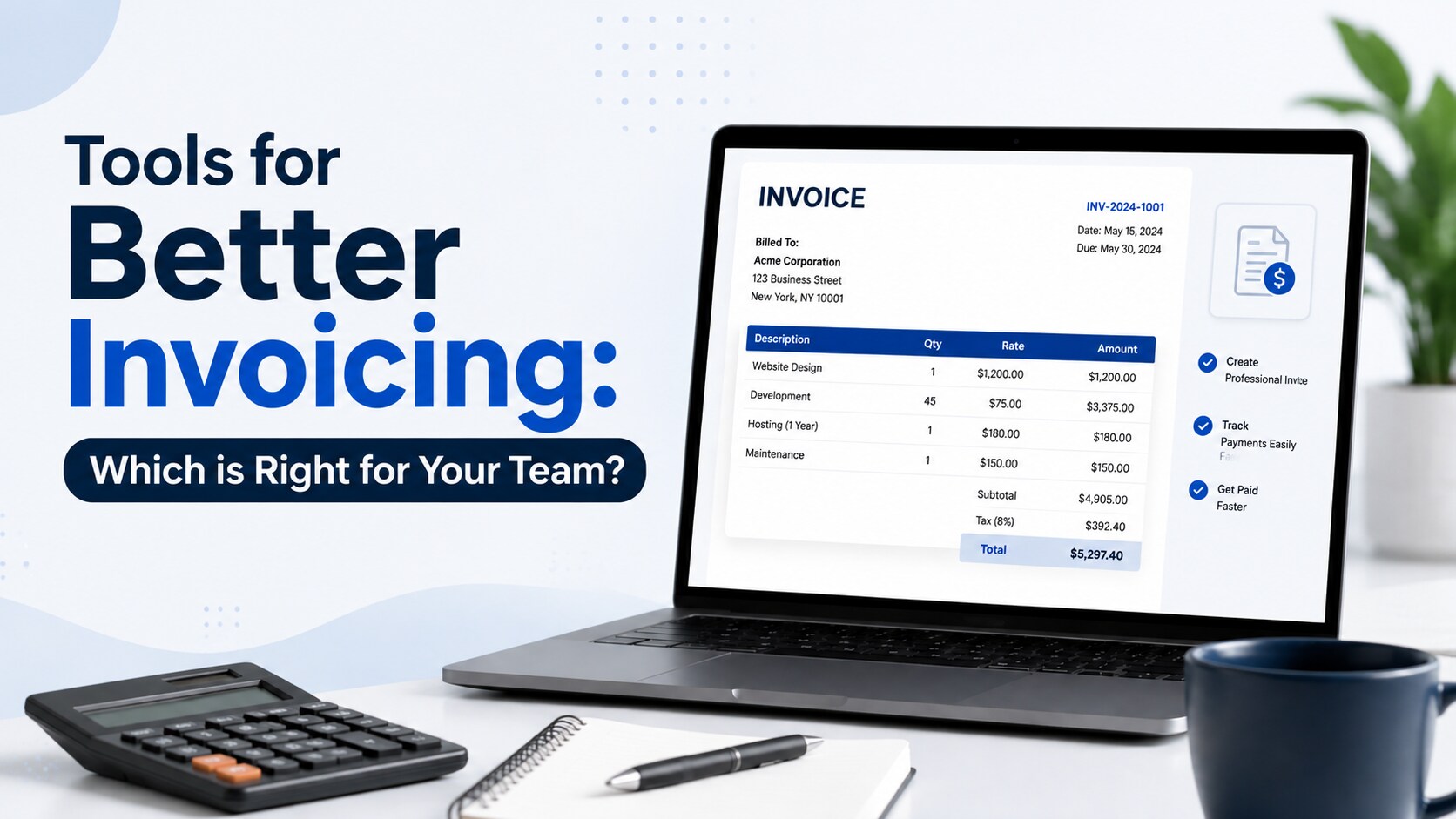
Tools for Better Invoicing: Which is Right for Your Team?
The main types of invoicing tools are cloud-based platforms, desktop software, and mobile apps. Cloud-based tools suit teams that need accessibility and integrations, desktop tools suit teams that need offline reliability, and mobile apps suit freelancers and on-the-go businesses. The right choice depends on your team's internet reliability, budget, and how much automation you need.
A major part of all company finance is invoicing. Efficiency in financial transactions is paramount, and choosing the right invoicing tool can make all the difference.
Choosing the best set of financial tools can streamline the process. You’ll keep track of payments to the letter and minimize (human) errors. Here are some of the unique features and benefits of different types of tools to identify which could be the right fit for your team.
Invoicing Tools – Why Do They Matter and Why Should You Care?
Business is like an ocean. It’s vast. Anything can happen. It’s beautiful and treacherous at the same time. As far as a financial instrument, invoicing is a vital part of your crew. You don’t see them every day. But you know they’re working hard to keep you afloat. Choosing the right invoicing tools will keep your ship on course and your crew safe.
The mom-and-pop shops in your local community. The freelancing wizard coding in a coffee shop. T skyscraper-sized corporate entities. Everyone is manning their vessel of varying sizes. And they all need a crew.Invoicing isn't just sending out payment requests. It's about orchestrating a process that is efficient, traceable, and as error-free as possible.
It should be fluid, precise, and, above all, effortless. Let’s take a look at three types of invoicing tools. Each one has different features. We’ll show you how to figure out which is right for you.
Types of Invoicing Tools You Should Know
The world of invoicing tools is expansive, to say the least. These tools come in all sorts of flavors. Each type has its unique strengths and quirks, but they're all united by a common mission: to simplify your invoicing process and kick your efficiency up a notch. So, how do you pick the right one for your team? Let's find out.
Cloud-Based Invoicing Tools
Think of cloud-based invoicing tools as the all-in-one solution for your invoicing needs. These tools are web-based and accessible from any device with an internet connection. That makes them convenient for teams who need to access and track invoicing information on the go.
They offer a wide range of features. Typical offerings include customizable templates, automatic payment reminders, and integration with accounting software. Plus, they usually have affordable subscription plans, making them a popular choice for businesses of all sizes.
For teams that mainly need professionally designed invoice templates, rather than a full payment tracking or automation, there’s always the Adobe Express invoice creator. You can quickly customize an invoice, apply branding, and download or share it as a PDF, without committing to a full invoicing platform
Desktop-Based Invoicing Tools
Desktop-based invoicing tools are like your trusty old friend from college. They’re reliable, familiar, and always there when you need it.
These tools are installed directly on your computer and do not require an internet connection to function. If you’re the type that needs to unplug from the web to work distraction-free, that’s a huge plus. They’re also great for businesses with slow or unreliable internet connections.
Desktop tools have offline access, customizable templates, and integration with accounting software. However, they may lack some of the more advanced features cloud-based tools offer.
Mobile Invoicing Apps
Many entrepreneurs stay on the go. They want everything they need for success located on their phone or other mobile device. Mobile invoicing apps like Billdu allow you to create and send invoices directly from your smartphone or tablet. It’s convenient for freelancers and small businesses who are always on the move. They offer features like payment tracking, customizable templates, and integration with accounting software.
However, they may not be as comprehensive as cloud-based or desktop-based tools. They’re usually designed with simplicity and ease of use in mind.
Picking the Perfect Invoicing Tool: A Few Key Considerations
Invoicing is an essential aspect of any business. It’s how you get paid and keep track of your finances.
Without a proper invoicing system in place, you run the risk of errors, delays, and even missing out on payments. As your business grows, so does the complexity of invoicing. More clients means more projects and that means more transactions. Look for software that can do the following:
1. Features: The right tool should have all the features you need. Customizable templates add versatility. Payment tracking keeps you informed. Integration with other tools binds multiple processes together. You should also consider e-invoice applicability and whether the software supports the invoicing requirements relevant to your business. Make sure your chosen tool has them all!
2. Ease of Use: Biting off more than you can chew is never a fun experience. So you shouldn’t do it when your money is on the line. An invoicing tool should be user-friendly and intuitive. Every team member should be able to use it without issue. A simple, uncomplicated, and navigable interface is the key.
3. Cost: Different tools come with different price tags. Make sure the tool you're eyeing fits comfortably within your budget. There’s no point in getting upset over a few bells and whistles if they do more harm than good to your bottom line.
4. Customer Support: Good customer support helps troubleshoot issues. They guide you through usage and are there to lend a hand when you're stuck. Go for a tool with a strong and dependable support team.
5. Security: When dealing with invoicing, you're dealing with sensitive financial info. You’re trusting them with sensitive financial information. The tool you pick needs to have robust security measures to keep your data safe and sound.
Comparing Invoicing Tools
Now that you know what to consider when picking an invoicing tool, let's compare the three types we discussed earlier.
Cloud-Based Tools
These tools are perfect for businesses that value convenience and accessibility. They offer a wide range of features, affordable subscription plans, and integration with accounting software. However, they do require an internet connection to function. And security is always a concern for SaaS platforms, especially ones that integrate with various apps.
Desktop-Based Tools
Ideal for businesses with slow or unreliable internet connections. Or for people who don’t want to spend a ton of time online when they’re trying to work. These options offer features like offline access and integrations similar to their cloud-based counterparts. However, they may lack some of the advanced features offered by cloud-based tools.
Mobile Invoicing Apps
These apps are best suited for freelancers and small businesses that need to create and send invoices on the go which offers user-friendly PDF invoice Receipt template. Writers and graphic designers will love it. So will tradesmen who need anything from plumbing to drywall invoicing software. They offer features like payment tracking and customizable templates. However, they may not be as comprehensive as cloud-based or desktop-based tools.
Maximize the Pros of Your Selection
What remains indispensable is the maintenance of a professional, systematic, and organized invoicing system. Proper invoicing practices ensure the punctuality of payments and are also a critical aspect of building a trustworthy relationship with your clients. Moreover, they aid in fostering a positive image for your business in the corporate sphere. Leveraging a good invoicing tool assists in achieving this target by offering customizable templates, structured record-keeping, and timely reminders for payments.
Picking the right software will have the following pros for your business:
1. Enhanced Efficiency: Invoicing tools are designed to automate several tasks associated with the invoicing process. They reduce time spent on manual tasks. That allows you and your team to focus on other important aspects of your business.
2. Superior Organization: Consolidated record keeping. It’s an element that shouldn’t be overlooked. It keeps all your invoices, payments, and client information in one easily accessible place. Having this level of organization promotes better financial management and accountability within your company.
3. Improved Accuracy: Quality invoicing tools reduce the need for manual data input and automate calculations. This minimizes human error in your financial records. That helps your bottom line and keeps the tax man happy.
4. Elevated Professionalism: Sending well-designed invoices that include your business logo and corporate branding looks professional and fosters a sense of trust between your company and your clients.
5. Quicker Payments: Features like payment tracking and automated reminders ensure your clients pay their invoices promptly. This improves your cash flow and overall fiscal health.
Better Invoicing is Better Business
Choosing the ideal invoicing tool for your business optimizes your financial processes. It's important to consider all the factors. You want something easy to use, cost-effective, and has great customer support and security.
Whether you prefer cloud-based tools, desktop-based tools, or mobile invoicing apps, each type has its advantages. The right tool will enhance efficiency. Your business will be more organized. Records will be more accurate, you’ll appear more professional, and you’ll get paid on time.
Conclusion
Picking the right invoicing tool – no matter which one you choose – can significantly enhance your business's efficiency, organization, and professionalism. The right tool should ideally fit within your budget, be easy to use, have robust security measures, and offer excellent customer support. A quality tool helps your business by automating tasks, reducing manual errors, and expediting payments. It contributes to the overall success of your bottom line. Better invoicing truly equates to better business
FAQ's
1. What is the best type of invoicing tool for a small business?
For most small businesses, cloud-based invoicing tools tend to offer the best balance of features and value. They provide customizable templates, automated payment reminders, and integration with accounting software, all accessible from any device with internet access. This flexibility suits growing teams that need to send invoices, track payments, and collaborate remotely. However, if your team frequently works offline or has unreliable internet, a desktop-based tool may be more dependable. Freelancers and solo operators who invoice while traveling often prefer mobile apps instead, since they prioritize simplicity and speed over advanced features.
2. Are cloud-based invoicing tools secure?
Reputable cloud-based invoicing platforms use encryption, secure servers, and access controls to protect financial data, but security still varies by provider. Because these tools integrate with banking and accounting software, they can be an attractive target, so it's important to choose a vendor with strong compliance credentials and a transparent security track record. Look for features like two-factor authentication, regular security audits, and clear data-handling policies. If security is a top priority for your business, ask vendors directly about their certifications before committing to a subscription plan or long-term contract.
3. Can I use a mobile invoicing app for a growing business?
Mobile invoicing apps work well for freelancers and small teams, but they can become limiting as a business scales. They typically lack the advanced reporting, multi-user permissions, and deep accounting integrations that cloud-based platforms offer. As client volume and transaction complexity increase, many businesses outgrow mobile-only solutions and migrate to cloud-based tools for better scalability. That said, mobile apps remain useful as a companion tool for on-the-go invoicing, even after adopting a more robust primary system, since they let you send quick invoices without being tied to a desk.
4. Do desktop invoicing tools work without an internet connection?
Yes, that's their main advantage. Desktop-based invoicing tools are installed directly on your computer and don't require an internet connection to create, edit, or manage invoices. This makes them a reliable option for businesses in areas with unstable internet or for anyone who prefers working offline to avoid distractions. The trade-off is reduced accessibility: you can't access your invoices from another device unless you manually transfer files, and syncing with cloud accounting tools may require occasional internet access to update records.
5. How do I choose between cloud, desktop, and mobile invoicing tools?
Base your decision on five factors: features, ease of use, cost, customer support, and security. Consider how your team works. If you need remote access and integrations, go cloud-based. If reliable offline access matters more, choose desktop software. If you're a freelancer who invoices on the move, a mobile app is likely sufficient. Also factor in your budget and how much automation you need for payment tracking and reminders. Testing free trials of each type before committing can help confirm which fits your workflow best.