Connect with us
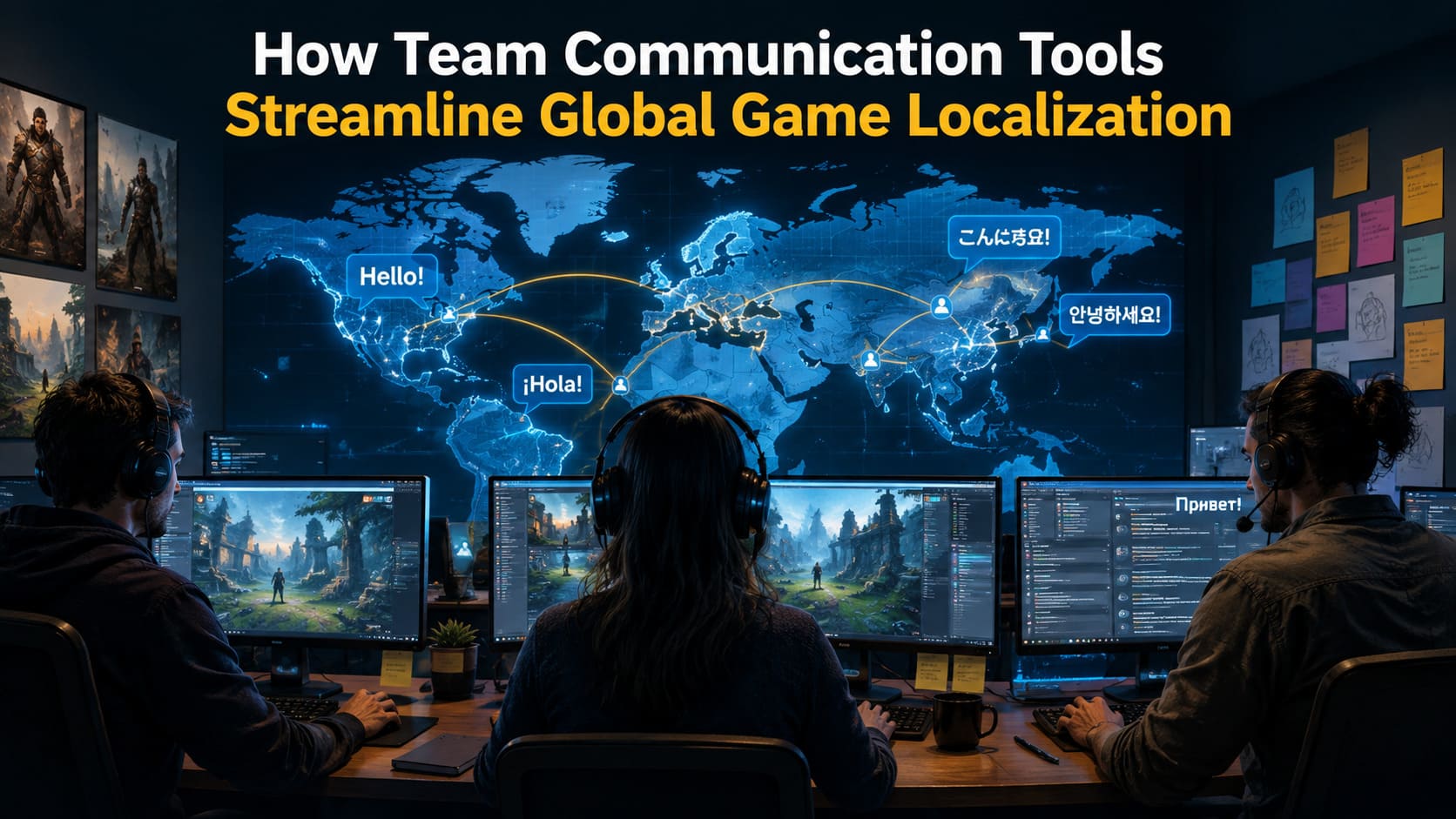
How Team Communication Tools Streamline Global Game Localization
Team communication tools help global game development teams stay connected, organized, and aligned across different time zones, languages, and workflows. Team communication tools also make it easier for developers, localization agencies, QA teams, and regional partners to exchange updates in real time.
As game studios expand into international markets, localization becomes much more than translating dialogue. Teams must manage cultural adaptation, regional compliance, multilingual assets, voiceover production, platform-specific requirements, and continuous build updates. Without a centralized communication system, important information can become scattered across emails, private messages, and disconnected platforms.
Modern collaboration tools create a structured communication environment where teams can share assets, track localization changes, coordinate QA activities, resolve questions quickly, and provide secure access to external vendors. By connecting communication directly with development workflows, studios can reduce version conflicts, speed up testing, and create a more predictable path toward successful global releases.
Scaling Game Releases Across Global Workplaces
Global game launches live or die by seamless internal coordination across multiple time zones. Modern interactive software production requires continuous real-time communication to connect core engineers, narrative designers, quality assurance teams, and external vendor networks. Without centralized channels, urgent updates get swallowed by chaotic email threads, resulting in severe version mismatches, delayed sprint reviews, and costly post-launch patches.
Managing international software releases requires far more than dropping raw spreadsheets into shared cloud drives. Developers frequently encounter massive operational bottlenecks when regional feedback is fragmented across disjointed tools. A colloquial joke that lands perfectly in North America might fall completely flat in East Asia, or a specific visual layout could unintentionally violate regional compliance standards in Western Europe. Catching these subtle flaws before public deployment demands structured, real-time collaboration between primary creators and specialized third-party partners.
Integrating the specialized expertise of a professional game localization agency ensures every dialogue string, user interface container, and narrative nuance feels fully native to target player demographics. However, bringing external language teams into an active development loop often creates confusing communication silos if legacy messaging tools are used. Utilizing dedicated workplace productivity tools serves as a total sanity-saver for studio leads. Structured messaging hubs maintain total operational transparency, turning complex international expansion into a predictable, highly scalable process.
Bypassing Friction in Remote Team Workflows
Distributed game development environments demand structural clarity. When cross-border workflows operate smoothly, production milestones are hit consistently and final software quality soars. Yet, forced or disorganized internal communication channels build massive friction among remote staff. Engineers end up wasting precious hours tracking down context buried in private direct messages. Ugh, nobody enjoys digging through unorganized chat history just to find a single localization key.
Industry analytical data indicates that approximately 38% of operational delays in multi-regional software projects stem directly from misread project guidelines or fragmented internal updates. That represents an enormous, entirely avoidable financial liability for enterprise-scale studios. Fixing broken user interface text or corrupted voiceover triggers post-launch rapidly drains engineering resources. Getting execution right on the very first attempt relies heavily on structured project collaboration tools.
Forward-thinking studio directors structure their remote development stacks using several foundational pillars:
- Centralized Asset Channels: Streamlining text, audio, and visual file transfers directly within secure team communication tools.
- Synchronized QA Loops: Connecting regional quality assurance testers directly with core engine bug-tracking channels.
- Real-Time Vendor Guest Access: Establishing secure workspace channels for external agencies to eliminate back-and-forth email chains.
- Automated Continuous Integration Alerts: Pushing instantaneous build notifications to developer channels whenever asset files update.
- Contextual Documentation Repositories: Pinning localization glossaries, style guides, and cultural sensitivity notes directly inside active chat rooms.
Relying on frantic, last-minute messaging during crunch periods is a guaranteed path toward operational burnout. Implementing structured internal communication software guarantees that technical data flows naturally across every internal and external department.
Solving Version Control Conflicts in Multilingual Pipelines
Version control conflicts remain one of the most frustrating obstacles in multi-language game development. Imagine a scenario where a localization team finishes translating 50,000 words of dialogue, only to discover that narrative designers altered character paths three days earlier without notifying the external vendor. That creates instant rework. Without real-time chat integrations linking repository updates directly to project channels, cross-functional teams waste hundreds of labor hours translating obsolete code branches.
Modern collaboration platforms resolve this issue by combining automated status bots with topic-based conversation threads. When a developer updates a master string file in Git or Subversion, an automated webhook triggers a clear notification in the dedicated localization channel. Language managers immediately see which assets changed, why they changed, and who authorized the update. Instant clarity replaces guesswork.
Dr. Aris Thorne, a senior software workflow researcher, emphasizes this structural necessity: "Disjointed communication platforms actively breed technical debt in multi-regional software builds. When third-party vendors are isolated from core developer chat channels, asset misalignment becomes an mathematical certainty rather than an occasional mistake."
By centralizing asset validation within a single messaging environment, game studios eliminate file duplication, prevent obsolete text pushes, and maintain pristine version parity across all target languages simultaneously.
Agile Frameworks for Distributed Game Studios
Entering foreign commercial markets requires a resilient technical framework. The most successful international game studios leverage highly agile production methodologies backed by enterprise collaboration software. Cross-functional development squads test, iterate, and refine game builds specifically for regional player bases without losing track of high-level sprint goals.
Relying on unverified guesses or chaotic group chats is a direct recipe for budget overruns. Data-driven insights dictate every strategic milestone. Studios can execute regional soft-launches in selected territories to gather performance metrics before committing to full global deployment. This calculated approach drastically reduces financial exposure while maximizing overall commercial upside.
Consider how structured messaging workflows streamline regional adaptations across active development sprints:
- Modular Task Allocation: Splitting large translation batches into bite-sized, trackable messaging threads aligned with active development sprints.
- Live In-Context Queries: Allowing external translators to post quick questions about scene context directly to narrative leads, receiving answers in minutes.
- Automated QA Routing: Tagging engine programmers automatically whenever localized text overlaps or breaches UI bounding boxes in test builds.
- Sprint Retrospective Analytics: Reviewing channel message density and response times to optimize communication speed for upcoming content expansions.
Removing communication barriers between internal developers and linguistic specialists fosters deep organizational efficiency. Smooth collaboration naturally produces higher-quality localizations, which in turn drives player retention and long-term monetization across international markets.
Cultural Sensitivity and Regional Compliance Management
Game localization extends far beyond literal language translation; it encompasses deep cultural adaptation, regional legal compliance, and sensitive content adjustments. Age rating boards across different territories enforce strict rules regarding visual violence, historical depictions, religious symbols, and microtransaction mechanics. Failing a regional certification check due to a missed compliance detail can push a game launch back by months, resulting in massive financial penalties and lost marketing momentum.
Using modern team collaboration platforms enables real-time compliance tracking across every regional market. Studios can create dedicated channels for regional compliance officers, legal advisors, and cultural consultants. When specialized reviewers identify problematic content in a build, they drop annotated screenshots and clear policy references straight into the project workspace.
For instance, a visual asset featuring specific regional currency symbols might pass legal checks in North America but violate strict financial advertisement regulations in East Asia. A quick chat thread connecting the art director, compliance lawyer, and regional production lead ensures the visual asset is swapped out immediately. Keeping compliance discussions organized within searchable channels creates an auditable historical trail. This structural transparency gives studio executives total confidence that their titles will pass regional rating reviews on the first submission.
Advanced Voiceover and Audio Synchronization Workflows
Audio localization presents one of the most complex logistically demanding phases in interactive media production. Coordinating voice actors, sound engineers, casting directors, and language supervisors across global recording studios requires real-time precision. When an audio script undergoes minor rewrites during session recordings, communicating those immediate script adjustments back to core engineering teams must happen instantly to prevent timing desynchronization in cutscenes.
Integrated team messaging platforms serve as central command hubs for global audio production. Studio leads can set up dedicated channels for each supported audio language, allowing recording engineers to upload raw audio takes directly into active sprint rooms. Instant playback previews within the chat interface let sound designers verify lip-sync timing and atmospheric spatial audio parameters without exiting their workstation environment.
Furthermore, automated file-naming utilities can monitor recording channels and immediately validate audio assets against project naming conventions. If a voice actor records a file with an improper regional tag or incorrect sample rate, an automated notification alerts the sound supervisor before the session ends. Fixing acoustic and technical errors in real time during active studio sessions saves thousands of dollars in studio re-booking fees. Modern communication architectures ensure localized voiceover tracks match the high artistic fidelity of the original source audio.
Optimizing Multi-Platform Build Verification and Beta Testing
Deploying global software across multiple hardware platforms - including PC storefronts, home consoles, and mobile operating systems - introduces distinct technical validation challenges for localized builds. Each hardware manufacturer enforces unique platform guidelines regarding regional button prompts, system dialogue terminology, and local currency display logic. A failure to adhere to platform-specific terminology in local builds leads to immediate certification rejections by platform holders.
Centralizing multi-platform testing within dedicated team communication suites dramatically speeds up build verification. External beta testers and regional QA teams drop live bug reports, platform crash logs, and localized UI screenshots into designated platform channels. Developers can filter bug submissions by platform type, regional build version, and error severity, routing urgent hotfix tickets to the responsible platform engineers instantly.
When localized builds undergo external closed beta testing in key international markets, real-time feedback channels allow community managers to gauge regional player sentiment immediately. If players in a specific region report confusing translation choices in gameplay tutorials, narrative teams can deploy updated string packages within hours. Rapid iteration during beta cycles builds strong community goodwill and ensures launch-day software stability across every supported platform.
Real-World Case Studies in Studio Productivity
Examining actual industry workflows reveals the tangible benefits of unified communication setups. A mid-sized European development studio preparing a massive open-world RPG faced an immense challenge: localizing over 800,000 words of dialogue across nine languages within a strict six-month timeline.
Originally, the team relied on fragmented email updates and scattered file attachments. The result? Translation progress ground to a halt due to missing context and conflicting file versions. After switching to an enterprise team communication platform with secure vendor guest access, production speeds changed overnight.
The studio organized dedicated chat rooms for each target language, linking translators directly with narrative designers. Questions regarding character backstories, regional idioms, and voiceover pacing were resolved in real-time. Automated build bots notified language leads the moment new string batches were ready for review. This structural shift reduced sprint review duration by 42% and allowed the studio to hit its global release date without incurring overtime costs.
In another compelling example, an independent mobile developer saved an estimated $30,000 in post-launch hotfix expenses. By setting up real-time bug reporting channels that connected remote regional QA testers directly with lead engine developers, text-overflow glitches in German and Finnish builds were caught and resolved during pre-alpha testing. Smooth communication saved the day.
Security and IP Protection in External Vendor Collaboration
Protecting intellectual property remains a paramount concern for game studios working with external partners. Unreleased game scripts, plot twists, concept art, and proprietary engine code represent multi-million dollar investments that must be safeguarded against unauthorized leaks. Bringing external agencies, freelance translators, and third-party QA firms into your production workflow requires enterprise-grade security controls.
Modern team collaboration platforms offer robust security protocols designed to protect sensitive corporate assets while maintaining high operational productivity. Studio administrators can enforce strict role-based access controls, ensuring external partners only see the specific channels and files required for their immediate tasks.
Key security features that safeguard global game localization include:
- Granular Guest Permissions: Restricting external vendor access exclusively to designated project channels without exposing internal corporate directories.
- Encrypted Document Sharing: Utilizing end-to-end encryption for sensitive script transfers and internal design documents.
- Multi-Factor Authentication (MFA): Requiring mandatory secondary verification for all remote staff and third-party contractors accessing the workspace.
- Custom File Retention Policies: Automatically purging temporary localized asset files from chat channels once sprints are completed.
- Comprehensive Audit Logs: Tracking user logins, file downloads, and channel activity to maintain total operational security compliance.
Implementing secure collaboration software allows game developers to collaborate with world-class external talent without sacrificing IP security. Studio executives can sleep soundly knowing their confidential assets remain fully protected throughout the entire localization lifecycle.
Building a Borderless Production Pipeline for Global Success
Sustained commercial growth in the interactive entertainment sector relies on crossing operational boundaries smoothly. Removing rigid language and communication barriers actively unlocks major performance gains across distributed workforces.
To maintain peak productivity across international offices, studio leads must prioritize deep workflow integration. Modern remote team management tools give studio directors clear visibility into regional progress while protecting sensitive project data. Centralized communication hubs keep multilingual assets organized, preventing version control nightmares during major engine updates.
Building a borderless production pipeline guarantees lasting commercial viability. The roadmap is crystal clear: equip your distributed staff with top-tier collaboration tools, maintain real-time integration with external language partners, respect local market nuances, and your game studio will thrive on a global scale.
Conclusion
Global game localization requires more than skilled translators and quality development teams; it requires a communication infrastructure that keeps everyone working from the same source of information. Team communication tools help connect developers, localization specialists, QA testers, compliance teams, audio professionals, and external vendors throughout the production lifecycle.
From centralized asset sharing and real-time localization discussions to automated build notifications, regional compliance tracking, beta testing, and secure vendor collaboration, structured communication can remove many of the operational barriers associated with international releases. When these tools are integrated into agile development workflows, studios can respond faster to regional feedback, reduce rework, protect intellectual property, and maintain consistency across languages and platforms.
Ultimately, a well-connected production pipeline gives game studios greater control over increasingly complex global launches. By combining technology, structured communication, and specialized localization expertise, development teams can deliver culturally relevant and technically reliable gaming experiences to players around the world.
Frequently Asked Questions
1. How do team communication tools support game localization?
Team communication tools provide a centralized environment where developers, translators, localization managers, QA testers, and external agencies can communicate throughout the localization process. Teams can create dedicated channels for individual languages, share updated assets, discuss translation context, and receive immediate notifications when source files change. This reduces dependence on lengthy email chains and helps prevent translators from working with outdated information. Communication platforms can also connect with development and bug-tracking workflows, allowing localization issues to reach the appropriate technical teams quickly. This creates better visibility and improves coordination across geographically distributed game development teams.
2. Why is real-time communication important for global game development?
Real-time communication is important because global game development involves teams working across different locations, time zones, languages, and technical disciplines. A small change to dialogue, user-interface text, audio, or game functionality can affect multiple teams and regional builds. Delayed communication may result in duplicated work, outdated assets, or missed testing requirements. With real-time communication, developers can immediately notify localization teams about changes, translators can ask questions directly to narrative specialists, and QA teams can report regional issues while builds are being tested. This faster information flow helps studios respond to problems before they affect launch schedules.
3. How can communication tools reduce localization version conflicts?
Communication tools can reduce localization version conflicts by connecting development updates with dedicated project conversations. When source strings or other assets change, automated notifications can alert localization teams about the update and provide context about what changed. Topic-based channels and conversation threads also make it easier to keep discussions connected to specific assets, languages, or development tasks. This reduces the possibility of translators continuing to work on obsolete content. Centralized communication additionally gives project teams a searchable history of decisions and updates, helping them identify the latest approved information and maintain better version consistency throughout multilingual production.
4. Can team communication tools help protect game development IP?
Yes. Team communication tools can support intellectual property protection when they provide appropriate access-control and security capabilities. Game studios frequently need to collaborate with external translators, localization agencies, QA companies, and freelance specialists while limiting their access to confidential development information. Role-based permissions and restricted guest access can allow external partners to view only the channels and files relevant to their assignments. Additional measures such as multi-factor authentication, encrypted file sharing, retention policies, and audit logs can strengthen security. These controls allow studios to collaborate with external partners while maintaining greater oversight of sensitive game assets and production information.
5. How do communication tools improve global game launch readiness?
Communication tools improve global launch readiness by bringing multiple stages of international production into a coordinated workspace. Development teams can communicate source-file changes, localization specialists can track translation requirements, QA teams can report regional bugs, and compliance professionals can flag market-specific issues. Audio teams can coordinate recording updates, while beta testers can provide localized player feedback. Centralized communication makes these activities easier to monitor and helps teams respond to problems before launch. When combined with automated alerts and structured workflows, communication tools can reduce delays, improve cross-functional visibility, and help studios deliver more stable and culturally appropriate game releases across international markets.