Connect with us
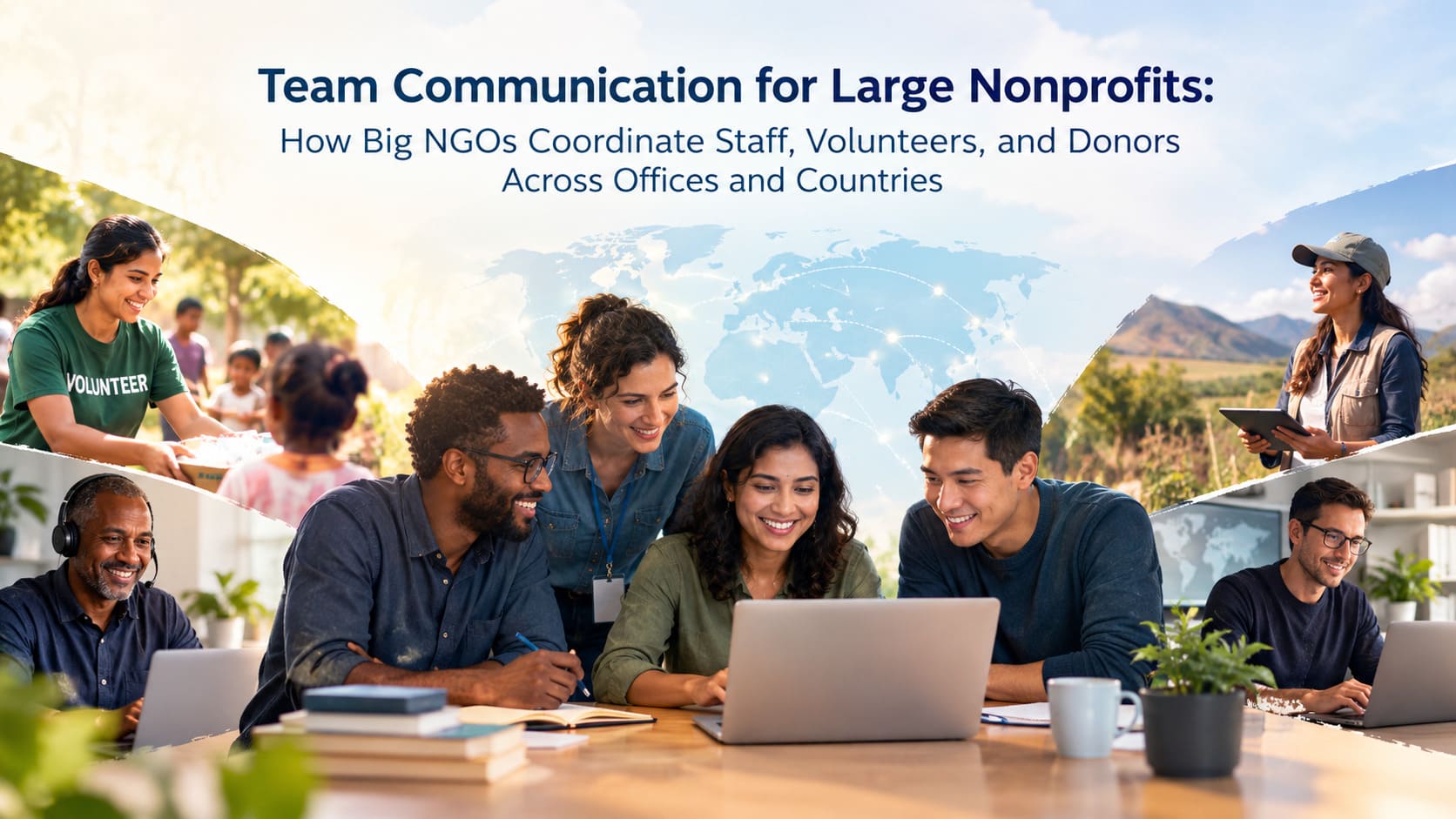
Team Communication for Large Nonprofits: How Big NGOs Coordinate Staff, Volunteers, and Donors Across Offices and Countries
Communication is key to almost everything an organization does. This becomes even more important for large nonprofit organizations with departments, employees, volunteers, and operations spread across multiple countries.
Consider planning an event involving more than a hundred people within a single country. Think about the number of responsibilities to assign, tasks to manage, people to contact, resources to arrange, and decisions to make. Now imagine coordinating the same event on a global scale, with people spread across different countries and time zones. The complexity increases considerably.
Large nonprofits operate on a similar scale. Their activities often involve hundreds or thousands of people working across different locations, each with specific responsibilities and priorities. With so many moving parts, even a small communication gap can lead to missed updates, duplicated efforts, delayed decisions, or confusion over responsibilities.
Of course, things can go wrong when coordination becomes this complex. But with the right communication tools, clearly defined responsibilities, and consistent information sharing, managing these operations becomes considerably easier. The challenge is not simply getting everyone connected; it is ensuring that everyone stays informed, aligned, and focused on the same organizational objectives.
Communication Challenges Facing Large NGOs
Imagine running an NGO responsible for organizing an international relief programme for communities affected by a cyclone. Anyone who has managed a large-scale event or coordinated multiple teams understands how difficult it can be to ensure that everything happens as planned. Now, imagine handling those responsibilities across several countries, with different teams, stakeholders, and operational requirements.
For such an initiative to succeed, communication needs to be at the centre of every activity.
The process begins well before the actual programme. From deciding the purpose of the initiative to assigning responsibilities and arranging resources, several activities need to be planned and coordinated. Let's take a closer look at what this involves:
Stage | What needs to be decided or coordinated |
Planning | Event dates, locations, venues, timelines, and overall schedule. |
Purpose and Objectives | Why the programme is being organized, what it aims to achieve, and the expected outcomes. |
Stakeholder Identification | Identifying beneficiaries, local authorities, partner organizations, donors, suppliers, and other stakeholders. |
Roles and Responsibilities | Assigning project leads, regional managers, department heads, field coordinators, and volunteers. |
Resource Allocation | Arranging funds, supplies, transportation, accommodation, equipment, and other logistical requirements. |
Policy and Compliance | Ensuring organizational policies, local regulations, safety guidelines, and operational procedures are followed. |
Communication and Coordination | Establishing communication channels, sharing instructions, distributing updates, and coordinating between departments and locations. |
Execution | Monitoring activities, managing teams, addressing unexpected challenges, and ensuring tasks are completed. |
Reporting and Feedback | Collecting progress reports, documenting outcomes, communicating with donors, and gathering feedback from participating teams. |
Review and Follow-up | Evaluating the programme, identifying gaps, documenting lessons learned, and planning improvements. |
I hope this table gives you a clear picture of the process involved in organizing an international relief programme. You will notice a pattern here: communication isn't just one step in the process; it connects every step.
At every stage, teams need to exchange information, seek approvals, share updates, and coordinate responsibilities. A delay or breakdown in communication at any point can affect the activities that follow. This is why communication cannot be treated as a separate administrative function. It needs to be part of the entire operational process.
Establishing Clear Communication Channels Across Departments
Let's go back to our international NGO scenario. Imagine the organization has its headquarters in the US, with regional offices in India, Africa, and Europe. How should important decisions, policy changes, and project updates be communicated across these locations?
Major initiatives, budgets, and operational requirements would first need approval from senior management. Formal communication channels such as emails, proposals, and scheduled meetings can help document these decisions. Once approved, the responsibility moves to the respective departments and regional offices for implementation.
Understanding Interdepartmental Dependencies
Every department has its own responsibilities, but its activities often depend on other teams. Let's consider a few examples:
- Finance: Reviews budgets and approves expenditure.
- Procurement: Arranges supplies and equipment based on approved budgets.
- Human Resources: Handles staffing and recruitment requirements.
- Marketing and Communications: Creates awareness and supports volunteer outreach.
- Volunteer Management: Coordinates volunteer recruitment, assignments, and schedules.
- Fundraising and Donor Relations: Manages fundraising activities and donor relationships.
- Field Operations: Coordinates activities and manages execution on the ground.
Now, imagine what would happen if these departments worked independently. Procurement might not receive budget approval on time, field operations might not have enough volunteers, and fundraising teams might not receive the project updates needed to communicate with donors.
One department's delay can affect several others. This is why effective communication between departments is essential.
Choosing the Right Communication Tools
Relying entirely on emails can make everyday coordination difficult, especially when multiple departments and regional offices are involved.
CRM platforms can help NGOs manage donor information, volunteer records, stakeholder interactions, and engagement metrics. However, they serve a different purpose from dedicated team communication platforms, which allow employees to exchange updates, share files, discuss projects, and coordinate tasks.
Organizations may also need separate email-sending domains or IP addresses for large-scale marketing campaigns to manage email deliverability.
The key is to identify the purpose of each tool and ensure that they support the organization's communication requirements.
Establishing Communication Accountability
Having communication channels in place is only part of the process. Organizations must also ensure that important information reaches the people responsible for acting on it.
For instance, whenever a policy or operational protocol changes, regional managers must receive the update and communicate it to their respective teams. Someone should be accountable for sharing the information, confirming receipt, addressing questions, and ensuring implementation.
Clear reporting structures and defined responsibilities help prevent important updates from getting lost among everyday emails and conversations.
Coordinating Field Staff and Volunteers Across Locations
Coordinating employees and volunteers across multiple countries comes with its own set of challenges. While some factors, such as internet connectivity, may be beyond an organization's control, others can be managed with proper planning and communication.
Regional managers can act as the communication bridge between headquarters and field teams. Some ways to improve coordination include:
- Language support: Providing clear instructions in languages that volunteers understand.
- Time zone management: Scheduling emails and meetings according to recipients' local time zones.
- Dedicated points of contact: Assigning POCs to coordinate volunteers and field staff across different locations.
- Clear instructions: Ensuring everyone knows whom to contact for updates, assistance, or clarification.
Consider a situation where a relief distribution centre has to change its location at the last minute. Having designated personnel responsible for contacting volunteers, sharing the revised location, and ensuring everyone reaches the new venue can make the transition easier to manage.
Allowing Regional Teams to Make Decisions
Not every operational issue needs to be escalated to headquarters. Regional managers should have the autonomy to make decisions within the organization's approved budget and policy guidelines.
This allows them to address local challenges without waiting for approval at every stage. However, they must remain accountable for their decisions and keep senior management informed about important developments.
Clear communication, defined responsibilities, and proper delegation can help large NGOs coordinate their field teams more effectively without making every decision dependent on headquarters.
Keeping Donor Relations and Internal Teams Aligned
Donors play an important role in helping large NGOs carry out their initiatives. Whether the contributions come from individuals, corporate partners, or funding organizations, maintaining transparency and keeping donors informed should be a priority.
Once a donation is received, the organization should acknowledge it with a confirmation or receipt. But communication shouldn't end there. Donors should also receive updates on how their contributions are being used and what the organization has achieved through the relief programme.
Some ways to maintain donor relationships include:
- Sending donation confirmations and receipts.
- Sharing regular project progress updates.
- Communicating how funds and resources are being utilized.
- Being transparent about delays, challenges, and changes.
- Sharing the outcomes and impact of the initiative.
- This not only builds trust but also gives donors a sense of involvement and accomplishment.
Aligning Donor Commitments With Operational Capabilities
Communication between fundraising and field operations teams is equally important. Imagine the fundraising team has committed to providing relief supplies to a certain number of people, but the field team later discovers that available resources are insufficient.
Instead of waiting until the programme is affected, both teams should communicate immediately, explore alternative arrangements, and keep donors informed if the original commitment cannot be met on time.
Maintaining a centralized database of donor details, contributions, communication history, and funding commitments can make this process easier. When choosing among the best nonprofit CRM solutions large NGOs should look for one that brings donor records, track fundraising activities, and maintain better visibility into donor relationships.
Making Donor Communication Personal
Not every update needs to be an automated email. Important developments, unexpected challenges, or changes to project commitments may require a more personal approach.
A personalized email or phone call can help explain the situation, address concerns, and maintain the relationship.
Ultimately, transparent communication and accurate record-keeping help large NGOs build lasting donor relationships while ensuring that fundraising commitments remain aligned with what their teams can deliver.
Using Collaboration Technology to Improve NGO Productivity
When selecting communication software, large NGOs should consider the features their teams need to coordinate effectively.
Some essential capabilities include:
- Group and individual messaging: To communicate with departments, regional offices, and field teams.
- Audio and video conferencing: To conduct meetings and discuss project updates across locations.
- File sharing: To exchange reports, documents, instructions, and other resources.
- Task management: To assign responsibilities, monitor progress, and track deadlines.
- Searchable conversation history: To retrieve important discussions and previously shared information.
- Access controls: To ensure employees and volunteers can access information relevant to their roles.
A centralized CRM can complement these tools by maintaining donor records, volunteer information, communication history, and engagement metrics. Organizations managing large-scale email campaigns may also need separate sending domains or IP addresses to manage email deliverability.
Don't Overlook Data Security
Data is gold, and organizations handling donor information, beneficiary records, financial details, and internal documents must be vigilant about protecting it.
Before selecting a collaboration platform, NGOs should evaluate its security capabilities, including:
- Data encryption and secure authentication.
- Role-based access permissions.
- Administrative controls.
- Data retention and privacy policies.
- Compliance with applicable data protection regulations.
The right combination of communication and collaboration tools can help NGOs improve coordination, maintain better visibility, and protect the information they handle.
Building Communication Protocols for International Teams
When an NGO operates across multiple countries, having a common communication framework is important. However, the same policies and procedures may not work everywhere. For example, workplace policies, data protection requirements, and operational guidelines applicable in the US may not necessarily meet the requirements in India.
Organizations should establish standard communication guidelines while allowing regional offices to adapt them to local laws, regulations, and operational requirements.
Some important considerations include:
- Standard communication guidelines: Establishing common procedures for reporting, approvals, information sharing, and escalation.
- Local adaptations: Allowing regional offices to modify procedures based on local requirements.
- Employee and volunteer training: Providing adequate training on communication tools, organizational policies, and reporting procedures.
- Defined responsibilities: Ensuring everyone understands their role and takes responsibility for following established protocols.
Training employees and volunteers to use communication tools effectively is equally important. While organizations should provide the necessary guidance, individuals should also take the initiative to learn and use these tools responsibly. After all, everyone involved is working towards a common purpose, and effective collaboration is part of that responsibility.
Planning for Urgent Communication
International teams may not always work in the same time zone or have access to reliable internet connectivity. Organizations should establish clear procedures for communicating urgent updates. Emails with subject lines such as [URGENT] or [ACTION REQUIRED] can help recipients identify priority messages. For time-sensitive situations, phone calls or designated emergency communication channels can serve as alternatives when regular communication channels are unavailable.
Having these procedures in place can help teams respond to unexpected situations without unnecessary delays.
Measuring and Improving Communication Effectiveness
Having communication tools and protocols in place is one thing. Knowing whether they are actually working is another. Large NGOs should periodically evaluate how effectively their teams communicate and coordinate across different locations.
Some useful indicators to consider include:
- Response times: How quickly employees acknowledge and respond to important messages.
- Task completion: Whether assigned activities are completed within the expected timelines.
- Tracking and coordination: Whether teams can avoid duplicated tasks, missed updates, and misunderstandings.
- Information sharing: Whether regional offices receive important updates on time.
- Role clarity: Whether employees and volunteers understand their responsibilities.
Organizations should also provide employees and volunteers with opportunities to share feedback. Rather than constantly requesting feedback, NGOs can collect it after important programmes and maintain an accessible channel where team members can share suggestions or report communication difficulties whenever necessary.
Finally, communication policies, tools, and protocols should be reviewed periodically. An annual review can help identify gaps, address changing requirements, and ensure that communication practices continue to support the organization's growth.
Conclusion
Communication is the foundation of successful NGO operations. Whether it is coordinating employees across departments, managing volunteers in different countries, or maintaining relationships with donors, every activity depends on how effectively information is shared.
Having the right communication tools, clearly defined responsibilities, and proper protocols can make managing large, geographically distributed teams considerably easier. More importantly, organizations must ensure that everyone stays informed, accountable, and aligned with their objectives.
Ultimately, successful collaboration isn't just about connecting people across locations. It's about ensuring that they work together towards a common purpose.
FAQ's
1. Why is effective team communication important for large nonprofit organizations?
Effective team communication helps large nonprofit organizations coordinate employees, volunteers, donors, and regional offices working across different locations. Without proper communication, teams may experience missed updates, duplicated efforts, delayed decisions, and confusion over responsibilities. Clear communication ensures that everyone understands organizational objectives, project requirements, and their individual responsibilities. It also improves collaboration between departments, supports faster decision-making, and helps NGOs manage large-scale programmes more efficiently. Strong communication practices ultimately allow nonprofit organizations to maintain transparency, improve productivity, and work towards their shared mission.
2. What are the biggest communication challenges faced by large NGOs?
Large NGOs often face communication challenges because their employees, volunteers, and departments operate across different countries, languages, and time zones. Common problems include delayed updates, poor coordination between departments, unclear responsibilities, limited internet connectivity, and difficulties sharing important information with field teams. Communication gaps between fundraising and operational teams can also affect donor commitments and project delivery. To overcome these challenges, NGOs need clearly defined communication channels, dedicated points of contact, regional coordination, and reliable collaboration tools that keep everyone informed and aligned.
3. What communication tools should large nonprofits use to coordinate their teams?
Large nonprofits should consider using team communication and collaboration platforms that support individual and group messaging, audio and video conferencing, file sharing, task management, and searchable conversation history. These features help employees coordinate activities, exchange project updates, and manage responsibilities across different locations. CRM platforms can complement these tools by maintaining donor records, volunteer information, stakeholder interactions, and fundraising activities. When selecting software, NGOs should also evaluate security features, access controls, data protection policies, and administrative capabilities to ensure the platform meets their organizational requirements.
4. How can NGOs effectively coordinate volunteers and field staff across different countries?
NGOs can coordinate international volunteers and field staff by establishing clear communication protocols and assigning dedicated regional points of contact. Regional managers can act as communication bridges between headquarters and local teams, ensuring that instructions and operational updates reach the right people. Organizations should also provide language support, schedule meetings according to local time zones, and communicate responsibilities clearly. For urgent situations, designated emergency communication channels and alternative contact methods can help teams respond quickly. These practices improve coordination and help volunteers remain informed, prepared, and accountable.
5. How can large NGOs improve communication between donors and internal teams?
Large NGOs can improve communication between donors and internal teams by maintaining accurate records of donations, funding commitments, project updates, and communication history. Fundraising teams should regularly coordinate with field operations to ensure that donor commitments match available resources and actual project progress. Donors should receive timely donation confirmations, progress reports, and transparent updates about how their contributions are being used. When unexpected challenges arise, personalized emails or phone calls can help address concerns. Consistent information sharing builds donor trust while helping NGOs maintain accountability and realistic project expectations.