Connect with us
8 Ways Technology Enhances Supply Chain Visibility
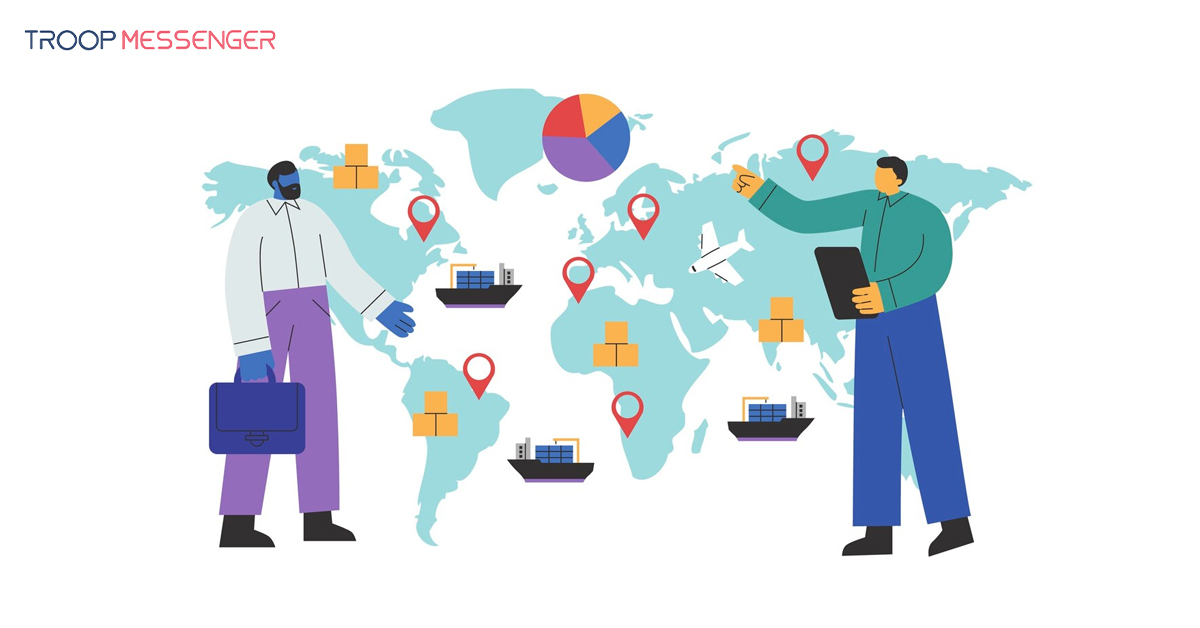
Supply chain visibility is the ability to track goods, inventory, shipments, and related information as they move from suppliers to warehouses and customers. It helps businesses monitor operations, identify delays, manage inventory more effectively, and respond to disruptions before they significantly affect deliveries. Technologies such as RFID, big data analytics, artificial intelligence (AI), cloud computing, mobile applications, the Internet of Things (IoT), blockchain, and augmented reality (AR) are making this visibility more detailed and accessible.
This guide explores eight ways technology enhances supply chain visibility, explaining how each solution improves tracking, information sharing, forecasting, and operational decision-making. It also highlights the practical considerations businesses should evaluate when adopting these technologies to build a more connected, responsive, and resilient supply chain. Effective coordination between suppliers, logistics teams, and other stakeholders also depends on a reliable team communication platform that helps teams share updates and respond to operational changes.
1. Improving Item Tracking with RFID Technology
Radio-frequency identification (RFID) uses tags and readers to identify and track items through radio waves. In supply chain operations, RFID can help businesses monitor inventory movement, improve stock visibility, and reduce the manual effort involved in inventory counts. Its effectiveness depends on tag type, reader placement, system configuration, and the environment in which it operates.
More Accurate Inventory Tracking: RFID readers can identify multiple tagged items without requiring each tag to be scanned individually. This can help warehouses reconcile stock records more efficiently and identify discrepancies sooner.
Fewer Manual Errors: Automating inventory checks reduces reliance on manual counting and data entry. More accurate records can help businesses limit stock discrepancies, misplaced items, and avoidable fulfilment delays.
Better Movement Records: When RFID reads are connected to inventory and warehouse management systems, businesses can build a clearer record of when tagged goods pass through designated checkpoints. Additional sensors and integrations may be required to capture information such as temperature, humidity, or handling conditions.
RFID is most effective when businesses combine reliable tagging and reader coverage with accurate inventory records and well-defined tracking processes.
2. Turning Supply Chain Data into Actionable Insights
Big data analytics helps businesses combine information from orders, inventory systems, transportation platforms, suppliers, and customer demand. Analyzing these data sources together can reveal patterns that are difficult to identify through isolated reports, giving supply chain teams a more complete view of operational performance.
Smarter Decision-Making: Consolidated data helps teams compare inventory levels, shipment progress, supplier performance, and delivery schedules. These insights support more informed decisions about replenishment, routing, and resource allocation.
Improved Demand Forecasting: Historical sales, seasonal patterns, current orders, and market signals can help businesses estimate future demand. Forecasts are more useful when the underlying data is timely, consistent, and representative of changing conditions.
Earlier Risk Detection: Analytics can highlight unusual delivery times, recurring stock shortages, and supplier performance issues. Teams can investigate these warning signs earlier and plan corrective action before disruptions spread across the supply chain.
The value of big data depends not only on the volume of information collected but also on its accuracy, accessibility, and relevance to business decisions.
3. Using AI to Predict and Prevent Disruptions
Artificial intelligence (AI) can help supply chain teams analyze large datasets, identify patterns, and generate predictions that support planning. When connected to reliable operational data, AI tools can improve demand forecasting, highlight potential bottlenecks, and help teams evaluate possible responses to changing conditions.
Continuous Learning: Depending on the model and implementation, AI systems can be updated with new data to improve forecasts and recommendations. Regular monitoring is still necessary to identify inaccurate predictions and changes in operating conditions.
Predictive Problem-Solving: AI can flag patterns associated with late deliveries, equipment failures, inventory shortages, or supplier disruptions. These signals give teams an opportunity to investigate risks and take preventive action.
More Relevant Recommendations: AI-driven systems can tailor recommendations to business priorities, such as delivery speed, inventory costs, service levels, or resource availability. Human oversight remains important when decisions involve significant costs or operational risks.
AI supports supply chain visibility most effectively when businesses use it alongside reliable data, clear performance measures, and established decision-making processes.
4. Connecting Supply Chain Systems Through Cloud Computing
Cloud computing allows businesses to access software, data, and computing resources through hosted infrastructure. For supply chains, cloud-based platforms can connect information from warehouse management systems, transportation management systems, suppliers, and customer service teams, helping stakeholders work with more consistent operational information.
Better System Integration: Connected platforms can share inventory updates, order information, and shipment statuses across departments. This reduces information silos and helps teams work from a more consistent view of supply chain activity.
Flexible Capacity: Cloud resources can be scaled to accommodate changing workloads, seasonal demand, and business expansion. Costs and performance depend on the chosen service, usage levels, and configuration.
Business Continuity: Cloud services can support data backup and recovery when they are configured appropriately. Businesses should evaluate backup frequency, recovery procedures, provider reliability, access controls, and security requirements rather than assuming that cloud storage alone guarantees continuity.
Cloud computing improves visibility when connected systems exchange accurate information securely and consistently, with appropriate governance and recovery planning.
5. Improving Supply Chain Visibility with Mobile Technology
Mobile technology gives supply chain personnel access to operational information through smartphones, tablets, and other connected devices. When integrated with business systems, mobile applications help teams record transactions, share updates, and confirm shipment progress while working in warehouses, distribution centres, or the field.
Faster Communication: Mobile alerts and status updates help warehouse teams, drivers, suppliers, and logistics coordinators communicate changes quickly. Timely updates allow stakeholders to respond to delays and exceptions more effectively.
Access to Operational Information: Authorized employees can check inventory, review orders, update delivery statuses, and access relevant records while away from a desktop workstation. Access should be managed through appropriate authentication and permissions.
More Efficient Data Capture: Mobile devices can scan barcodes, record proof of delivery, capture signatures, and submit inspection results. Sending this information directly to connected systems can reduce duplicate entry and improve the timeliness of supply chain records.
Businesses should consider device security, connectivity, application usability, and integration requirements when implementing mobile supply chain tools.
6. Monitoring Goods and Equipment with IoT
The Internet of Things (IoT) connects physical devices equipped with sensors and communication capabilities, allowing them to collect and transmit information. In supply chains, IoT devices can monitor shipment conditions, equipment performance, vehicle movement, and other operational events, helping businesses identify changes that require attention.
Real-Time Condition Monitoring: Sensors can capture information such as temperature, humidity, vibration, and location when the appropriate devices are installed. This is particularly useful for shipments that require controlled environmental conditions, including certain food and pharmaceutical products.
Predictive Maintenance: Equipment sensors can reveal unusual vibration, temperature changes, or other signs of potential failure. Analyzing these signals can help maintenance teams schedule inspections and reduce unexpected downtime.
Greater Shipment Transparency: When connected to tracking platforms, IoT devices can provide relevant shipment updates to authorized teams and customers. The quality and frequency of updates depend on sensor capabilities, network coverage, battery life, and system integration.
IoT improves visibility by connecting physical events with digital records, enabling teams to respond to changes based on more timely information.
7. Improving Traceability with Blockchain Technology
Blockchain is a distributed digital ledger that records transactions across a network according to defined rules. In supply chains, it can help participating organizations share traceability records and create a consistent transaction history. Its usefulness depends on the quality of the information entered, participant adoption, governance, and integration with existing systems.
Shared Transaction Records: Authorized participants can use a common ledger to review recorded events, such as product transfers, certifications, or ownership changes. This can reduce disagreements caused by inconsistent records across separate systems.
Automated Workflows: Smart contracts can execute predefined actions when specified conditions are met. For example, a workflow might trigger an approval or payment process after required delivery documentation is recorded, subject to the system's rules and integrations.
Product Provenance: Blockchain can help preserve records related to a product's origin and movement through the supply chain. Physical verification, reliable data entry, and suitable controls are still needed to reduce the risk of inaccurate or fraudulent information being recorded.
Businesses should assess whether blockchain addresses a genuine coordination or traceability problem before adopting it, as conventional shared databases may be sufficient for some use cases.
8. Using Augmented Reality to Improve Warehouse Operations
Augmented reality (AR) overlays digital information onto a user's view of the physical environment through compatible devices, such as smart glasses, tablets, or smartphones. In supply chain operations, AR can help employees access instructions, locate inventory, and understand equipment information without relying entirely on separate paper documents or screens.
Interactive Employee Training: AR-based training can guide workers through warehouse procedures and equipment tasks using visual instructions. This can help employees understand workflows, although the results depend on training quality and implementation.
More Efficient Order Picking: AR applications can display item locations, picking instructions, and route guidance. When connected to accurate warehouse inventory data, these overlays can help workers locate products and reduce picking errors.
Guided Maintenance: Technicians may use AR to view digital instructions, equipment diagrams, or relevant repair information alongside physical machinery. This can support troubleshooting and maintenance, particularly when the displayed information reflects the correct equipment configuration.
AR contributes to supply chain visibility by making operational information easier to access at the point of work. Its effectiveness depends on suitable devices, reliable data, and integration with warehouse or maintenance systems.
Best Practices for Improving Supply Chain Visibility
Adopting new technology is only one part of improving supply chain visibility. Businesses also need reliable data, connected systems, clear processes, and teams that know how to act on the information available to them.
Identify Visibility Gaps: Determine where information is missing or delayed, such as supplier updates, warehouse inventory, or shipment tracking. Prioritize the gaps that have the greatest impact on costs, service levels, and delivery performance.
Integrate Existing Systems: Connect relevant inventory, warehouse, transportation, and order management platforms wherever practical. Consistent data exchange helps teams avoid disconnected records and conflicting shipment information.
Set Clear Performance Indicators: Track measures such as inventory accuracy, on-time delivery, order fulfilment time, and shipment exception response time. These indicators help businesses evaluate whether new technology is delivering measurable improvements.
Protect Supply Chain Data: Apply appropriate access controls, authentication, data protection measures, and security monitoring. Review the security practices of technology providers and third-party partners that handle operational information.
Train Employees and Review Results: Help employees understand new tools and the actions required when problems are detected. Regularly review performance, data quality, and system effectiveness so that processes can be improved over time.
A phased implementation, starting with a clearly defined business problem, can help organizations evaluate results before expanding technology across the wider supply chain.
Conclusion
Technology enhances supply chain visibility by helping businesses track inventory, analyze operational data, predict disruptions, connect systems, and share more timely information across their networks. RFID, big data analytics, AI, cloud computing, mobile technology, IoT, blockchain, and augmented reality each address different visibility challenges, from identifying goods to improving warehouse workflows and maintaining traceability.
However, the benefits depend on selecting the right solutions, maintaining accurate data, integrating existing systems, and protecting sensitive information. Businesses should prioritize their most important visibility gaps, measure performance, and expand successful implementations over time. With a practical technology strategy and consistent monitoring, organizations can build more responsive, efficient, and resilient supply chains.
Frequently Asked Questions
1. What Is Supply Chain Visibility?
Supply chain visibility is the ability to monitor goods, inventory, shipments, and related information as they move through the supply chain. It helps businesses understand where products are, identify delays, assess inventory levels, and coordinate activities between suppliers, warehouses, transport providers, and customers. Better visibility supports informed decision-making, improves responses to disruptions, and helps organizations manage deliveries and resources more effectively.
2. How Does Technology Improve Supply Chain Visibility?
Technology improves supply chain visibility by collecting, sharing, and analyzing operational information. RFID and IoT devices help track goods and monitor conditions, while cloud platforms connect business systems. Big data analytics and AI help identify patterns, forecast demand, and flag potential disruptions. Mobile applications make updates easier to capture in the field, while blockchain can support shared traceability records when multiple organizations need a consistent transaction history.
3. What Is the Role of AI in Supply Chain Visibility?
Artificial intelligence helps supply chain teams analyze operational data, identify patterns, and predict potential problems. AI applications can support demand forecasting, detect unusual shipment delays, identify possible inventory shortages, and recommend adjustments to planning. These insights can help businesses respond earlier to disruptions. However, AI predictions depend on reliable data, suitable models, and ongoing monitoring, and important operational decisions may still require human review.
4. How Does IoT Help Track Goods During Transportation?
The Internet of Things uses connected devices and sensors to collect information about shipments, vehicles, and cargo conditions. Depending on the equipment installed, these devices can report location, temperature, humidity, or vibration. When connected to supply chain platforms, the information helps teams monitor shipment progress and identify exceptions. IoT effectiveness depends on network coverage, device reliability, sensor capabilities, battery life, and integration with tracking systems.
5. Is Blockchain Necessary for Supply Chain Visibility?
Blockchain is not necessary for every supply chain visibility project. It can be useful when multiple independent organizations need to share traceability records and maintain a consistent transaction history. However, conventional databases or integrated supply chain platforms may be simpler and more cost-effective for many businesses. Organizations should evaluate their data-sharing requirements, governance needs, partner participation, and integration costs before deciding whether blockchain offers meaningful advantages.
6. How Can a Business Measure Improvements in Supply Chain Visibility?
Businesses can measure supply chain visibility improvements using indicators such as inventory accuracy, on-time delivery rates, order fulfilment time, shipment tracking coverage, and the time required to identify and resolve exceptions. They should establish baseline measurements before implementing new technology and compare results afterward. Reviewing these indicators regularly helps organizations identify persistent gaps, assess the value of technology investments, and prioritize further improvements across supply chain operations.