Connect with us
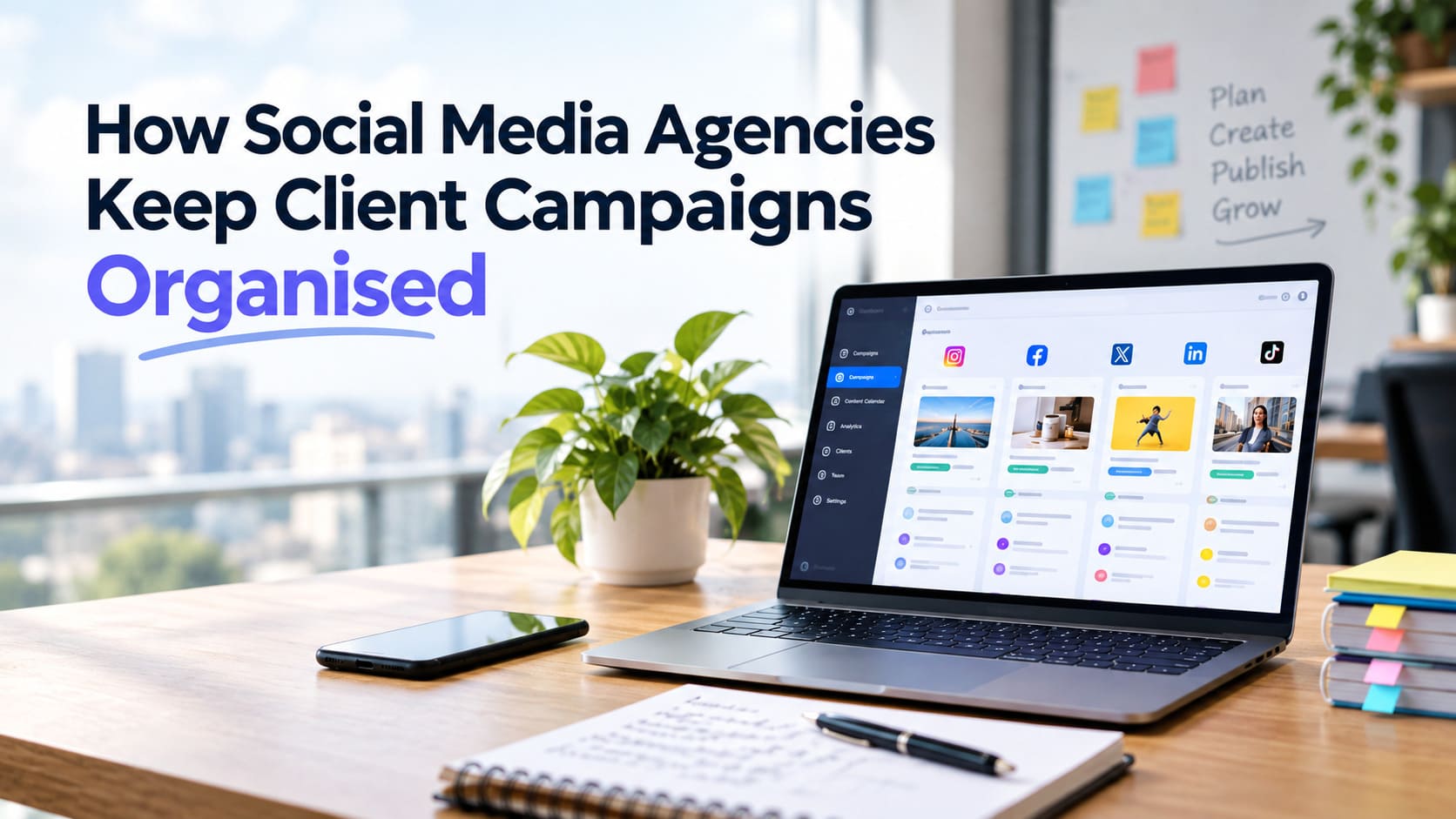
How Social Media Agencies Keep Client Campaigns Organised
A social media agency with a dozen clients is running something closer to a hundred projects. Each client has several platforms, each platform has its own calendar, and each campaign has a start date, a target and a point at which somebody has to report whether it worked.
Most of that coordination happens in chat, and most of the confusion does too. A message asking whether the Instagram campaign for one client has started sits between a design review for another and a question about an invoice. By the afternoon nobody can find it, and by the end of the week somebody asks again.
The agencies that handle this well are not the ones with the most tools. They are the ones that decided early what belongs in a conversation and what does not.
One channel per client, not one channel for everything
The first decision is the simplest and the one most often skipped. A shared channel for "social" becomes unreadable within a month, because every client's work lands in the same stream and nothing can be found by the person who needs it.
A channel per client fixes most of that on its own. Everything about one account lives in one place: the brief, the approvals, the questions, the results. When a client asks what happened in March, the answer is a scroll away rather than a search across six threads. And when someone new joins the account, they can read their way in rather than being briefed from memory.
Within each channel, keep a pinned note with the three things everyone asks about: which platforms are active, what the current campaign is trying to achieve, and who approves what. It takes five minutes to write and saves that many questions a day.
Status belongs in a feed, not in a question
The single most wasteful message in an agency is "has this started yet?". It interrupts whoever is asked, it gets answered from memory, and the answer is out of date within the hour.
Status is data, and data can arrive on its own. Most of the platforms and services an agency works with expose their status somewhere, whether through a dashboard, a report or an API. The question worth asking is not "who knows?" but "where does this already live, and can it come to us instead?".
When status arrives in a client channel automatically, three things improve at once. The team stops interrupting each other. The client's history builds itself. And the number in the channel is the number the system reports, rather than somebody's recollection of it.
Where APIs earn their place
For an agency with a developer, or even a patient account manager with a little scripting, the services that expose an API are worth more than the ones that do not, because their status can be pulled on a schedule rather than checked by hand.
The details matter more than the feature list. The useful questions are how many items one request can cover, how often you are allowed to ask, and what happens when something fails.
Take order status as an example. Boostero, a service agencies use for client social media campaigns, lets an integration check the status of up to 100 orders in a single request through its public API. That shapes how the automation should work. There is no push notification when an order changes, so the integration has to ask, and one scheduled request every few minutes covers a hundred open orders at once. Written that way, a single short script can post a daily status line into each client channel without anyone asking for it.
The general lesson applies to any service in the stack. Read the documentation for the limits, not just the list of endpoints, and design around what the service actually does rather than what you assumed it would.
What to automate, and what to keep human
Automation is good at the things that repeat and bad at the things that need judgement.
Automate status updates, scheduled reports, reminders before a campaign ends, and alerts when a number moves outside its expected range. These are the messages nobody wants to write and everybody wants to receive.
Keep human the things a client relationship depends on: explaining why a campaign underperformed, deciding whether to change course, and anything that involves a decision the client needs to own. An automated message saying a number dropped is useful. An automated message deciding what to do about it is not.
Reporting that clients actually read
The end of every campaign is a report, and most agency reports are too long. A client wants three things: what was planned, what happened, and what you recommend next.
If status has been flowing into the client channel all along, most of the report is already written. The numbers are there with their dates, the changes are recorded where they happened, and the summary becomes an exercise in selection rather than reconstruction. That is the real payoff of the earlier decisions: the report stops being a week of archaeology.
The short version
Give each client a channel. Pin the three things everyone asks. Let status arrive on its own instead of being requested. Choose services whose limits you understand, and design around those limits. Automate what repeats, keep human what needs judgement, and let the record you built along the way write most of the report.
FAQ's
1. How do social media agencies keep client campaigns organised?
Social media agencies keep client campaigns organised by separating communication, tasks, approvals, and reporting into clear workflows. Creating a dedicated communication channel for each client prevents messages from different accounts from getting mixed together. Teams can also use content calendars, task management systems, campaign dashboards, and automated status updates to track progress. Pinning important information, such as active platforms, campaign objectives, deadlines, and approval responsibilities, gives everyone quick access to essential details. This structure reduces repeated questions, improves accountability, and helps teams manage multiple campaigns without losing track of important updates.
2. Why should social media agencies use a separate channel for each client?
A separate channel for each client keeps campaign communication focused and easier to find. When several clients share one general channel, campaign updates, design approvals, questions, and reporting discussions can quickly become difficult to track. A dedicated client channel keeps the relevant conversations, files, decisions, and updates together. New team members can also review the channel history to understand the account without relying entirely on verbal explanations. Pinning important information, such as campaign goals, active platforms, and approval contacts, makes the channel even more useful and reduces unnecessary back-and-forth communication.
3. What should social media agencies automate in campaign management?
Social media agencies should automate repetitive tasks that do not require human judgement. Useful examples include campaign status updates, scheduled performance reports, deadline reminders, recurring notifications, and alerts when important metrics move outside expected ranges. Automation can reduce the number of manual checks account managers need to perform and ensure that important updates reach the right people consistently. However, strategic decisions should remain with the team. Explaining poor campaign performance, recommending major changes, communicating sensitive results, and deciding the next campaign direction require context and professional judgement that automated messages cannot reliably provide.
4. How can APIs help social media agencies manage client campaigns?
APIs can help social media agencies connect different services and automatically collect campaign information. Instead of manually checking multiple dashboards, an integration can retrieve relevant data on a schedule and send updates to a central system or client communication channel. Before building an integration, agencies should review the API documentation carefully, including request limits, available endpoints, authentication requirements, response formats, and failure handling. Understanding these limitations helps teams design reliable workflows. When used appropriately, APIs can reduce repetitive work, improve data consistency, and make campaign status information available without requiring employees to check every service manually.
5. How can agencies make social media campaign reports easier for clients to understand?
Agencies can make campaign reports easier to understand by focusing on the information clients actually need. A useful report should clearly explain what was planned, what happened, and what should happen next. Instead of overwhelming clients with every available metric, agencies can highlight the key results that relate directly to the campaign objective. Maintaining campaign updates throughout the project also makes reporting easier because important numbers, decisions, and changes are already documented. This turns the final report into a concise summary of the campaign rather than a time-consuming process of reconstructing what happened.