Connect with us
Sending Customer Rewards Across Email, SMS and Chat
A customer completes a survey, qualifies for a rebate, or successfully refers a friend. The reward is approved, and the business initiates delivery. But what happens when the customer doesn't receive it? The support team needs to investigate, the marketing team may need to verify the campaign, and the finance team might need to confirm the reward status.
Sending customer rewards is not just about choosing a delivery channel. It also requires effective communication and coordination between the teams responsible for managing the process.
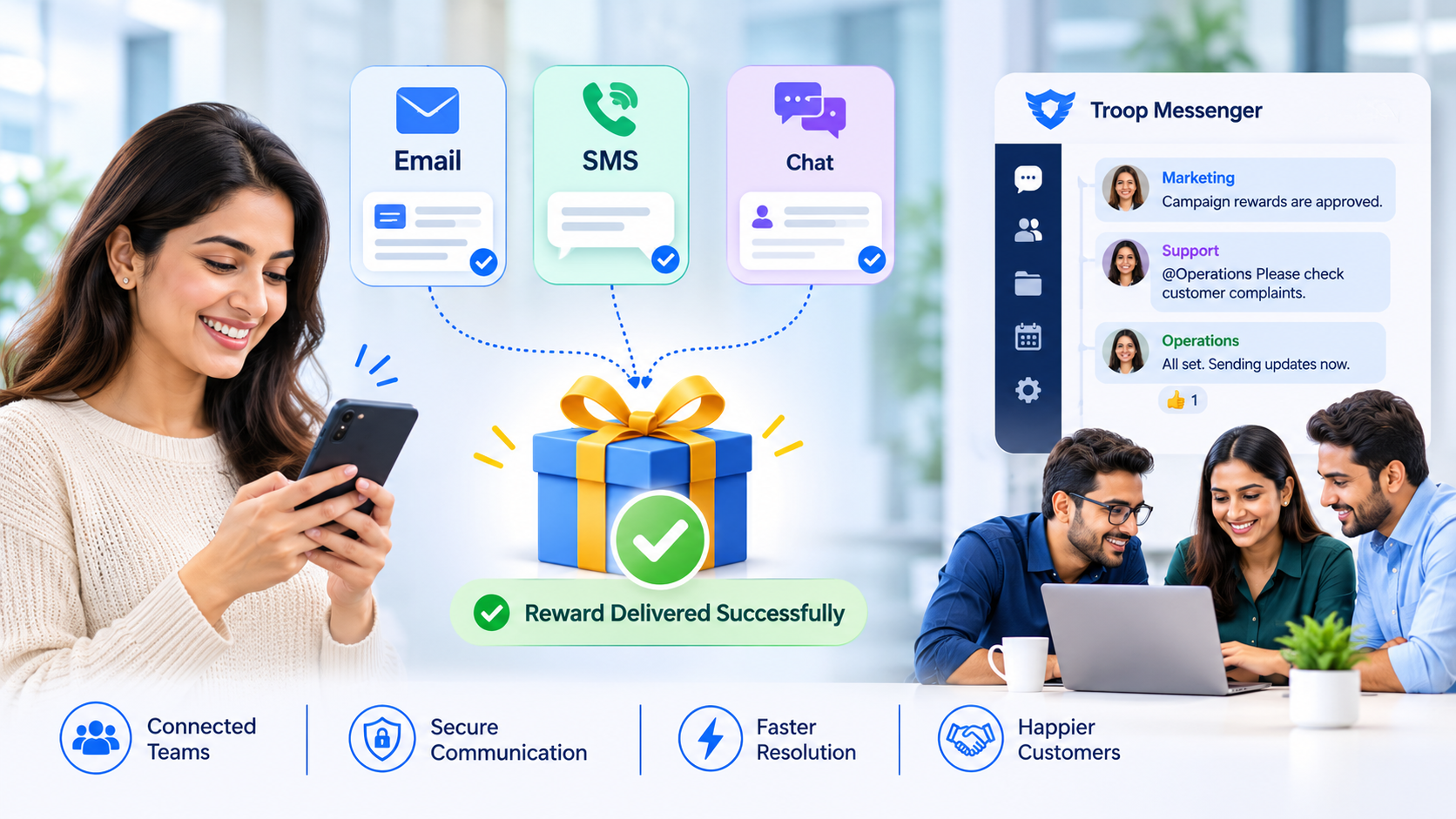
Businesses use email, SMS, and chat to notify customers about rewards. However, managing these channels independently can create communication gaps, delayed responses, and operational confusion. A centralized team communication platform like Troop Messenger can help organizations coordinate these activities, keep relevant teams connected, and resolve delivery-related issues efficiently.
Email: A Reliable Channel for Large Reward Programs
Email remains one of the most widely used channels for communicating customer rewards. It works well for large incentive programs, including survey participation, rebates, loyalty campaigns, and referral rewards.
Businesses can use email to send reward confirmations, redemption instructions, digital gift cards, and other relevant information. It also provides customers with a message they can refer to later.
However, email delivery is not always guaranteed. Incorrect email addresses, spam filters, and overflowing inboxes can prevent customers from seeing important notifications.
This is where internal team coordination becomes important. Marketing, customer support, and operations teams need to communicate effectively when customers report missing rewards or request delivery updates.
With Troop Messenger, teams can exchange updates, share relevant information, and coordinate follow-up actions through centralized workplace conversations. This helps reduce communication gaps and ensures that the right people are involved in resolving customer queries.
SMS: Immediate Notifications with Consent Management
SMS is useful when businesses want to deliver short, time-sensitive reward notifications. Customers can receive updates about reward approvals, redemption links, promotional incentives, and transaction confirmations directly on their mobile devices.
However, SMS communication requires careful handling. Businesses must verify mobile numbers and obtain the necessary consent before sending promotional or other regulated messages.
For example, an organization may have 20,000 customer email addresses but only 4,000 mobile numbers with valid SMS permissions. In such cases, SMS communication should be limited to the eligible audience.
Another consideration is the growing risk of phishing and fraudulent reward messages. Businesses should ensure that their notifications are recognizable, legitimate, and consistent across communication channels.
Troop Messenger supports internal coordination by allowing customer support and operations teams to discuss reported SMS delivery issues, share updates, and coordinate responses. Instead of relying on scattered messages and disconnected conversations, employees can collaborate through organized team communication.
Chat and In-App Messaging: Connecting Customers with Immediate Support
Chat and in-app messaging provide another way to communicate reward-related information. For SaaS platforms, e-commerce businesses, and digital service providers, these channels can deliver notifications when customers complete specific actions.
For example, when a referral is successfully converted, a business can trigger an in-app notification informing the customer about the approved reward. Similarly, customers can use an integrated chat interface to ask questions about reward eligibility, redemption, or delivery status.
However, customer-facing chat and internal team messaging serve different purposes.
Customer-facing chat helps businesses communicate directly with customers, whereas internal team messaging enables employees to coordinate the activities behind those interactions.
Troop Messenger addresses the internal communication side of this process. Customer support representatives can discuss unresolved queries with operations teams, involve relevant departments, exchange files, and coordinate responses without switching between multiple communication tools.
Its team messaging and collaboration capabilities help organizations maintain continuity across internal conversations, particularly when multiple departments are involved in resolving customer issues.
Why Internal Team Communication Matters in Multichannel Rewards
Using email, SMS, and chat together can improve customer communication. However, businesses also need an organized way to manage the internal activities supporting these channels.
Consider a reward program involving 10,000 customers. If 9,700 rewards are processed successfully and 300 customers report delivery problems, the organization needs to identify and resolve those exceptions efficiently.
Without effective internal communication, employees may spend considerable time contacting different departments, searching for previous conversations, and requesting the same information repeatedly.
A centralized team communication platform helps simplify this process.
With Troop Messenger, organizations can:
- Centralize team conversations: Keep reward-related discussions organized among marketing, operations, finance, and customer support teams.
- Improve cross-department collaboration: Allow employees to communicate with the relevant departments when reward delivery issues arise.
- Share files and updates: Exchange supporting documents, screenshots, and other relevant information during issue resolution.
- Enable faster decision-making: Help employees connect with the right stakeholders and reduce delays caused by fragmented communication.
- Maintain communication continuity: Keep teams informed about ongoing discussions and unresolved customer concerns.
The objective is not simply to send more notifications. It is to ensure that employees can communicate effectively when something goes wrong.
Choosing the Right Channel for Customer Rewards
Different customer reward programs require different communication channels. The choice depends on the audience, the type of reward, customer preferences, and the urgency of the notification.
| Channel | Best suited for | Main consideration |
| Large reward campaigns, rebates, and gift card notifications | Email accuracy and deliverability | |
| SMS | Time-sensitive reward alerts and confirmations | Customer consent and mobile number accuracy |
| In-app messaging | Rewards triggered by customer activity within an application | Requires customer access to the application |
| Customer-facing chat | Reward-related questions and immediate assistance | Availability of customer support |
| Internal team messaging | Coordination between departments handling reward operations | Requires organized communication and collaboration |
For example, an organization managing a large customer rebate program may use email as its primary notification channel and SMS for customers who have provided the necessary consent.
A SaaS company managing referral rewards may use in-app notifications to inform customers when they qualify for an incentive, while customer support teams handle queries through their designated support channels.
Behind these customer-facing interactions, Troop Messenger can help employees coordinate internally, share updates, and work together to address unresolved issues.
Businesses looking to implement multichannel rewards should consider both customer-facing delivery and the internal communication processes required to manage the program successfully.
Conclusion
Sending customer rewards through email, SMS, and chat gives businesses multiple ways to reach their audiences. However, successful reward communication involves more than selecting the right delivery channel. Organizations also need effective coordination between the teams responsible for approvals, customer notifications, support, and issue resolution.
While email, SMS, and customer-facing chat serve different delivery purposes, internal team communication connects the people managing these activities.
Troop Messenger helps organizations strengthen this internal communication through secure messaging, file sharing, and team collaboration capabilities. By keeping employees and departments connected, businesses can reduce communication gaps, respond to customer concerns more efficiently, and manage reward-related operations with greater clarity.
Ultimately, a successful customer reward program depends not only on delivering the reward but also on ensuring that the teams behind the process stay connected.
Frequently Asked Questions
Q: Which communication channels can businesses use to send customer rewards?
A: Businesses can use email, SMS, in-app notifications, and customer-facing chat to communicate reward approvals, redemption instructions, and delivery updates. The appropriate channel depends on customer preferences, available contact information, and consent requirements.
Q: Why is internal team communication important in customer reward programs?
A: Reward programs often involve marketing, finance, operations, and customer support teams. Effective internal communication helps these departments share updates, coordinate approvals, investigate delivery issues, and respond to customer queries without unnecessary delays.
Q: How can Troop Messenger help businesses manage reward-related communication?
A: Troop Messenger provides a centralized platform for workplace messaging and team collaboration. Businesses can use it to coordinate reward-related activities, share files, discuss customer complaints, and connect employees across departments.
Q: Can businesses use multiple channels for the same customer reward program?
A: Yes. Businesses can combine email, SMS, in-app notifications, and customer-facing chat to reach different customer segments. They should maintain consistent reward information and ensure that internal teams can track and coordinate related activities.
Q: How does secure team messaging help customer support teams?
A: Secure team messaging helps employees communicate about customer issues, exchange relevant information, and involve the appropriate departments. It also reduces dependence on scattered conversations and makes internal collaboration more organized.
Q: Is Troop Messenger a customer reward delivery platform?
A: Troop Messenger is primarily a secure business messaging and team collaboration platform, not a gift card issuance or reward distribution platform. Organizations can use it to coordinate the internal communication involved in managing customer reward programs.