Connect with us
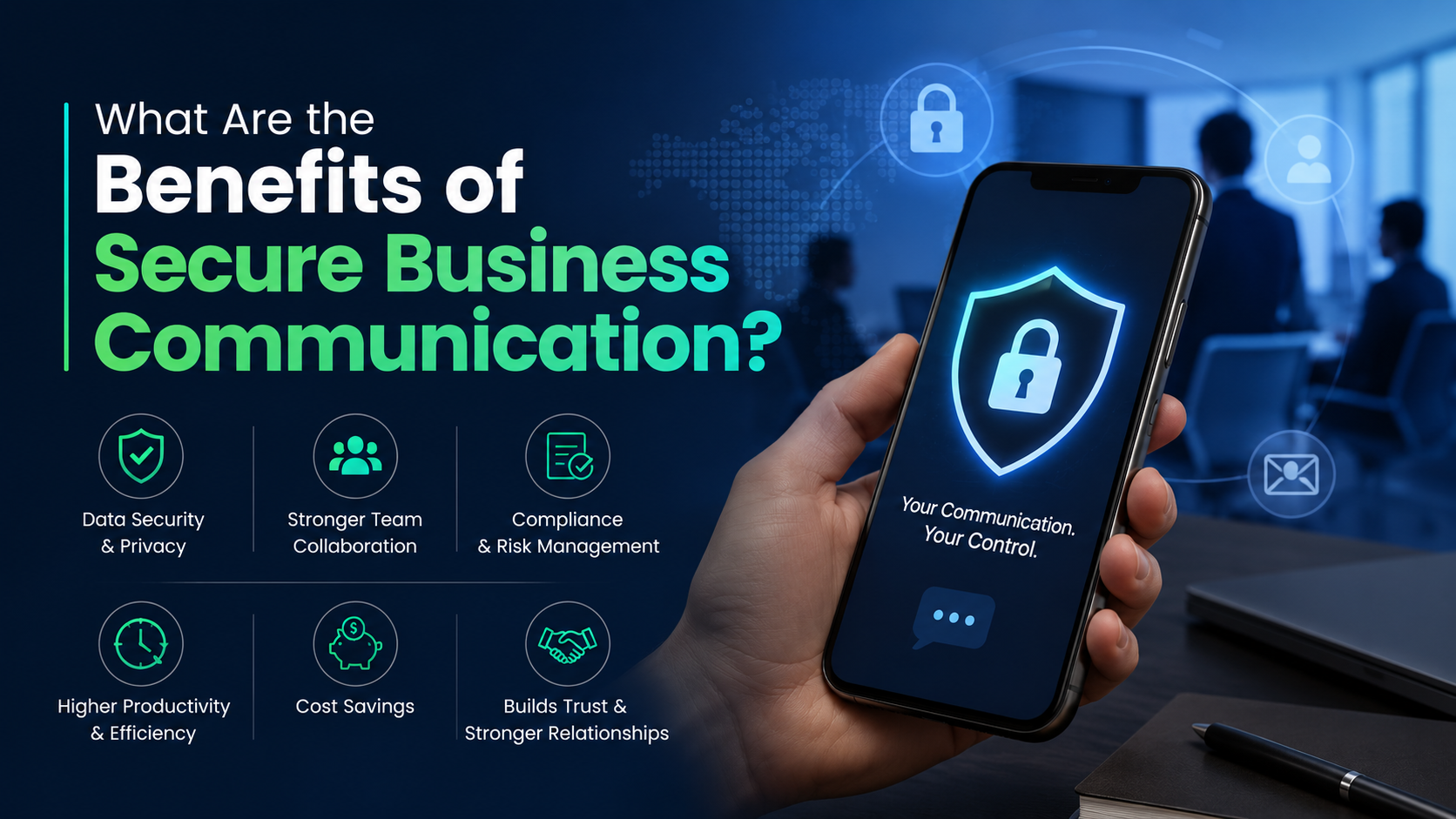
What Are the Benefits of Secure Business Communication
Business communication has changed significantly over the past decade. Email remains an essential part of professional communication, but it is no longer the only channel employees use to exchange information. Teams now rely on instant messaging, group chats, video meetings, file sharing, project discussions, and other digital collaboration tools to keep work moving.
This shift has created a new challenge for businesses: protecting information across every communication channel.
A confidential document shared in a team chat can be just as sensitive as an attachment sent by email. A conversation between employees can contain customer information, financial details, internal decisions, credentials, or strategic plans. If these communications are not properly protected, a single compromised account or poorly secured platform can create significant risks.
This is why businesses should look beyond email security alone and consider a broader approach to secure business communication.
Secure communication platforms help organizations protect conversations while giving employees a practical way to collaborate every day. When security, administration, privacy, and usability are considered together, communication becomes more than a productivity tool. It becomes an important part of an organization's overall security strategy.
Why Business Communication Security Matters
Employees exchange a considerable amount of sensitive information during a normal working day. Sales teams discuss customer requirements, HR teams handle employee information, finance departments exchange financial documents, and management teams discuss business decisions.
Much of this information is shared digitally.
The problem is that convenience often takes priority over security. Employees may move conversations between email, consumer messaging applications, personal accounts, and other tools simply because they are easy to use. This can make it difficult for organizations to understand where sensitive information is being stored or who has access to it.
A centralized and secure communication environment can reduce this uncertainty.
Instead of allowing sensitive business conversations to move across unrelated platforms, organizations can provide employees with a controlled environment for messaging, group collaboration, file sharing, and internal communication.
This does not mean that email becomes unnecessary. Email continues to play an important role, particularly for external communication. Organizations may also need a professional business email address for communicating with customers, partners, suppliers, and other external stakeholders.
However, internal communication requires a different approach.
Email Is Important, but It Is Only One Part of the Communication Ecosystem
Email is still one of the most widely used business communication channels. It is particularly useful for formal communication, external correspondence, documents, notifications, and maintaining written records.
However, many internal conversations have moved away from email.
Employees increasingly expect to communicate through instant messaging because it enables faster conversations and makes collaboration easier. Teams can create dedicated group discussions, exchange files, share updates, and resolve questions without filling inboxes with long email threads.
This creates an important distinction between secure email and secure business communication.
Email security focuses primarily on protecting messages and accounts. Secure business communication takes a broader view and considers how employees communicate across the organization.
For example, a company may have strong email security but still expose sensitive information through an unsecured messaging application. Similarly, an organization may use an encrypted messaging platform but lack appropriate controls around user access and administration.
A complete communication strategy therefore needs to consider both.
How Secure Messaging Protects Internal Conversations
One of the most important advantages of a secure business communication platform is the ability to protect internal conversations.
Employees may discuss information that should remain within the organization, including:
- Customer information
- Business strategies
- Financial discussions
- Product plans
- Operational updates
- Employee-related matters
- Contracts and commercial negotiations
- Internal investigations
- Technical information
Keeping these conversations within a controlled communication environment helps organizations reduce unnecessary exposure.
Security features such as encryption can help protect information while it is being transmitted and, depending on the platform's architecture, while it is stored. Strong authentication and administrative controls can further reduce the risk associated with unauthorized account access.
The objective is not simply to make communication more complicated. It is to create a secure environment without making employees abandon the tools they need to do their jobs.
Encryption Adds an Important Layer of Protection
Encryption is one of the fundamental technologies used to protect digital communication.
When information is transmitted without appropriate protection, it may be exposed to unauthorized parties. Encryption transforms readable information into a protected format so that unauthorized individuals cannot easily interpret it.
For businesses, encryption becomes particularly important when employees communicate over networks that the organization does not directly control.
Secure messaging platforms can use encryption to protect conversations and shared information while it moves between users and systems. Depending on the platform and its configuration, additional encryption approaches may also be available for protecting stored data.
However, encryption should not be treated as the only security measure.
A secure communication strategy should combine encryption with authentication, access controls, administrative policies, monitoring, and appropriate user permissions.
Security works best as a layered approach rather than as a single feature.
Access Controls Help Businesses Control Who Can Communicate
Not every employee needs access to every conversation.
A sales representative may need access to customer-related discussions but not HR conversations. A project team may need access to a project-specific group but not management discussions. An administrator may require different permissions from an ordinary employee.
Granular access controls allow organizations to structure communication according to their operational requirements.
Administrators can establish appropriate permissions, manage users, create groups, and control access to business information. These controls become especially important as organizations grow.
Without proper access management, employees may retain access to information they no longer need. Former employees may remain connected to communication channels, or users may accidentally share sensitive information with the wrong audience.
A centralized communication platform makes it easier to establish consistent policies and manage access from a central location.
Secure Group Communication Improves Collaboration
Modern organizations rarely work entirely through one-to-one conversations.
Projects involve multiple employees, departments, locations, and sometimes external stakeholders. Teams need dedicated spaces where they can discuss objectives, share updates, exchange files, and coordinate activities.
Secure group communication can bring these discussions into a controlled environment.
Instead of creating multiple informal groups across different applications, organizations can organize conversations around departments, projects, teams, or business functions.
This provides two advantages.
First, employees have a clear place to find relevant information. Second, administrators have greater visibility and control over how communication is organized.
For organizations with distributed or remote teams, this can be particularly valuable. Employees can collaborate without relying on physical offices or informal communication channels.
Secure File Sharing Reduces Unnecessary Data Exposure
Business communication is not limited to text.
Employees regularly exchange presentations, spreadsheets, contracts, reports, images, technical documents, and other files. Sending these files through uncontrolled channels can introduce additional security risks.
A secure communication platform that supports protected file sharing allows employees to exchange information within the same environment where conversations take place.
This can reduce the need to move sensitive documents between unrelated applications.
Businesses should still establish appropriate file-sharing policies, including access permissions and retention requirements. However, bringing communication and file sharing into a controlled environment can make it easier to manage how business information moves between employees.
Centralized Administration Gives IT Teams Greater Control
Managing multiple communication applications can become difficult for IT and security teams.
Every additional platform may introduce another set of accounts, permissions, security settings, and administrative responsibilities.
A centralized communication environment can simplify this process.
Administrators can manage users, groups, permissions, security policies, and other controls from a central interface. When an employee joins the organization, access can be provisioned according to their role. When an employee leaves, their access can be removed as part of the organization's offboarding process.
This approach helps reduce the risk of forgotten accounts and inconsistent permissions.
It also gives administrators greater visibility into how communication tools are being used across the organization.
Secure Communication Supports Regulatory and Privacy Requirements
Many organizations operate under privacy and data protection requirements.
Depending on the industry, location, and type of information being processed, businesses may need to follow regulations and internal policies governing how personal or confidential information is handled.
Industries such as financial services, healthcare, government, defense, and professional services may have particularly strict requirements.
Secure communication tools can support these requirements by providing organizations with controls for protecting information and managing access.
However, businesses should avoid assuming that using a particular communication platform automatically makes them compliant.
Compliance depends on the organization's complete environment, including its policies, processes, configuration, user behavior, data handling practices, and regulatory obligations.
The right communication platform should therefore be viewed as one component of a broader security and compliance framework.
Why Businesses Should Reduce Shadow Communication
One of the less visible risks facing organizations is shadow communication.
Employees may use personal messaging applications or consumer platforms because they are convenient. In many cases, this happens without malicious intent. Employees simply want to communicate quickly.
The problem is that the organization may have little control over information shared through those channels.
Sensitive documents may be stored on personal devices. Important decisions may exist only in private conversations. Employees may unknowingly share confidential information with the wrong person.
Providing employees with a secure and convenient business communication platform can help reduce the motivation to use unauthorized alternatives.
The easier a secure tool is to use, the more likely employees are to adopt it.
What Should Businesses Look for in a Secure Communication Platform?
Not every business communication platform provides the same level of security or administrative control.
Organizations evaluating a platform should consider several areas.
- Encryption: Understand how conversations and files are protected during transmission and, where applicable, while stored.
- Access Management: Look for controls that allow administrators to manage users, groups, roles, and permissions.
- Administrative Controls: Security teams should have appropriate tools for managing communication policies and organizational access.
- Authentication: Strong authentication mechanisms can help reduce the risk associated with compromised credentials.
- Data Protection: Businesses should understand how information is stored, processed, backed up, and protected.
- Deployment Options: Organizations with strict infrastructure or data requirements may need flexible deployment models rather than a single hosting approach.
- Scalability: The platform should be capable of supporting organizational growth without forcing businesses to replace their communication infrastructure.
- Usability: Security is only effective when employees actually use the platform. A complicated tool can encourage employees to return to less secure alternatives.
Secure Communication Should Not Come at the Cost of Productivity
Security and productivity are sometimes treated as opposing priorities.
They do not have to be.
A well-designed communication platform can combine security controls with features that employees need every day. Instant messaging, group communication, file sharing, search, collaboration, and administrative controls can exist within the same environment.
This reduces the need for employees to constantly switch between different applications.
For businesses, this can also make security easier to manage. Instead of attempting to secure a collection of unrelated communication tools, organizations can establish policies around a controlled communication environment.
The result is a more practical balance between productivity and protection.
Building a More Secure Communication Strategy With Troop Messenger
For organizations that want greater control over internal communication, Troop Messenger provides a business-focused environment for secure messaging and collaboration.
Rather than treating communication security as an isolated email problem, businesses can consider the complete lifecycle of internal conversations—from one-to-one messages and group discussions to file sharing and organizational collaboration.
The goal should be straightforward: employees should have a communication platform that is easy enough to use every day while giving organizations the security and administrative controls they need.
Email will continue to play an important role in business. Companies will still need professional email addresses, external correspondence, and formal written communication. But internal communication increasingly requires tools designed for real-time collaboration.
Bringing those conversations into a controlled business environment can help organizations reduce communication fragmentation and improve their overall security posture.
Turning Business Communication Into a Security Advantage
Every organization has valuable information moving through its communication channels.
The question is not whether employees will communicate digitally. They already do. The more important question is whether the organization has sufficient control over where those conversations happen, who can access them, and how the information is protected.
Secure business communication provides a practical way to address these challenges.
Encryption can protect information from unauthorized access. Access controls can limit who can participate in conversations. Centralized administration can simplify user and permission management. Secure file sharing can reduce unnecessary movement of sensitive documents. Group communication can help teams collaborate without relying on uncontrolled consumer applications.
At the same time, businesses should continue using secure email practices for external communication and formal correspondence.
The strongest approach is not to replace every existing communication channel with a single tool. Instead, organizations should understand the role of each channel and make sure that the tools employees use to communicate are aligned with the organization's security requirements.
In 2026, secure communication is no longer simply an IT concern. It is a business requirement.
Organizations that treat conversations, files, and collaboration as important business assets can make more informed decisions about the technologies they use every day. By combining professional email practices with secure internal messaging and collaboration, businesses can create a communication environment that is not only productive but also better prepared for the security challenges of modern work.
Frequently Asked Questions
Q. What is secure business communication?
A: Secure business communication refers to using protected tools and practices to exchange messages, files, and other business information while reducing the risk of unauthorized access, interception, or data exposure.
Q: Why is secure messaging important for businesses?
A: Secure messaging helps businesses protect confidential conversations, customer information, internal discussions, and shared files. It can also give administrators greater control over users, permissions, and communication channels.
Q: Is email security enough to protect business communication?
A: Email security is important, but it may not address risks associated with instant messaging, group chats, file sharing, and other internal communication channels. Businesses should secure the complete communication environment rather than relying on email protection alone.
Q: What features should businesses look for in a secure communication platform?
A: Businesses should consider features such as encryption, access controls, authentication, centralized administration, secure file sharing, user and permission management, scalability, and flexible deployment options.
Q: Can secure business communication improve productivity?
A: Yes. A secure communication platform can combine messaging, group collaboration, file sharing, and administrative controls in one environment. This can reduce the need to switch between multiple applications while allowing employees to collaborate more efficiently.