Connect with us
How Integrated Collaboration Platforms Bridge the Gap Between Sales and Support
Historically, sales and customer support have traditionally operated in silos. Teams prioritized acquisition and revenue, while support focused on retention and customer satisfaction, often relying on separate systems with limited communication. The result was a fragmented customer journey and inconsistent experiences.
Today, customer experience is a defining competitive advantage. Customers expect seamless interactions, regardless of department, making disconnected workflows increasingly unsustainable.
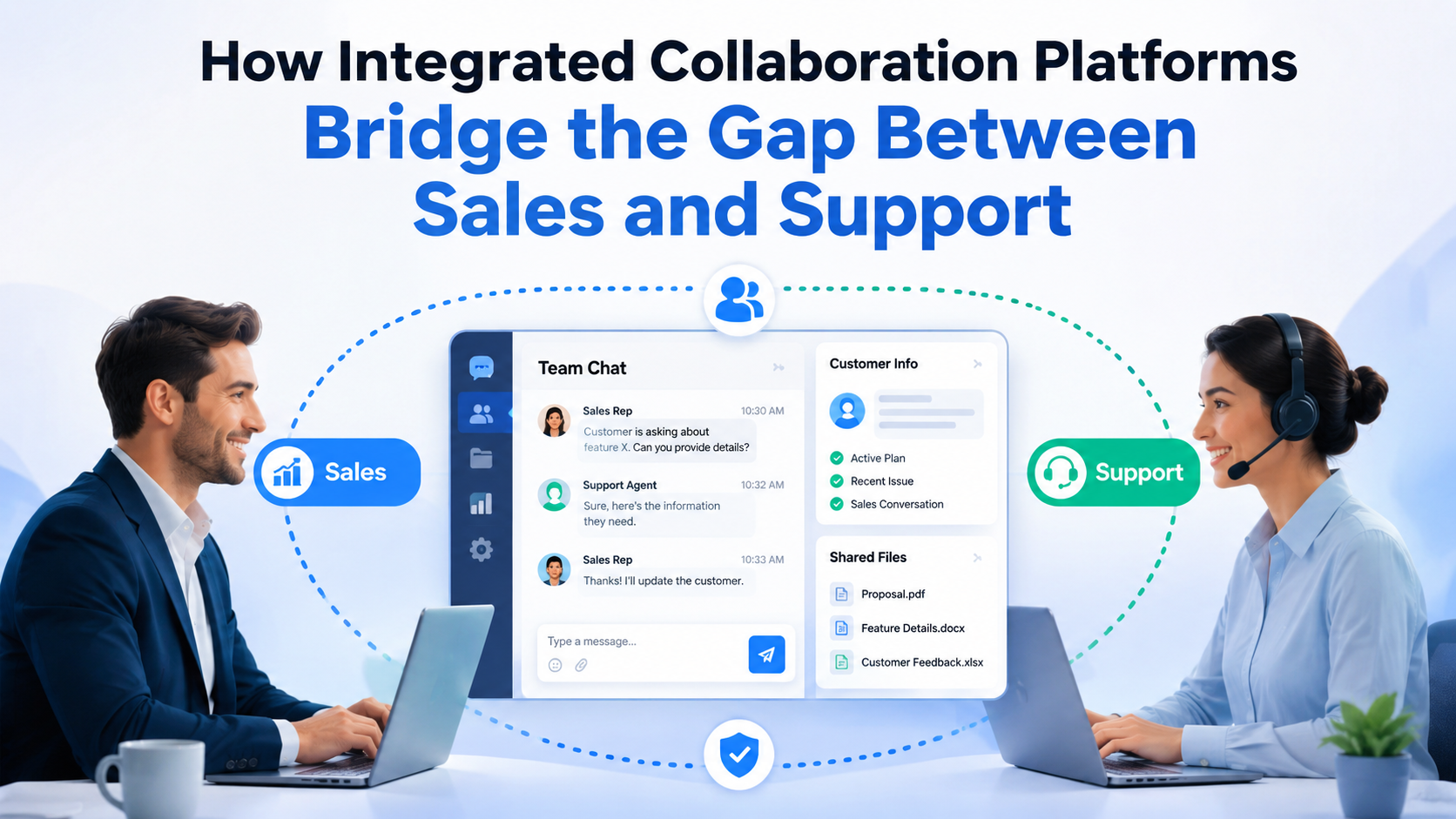
Integrated collaboration platforms close this gap by centralizing data, conversations, and documentation, giving sales and support teams shared visibility across the customer lifecycle.
The result is smoother handoffs, faster issue resolution, and a more consistent customer experience.
The Evolving Landscape of Customer Acquisition and Retention
In recent years, the technology driving customer acquisition has become incredibly sophisticated, operating at a speed that traditional manual processes cannot match. Revenue teams are rapidly deploying advanced tools to manage their pipelines and accelerate their daily outreach.
For instance, many organizations now implement an AI sales calling agent to autonomously handle high-volume prospecting, instantly qualify inbound leads, and seamlessly schedule meetings without requiring human intervention.
While this powerful technology drastically increases the efficiency of the sales process and automates early prospecting tasks, it also generates massive amounts of vital data. Valuable context regarding customer pain points, specific use cases, and budget constraints is gathered during these initial interactions. If this rich context remains trapped in a siloed sales environment, the support team is left completely in the dark once the prospect signs the contract and becomes a paying customer.
To maximize the value of these rapid technological advancements, the entire revenue organization must operate within a unified digital ecosystem. We are currently witnessing a massive shift in how businesses structure their operations from the ground up, with even forward-thinking solopreneurs building automated sales engines to handle early-stage pipeline growth before they even hire their first human representative.
As these automated systems successfully hand off qualified leads to human account executives, and those executives eventually hand the closed deals over to customer success managers, the collaboration platform acts as the central nervous system.
It ensures that every promise made and every requirement discussed during the sales cycle is immediately visible to the support team, establishing a strong foundation of trust and operational continuity.
The Hidden Costs of Disconnected Departments
When sales and support rely on fragmented and disconnected communication tools, the customer ultimately pays the price. Imagine a highly common scenario where a sales representative promises a specific software integration or a customized workflow to close a high-value enterprise deal.
The deal closes successfully, and the client is handed over to the onboarding and support teams. Because the teams lack a shared collaboration space and operate in different software ecosystems, the support agents have no documented record of this specific promise.
The new client is forced to repeat their requirements and explain their workflow all over again, leading to immediate frustration, a loss of confidence, and potential buyer's remorse before the implementation even begins.
Furthermore, this operational disconnect leads to severe internal friction. Support teams often feel that sales representatives overpromise to secure a commission, while sales teams feel that support does not properly nurture the vital accounts they worked so hard to win.
Actively addressing collaboration tool challenges is absolutely essential to repairing this toxic dynamic. A fragmented software stack leads to endless context switching, lost information, and severely delayed response times.
When employees are forced to constantly jump between a dedicated sales chat application, a separate support ticketing system, and disjointed, disorganized email threads, daily productivity plummets, and vital customer details inevitably slip through the cracks.
Core Features That Drive Cross-Functional Alignment
What specific features within modern collaboration platforms actively enable this critical bridge between departments? It requires more than just a basic messaging application; it requires a thoughtfully designed digital workspace.
First, unified messaging channels are absolutely critical to breaking down silos. Creating dedicated, cross-departmental channels for specific enterprise accounts allows the account executive, the solutions engineer, and the customer success manager to communicate natively in real time.
This level of internal transparency transforms team collaboration in the workplace from a corporate buzzword into a tangible, measurable operational advantage. When a critical, high-priority support ticket is raised by a key client, the assigned sales representative is immediately notified in the same shared channel, allowing them to step in, provide context, and manage the client relationship proactively.
Second, deep bidirectional integrations with existing technology stacks are non-negotiable. A modern communication platform must connect directly with both the sales CRM system and the customer helpdesk software. This constant synchronization ensures that contextual data flows freely in both directions.
Additionally, modern engineering teams are increasingly investing in custom sales automation to trigger intelligent alerts directly within the collaboration platform. For example, if a support ticket sits unresolved for more than twenty-four hours for a VIP client, the automated workflow can instantly ping the account owner in their unified workspace, ensuring rapid escalation and preventing the client from churning.
Maintaining Data Integrity and Information Security
While tearing down digital silos and freely sharing information is the ultimate goal, it introduces significant logistical challenges regarding strict data governance. Customer support teams frequently handle highly sensitive information, including billing details, personally identifiable information, and proprietary technical logs.
Sales teams, on the other hand, deal with confidential contract values, strategic expansion plans, and sensitive pipeline forecasts. When bringing these two distinct departments together into a single digital environment, organizations must ensure that data is not accidentally overexposed to unauthorized personnel.
This is exactly where granular access controls and enterprise-grade security protocols become indispensable. A robust, enterprise-ready collaboration platform allows administrators to define strict user permissions and hierarchical roles.
This ensures that while the sales and support teams can communicate fluidly in shared conversational channels, access to restricted files, financial documents, and sensitive customer data remains firmly and safely regulated. Conducting a routine remote team communication security audit is a highly necessary practice for organizations operating in this modern, unified manner.
It also helps identify potential infrastructure vulnerabilities, ensures strict compliance with global frameworks like GDPR, and guarantees that cross-departmental collaboration does not inadvertently compromise client confidentiality.
Actionable Strategies to Unite Sales and Support
Deploying a state-of-the-art software platform is only half the battle; the other half is entirely cultural.
To bridge the gap, executive leadership must actively implement strategies that encourage participation, empathy, and alignment from both sides of the revenue engine:
- Establish Shared Metrics of Success: Sales is traditionally measured by net new revenue and quota attainment, while support is measured by ticket resolution time and customer satisfaction scores. To structurally align these teams, organizations must introduce shared key performance indicators such as Customer Lifetime Value or Net Retention Rate. When both teams are evaluated on the long-term, sustained success of the customer, they are financially and operationally incentivized to collaborate closely from day one.
- Institute the Warm Handoff. Relying solely on automated CRM updates is rarely enough for complex, high-value enterprise accounts. Teams should use the collaboration platform to facilitate a structured "warm handoff." When a deal reaches the closed-won stage, the sales representative should initiate a brief video huddle or a dedicated group chat with the new client and the assigned support representative. This smooth, highly visible transition proves to the client that the entire company is aligned behind their success.
- Create Feedback Loops for Product Improvement: Support agents are on the front lines, dealing with user frustrations, constant feature requests, and recurring software bugs. Sales representatives are in the trenches, hearing exactly why prospects ultimately choose to go with competitors. Creating a dedicated product feedback channel within the collaboration platform means both teams can share these vital insights in real time. This combined, cross-departmental intelligence is invaluable for the product development team, ensuring that the company builds features that both attract new buyers and retain existing users.
- Encourage Cross-Departmental Shadowing: Organizations can utilize the platform’s screen-sharing and call-recording capabilities to facilitate remote shadowing programs. Having a sales representative listen in on a complex, escalated support resolution call builds internal empathy and provides a highly realistic view of the post-sale customer experience. Conversely, allowing a support agent to listen to an introductory sales pitch helps them deeply understand the initial expectations set during the buying cycle.
The Long-Term Impact on Revenue and Retention
When sales and support teams operate in true harmony, the business fundamentally transforms from a disjointed vendor into a trusted, strategic partner. The most immediate and noticeable result of this alignment is a drastic reduction in customer churn. Clients quickly recognize when a company's internal operations are chaotic, and they are equally quick to notice when an organization operates as a seamless, well-oiled machine.
Furthermore, a tightly integrated approach actively drives sustainable expansion revenue. When support teams have a direct, frictionless line to the sales department via a collaboration platform, they can easily flag upsell and cross-sell opportunities without leaving their workflow.
If a support agent notices that a client is consistently bumping against their software usage limits or asking about premium features, they can instantly ping the account executive to initiate a strategic upgrade conversation. This structural shift turns the support department from a traditional cost center into a highly powerful, proactive revenue-generating engine.
Building a Unified Operational Future
The rigid division between pre-sale customer acquisition and post-sale technical support is an outdated corporate concept that simply no longer serves the modern, highly educated consumer.
Today's B2B and B2C buyers expect a continuous, deeply contextual, and highly personalized journey from their very first interaction with an artificial intelligence agent through years of ongoing, human-led service. Integrated collaboration platforms provide the necessary digital infrastructure required to make this seamless journey a reality.
Centralizing daily communication, synchronizing critical customer data across platforms, and fostering a culture of mutual accountability is the only way businesses can eliminate the operational friction that causes churn.
Investing in a robust, secure, and highly integrated digital workspace is not merely an IT decision; it is a fundamental, long-term revenue strategy.
When sales and support teams finally speak the exact same language and operate natively within the exact same environment, the entire organization is perfectly positioned for sustainable, resilient growth.
FAQs
Q: How does an AI calling agent support sales teams during customer acquisition?
A: An AI calling agent helps sales teams automate repetitive outreach activities such as lead qualification, appointment scheduling, and initial prospect conversations. It can engage prospects instantly, collect essential information, and identify high-value opportunities before transferring qualified leads to sales representatives.
By handling early-stage interactions, these systems allow sales professionals to focus on complex conversations and relationship building. The insights gathered during AI-driven calls can also be shared through integrated collaboration platforms, ensuring support teams have visibility into customer expectations before onboarding begins.
Q: Can an AI calling agent improve communication between sales and customer support teams?
A: An AI calling agent can improve communication by capturing important customer details during early interactions and making that information available across connected business systems. Instead of losing valuable context after a customer moves from sales to support, recorded insights, preferences, and requirements can flow into shared collaboration environments.
This creates a smoother transition between departments and reduces the need for customers to repeat information. When combined with centralized communication tools, AI calling technology helps create a more connected customer journey from the first conversation through long-term support.
Q: What information can an AI calling agent collect from customer conversations?
A: An AI calling agent can collect various types of customer information, including business requirements, product interests, common challenges, preferred solutions, and purchasing timelines. During prospecting or qualification calls, it can identify customer priorities and document key discussion points automatically.
This information provides sales teams with better context while also helping customer support understand customer expectations after conversion. When integrated with collaboration platforms and CRM systems, these insights become accessible to relevant teams, reducing information gaps and helping employees deliver more personalized customer experiences.
Q: Are AI calling agents replacing human sales and support representatives?
A: AI calling agents are designed to support human teams rather than completely replace them. They handle routine communication tasks, manage high-volume outreach, and provide faster responses to common customer inquiries. Human representatives remain essential for complex negotiations, emotional conversations, strategic decision-making, and relationship management.
By removing repetitive tasks, AI calling technology allows sales and support professionals to dedicate more time to high-value activities. Organizations that combine artificial intelligence with human expertise can create more efficient workflows while maintaining the personal interactions customers expect.
Q: How do businesses integrate AI calling agents with collaboration platforms?
A: Businesses can integrate AI calling agents with collaboration platforms by connecting them through APIs, workflow automation tools, and existing customer relationship management systems. These integrations allow conversation summaries, customer data, follow-up tasks, and important alerts to move automatically between systems.
For example, a qualified lead identified during an AI-powered call can trigger notifications for sales representatives, while customer preferences collected during conversations can support future service interactions. This connected approach creates a unified information flow that helps sales and support teams collaborate more effectively throughout the customer lifecycle.