Connect with us
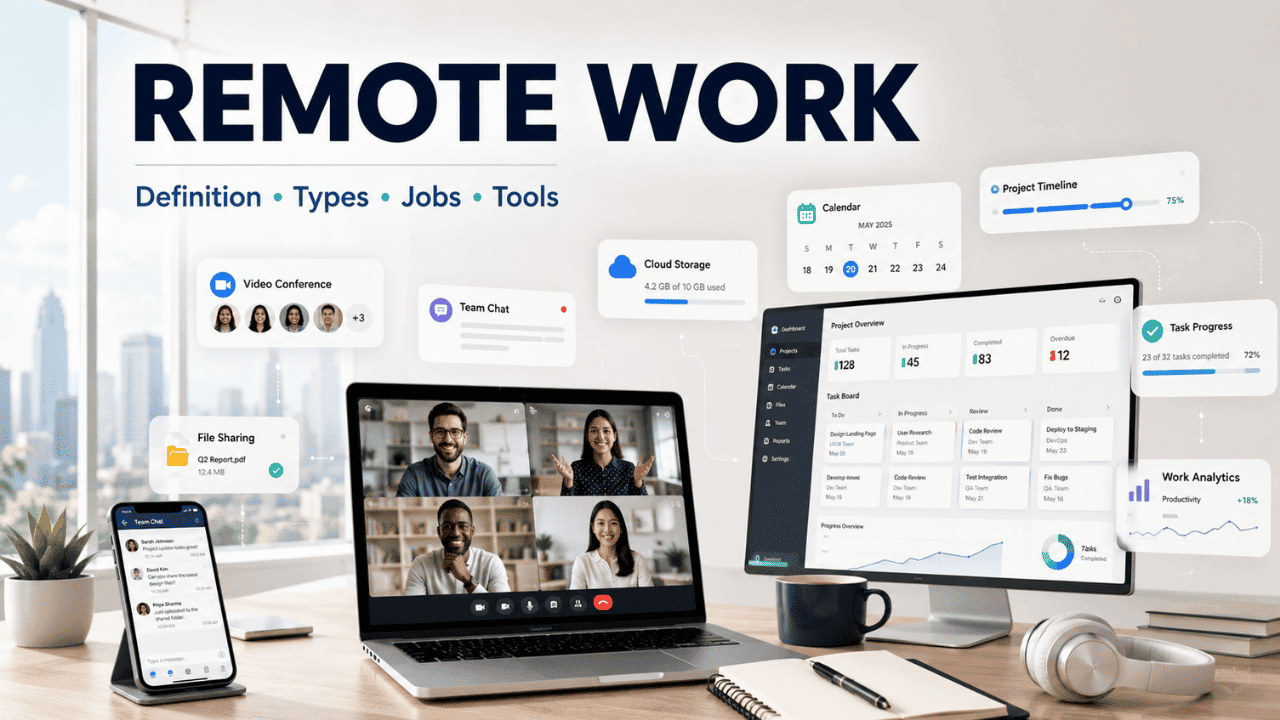
Remote Work: What It Means and How It Works
Remote work is a work model where employees perform their job duties outside a traditional office using digital tools, internet connectivity, and cloud-based systems. It allows professionals to collaborate, communicate, and complete tasks from home, co-working spaces, or any location without needing physical presence in an office.
Over the last decade, and especially after global digital transformation, remote work has shifted from being a rare workplace perk to a mainstream employment model. Organizations now use it to access global talent, reduce operational costs, and improve workforce flexibility. Employees, on the other hand, benefit from freedom, flexibility, improved work-life balance, and the ability to adopt a work from home lifestyle.
Today, remote work is no longer just an alternative to office work, it has become a core part of modern business operations. This guide explains what remote work really means, how it works in real-world scenarios, its types, benefits, challenges, tools, job opportunities, and future trends in detail.
What Is Remote Work?
Remote work refers to a working arrangement where employees or professionals complete their tasks outside a centralized office environment. Instead of commuting daily to a physical workspace, individuals rely on digital communication platforms, cloud systems, and productivity tools to stay connected with teams and deliver results.
In simple terms, remote work allows employees to break away from traditional office boundaries and work efficiently from anywhere in the world.
Unlike traditional office work, remote work focuses more on output rather than physical presence. Productivity is measured by completed tasks, project milestones, and deliverables instead of hours spent at a desk.
Remote work is commonly used across industries such as:
- Information technology
- Digital marketing
- Education and e-learning
- Customer service
- Finance and accounting
- Creative industries
This flexibility allows companies to hire talent globally while enabling professionals to work from anywhere.
How Remote Work Works in Real Life
Remote work operates through a combination of digital tools, structured communication, and clearly defined workflows. A typical remote work system includes:
1. Communication Systems
Teams use messaging platforms and video conferencing tools to communicate daily. These tools replace traditional face-to-face office interactions.
2. Task Management Systems
Work is assigned and tracked using project management tools where deadlines, responsibilities, and progress are visible to everyone.
3. Cloud-Based Work Environment
Files, documents, and applications are stored in the cloud so employees can access them from anywhere securely.
4. Performance Tracking
Managers evaluate employees based on productivity, output quality, and deadlines rather than physical presence.
5. Digital Collaboration
Teams collaborate in real time using shared documents, virtual whiteboards, and integrated software tools.
This system ensures smooth workflow even when team members are distributed across different cities or countries.
Many modern teams operate in a “we work remotely” culture where communication, accountability, and productivity are managed entirely through digital systems.
Evolution of Remote Work
Remote work is not a new concept. It existed in limited forms before modern technology, but it became widely adopted due to advancements in internet connectivity, cloud computing, and communication tools.
Earlier, most companies required employees to work on-site due to limited digital infrastructure. However, the rise of cloud platforms, SaaS tools, and high-speed internet changed everything.
Key phases of evolution include:
- Early telecommuting (limited and occasional remote days)
- Freelancing and gig economy growth
- Cloud-based collaboration era
- Fully distributed global teams
Today, many companies operate without a central office, relying entirely on remote teams.
Types of Remote Work
Remote work is not a single model. It exists in multiple forms depending on company structure and job roles.
1. Full-Time Remote Work
Employees work entirely from a remote location without visiting the office. This is common in tech companies and startups.
2. Hybrid Remote Work
Employees split time between office and remote locations. For example, 2–3 days at home and the rest in the office.
3. Part-Time Remote Work
Employees work remotely for specific hours or days while still having some office presence.
4. Freelance Remote Work
Independent professionals work on project-based contracts for multiple clients without long-term employment commitments.
5. Distributed Teams
Entire companies operate without a physical headquarters, with employees spread across different regions and time zones.
Each model suits different industries, job roles, and personal preferences.
Advantages of Remote Work
Remote work provides benefits for both employees and employers.
For Employees:
- Flexible working hours
- No commuting time
- Better work-life balance
- Cost savings on travel and meals
- Opportunity to work from anywhere
For Employers:
- Access to global talent
- Reduced office infrastructure costs
- Higher employee retention
- Increased productivity in many cases
- Business continuity during disruptions
Additional Benefits:
Remote work also contributes to environmental sustainability by reducing daily commuting and lowering carbon emissions.
Challenges of Remote Work
Despite its benefits, remote work also comes with challenges that need proper management.
1. Communication Barriers
Lack of face-to-face interaction can sometimes lead to misunderstandings.
2. Isolation
Employees may feel disconnected from team culture.
3. Work-Life Balance Issues
Without clear boundaries, employees may overwork or struggle to disconnect.
4. Productivity Monitoring
Managers may find it difficult to track performance without direct supervision.
5. Onboarding Difficulties
New employees may take longer to adapt in a fully remote setup.
Solutions
- Regular virtual meetings
- Strong documentation practices
- Clear working hours
- Employee engagement activities
- Structured onboarding systems
With proper planning, these challenges can be minimized effectively.
Tools Required for Remote Work
Remote work depends heavily on digital tools.
Communication Tools:
Used for messaging, calls, and team coordination.
Video Conferencing Tools:
Used for meetings, presentations, and discussions.
Project Management Tools:
Used to assign tasks and track progress.
Cloud Storage Tools:
Used for storing and sharing files securely.
Productivity Tools:
Used for time tracking, notes, and workflow management.
Security Tools:
- VPN
- Two-factor authentication
- Password managers
These tools ensure efficiency and data security in remote environments.
Best Practices for Remote Work
Successful remote workers follow structured habits such as:
- Maintaining fixed working hours
- Communicating clearly and regularly
- Using written documentation
- Avoiding unnecessary meetings
- Taking regular breaks
- Keeping a dedicated workspace
- Staying organized with task tracking tools
These practices help maintain productivity and consistency.
Best Remote Work Jobs
Many jobs are suitable for remote work, especially digital roles.
These remote jobs allow professionals to build careers without geographical limitations and are in high demand across global companies.
Popular Remote Jobs:
- Software development
- UI/UX design
- Content writing
- Digital marketing
- SEO specialists
- Customer support
- Virtual assistants
- Accounting and finance roles
- Online teaching and tutoring
These roles require minimal physical presence and can be managed entirely online.
How to Find Remote Jobs
Remote jobs can be found through:
- Job portals
- Company career pages
- Freelancing platforms
- Networking communities
- LinkedIn and professional networks
Candidates should always verify company legitimacy and avoid job scams that require upfront payments.
Remote Work vs Office Work
Remote work differs significantly from traditional office setups.
| Factor | Remote Work | Office Work |
| Location | Anywhere | Fixed office |
| Flexibility | High | Low |
| Communication | Digital tools | In-person |
| Cost | Lower | Higher |
| Supervision | Limited | Direct |
Both models have advantages depending on job type and company needs.
Future of Remote Work
Remote work is expected to continue growing due to:
- Digital transformation
- Cloud computing adoption
- Global hiring trends
- AI-powered collaboration tools
- Hybrid workplace models
Many companies are shifting toward flexible work environments rather than fully office-based systems.
These remote work trends show that hybrid models, AI-powered collaboration tools, and global distributed teams will continue shaping the future of employment.
Conclusion
Remote work has moved from a temporary workaround to a standard way of operating for millions of professionals and thousands of companies worldwide. It offers real benefits, flexibility, wider talent access, and cost savings, but it also demands intentional habits, the right tools, and clear communication to work well.
Whether you're an employee setting up your first home office or an employer building a distributed team, the fundamentals stay the same: reliable tools, clear processes, and consistent communication. Get those right, and remote work can be just as productive, often more so, than a traditional office setup.
FAQs
Q1. What is remote work in simple terms?
Remote work means completing your job duties from a location outside a traditional office, such as your home or a co-working space, instead of commuting daily. It relies on internet-based tools like video calls, chat apps, and cloud storage to stay connected with colleagues and complete tasks, regardless of physical distance from the company's main location.
Q2. Is remote work the same as work from home?
Not exactly. Work from home is a specific type of remote work limited to working from your residence. Remote work is the broader term and also includes working from co-working spaces, cafes, or while traveling. All work-from-home arrangements are remote work, but not all remote work happens at home specifically.
Q3. What jobs are best suited for remote work?
Computer-based roles that don't require physical presence work best remotely. This includes software development, content writing, graphic design, digital marketing, customer support, virtual assistance, and accounting. Roles requiring hands-on interaction, like healthcare or manufacturing, are generally unsuitable. The determining factor is whether the core tasks can be completed independently using a computer and internet.
Q4. What tools do I need to work remotely?
At minimum, you need a reliable laptop, stable internet connection, and a messaging or collaboration app for team communication. Video conferencing software, cloud storage for file sharing, and a project management tool round out a solid setup. Security tools like a VPN and two-factor authentication are also recommended when accessing company systems remotely.
Q5. Is remote work more productive than office work?
Productivity varies by individual and role rather than location alone. Many remote workers report deeper focus due to fewer office interruptions, while others need in-person structure to stay on task. What matters most is whether a company has clear processes, defined expectations, and the right communication tools in place to support remote output effectively.