Connect with us
Maximizing Ecommerce Impact: 6 Ways to Strengthen Your Brand Presence
Building a successful ecommerce business requires more than offering quality products. As online competition continues to grow, businesses must build a recognizable brand that earns customer trust, encourages repeat purchases, and delivers consistent experiences at every touchpoint. Strong branding, combined with effective team communication, helps businesses coordinate marketing, sales, and customer support to create a seamless customer journey and support long-term growth.
In this guide, you'll learn six practical strategies to strengthen your ecommerce brand presence, improve customer confidence, increase conversions, and build lasting customer relationships through proven ecommerce branding practices.
Why Brand Presence Matters in Ecommerce
A strong brand presence helps customers recognize, trust, and remember your business in a competitive marketplace. Beyond attracting first-time buyers, it encourages repeat purchases, increases customer loyalty, improves word-of-mouth referrals, and supports long-term business growth.
An effective ecommerce brand is built through consistent messaging, transparent communication, high-quality customer experiences, and trustworthy interactions across every touchpoint—from product pages and social media to customer support and post-purchase engagement.
What Builds a Strong Ecommerce Brand?
Customers rarely make purchasing decisions based on price alone. Several factors influence how they perceive and trust an online brand.
Some of the most important elements include:
- Customer reviews and ratings
- Product quality
- Website usability
- Brand consistency
- Product videos
- Transparent pricing
- Secure checkout
- Fast customer support
- User-generated content
- Return policies
- Trust badges
- Social media presence
1. Build Credibility with Social Proof
Trust is everything in ecommerce. Customers might love your products, but if they don’t trust your brand, they won’t buy. That’s where social proof comes in.
People trust word-of-mouth recommendations 25% more than traditional ads, which means showcasing real customer experiences can make all the difference. The right social proof builds credibility and reduces hesitation.
Here’s how to do it right:
- Highlight reviews and ratings: Display star ratings and review counts directly on product pages and collection pages so that shoppers see them at a glance. The more transparent you are, the more confident customers feel.
- Use real customer testimonials: Feature authentic, unfiltered reviews. Include details like before-and-after results, specific product benefits, or personal experiences to make them more relatable.
- Leverage user-generated content (UGC): Photos and videos of real customers using your products create trust faster than any ad. Encourage buyers to share their experiences on social media and showcase their content on your site.
- Showcase trust signals: Badges like “Verified Purchase” and “Best Seller” help reinforce legitimacy. Adding media mentions or influencer endorsements can also strengthen credibility. We’ll discuss this in more detail in section #4.
A great example of this tactic is Transparent Labs, a premium sports nutrition brand in the natural supplements industry.
On their Best Pre-Workout Supplements Collections page, they prominently display star ratings and review counts below each product. This simple yet effective strategy reassures shoppers that others trust their products, making them more likely to purchase.
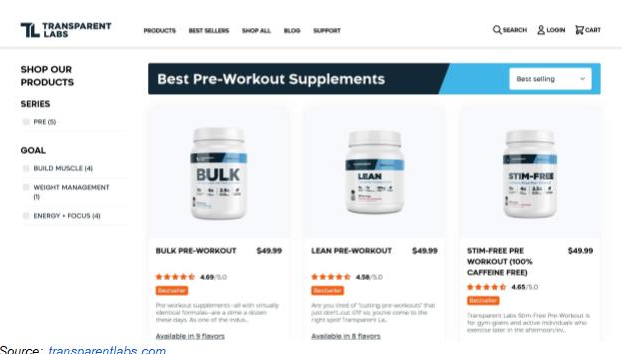
When done right, social proof turns skepticism into confidence, and confidence drives conversions.
2. Boost Brand Awareness with High-Quality Product Videos
Consumers are bombarded with content daily, and static images alone aren’t enough to grab attention.
That’s why video marketing is a game-changer. So much so that 90% of video marketers say video has helped them increase brand awareness.
A well-crafted product video showcases your products in the best light while building a connection, answering questions, and making your brand more memorable.
Here’s how to do it right:
- Showcase products in action. A good video highlights how a product looks, feels, and functions in real life. Show close-ups of key features, demonstrate use cases, and help customers visualize owning it.
- Keep it high-quality yet concise. Your videos should be visually appealing and professionally shot, but they don’t need to be lengthy. A 30- to 60-second clip is often enough to capture attention and drive interest.
In case some of your footage appears blurry or low resolution, invideo Agent enables you to upscale videos using AI, making them look sharper and more polished. - Don’t just sell – tell a story. Instead of listing product specs, focus on the benefits and emotions tied to using your product. A compelling narrative sticks with people longer than raw data.
- Optimize for multiple platforms. Feature your videos on product and collection pages, but don’t stop there. Repurpose them for social media, ads, and email marketing to maximize reach.
A brand that nails this strategy is Golf Cart Tire Supply, a leading supplier of golf cart tires and accessories.
On their Golf Cart Wheels and Tires collections page, they feature a high-quality video that provides an up-close look at their products. Professionally filmed, it adds a personal touch while emphasizing key features, making it easier for buyers to trust their purchase.
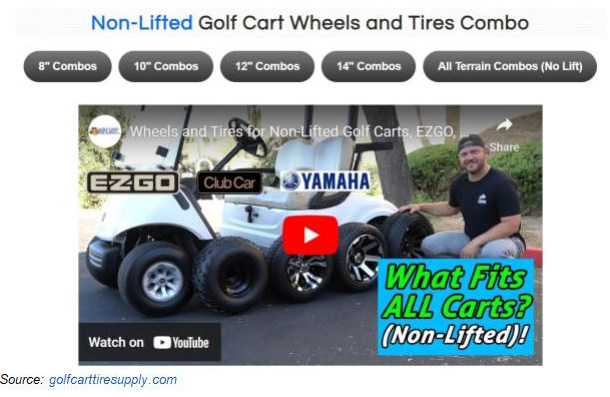
Your videos should be visually appealing and professionally shot, but they don’t need to be lengthy. A 30- to 60-second clip is often enough to capture attention and drive interest. In case some of your footage appears blurry or low resolution, invideo Agent enables you to upscale videos using AI, making them look sharper and more polish
3. Remove the Most Common Conversion Barriers
Even if shoppers love your products, hesitation can stop them from completing a purchase. Uncertainty about pricing, shipping costs, or product quality can lead to abandoned carts.
Smart brands proactively eliminate these doubts, making the purchase decision as smooth as possible.
Here’s how to do it right:
- Be upfront about costs. Unexpected fees at checkout are one of the biggest reasons shoppers bounce. Display shipping costs early, and if possible, offer free shipping. These are some of the most effective conversion boosters.
- Make returns and refund policies clear. Customers want to know they won’t be stuck with a product they don’t love. A hassle-free return policy reduces risk and increases buyer confidence. Keep the process simple and easy to find.
- Offer flexible payment options. High-ticket items can lead to sticker shock. Providing financing options or buy now, pay later (BNPL) solutions can make purchases feel more manageable.
- Highlight quality and trust factors. Reinforce product value with trust signals, such as certifications, materials used, sustainability efforts, or customer guarantees. These details help justify the price and build confidence.
WholeWoodPlayhouses, a brand specializing in ready-to-assemble outdoor kid's playhouses, shows how to execute this strategy effectively.
On their homepage, they proactively address common concerns by showcasing free shipping, eco-friendly materials, high-quality craftsmanship, and flexible financing options. This transparency reassures buyers, making it easier for them to commit to a purchase.
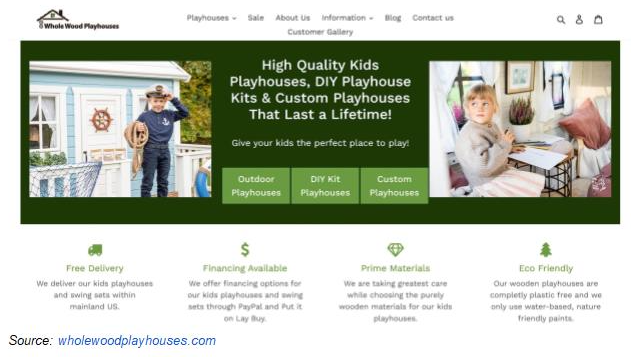
When you remove friction points, you remove excuses not to buy, turning hesitation into conversion.
4. Boost Buyer Confidence with Trust Badges
Online shoppers are naturally skeptical. They can’t see or touch your products, so they need extra reassurance before making a purchase.
Trust badges instantly signal credibility, helping customers feel safe and confident about buying from you. When used correctly, they reduce hesitation and increase conversions.
Here’s how to do it right:
- Highlight secure payment options. Badges from trusted payment providers (like PayPal, Visa, or Mastercard) reinforce that transactions are safe. Display them near the checkout to ease last-minute doubts.
- Showcase guarantees and certifications. If you offer warranties, money-back guarantees, or industry certifications, make them visible. These badges reassure customers they’re making a risk-free purchase
- Feature shipping and return policies. Shipping costs and return concerns often stop buyers from completing a purchase. Displaying badges like “Free Shipping” or “Hassle-Free Returns” eliminates uncertainty.
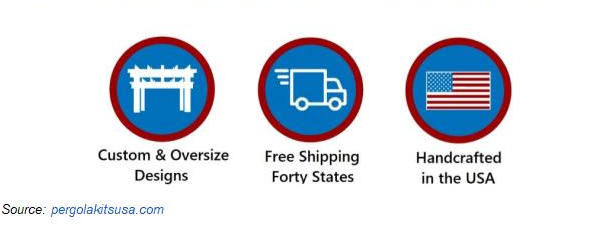
- Use custom trust badges to address key concerns. Generic badges are useful, but customized trust signals that highlight your unique selling points are even better. Whether it’s “Made in the USA” or “Sustainably Sourced Materials,” these details can be the final push a customer needs.
A brand that executes this well is Pergola Kits USA, a specialist in pergola and pavilion kits.
On their Patio Covers Kits collections page, they use trust badges like “Custom and Oversize Designs,” “Handcrafted in the USA,” and “Free Shipping.” These reassure buyers about quality, customization, and affordability, helping turn hesitant visitors into paying customers.
When buyers feel secure, they buy with confidence. Trust badges make that decision easier.
5. Bring Your Product to Life with Real-World Use
A product sitting on a white background doesn’t inspire much excitement. Shoppers want to see how it fits into their lives. They want to know how it looks, feels, and performs in real-world scenarios.
Showing your product in action helps bridge the gap between browsing and buying, making it easier for customers to picture themselves using it.
Here’s how to do it right:
- Use lifestyle imagery and videos.An AI image generator can help you create diverse lifestyle scenes without a full photoshoot. Go beyond static product photos. Show your product being used in real situations by real people. This makes it feel more tangible and relatable.
- Highlight key benefits in action. Instead of just listing features, demonstrate how your product solves a problem or enhances a customer’s life. Visual storytelling is far more persuasive than text alone.
- Incorporate different settings and users. Showcase diverse use cases to appeal to a broader audience. Whether it’s different lighting, environments, or people, variety helps more customers connect with your product.
- Pair visuals with customer testimonials. A real user demonstrating your product alongside a positive review reinforces credibility and trust.
Barefaced, a skincare brand offering science-backed beauty solutions, executes this tactic brilliantly.
On their Liquid Gold serum product page, they feature a video of real people using the serum in various settings. The video highlights the product’s texture and application while reinforcing its effectiveness, making it feel like a must-have in any skincare routine.
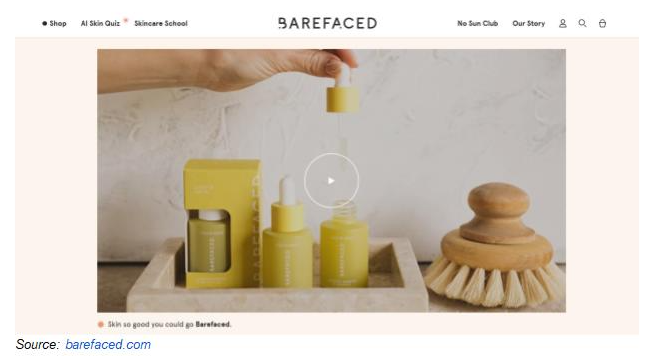
When customers see a product in action, they stop guessing and start buying. Real-world visuals provide the confidence they need to make a purchase.
6. Amplify Trust with User-Generated Content
People trust real customers more than brands. As a matter of fact, 43% of consumers want to see content from individuals who actually use the brand they’re considering.
That’s why user-generated content (UGC) is so powerful. It provides authentic, unbiased proof that your products deliver.
Here’s how to do it right:
- Encourage customers to share their experiences. Ask buyers to post photos or videos using your product. You can incentivize participation with discounts, giveaways, or simple shoutouts on social media.
- Feature UGC on key pages. Display real customer photos and testimonials on product pages, landing pages, and even in ads. This builds instant credibility.
- Make reviews visual. A wall of text won’t grab attention, but images and videos alongside reviews make them more engaging and persuasive.
- Leverage social proof everywhere. Share UGC on Instagram, TikTok, Facebook, YouTube, and even email campaigns. Seeing everyday people use your product creates a deeper connection than polished brand content.
A brand that nails this strategy is BURST, a leading name in oral care products. On their Original Sonic Toothbrush product page, they showcase customer reviews that include real user images.
These personal snapshots and testimonials make the product feel more trustworthy and relatable, emphasizing the brand’s reputation through social proof.
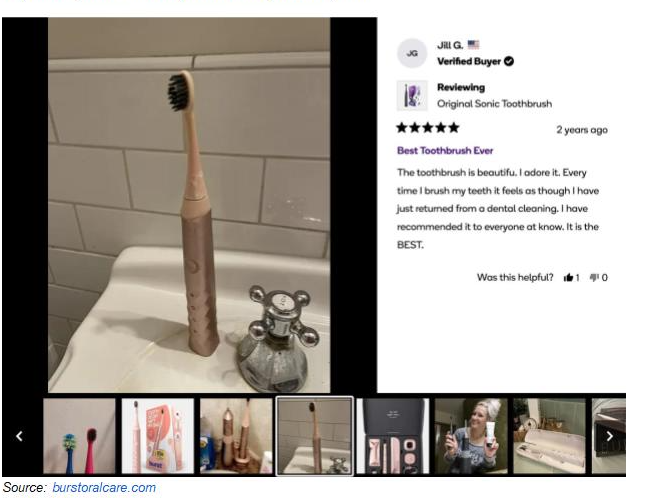
When real customers become your marketers, trust skyrockets. UGC turns happy buyers into your most effective brand ambassadors.
Additional Ways to Strengthen Your Ecommerce Brand
While the strategies above are highly effective, businesses can further strengthen their online presence by:
- Maintaining consistent branding across all channels
- Offering responsive customer support
- Publishing educational content
- Optimizing website speed
- Personalizing customer experiences
- Building an email marketing strategy
- Being active on social media
- Encouraging customer referrals
- Monitoring online reputation
- Improving mobile shopping experience
Conclusion
Building a strong ecommerce brand requires more than promoting products—it requires consistently creating positive customer experiences that inspire trust and loyalty. From showcasing authentic customer reviews and product videos to reducing purchase barriers, displaying trust signals, and encouraging user-generated content, every interaction contributes to how customers perceive your business.
As ecommerce competition continues to grow, brands that focus on transparency, customer experience, and long-term relationship building are better positioned to improve conversions and encourage repeat purchases. By implementing these strategies and continuously optimizing your online store, you can create a stronger brand presence that supports sustainable business growth and lasting customer loyalty.
FAQs
1. Why is brand presence important for ecommerce businesses?
A strong ecommerce brand presence helps businesses build trust, improve recognition, and differentiate themselves from competitors. Customers are more likely to purchase from brands they recognize and perceive as reliable. Consistent branding across websites, social media, product pages, and customer communications also encourages repeat purchases, strengthens customer loyalty, and supports long-term business growth by creating memorable shopping experiences.
2. How can ecommerce brands build customer trust?
Businesses can build trust by displaying authentic customer reviews, offering transparent pricing, using secure payment methods, showcasing trust badges, publishing high-quality product information, and maintaining responsive customer support. Providing clear return policies, accurate product descriptions, and real customer experiences further reassures shoppers and reduces purchase hesitation, leading to higher conversion rates and stronger long-term customer relationships.
3. What role does user-generated content play in ecommerce?
User-generated content provides authentic proof that customers have successfully purchased and used a product. Photos, videos, reviews, testimonials, and social media posts from real customers help build credibility because shoppers often trust fellow consumers more than traditional advertising. Featuring user-generated content across product pages, websites, and social media can improve customer confidence, increase engagement, and positively influence buying decisions.
4. How do product videos improve ecommerce sales?
Product videos help customers better understand product features, functionality, quality, and real-life usage before making a purchase. They answer common questions, demonstrate value, reduce uncertainty, and create a more engaging shopping experience. Short, informative videos placed on product pages and shared across marketing channels can improve customer confidence, increase conversions, reduce product returns, and strengthen overall brand perception.
5. What are trust badges, and why are they important?
Trust badges are visual indicators that reassure customers about website security, payment protection, product quality, guarantees, or shipping policies. Examples include secure checkout badges, SSL certificates, verified reviews, money-back guarantees, and free shipping icons. Displaying these trust signals throughout the shopping journey helps reduce purchase anxiety, improve credibility, and encourage customers to complete their transactions with greater confidence.