Connect with us
Managed IT Services: A Guide to Streamlining Business Operations
Managed IT services are outsourced technology services in which a specialized provider remotely monitors, maintains, secures, and supports a business’s IT environment. Instead of handling every technical issue internally, businesses can rely on managed services for ongoing IT support, system maintenance, security monitoring, and technology management. This approach can help organizations improve operational efficiency, reduce avoidable downtime, and make IT resources more predictable. In this guide, we’ll explore the key features, benefits, operational advantages, and important factors to consider when choosing a managed IT service provider.
Key Features of Managed IT Services
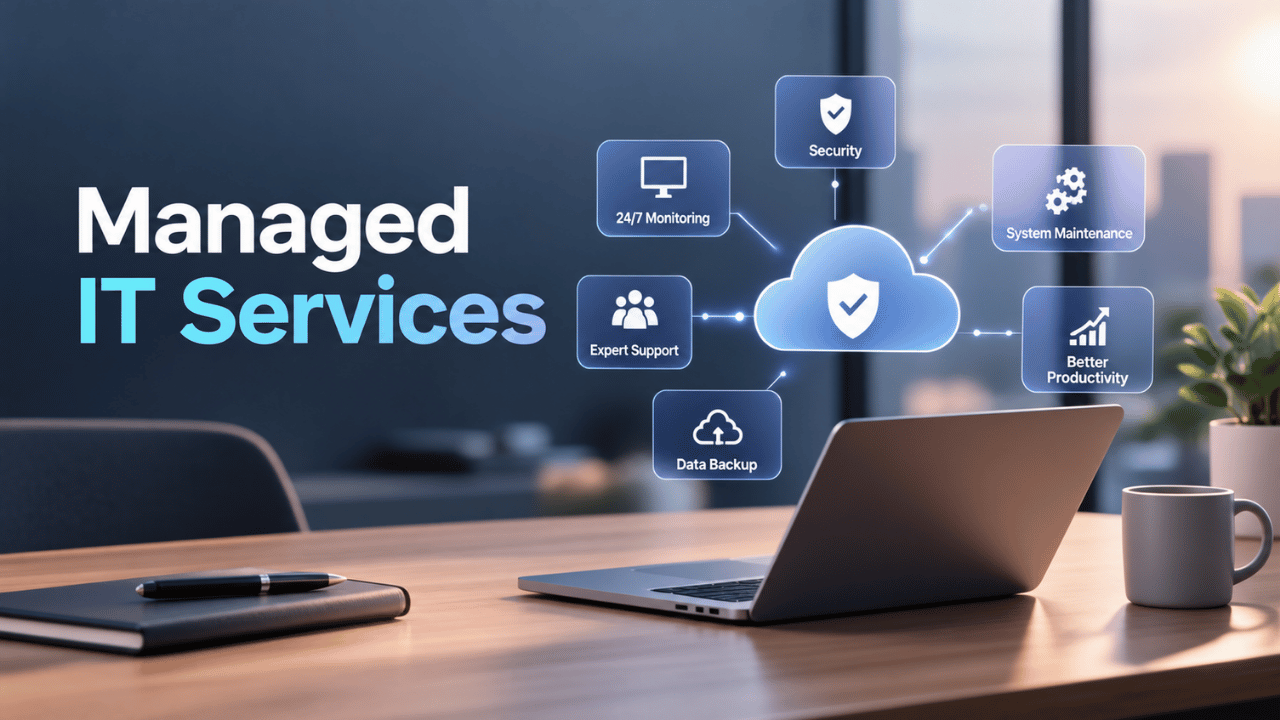
Managed IT services cover the ongoing management and support of an organization’s technology environment. Depending on the provider and service agreement, this can include system monitoring, maintenance, technical support, security management, backups, network management, and software updates. These services help businesses maintain reliable IT operations while allowing internal teams to focus on their core responsibilities.
System Monitoring and Maintenance
System monitoring ensures your IT environment operates efficiently. It observes system health, identifies potential risks, and prevents failures before they interrupt business operations. For example, automated tools can detect server overloads or unusual network activity in real time. Early identification helps avoid downtime.
Routine maintenance helps keep systems updated, supported, and secure. IT teams can apply software updates, review system performance, address known vulnerabilities, manage configurations, and identify outdated components. Regular maintenance also helps organizations identify potential issues before they become larger operational problems. A consistent monitoring and maintenance process can therefore support system reliability while reducing avoidable interruptions.
Proactive IT Support
Tech hiccups can stall any operation. Prompt IT support addresses problems before they escalate. By monitoring systems continuously, technicians identify issues early and resolve them quickly. This reduces downtime and keeps workflows efficient.
Effective IT support combines responsive troubleshooting with proactive monitoring. Support teams can investigate technical issues, assist employees, maintain systems, and address recurring problems. This approach helps reduce the amount of time employees spend dealing with technical interruptions and gives businesses a structured process for resolving IT issues.
Automation and Efficiency Tools
Automation tools can handle repetitive activities such as software updates, backups, routine data processing, and workflow notifications. By reducing manual steps, automation can save employee time and reduce the likelihood of repetitive errors. Managed IT providers may also use automation for monitoring, maintenance, and routine support tasks, allowing technical teams to focus on more complex issues.
Benefits of Managed IT Services
Managed IT services can keep your business operating smoothly. They also help protect you from common tech issues.
Cost Savings
Managed IT services can make IT spending more predictable by replacing some unexpected support and maintenance costs with a planned service arrangement. Businesses may also avoid the expense of maintaining a large internal IT team for every specialized requirement. However, the actual cost benefit depends on factors such as business size, service scope, infrastructure, internal staffing, and provider pricing. The focus should therefore be on overall value rather than cost alone.
Improved Security and Risk Management
Managed IT services can support security through ongoing monitoring,which is why IT for early-stage teams often starts with managed IT services that provide continuous system monitoring.
software updates, access management, vulnerability management, and other security controls. Providers may also help businesses configure firewalls, endpoint protection, encryption, backups, and security policies according to their needs.
Regular monitoring and risk assessments can help identify weaknesses that require attention. Managed services do not eliminate cybersecurity risks, but they can provide additional expertise and structured processes for maintaining security controls and responding to potential incidents.
Reduced Downtime
Technical problems can bring work to a standstill. Managed IT services provide continuous system monitoring, ensuring issues are identified early. Prompt solutions lead to fewer delays and more efficient business operations. Automated processes help lower manual mistakes. Planned maintenance avoids unforeseen breakdowns while keeping systems running efficiently. This can reduce avoidable interruptions and help employees maintain more consistent access to the systems and applications they need.
Role of Managed IT Services in Streamlining Operations
Managed IT services simplify daily tasks, helping your team work smarter and stay focused.
Technology Integration for Business Objectives
Integrating technology connects different business operations more effectively. For example, software customized for customer management helps sales teams track leads while aligning with company goals. IT solutions such as automation tools streamline repetitive tasks, freeing up employee time for important initiatives.
System monitoring improves efficiency by identifying potential issues before they interrupt workflows. Proper integration ensures all systems function cohesively, supporting long-term objectives and minimizing downtime risks. These developments directly influence productivity and operational success without added difficulty.
Enhanced Productivity and Collaboration
Efficient IT solutions minimize time spent on repetitive tasks. Automation tools manage routine processes, allowing employees to concentrate on important projects. Easy access to shared files and applications keeps teams aligned. Reliable communication systems enhance collaboration across departments. Cloud services enable convenient sharing of updates, even in remote settings. System monitoring ensures efficient workflows with minimal interruptions or downtime.
How to Choose the Right Managed IT Service Provider
Choosing the right managed IT service provider requires evaluating technical expertise, service coverage, scalability, security practices, responsiveness, and overall value. The provider should align with your organization’s current infrastructure while being capable of supporting future technology requirements.
Evaluate Expertise and Service Offerings
Check certifications and industry expertise to gauge their knowledge. Providers with experience in your field can better align IT solutions with your business objectives. Verify if their team holds relevant qualifications in system management, network security, or cloud services.
Assess the range of services offered before committing. Look for monitoring, IT support, automation tools, and downtime reduction strategies. A provider offering diverse services may handle unexpected challenges more effectively than a narrowly focused one. Focus on value instead of only cost savings to ensure quality service delivery.
Consider Scalability and Customization Options
Choose IT solutions that grow with your business. As operations expand, the ability to increase services helps meet rising demands without delays or interruptions. Managed services should adjust smoothly to align with changing goals or workloads.
Customization ensures that technology supports specific business objectives rather than forcing a one-size-fits-all approach. Providers offering personalized options can modify system management and automation tools for unique needs. Assess providers who prioritize flexibility when planning for future growth and challenges. Careful selection sets businesses up for enhanced productivity and collaboration.
Security, Compliance, and Service-Level Agreements
Security should be an important part of evaluating a managed IT service provider. Businesses should understand how providers protect access to systems, manage sensitive information, handle backups, and respond to security incidents. Depending on the industry, organizations may also need to consider specific compliance requirements.
Service-level agreements should clearly define responsibilities, response times, availability, escalation procedures, and included services. Reviewing these details before signing an agreement helps businesses understand what support they can expect and how technical issues will be handled.
Conclusion
Managed IT services provide ongoing support for the technology that businesses rely on every day. From system monitoring and maintenance to technical support, security, automation, and technology integration, these services can help organizations improve IT reliability and reduce avoidable disruptions. The right provider should offer services that match the business’s infrastructure, security requirements, budget, and growth plans. By evaluating expertise, scalability, service coverage, and service-level agreements carefully, businesses can choose managed IT support that delivers practical long-term value.
Frequently Asked Questions
1. What are managed IT services?
Managed IT services are outsourced technology services provided on an ongoing basis to help businesses manage their IT environments. Depending on the service agreement, providers may handle system monitoring, maintenance, technical support, security, backups, network management, and software updates. These services allow businesses to access specialized IT expertise while reducing the need to manage every technology requirement internally.
2. How do managed IT services help businesses?
Managed IT services can help businesses maintain reliable technology, address technical problems, monitor systems, and manage routine IT tasks. Proactive monitoring can identify potential issues before they cause significant disruption, while ongoing support helps employees resolve technical problems more efficiently. Managed services can also provide access to specialized expertise and structured IT processes that may be difficult to maintain entirely in-house.
3. Can managed IT services reduce business costs?
Managed IT services can make IT spending more predictable by providing ongoing support under a defined service arrangement. Businesses may also reduce the need to hire internal specialists for every technical requirement. However, savings vary based on company size, infrastructure, service scope, staffing, and provider pricing. Organizations should evaluate total value, service quality, scalability, and potential downtime costs rather than focusing only on the monthly service fee.
4. How do managed IT services improve cybersecurity?
Managed IT services can support cybersecurity through system monitoring, software updates, access management, vulnerability management, backups, and security controls. Providers may also assist with firewalls, endpoint protection, encryption, and security policies. While managed services cannot eliminate cyber risks, they can provide additional expertise and structured processes for maintaining security measures, identifying potential weaknesses, and responding to security incidents.
5. What should businesses look for in a managed IT service provider?
Businesses should evaluate a provider’s technical expertise, service offerings, security practices, response times, scalability, and pricing structure. It is also important to review service-level agreements, support availability, escalation procedures, and responsibilities. Providers with experience in the organization’s technology environment or industry may be better positioned to understand specific requirements. Businesses should choose based on overall value and long-term fit rather than price alone.
6. Are managed IT services suitable for small businesses?
Managed IT services can be suitable for small businesses that need ongoing technology support but do not require a large internal IT department. Providers can offer access to technical expertise, monitoring, maintenance, security support, and troubleshooting based on the organization’s needs. The appropriate service model depends on factors such as business size, technology requirements, budget, security expectations, and the complexity of the IT environment.