Connect with us
The State of Law Enforcement Technology in 2026: Trends Reshaping Policing
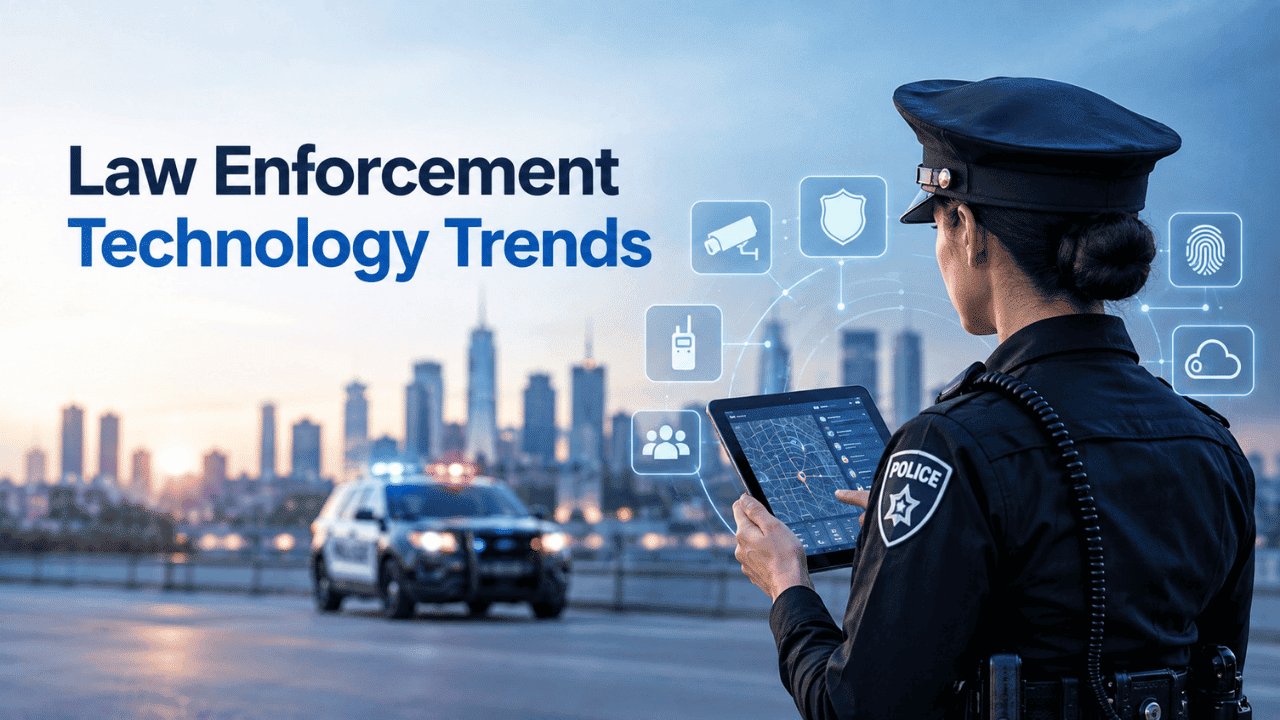
Law enforcement technology trends refer to the shifting mix of tools, platforms, and capabilities that police departments are adopting to keep pace with rising call volumes, tighter budgets, staffing challenges, and growing public expectations around transparency. From artificial intelligence and real-time crime centers to body-worn cameras, cloud-based systems, and law enforcement communication tools, technology is increasingly influencing how agencies collect information, coordinate operations, and respond in the field.
Understanding where these trends are heading matters for any agency trying to make technology investments that remain useful as operational needs evolve. The challenge isn't simply adopting the newest technology; it's choosing solutions that can integrate with existing systems, support officers and staff in their daily work, protect sensitive information, and meet regulatory and public accountability requirements.
This article explores the key forces driving the evolution of law enforcement technology in 2026, the technologies reshaping day-to-day policing, and the practical considerations agencies should weigh when planning their next technology investments.
Why Law Enforcement Technology Is Evolving So Quickly
Policing technology rarely changes for its own sake it tends to move in response to pressure. Right now, that pressure is coming from multiple directions at once: shrinking budgets, staffing shortages, and communities asking for more visibility into how their local agencies operate.
Rising Public Safety Demands and Budget Pressures
Departments are increasingly expected to do more with fewer resources, which pushes agencies toward technology that can extend the reach of existing staff rather than requiring additional headcount. At the same time, elected officials and community groups are asking for measurable outcomes, faster response times, clearer accountability which puts direct pressure on agencies to modernize tools that were, in many cases, never designed for today's call volumes.
Major Technology Trends Reshaping Policing
AI and Predictive Analytics in Policing
AI in law enforcement has moved well past pilot-project status into practical daily use flagging anomalies in reporting data, assisting with case triage, and surfacing patterns across large datasets that would take an analyst far longer to spot manually. The technology isn't replacing officer judgment; it's narrowing down where that judgment needs to be applied first, which is proving especially valuable for departments stretched thin on staffing.
Real-Time Crime Centers and Live Data Integration
Real-time crime center technology continues to expand beyond the largest metro departments into mid-size agencies, often through regional partnerships that let smaller departments share the cost of a centralized hub. The core idea pulling camera feeds, dispatch data, and analytics into one place so responding officers arrive with more context is becoming less of a specialized capability and more of an expected baseline for agencies serious about response efficiency.
Body-Worn Cameras and Video Analytics
Body-worn cameras themselves are no longer the novel part of this trend; what's changed is what agencies are doing with the footage afterward. Automated redaction, searchable video archives, and analytics that can flag specific events within hours of footage are turning what used to be a passive accountability tool into an active operational resource.
Secure Communication and Mobile-First Tools
As more of an officer's workday happens outside a squad car or precinct desk, departments are shifting toward mobile-first platforms for both records access and internal communication. This has also pushed agencies to reconsider general-purpose consumer apps in favor of purpose-built, access-controlled tools platforms like Troop Messenger have gained traction in this space simply because they were designed from the outset for exactly this kind of field-based, security-conscious communication, rather than retrofitted for it.
Cloud and On-Premise Records Management Shifts
Records management is going through its own quiet transformation, with more departments weighing cloud-hosted systems against traditional on-premise infrastructure. The decision increasingly comes down to which model better supports remote access for field units without compromising the data control that compliance frameworks demand.
How These Trends Are Changing Daily Policing
Faster Response and Decision-Making
When dispatchers and officers have access to richer, real-time information before and during a call, decisions that used to require radio back-and-forth can often happen in seconds. This shift is showing up most clearly in departments that have paired live data tools with mobile access for field units.
Improved Inter-Agency Collaboration
Shared platforms and regional data-sharing agreements are making it easier for neighboring departments to coordinate on cross-jurisdictional cases, something that used to require manual phone calls and separate records requests. This collaborative shift is quietly becoming one of the more practical benefits of modern policing technology, even though it gets less attention than flashier tools like AI or predictive analytics.
Greater Transparency and Accountability
Technology adoption is also reshaping how departments engage with the public, from published use-of-force data to searchable video request portals. Agencies that build transparency directly into their technology stack rather than treating it as a separate reporting exercise tend to face less friction when incidents draw public scrutiny.
Challenges Agencies Face While Adopting New Technology
Data Privacy and Public Trust
Every new data source cameras, sensors, and analytics platforms adds another point where privacy concerns can surface, and agencies that roll out new tools without clear public communication often face pushback that could have been avoided with earlier transparency.
Legacy System Integration
Many departments are still running core systems that are a decade or more old, and connecting newer tools to that legacy infrastructure is rarely straightforward. This integration gap is frequently the single biggest delay in rolling out new technology, more so than the cost of the new tool itself.
Budget and Training Constraints
Even well-funded technology purchases can fall flat if departments don't budget separately for staff training and change management. A tool that officers don't fully understand or trust tends to get underused regardless of how capable it is on paper.
What Agencies Should Prioritize Going Forward
Choosing Scalable, Interoperable Systems
Agencies evaluating new technology are increasingly prioritizing systems built to integrate with what they already have, rather than standalone tools that solve one problem while creating a new data silo. This shift in priorities reflects lessons learned from earlier rounds of technology adoption that didn't account for long-term scalability.
Balancing Innovation with Compliance
Adopting new capabilities AI-assisted analytics, expanded data sharing, cloud infrastructure has to happen alongside a clear-eyed view of compliance obligations, including CJIS requirements for any system touching criminal justice data. Agencies that treat compliance as a starting constraint, rather than something to address after a tool is already selected, tend to avoid costly rework and delayed rollouts later on.
Final Thoughts
The direction of law enforcement technology trends points toward more connected, data-informed policing but the departments getting the most value aren't necessarily the ones adopting the newest tools first. They're the ones pairing new technology with realistic budgeting, proper training, and a clear compliance framework from day one. As these trends continue to mature, agencies that stay deliberate about integration and public trust will likely see the most durable returns on their technology investments.
Frequently Asked Questions (FAQs)
1. What is driving the biggest changes in law enforcement technology right now?
Budget pressure and staffing shortages are pushing departments toward tools that extend existing resources rather than require more personnel. At the same time, public demand for transparency and measurable outcomes is accelerating adoption of technology that supports both faster response and clearer public accountability across daily operations.
2. How is AI currently being used in policing?
AI is mostly being used to support human decision-making rather than replace it — flagging anomalies in data, assisting with report triage, and helping analysts spot patterns across large datasets faster than manual review would allow. Most current use cases are narrow and supervised rather than fully autonomous or predictive in scope.
3. Why are more departments moving away from consumer messaging apps?
Consumer apps generally weren't built with the access controls, audit logging, or compliance requirements law enforcement communication demands. As departments modernize their broader technology stack, communication tools are increasingly being replaced with purpose-built, access-controlled platforms designed specifically for sensitive, field-based use.
4. What role does CJIS compliance play in adopting new technology?
Any new system touching criminal justice data has to meet CJIS security requirements around encryption, access control, and audit logging before it can be deployed. Agencies that evaluate compliance early in the selection process avoid the costly delays that come from choosing a tool and later discovering it doesn't meet these standards.
5. What's the biggest obstacle agencies face when adopting new technology?
Legacy system integration is consistently one of the toughest hurdles, since many departments run core infrastructure that predates modern data-sharing standards. Connecting new tools to these older systems often takes longer and costs more than the new technology purchase itself.
6. How can smaller agencies keep up with these technology trends on limited budgets?
Smaller agencies are increasingly turning to regional partnerships and shared infrastructure, particularly for resource-heavy tools like real-time crime centers, to spread out costs. Prioritizing scalable, interoperable systems over standalone tools also helps smaller departments avoid costly replacements as needs grow over time.