Connect with us
Key Indicators to Gauge if Your Workforce Has Reached Peak Satisfaction
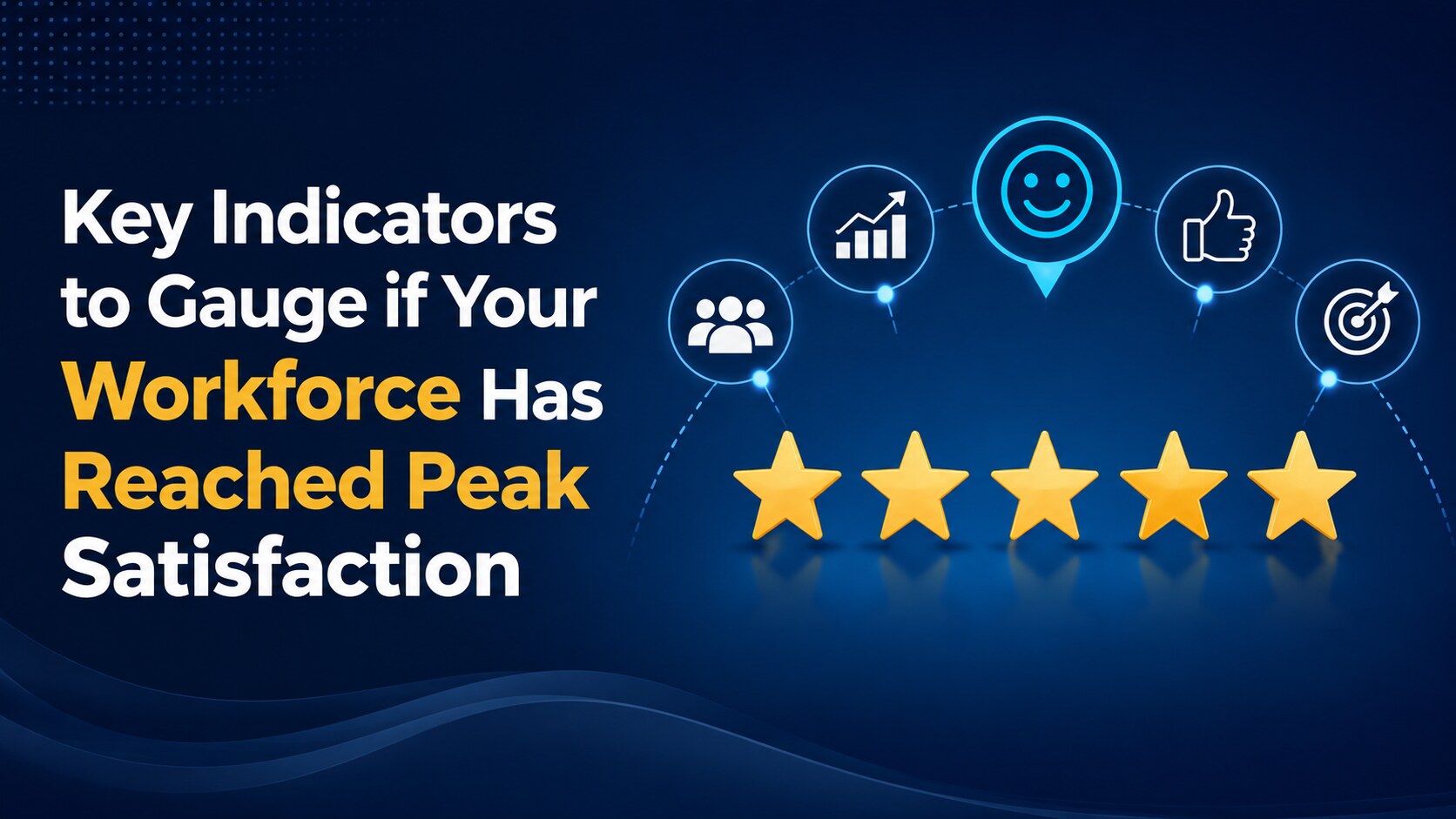
A satisfied team shows four consistent signs — low turnover and high loyalty, strong day-to-day productivity, a visible culture of recognition and praise, and benefits that go beyond the standard package. When these four indicators are present together, employee satisfaction is usually high, and that satisfaction directly fuels better client service, stronger project outcomes, and a healthier company reputation.
If your team's buzzing, not just with the caffeine jitters but with real, honest-to-goodness job satisfaction, that's like stumbling upon a treasure chest in the corporate world. The big question is: how do you know if they're just putting on a show or if they're all in? Below, we break down the clearest indicators, why they matter, and how you can start measuring them today.
At a glance, the key indicators of a satisfied team include:
- Long employee tenure and low voluntary turnover
- High productivity and efficient use of tools
- Frequent, genuine recognition and praise
- Open, two-way communication across all levels
- Consistent attendance and active meeting participation
- Benefits that reflect employees' real day-to-day needs
Loyalty Speaks Volumes
Long Tenure Is a Trust Signal
The point is – loyalty is always your first hint. When you have employees who have been working at your company for years, you know that there is something more than just working hours. These are loyal individuals who have seen everything and still are devoted to the job, proud of their company and eager to develop alongside it. They are loyal to the company and believe in what they are doing. This kind of loyalty is very valuable. In order to evaluate key indicators in order to assess whether your workforce is satisfied or not, using evaluation form templates is absolutely necessary.
Loyalty Is More Than Time Served
Let me get one thing clear: loyalty is not only about how many years one worked for a company. It is about those people who are willing to dig into the trenches with you and face any obstacle that appears on their way. They do not wait to be told what to do – instead, they are proactive and think in advance so as to ensure the smooth flow of the process. Loyalty is represented by the team members who do not only bring their lunch to work but contribute with ideas and solutions too. In addition, sometimes they are the ones who glue the team together. Their devotion is the one which helps to form a positive work culture, and their colleagues want to come to the office to be there rather than have to be there.
Loyalty Is Contagious
In case there is a high level of loyalty within a team, this quality is easily contagious. No wonder that new members of a team can instantly realize that they came to a certain special place where loyalty is not only expected but appreciated. The environment will be created which will make people not only work for money but be interested in their work and each other too. Thus, the feeling of loyalty turns into the loyalty loop and makes it spread everywhere.
Signs of genuine employee loyalty:
- Long tenure without frequent job-hopping
- Employees who speak positively about the company externally
- Proactive problem-solving instead of waiting for instructions
- New hires quickly absorbing a strong team culture
When Work Flows Like a River
Productivity as a Direct Reflection of Satisfaction
The next point which shows the high level of employee satisfaction is extremely high productivity. This characteristic is easily visible when the team is skilled at handling technologies and finds the process of work easy. They not only work quickly but do it with enthusiasm thanks to the proper tools for it. Moreover, there appear numerous ideas which pop in their heads because they have enough freedom for expressing them.
Smart Use of Tools Beats More Tools
There is one more thing you need to remember while considering productive work environment. Having the best technology and software is not enough – it is crucial that your team knows how to use them to benefit from. They can come up with different hacks and solutions that will speed up routine tasks, making work more enjoyable for them and increasing productivity. Here, creativity and imagination of the employees plays an important role, since it is the ability to think outside the box and find new and unique ways of completing tasks that makes a difference. This type of productivity will not only bring profits, but will increase team motivation as well. And who doesn't enjoy working like a tech-savvy wizard?
The Ripple Effect of a Productive Team
Do not forget about the chain reaction productivity may cause. Once one team member starts showing great results in his or her job, it is highly likely that others will be stimulated to show the same performance and try to give their contribution to the teamwork. It will bring productivity wave in the office. Meetings will transform into the meetings where employees share brilliant ideas, coffee brakes will be occupied with discussion of some "what if?" questions and the atmosphere in the office will get the spark of energy. It is time when collaboration becomes truly effective – as everyone shows his or her best skills out of enthusiasm and interest in the job.
What high team productivity typically looks like:
- Faster turnaround on tasks without a drop in quality
- Creative use of existing tools rather than constant tool-switching
- Spontaneous collaboration and idea-sharing between team members
- One person's momentum sparking broader team-wide motivation
A Little Praise Goes a Long Way
Recognition Shows Up in the Small Moments
It is also worth mentioning the importance of recognition and praise in the office. In the environment where the morale level of the employees is incredibly high, you will constantly hear words like "good job" or "thank you". Employees take responsibility voluntarily, complete challenging tasks with pleasure and help each other. In work place like this, new ideas are not rare – rather, they appear one after another.
Gratitude Fuels a Cycle of Motivation
In addition, it should be mentioned that the culture of recognition and gratitude works not only on the emotional level, but also increases team motivation. Knowing that their efforts are appreciated makes people want to show their best and do their job effectively. It is a positive cycle where the more appreciative attitude brings the more motivation and success.
How recognition shows up in a healthy workplace:
- Regular verbal or written acknowledgment of good work
- Employees supporting one another without being asked
- New ideas being welcomed rather than dismissed
- A visible cycle of appreciation leading to more motivation
Open Communication Keeps Everyone Aligned
Transparency Builds Confidence
When a team is truly satisfied, they aren't kept in the dark. Employees who know the reasons behind the decisions of their leaders will feel more confident in those leaders, which will allow them to work together as a cohesive unit. When they understand the goals and any upcoming changes within the organization, they will not be caught off guard.
Feedback Flows Both Ways
One-way communication isn't what true satisfaction looks like in a team. Team members feel comfortable giving input and feedback and feel free to voice their concerns in a respectful manner. This can be done through scheduled check-ins, regular anonymous surveys, and an open door policy from management. These feedback loops make sure that problems are addressed before they result in resignations.
Markers of open, healthy communication:
- Leadership explains the reasoning behind decisions, not just the decisions
- Employees feel safe raising concerns or disagreeing respectfully
- Anonymous surveys and regular check-ins are actually acted on
- Small issues get addressed before they escalate
Low Absenteeism and High Engagement in Meetings
Attendance Patterns Tell a Story
Constant absenteeism, sick calls right before work and subtle resignation are all examples of disengagement in a team. On the other hand, satisfaction shows itself through regular attendance and engagement. It isn't just about showing up at the right time; satisfied team members attend and are present because they have a desire to participate.
Active Participation Over Passive Presence
Being there and being engaged are two different things. Satisfied employees take part in discussions during team meetings by asking questions and volunteering for new tasks. They speak freely and give their opinion without prompting.
Attendance and engagement red flags vs. green flags:
- Green flag: consistent punctuality and low unplanned absences
- Green flag: employees volunteering for new projects
- Red flag: chronic last-minute sick days or "quiet quitting"
- Red flag: silence or disengagement during team meetings
Benefits That Go the Extra Mile
Beyond the Standard Package
According to Edify Financial, companies should go one step further and reward employees not just with a standard list of benefits. While having health insurance and a 401(k) is good, a company needs to give people more. These perks have to be something valuable for an employee, so such benefits as flexible working hours, remote work, and even pet insurance come to mind.
Perks as Long-Term Loyalty Investments
Surely, these perks will cost some money, but they also bring a number of tax deductions. Moreover, they can be viewed as investments into loyalty of employees. It's common knowledge that companies which provide employees with benefits tailored specifically to them, get lower turnover rate, more referrals, and overall better reputation as great employers — in other words, they save money in the end.
Benefits that make the biggest impact:
- Flex-time and flexible or remote work options
- Pet insurance and family-inclusive perks
- Wellness stipends or mental health support
- Tax-advantaged benefits that also boost take-home value
Conclusion
The bottom line is this: the more satisfied employees are, the more productive their work is. This means that your clients receive high-quality services, your projects get completed professionally, and the company gets a good reputation. Employee satisfaction isn't just another measure but the key to success of any company. Measuring loyalty, productivity, recognition, communication, attendance, and benefits together, managers get a complete picture of their employees' state and their future steps.
FAQ's
1.What is the clearest sign that employees are satisfied at work?
If there is little turnover and high engagement levels, then the satisfaction level will be quite high. In addition, it can be said that employees are satisfied with working conditions if they have worked there for many years, show a lot of initiative, and talk positively about the company to other people.
2.How can I measure employee satisfaction accurately?
It can be done by using various tools such as surveys, checking-in personally with employees and evaluation forms to measure the dynamics of sentiment. Quantitative indicators can also help, such as turnover rates, absenteeism, and productivity. Measuring consistently instead of annually will help catch the decrease in employees' morale on time.
3.Does offering more benefits actually improve satisfaction?
Yes, but benefits must be relevant to employees' needs and preferences. Offering employees some flexible options such as remote work, flex time, and pet insurance will be a good solution. It proves that a company cares about their needs as individuals and it will increase loyalty and may reduce turnover even more than salary increase.
4.Why does recognition matter so much for team morale?
Appreciation makes people feel valuable and motivates them. When employees receive recognition of their work, they feel the appreciation of the manager and therefore become ready to repeat those actions and take up new tasks. It creates a virtuous circle because the appreciation of work makes people do it well.
5.Can productivity alone indicate a satisfied team?
No, it cannot be the only indicator of satisfaction because productivity can be increased due to some negative aspects, such as high stress level of employees or their dissatisfaction with the work process.