Connect with us
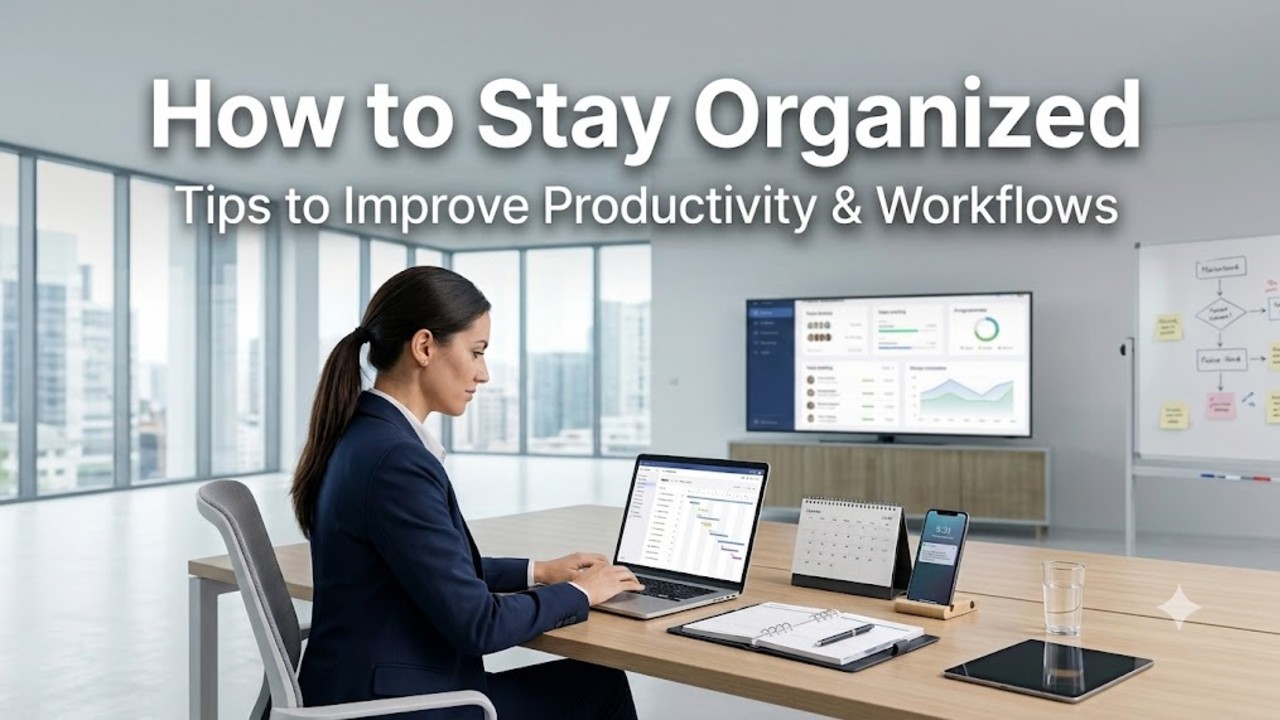
How to Stay Organized: Strategies for Better Productivity
How to Stay Organized is crucial in the current dynamic setting since it will enable one to manage all the tasks, priorities, data, and duties properly. This may come in handy whether it is in regards to personal goals, office work, or teamwork activities.
In cases where people have to do several things at once, keep communicating constantly, attend meetings, and deal with deadlines among other things, it is possible to lose track of everything without a proper way to handle the work.
Organization is not about being able to do a lot of work at once but rather creating better systems that will allow one to plan, prioritize and manage the data properly.
This paper seeks to provide some useful tips on how to stay organized, issues that may affect the productivity level of people, workplace organization tips, and the use of digital means of communication to facilitate better organization.
What Does It Mean to Stay Organized?
Organization entails setting up systems which help one organize his/her tasks, information, schedules, and other duties without unnecessary complications.
Many individuals view organization in terms of filing their documents and having a tidy working space. However, for one to be truly organized, he or she must not only be able to keep his or her physical spaces neat but set up systems which make everyday tasks easy.
Organized systems typically entail:
- Having clear objectives and priorities
- Using the right planning processes
- Having quick access to critical information
- Working on set schedules
- Communication systems that work
For individuals, organizational skills enhance their efficiency in managing time. In business, this ensures efficient workflow through coordination of work and completion of projects.
Organized vs Productive: Understanding the Difference
Being busy is not necessarily a sign of being organized. There are many professionals who end up spending their whole day answering emails, attending meetings, and doing small errands yet they fail to do what really matters.
An organized person ensures that he/she:
- Plans his/her tasks prior to beginning work
- Puts priorities in place
- Makes systems rather than relying on his/her memory
- Manages information well
Being organized provides an easy way of becoming productive because it enables one to channel his/her efforts towards worthwhile things.
Why Do People Struggle to Stay Organized?
While organization helps boost efficiency, many people find it hard to keep proper organization. In the contemporary environment of work, people are required to process more information daily than before, which makes organization even harder.
As indicated by some findings of workplace research conducted by, for example, Microsoft Work Trend Index, more and more employees encounter difficulties associated with information overload, digital communication, and multiple priorities.
Some reasons for people's inability to organize themselves include:
Managing Too Many Tasks at the Same Time
Performing several tasks without a good framework may create problems regarding priority. If all tasks seem equally urgent, then individuals may end up reacting to urgent demands rather than performing their actual tasks.
Task management is an excellent way to differentiate between important and less important tasks.
Lack of Planning and Prioritization
In the absence of a proper plan, many people end up doing things that demand instant action without being fully aware of what their priorities are. This leads to failure and stress.
Developing a plan for the day/week would give greater clarity regarding one’s obligations.
Information Scattered Across Multiple Platforms
In contemporary office spaces, critical information is generally spread through email, chat apps, documents, and various software platforms.
When workers fail to access this information promptly, their productivity falls.
Frequent Interruptions and Digital Distractions
Notifications, unnecessary meetings, and continuous communication may hinder concentration. Although collaboration is necessary, lack of structure in communication may interfere with work flows.
Organized communication is essential to ensure effective communication without reducing productivity.
The Impact of Poor Organization on Productivity: Key Insights
Disorganized approach may influence productivity through extra time needed to find relevant information, communicate, and switch tasks. Research proves that information and communication overloads are common issues among today’s employees.
In accordance with Microsoft Work Trend Index, information overload, meetings, and communication are serious challenges among current workers. At the same time, Asana's Anatomy of Work Index reveals that employees need to spend much time managing their work rather than performing their tasks.
Key impacts include:
| Challenge | Effect |
| Information overload | More time spent finding information |
| Poor prioritization | Delayed important tasks |
| Unorganized communication | Missed updates and decisions |
| Lack of workflow systems | Reduced team efficiency |
Essential Habits for Better Organization and Productivity
Organization skills development demands habitual actions that will make daily obligations easier to handle. It does not mean building complicated organizational structures, but rather developing practices that can be carried out on a regular basis.
1. Set Clear Goals and Priorities
Prioritization is the first step in organization. By having priorities, individuals can concentrate on what really matters rather than wasting time on irrelevant activities.
Prioritization includes:
- Identifying important and urgent tasks
- Having realistic daily goals
- Dividing big tasks into small actions
- Reevaluating priorities if the situation changes
Having an efficient priority system ensures that the work load does not become too much for one to handle.
2. Create a Structured Planning System
Planning systems give guidance and eliminate the need for remembering responsibilities on your own.
Organization techniques may include:
- Listing out all the tasks
- Making calendars of all crucial dates
- Planning time periods for concentrated work
- Checking all completed and pending tasks
An efficient planning system is always simple and flexible enough.
3. Develop Consistent Organization Habits
Consistency is key to long-term organizational success. Little things done on a daily basis can go a long way.
Some good habits are:
- Taking stock of one's tasks at the beginning and end of each day
- Keeping organized notes and documents
- Eliminating unnecessary tasks from schedules
- Keeping updated project information
Once organization becomes a habit, tasks become easier to manage.
Workplace Organization: Managing Responsibilities Effectively
Organizing the workplace is not only about organizing individual tasks; there needs to be a system in place for collaboration and coordination.
A well-organized workplace setting assists in:
- Understanding the scope of work
- Being able to keep track of the project
- Eliminating delays
- Increasing accountability
- Communicating effectively
Work organization normally involves three main areas:
Task Management: It is important to have visibility on tasks, timelines, and priorities.
Information Management: The files, updates, and conversations need to be easily accessible.
Communication Management: Proper communication channels are necessary so that information is not lost.
Organized Work Approach vs Disorganized Work Approach
| Organized Work Approach | Disorganized Work Approach |
| Tasks are prioritized based on importance | Tasks are handled without clear priorities |
| Deadlines are tracked and reviewed regularly | Deadlines are often missed |
| Information is stored in structured systems | Information is scattered across different platforms |
| Team communication is clear and accessible | Important updates can be overlooked |
A well-organized work environment allows employees to spend less time searching for information and more time completing valuable work.
How Teams Can Stay Organized in a Digital Workplace
However, with increasing digitization in the workplace, organizational skills are not limited to managing one’s own schedule and tasks anymore. It also involves managing collective information, communication, documents, and updates on projects.
Communication plays a crucial role in terms of organization for employees working in different geographical locations or even different departments within a single organization. Otherwise, it will take much time to find information than to do actual tasks due to lack of proper management of communication.
Digitized organization allows the team to build a system where employees will be able to:
- Get access to all necessary information easily
- Track all discussions on a project
- Provide updates to the relevant parties
- Avoid communication gaps
- Track workflow effectively
The Role of Employee Communication Tools in Team Organization
Communication is an important aspect of organizational work within any company. Even though the use of emails and various forms of messaging applications may facilitate better communication among team members, they may end up scattering information if communication is not well managed.
Employee communication applications facilitate the process of organizing workplace communication for companies in the following ways:
Centralized Team Communication
Rather than looking for updates on various channels, staff will be able to access discussions, announcements, and chats all within one communication tool.
This prevents data loss and improves visibility into their ongoing work.
Better Collaboration Between Teams
Effective communication helps in coordinating among different departments. People will be able to exchange information, project updates, and deal with any issue without delay.
Improved Access to Information
In case the discussion and updates have been properly arranged, people will be able to access all the information that they require to accomplish their tasks.
The Troop Messenger is an example of software that can help companies set up effective communication environment within the organization.
Digital Tools and Systems That Help You Stay Organized
Technology has revolutionized how people and organizations organize themselves to carry out their everyday activities. Technology makes it possible for one to have more visibility, automation, and collaboration capabilities, thus making organization easier.
Some of the tools that can be used include:
Task Management Tools
Task management applications assist people and groups by:
- Creating and delegating tasks
- Monitoring the progress
- Setting deadlines
- Assigning responsibilities
This way, important things won’t be overlooked, and clarity on ongoing work will be ensured.
Calendar and Scheduling Tools
The use of calendars is beneficial in organizing time through:
- Arranging for meetings
- Creating time slots for concentrated work
- Recording significant dates
- Planning future events
Good organization of your calendar will minimize scheduling problems.
File Management Systems
Good file management ensures that employees can find files, reports, and information about projects easily.
Good file management involves:
- Good folder organization
- Good naming conventions
- Access control
- Updates to documents
Communication and Collaboration Platforms
The modern team works extensively using communication tools to exchange information.
A good collaboration tool would enable workers to:
- Communication effectively
- Provide quick updates
- Organize discussions
- Lessen reliance on multiple communication platforms
Research conducted in the workplace by firms such as McKinsey & Company reveals that digital collaboration solutions could have a great impact on how workers communicate and share knowledge in their organization.
Common Organization Mistakes That Reduce Productivity
Despite planning techniques and digital applications, there are some behaviors that make it impossible for people to organize themselves. Recognizing such issues will help individuals and groups develop better ways of organizing themselves.
Trying to Manage Everything Through Memory
Recalling all the tasks, deadlines, and conversations becomes hard at times, especially with several roles to play.
It is vital to have an organization system that can record all the necessary information without just relying on the memory.
Creating Too Many Complicated Systems
Others make themselves productivity systems that they find hard to sustain.
A good productivity system is one that is:
- Easily understood
- Easily updated
- Easily applied daily
The most effective way to organize things is the one that people can easily apply consistently.
Using Too Many Tools Without a Clear Process
Having many applications does not always enhance organization. Applications that are not interlinked or utilized correctly can only create more chaos.
It is important for businesses to be concerned about the process development related to their tools.
Ignoring Regular Reviews
Improvement is necessary for organization. Without periodic examination of tasks, scheduling, and processes, out-of-date information may cause trouble.
Periodic review helps to spot:
- Completed tasks
- Ongoing responsibilities
- Areas where the process may be improved
- Changes in priorities
Workplace Efficiency Insights: What Research Reveals
It has been found out through workplace studies that information overload, communication problems, and poor workflow practices continue to hinder employee productivity.
- 68% of the employees admit that they find it difficult to deal with speed and amount of work, thus having trouble focusing and organizing their work properly.
- 60% of the time at work is devoted to work coordination activities like emails, meetings, and information management rather than skill-based activities.
- Employees switch apps and tools throughout the work process, thus causing more digital distractions and hindering their productivity.
How to Maintain Long-Term Organization Habits
Organizing is an ongoing process that involves improvement and adaptation to changes in responsibilities.
Sustainable organizing requires creation of a system that will continue to serve despite heavier workload.

Review and Improve Your Organization System Regularly
Good system organization needs to continually adapt.
Regular assessment will provide answers for:
- Do we have clear priorities?
- Are we completing tasks in an efficient manner?
- Is our information readily accessible?
- Does our communication system work?
It is easier to make small improvements than let a system become ineffective.
Simple Daily Practices to Stay Organized
Small everyday activities can assist in having good control over the responsibilities.
Some examples of these are:
Planner your activities beforehand before beginning the day
- Check your completed work
- Adjust the priority levels of the tasks
- Arrange the information
- Plan the responsibilities that lie ahead of you
Build Organization Into Team Culture
In business, organization should not be left to individual employees alone. Teams become more efficient where organization is integrated into the business culture.
This can be achieved through:
- Establishing good communication protocols
- Ensuring that there is a structure in the workflow process
- Using the right collaboration tools
- Fostering transparency among teams
Conclusion
Organized individuals tend to plan their priorities, break down big tasks, keep deadlines in check, and evaluate their performance on a regular basis. Organized people pay much attention to creating systems that would facilitate responsibility management rather than memorization.
Being organized means understanding how to develop effective systems for task, data, and communications management. Organizational skills are both personal and very valuable at work.
By organizing their priorities, developing consistent habits, and working efficiently with technology, people become less confused and better able to manage their responsibilities. As far as business is concerned, organizational skills allow companies to connect and collaborate more efficiently and exchange data faster.
In today's digital world, companies need to be well organized to function properly. In order to achieve that, companies may use platforms such as Troop Messenger that help organize communications and collaborate better.
FAQs
1. What is the easiest way to stay organized?
The best way to remain organized is by having an easy process of organizing tasks, priorities and information. To do this, one needs to write down the responsibilities, priorities and tasks in hand, which will then make it easy to organize them consistently.
2. How can I stay organized at work?
There are ways that one can keep things well organized while working, which include prioritization of activities, handling deadlines, organizing relevant information, and ensuring good communication within the team. Daily planning and keeping track of progress is important.
3. Why is staying organized important for productivity?
Organization enhances productivity since people are able to concentrate on what is really important, save time, and manage their duties effectively. Organization is also de-stressing since people can better manage their workload and have all the necessary information at hand.
4. How can teams stay organized while working remotely?
Remote teams can be well-organized through the use of structured communication techniques, following the same workflows, documenting critical information and using digital platforms for collaboration. Efficient processes will keep the remote workers on track despite being in different places..
5. What tools help employees stay organized?
Individuals are capable of using the following to enhance their organizational skills: task management tools, calendars, file management, and communication devices. These tools are used to help individuals organize their work.
6. How do organized people manage daily tasks?
The organized individual always sets his priorities, divides the bigger picture into small bits, and monitors deadlines. He or she focuses on developing systems that help to make responsibilities easier to handle rather than depending on memory alone.