Connect with us
How to Choose an EOR That Can Keep Up With the Global Growth
Global expansion rarely happens in a straight line. A company might start with one overseas hire, then quickly find itself juggling several countries, currencies, payroll systems, and sets of employment rules. What worked for a small international team often stops working once that team grows.
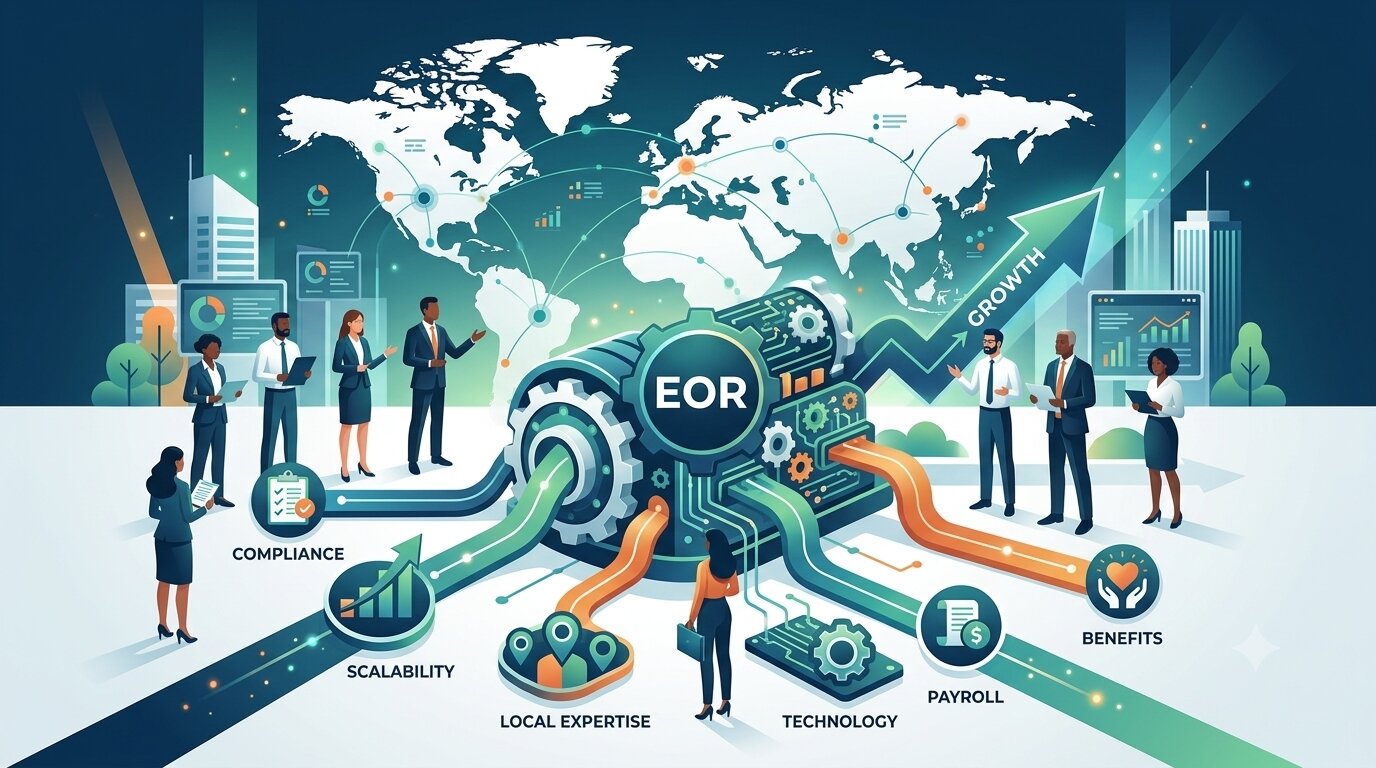
That's why picking the right EOR isn't just about counting how many countries a provider covers. Businesses need infrastructure that keeps pace as hiring, payroll, compliance, and workforce management all scale together. Multiplier's Global Teams Platform is built around this idea, covering 160+[1] [2] countries through owned entities, compliance-first processes, global payroll, HRIS tools, and 24/7 human support. This write-up covers what to look for in an EOR built for long-term growth, not just your first few hires.
Key Takeaways
● A scalable EOR should support global hiring without adding new compliance or admin headaches.
● Country coverage matters, but so do ownership, compliance expertise, payroll infrastructure, and support.
● Look for transparent pricing and real-time visibility to stay in control as your international team grows steadily.
● A good EOR should seamlessly manage both employees and contractors across multiple markets and regions.
● Multiplier brings together 160[3] [4] + countries, owned entities, 24/7 support, and real-time payroll visibility.
Why Does Your EOR Need to Scale With Your Business?
Your first international hire might only need a compliant contract and basic payroll. As the team grows, the requirements pile up: employees across several countries, multi-country payroll, localised benefits, regulatory changes, and a clear view of workforce costs. A provider that can't handle this complexity puts you back where you started, switching providers, running parallel systems, or dealing with scattered support. A scalable EOR should make expansion easier, not add friction.
What Should You Look for in an EOR?
Global Country Coverage
Think beyond where you're hiring today to where you might be in two or three years. Coverage across 160+ countries gives growing businesses room to enter new markets without shopping for another partner each time plans change.
Owned Entity Infrastructure
Country coverage alone doesn't show how a provider operates in those markets. Wholly-owned entities, rather than reliance on third parties, tend to mean more direct control and clearer accountability.
Compliance Built Into The Process
Labour laws, tax rules, and statutory benefits shift from one market to the next. Look for always-on compliance backed by local expertise so you're not tracking every change manually.
Payroll That Can Handle Global Complexity
Different currencies, tax structures, and pay schedules can quickly turn into a fragmented process. A strong provider offers more than salary runs: real-time visibility, gross-to-net reporting, custom approvals, and institutional FX rates across 120+ currencies.
Real-Time Visibility
Scaling gets harder when you can't see what's happening across markets. A single source of truth for employees, payments, and pay cycles helps teams make faster, better-informed calls.
Human Support When You Need It
Automation covers a lot, but global employment still needs a human sometimes. Round-the-clock support with a dedicated contact means issues don't get bounced between vendors.
Support For Long-Term Workforce Management
Needs often stretch beyond employing people; HR admin, benefits, and payroll should ideally sit on one platform, not a patchwork of tools.
What Mistakes Should You Avoid When Choosing an EOR?
● Choosing based only on country count. A long list doesn't guarantee strong infrastructure; check how compliance, entities, and payroll are actually handled.
● Overlooking who owns compliance. Find out whether it sits within the provider's own model or gets passed to local partners.
● Ignoring support. Waiting days for an answer on a payroll question shouldn't be part of the deal.
● Not planning for future growth. Choosing based only on today's needs can force a switch later; think ahead about markets and requirements.
How Can an EOR Make Global Growth Easier?
The right provider removes friction rather than shifting the admin work elsewhere. With solid infrastructure in place, a business can enter new markets without setting up local entities; manage compliance through one partner; consolidate payroll; and keep clearer visibility over its workforce, hiring, compliance, payroll, and workforce management working together instead of as separate processes.
The Features That Make an EOR Truly Scalable
Multiplier is built for companies growing global teams without stitching together a patchwork of providers. Wholly-owned entities across 160+ countries mean direct control and accountability; compliance-first infrastructure helps manage local requirements; and round-the-clock support means every account has someone to turn to. Global Payroll and HRIS tools sit on one platform, adding real-time visibility, institutional FX rates across 120+ currencies, and AI-assisted compliance support, a foundation for companies moving toward a genuinely global workforce.
Conclusion
Choosing an EOR is a long-term decision, not just an administrative one. The right partner should support your current team while offering the infrastructure, compliance expertise, and flexibility needed for future growth.
Look past country coverage alone; weigh entity ownership, payroll capabilities, compliance processes, visibility, support, and how well the platform adapts as your workforce grows. Multiplier brings these together through a Global Teams Platform spanning 160+ countries, backed by owned entities, 24/7 support, real-time payroll visibility, and compliance built in from the start. For businesses serious about building global teams, a provider built to scale can turn expansion from a complicated operational puzzle into a far more manageable path to growth.
FAQs
- What should businesses look for in an EOR?
Look for broad country coverage, owned entities, strong compliance expertise, reliable payroll capabilities, real-time visibility, responsive support, robust security, transparent pricing, and the ability to support future growth.
2. Why are owned entities important when choosing an EOR?[Text Wrapping Break] Owned entities give providers direct control over employment operations and compliance, reducing dependence on third-party partners and creating clearer accountability, faster issue resolution, and more consistent service across every market.
3. Can an EOR manage global payroll as a business grows?[Text Wrapping Break] Yes, a capable EOR consolidates multi-country payroll, payments, tax compliance, and reporting into one system, giving finance and HR teams clear, real-time visibility as headcount and complexity increase globally.
4. How does an EOR like Multiplier support global workforce growth?[Text Wrapping Break] Multiplier supports growth through owned entities, compliance-first infrastructure, Global Payroll, integrated HRIS tools, 24/7 customer support, and real-time operational visibility, enabling businesses to scale confidently across 160+ countries worldwide.
5. Is an EOR suitable for businesses entering multiple countries?[Text Wrapping Break] Yes, an EOR lets businesses enter multiple markets without setting up local entities, managing employment, payroll, benefits, and compliance through one unified platform, simplifying international expansion significantly.