Connect with us

Top Frontline LMS Choices Compared: 6 Reasons to Switch
If you are reading this, your organization almost certainly already owns a learning management system. It was bought for head office; it works reasonably well for head office, and at some point somebody decided that it would also have to serve the warehouse, the depot, the plant floor and the four regional sites. That decision is usually where the trouble starts, and the trouble does not announce itself at the time. It tends to surface about two years later, when an auditor asks for three years of certification records and it takes a week to assemble the answer.
The frontline is not a smaller version of the office, and the turnover numbers are one reason why. Deloitte's review of frontline-heavy industries reports that 80% of restaurant workers and 76% of hospitality workers leave their job within a year, which means that enrolment is not a one-time project you complete during implementation. Enrolment is a recurring load, and your system either absorbs that load or hands it back to a coordinator with a spreadsheet.
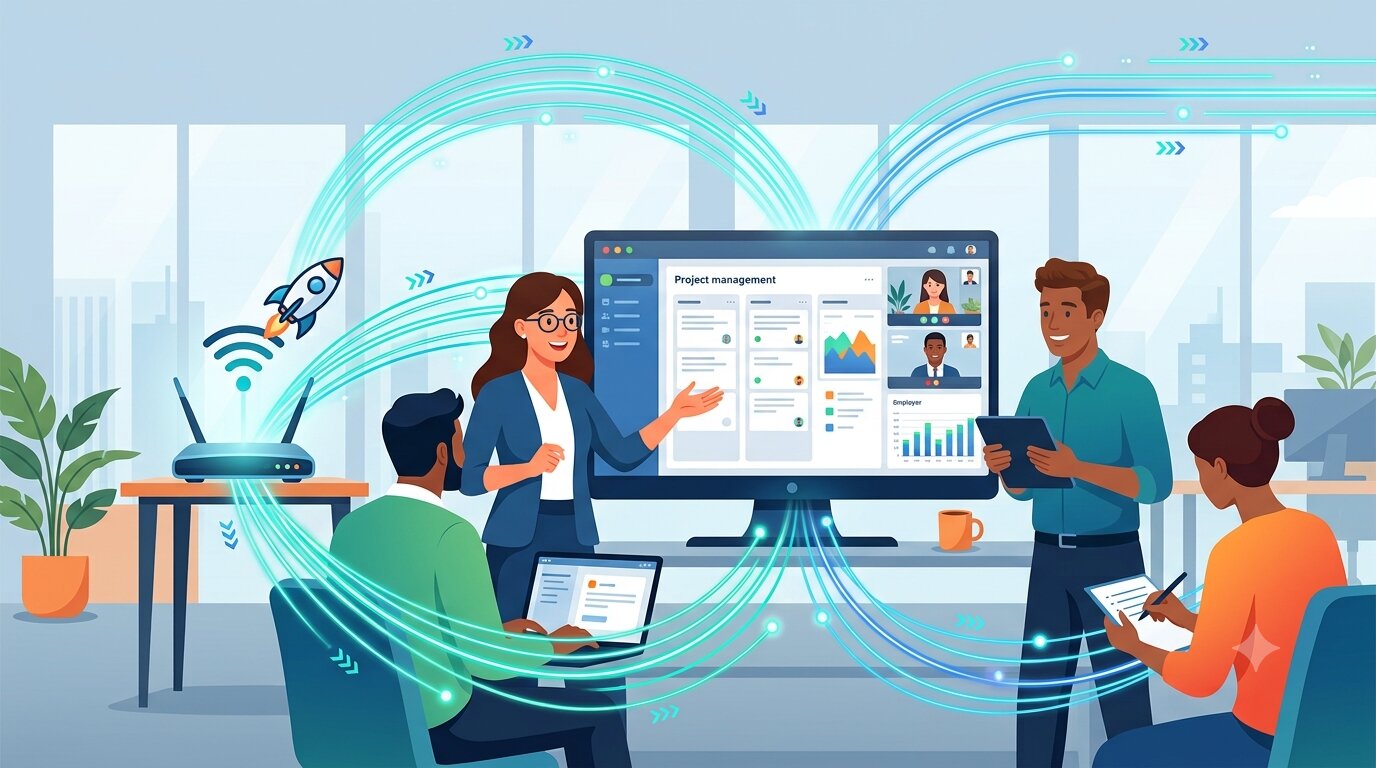
Communication adds another layer to the problem. Training announcements, reminders, policy updates and questions often have to move between frontline workers, supervisors and administrators while the actual learning remains inside a separate system. A workplace communication platform such as Troop Messenger can complement an LMS by giving teams a central place to communicate around training, share updates and coordinate follow-up without expecting every frontline worker to rely on email.
This comparison is written for the buyer who is past the question of whether to buy anything and is now deciding whether to move. We start with six symptoms that usually justify a switch, then we cover what switching costs actually are, and then we rank nine platforms specifically as replacement targets, not as first purchases.
Six Signs Your Current LMS Is The Wrong System For A Frontline Workforce
None of these is a deal-breaker on its own. Two or three of them together generally mean that the platform is being asked to do a job it was never designed to do.
1. A Large Share Of Your Workforce Cannot Log In Without Help
This is the cleanest test in the category. Count the people who have a company email address and a desk, and then count the people who do not. If the second number is the larger one, then every login-by-email workflow you run is a permanent tax on your team, in the form of password resets routed through supervisors, shared terminals, personal email addresses collected on paper, and a support queue that never quite empties. Platforms built for the frontline sign workers in with verified credentials or a badge-linked identity instead.
The communication layer matters here as well. When a worker needs help accessing training, the route to a supervisor or administrator should be straightforward rather than dependent on an email chain. Keeping training access and workplace communication easy to reach can reduce the friction that otherwise turns a simple login problem into a recurring support task.
2. Certification Questions Need A Person, Not A Query
A marketing lead in this category, characterising the way her buyers describe the requirement, reduced it to three questions: whether a certification needs to be updated, whether it is expiring, and who else on the roster currently holds it. If answering the third question means that somebody opens a file and begins filtering it, then your system is tracking completions and not currency, and currency is the part that determines how an audit will go.
The same principle applies when the result needs to be communicated to the workforce. A useful LMS should tell administrators what needs attention, while the organization's communication system should make it easy to notify the relevant workers or supervisors about the next action.
3. The Real Compliance Record Lives In A Spreadsheet Next To The LMS
At a regional safety trade show this spring, a marketing lead in this category came back with an observation that is worth repeating. A household-name manufacturer was still tracking incidents, training completion and compliance in an Excel spreadsheet, and the buyers who were not doing that were using a dedicated safety application instead. Neither group treated the LMS as the compliance record. When a shadow spreadsheet exists, the shadow spreadsheet is what gets opened during an inspection.
A second system can also emerge for communication. Teams may use email, personal messaging apps or scattered group chats to discuss training changes, while the official learning record sits somewhere else. That fragmentation makes it harder to know whether a worker received the message, completed the training and understood what changed.
4. Completion Is At 100% And Nothing Has Changed On The Floor
A completion rate proves that people clicked through the material, but it does not prove that they read the procedure or understood it. That gap is what an attestation is meant to close: a worker's recorded confirmation that he or she has read and understood a specific policy, tied to a document version and a timestamp. Whether your own regulator asks for one is a question for your compliance team, but if your current system cannot produce a versioned acknowledgement per worker per document, then your completion dashboard is measuring traffic.
This is also where communication after training becomes important. A procedure may be completed inside an LMS, but supervisors may still need to discuss the change with their teams, answer questions or clarify how it affects daily work. Training and communication therefore work best when they support each other rather than operating as isolated processes.
5. Every Site Answers The Auditor Differently
Multi-site operations are where corporate systems break in a way that is easy to miss. The platform technically supports multiple sites, but each location has developed its own enrolment habits, its own naming conventions and its own local file of who did what and when, so pulling a consolidated view becomes a reporting project instead of a report. If you cannot see certification status across all of your locations in a single view, you do not really have multi-site tracking; you have several single-site deployments that happen to share a login page.
The same challenge applies to day-to-day communication. A policy update sent to headquarters may not reach a warehouse supervisor, depot worker or regional team at the right time. A centralized workplace communication platform can help organizations distribute operational updates alongside the formal training process, while the LMS remains the system of record for learning and compliance.
6. The Tool That Assigns The Work Is Not The Tool That Trains
Frontline operations tend to accumulate two separate stacks over time. One of them handles safety and task execution, which covers job safety analyses, inspections, toolbox talks and corrective actions, and the other one handles training. The gap that gets named most often about the safety tools is that they cover nearly everything except training. Our own view is that the reverse holds too, and that most training tools cover nearly everything except the work itself. Running both is workable, but running both while assuming that they share a single compliance record is not.
This does not necessarily mean that one platform has to replace everything. In many organizations, a better approach is to let each system do what it is designed to do while making communication between teams simpler. An LMS can manage learning, certification and compliance evidence, while a workplace collaboration platform such as Troop Messenger can support team communication, announcements, file sharing and follow-up around that training.
What A Frontline LMS Is, And What A Migration Has To Carry
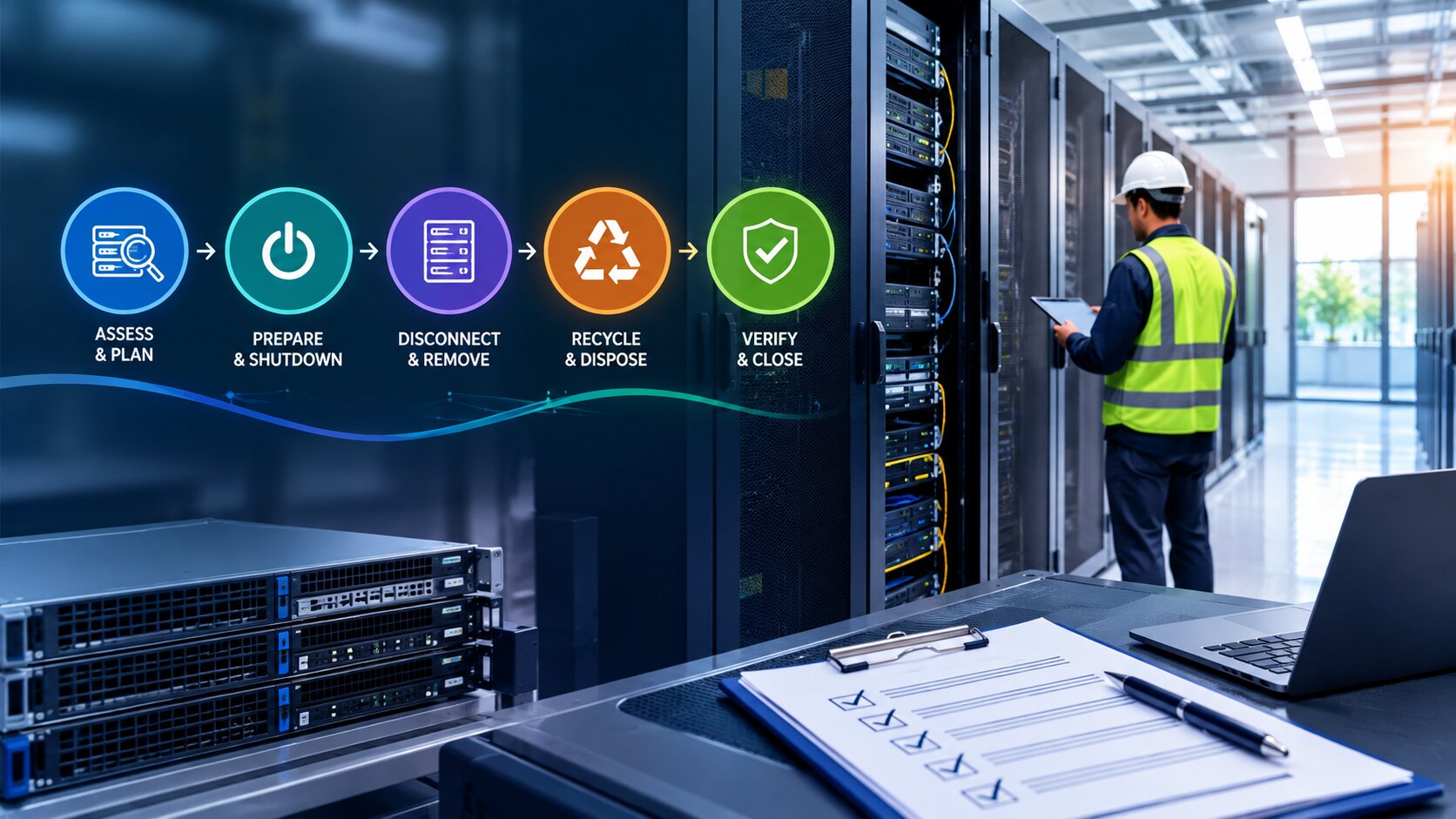
A frontline LMS is a learning system that has been designed for deskless, mobile and frequently email-free workers, as distinct from a corporate LMS that assumes a desk, a laptop and an inbox for every learner. The difference is not really the mobile app, because most corporate systems now have one. The difference is whether identity, enrolment, content format and reporting were all designed around a worker who may have four minutes at a shift change and no company account of any kind. That definition matters at switching time, because a migration has to move five separate things, and most vendor conversations only cover the first two of them.
Course content. If your existing library is packaged as SCORM 1.2 or SCORM 2004, AICC, xAPI or cmi5, then you should ask which of those formats the new platform ingests as a package and which of them it converts. Some platforms host the package as it is. Others treat SCORM as legacy material that has to be rebuilt in their own native format, which makes it a content project and not an import.
Historical completion and certification history. This is the part that tends to get discovered late. Your existing records are not simply data; they are evidence. Canadian due-diligence guidance asks employers directly whether they keep records of the training each worker has received, alongside inspection reports, risk assessments and safe work procedures. A migration that drops four years of completion dates and expiry dates does not simplify your compliance position. It resets it.
Integration rework. Every connection you built into the old system will need to be rebuilt, including the HRIS or payroll feed that creates users, the identity provider, the reporting warehouse, and any operational trigger that assigns training when somebody changes role or site. Budget for this as its own workstream, because in most projects it turns out to be the longest pole.
Enrolment rules. The learning paths that were configured by hand over several years are the hidden asset inside your current platform. Rebuilding them by hand is slow and prone to error, whereas rebuilding them from role, department, location and job-position attributes coming out of the HRIS is faster and holds up better afterwards.
The workforce itself. Re-enrolling people who have no company email address is the step that teams underestimate most often. Given the turnover figures above, whatever process you use for the initial re-enrolment is the process you will keep running every month afterwards, so a site supervisor needs to be able to do it in a few minutes and without opening a support ticket.
The communication process should be considered during this stage as well. A migration changes more than the software used to complete courses. Workers may need to know where new training instructions will appear, who they should contact when they have questions and where updated procedures will be shared. Planning that communication alongside the LMS migration can reduce confusion during the transition.
How We Compared These Platforms
We evaluated nine platforms in September 2026 against the switching decision specifically, and not against a blank-slate purchase. Four criteria carried most of the weight: frontline access, meaning whether a worker without a company email address can sign in and complete a required course on a phone; portability, meaning which standards the platform ingests as packages and whether historical completion and certification data can be brought across at all; compliance depth, which covers expiry logic, recertification, attestations and consolidated multi-site reporting; and pricing transparency, because a switch you cannot size before a sales call is a switch you will struggle to get budgeted internally.
Ratings are quoted from G2 as of September 2026 for eight of the nine platforms, so that the numbers sit on one scale and one review population. The exception is iTacit, which is quoted from Capterra, because its G2 listing holds only four reviews, and a base that small will not bear comparison against bases in the hundreds or thousands. We are flagging that switch because a per-vendor change of source is the kind of thing that quietly moves a ranking. A second disclosure in the same spirit: review sites do not always agree with each other, and Schoox is the clearest case in this comparison, since its Capterra listing shows 4.3 across 78 reviews against the 4.7 across 57 we quote from G2. We have kept the G2 figure for consistency with the other seven, and the Capterra number would have put Schoox below iTacit, not above it, which is a good reason to show you both. Pricing comes from each vendor's own published pricing page, and where a vendor publishes no rates at all we say so instead of guessing at a number. Every entry carries at least one thing it is not good at, and that includes the first one.
Nine Frontline LMS Platforms, Ranked As Replacement Targets
The order below reflects how straightforward it is to move an existing deskless training program onto each platform while keeping the compliance evidence intact. It is not a ranking of overall product quality, and a few well-known names sit lower here than they would on a general LMS list.
1. iTacit
Best for: regulated, deskless crews where most workers have no company email address and the certification history has to survive the move.
Training, compliance tracking and communication all sit in the same application here, which matters during a migration for a fairly unglamorous reason: the message telling people that the training system has changed reaches the same worker, in the same place, as the training itself. The underlying position is that most workforce software assumes company email and a desk, and iTacit drops that assumption and signs workers in with verified credentials instead.
What you get:
- Email-free mobile sign-in for drivers, warehouse staff and line crews, with single sign-on where an identity provider exists.
- Support for SCORM 1.2 and SCORM 2004, AICC, Articulate Storyline, Captivate, PowerPoint, HTML, audio, video and PDF.
- Automated learning paths with automatic enrolment by role, job position, department or group, plus certification expiry tracking, reminders and acknowledgements.
- Compliance reporting by course, program, role and department across multiple sites, with an audit trail.
Moving an existing program across: standards-based packages come over as packages, and the automatic enrolment rules can be rebuilt from HRIS attributes instead of being assigned by hand. The published integration list runs to 180-plus solutions and includes ADP, UKG, Workday, SAP, BambooHR, Okta and Paylocity.
Rating and proof: 4.6 out of 5 on Capterra across 42 reviews.
Pricing: quote-based. There are no published tiers and no public rate card. The model is a per-user monthly subscription that is priced after a scoping conversation.
Not the right switch if: you want to size the move yourself before you speak to anybody, because the absence of published pricing makes internal budgeting harder than it ought to be. The platform is also cloud-only and supports no offline mode at all. Workers have to be online to use it, so any site where connectivity drops out is a site where training stops.
2. Connecteam
Best for: mid-size deskless operations that want to price the switch before booking a call.
If you are evaluating this one, start with the pricing page. You can assemble a credible internal business case from public numbers in an afternoon, which is not true of most of the platforms on this list. The product itself is an operations application for non-desk teams that happens to include a training module. It is not an LMS that later bolted on a mobile app, and that ordering shows up in how it behaves.
What you get:
- Courses, quizzes and a knowledge base inside the HR and Skills hub, delivered through the same app as scheduling and communication.
- SCORM packages uploaded as zip files, alongside video, PDF, text, audio, forms and links.
- Mobile-first access designed for workers who have no company account.
- A free tier for very small teams, which makes a single-site pilot close to frictionless.
Moving an existing program across: SCORM content uploads directly, and the low entry price makes it inexpensive to run one site in parallel with your incumbent system before you commit to anything.
Rating and proof: 4.6 out of 5 on G2 across roughly 3,505 reviews, which is one of the largest review bases in this comparison.
Pricing: published. Billed yearly, Basic is $29 per month for the first 30 users, Advanced is $49 and Expert is $99, with per-user rates beyond 30 users varying by hub and by plan. There is a free-for-life plan for organizations with up to 10 users, as well as a 14-day trial.
Not the right switch if: certification expiry, recertification cycles and audit-grade evidence are the core of your requirement. Training sits inside a broader operations product here, and the compliance layer is thinner than that of a purpose-built compliance LMS.
3. Axonify
Best for: large distributed retail and logistics teams that are prepared to re-platform and not simply swap.
The daily habit is the whole idea with this one, in the form of short, adaptive, gamified bursts that resurface whatever a worker got wrong. Axonify has real credibility with large frontline employers, and the reinforcement science behind the model is genuine work and not decoration. It sits third here, below two platforms that are easier to move onto, because adopting it means changing your method as well as your vendor.
What you get:
- Daily adaptive microlearning that reinforces material based on what each worker answered incorrectly.
- Gamification that drives unusually high voluntary return rates.
- A content marketplace with 900-plus pre-built topics available from day one.
- Communications and task features in the same app as training.
Moving an existing program across: Axonify's own product materials describe AI-assisted extraction from raw source documents and state that the approach can automate the mapping of existing content libraries, reducing migration time from days to minutes. You should read that as a claim about content conversion, not about record migration, which is a separate conversation to have with their implementation team.
Rating and proof: 4.7 out of 5 on G2 across roughly 163 reviews.
Pricing: quote-based. Axonify publishes no rates and no tiers on its own site.
Not the right switch if: you want a like-for-like replacement. Axonify works best when the organization commits to the daily-habit model, and the configuration effort involved is real. Reviewers consistently name cost and setup time as the trade-offs.
4. eduMe
Best for: operations teams that want training triggered by the systems already running the work.
Passive libraries are the problem that eduMe is aimed at. Courses fire when the operational system says that a worker needs one, instead of waiting for an administrator to remember to assign it. If your incumbent LMS is essentially a filing cabinet with a login attached, that is the interesting part, and the short mobile format also has a good reputation for actually being completed.
What you get:
- Microlearning built for completion on a phone in a few minutes.
- Workflow integrations that push training from operational tools.
- Multilingual delivery for mixed-language crews.
- Engagement and completion analytics aimed at operations more than at L&D.
Moving an existing program across: eduMe publishes no SCORM ingest specification, and the guidance it does publish leans toward converting SCORM into mobile microlearning. That is not a statement that it will not host a package, so take one of your own courses into the demo and get the ingest behaviour confirmed in writing.
Rating and proof: 4.7 out of 5 on G2 across roughly 35 reviews.
Pricing: quote-based. The public pricing page describes a core platform plus flexible add-ons and routes the visitor to a quote request instead of listing rates.
Not the right switch if: certification expiry and audit evidence are what drive your requirement. eduMe is strong on delivery and completion and lighter on the formal compliance machinery that a regulated operation will need.
5. YOOBIC
Best for: multi-site retail and hospitality operations where learning should sit next to task execution.
Learning is one module here, alongside task management, communications and performance. That arrangement suits organizations whose training problem is really an execution problem, such as the new planogram, the new procedure or the new promotion. If your current LMS is disconnected from what the site is being asked to do this week, then this is the model that is worth a look.
What you get:
- A learning module inside a broader frontline execution platform.
- Task management and communications in the same worker app.
- Location-level rollout and reporting suited to store and site networks.
- A modular structure, so that you buy only the pieces you need.
Moving an existing program across: because the platform is modular and priced by location, the sizing exercise is different from a per-learner migration. You should map your sites before you map your learners, and you should agree the module list early, because it drives both scope and cost.
Rating and proof: 4.6 out of 5 on G2 across roughly 406 reviews.
Pricing: quote-based, with a stated model. YOOBIC's pricing page says that it is priced by number of stores, with the price also depending on which modules you select.
Not the right switch if: you run a large number of small locations, since location-based pricing works against that shape. It is also not the pick if formal certification management is the centre of your requirement, because learning here is a module rather than the core of the product.
6. Schoox
Best for: hourly workforces in restaurants, hospitality and retail that have a real course library to bring along.
The boring part of a migration is where Schoox is unusually good. If your incumbent system holds several years of authored courses and you would rather not rebuild all of them, the ingest question has a straightforward answer here, which is more than several better-known names on this list can say.
What you get:
- Uploads for SCORM, AICC, xAPI and cmi5 packages, including exports from Articulate Storyline.
- Course authoring and curation for teams without instructional designers.
- Learning paths and reporting aimed at multi-unit operators.
- Content marketplace access for standard compliance topics.
Moving an existing program across: standards-based packages import directly, which removes the single largest content risk in a switch. Historical completion records still have to be scoped separately, as they do everywhere else on this list.
Rating and proof: 4.7 out of 5 on G2 across roughly 57 reviews.
Pricing: quote-based. Schoox publishes no rate card and routes buyers to a personalized demo.
Not the right switch if: your workforce is email-free by default. Schoox is a capable LMS first and a frontline application second, so how well it serves badge-only workers depends heavily on how you configure identity and access.
7. TalentCards
Best for: a partial migration, in which the mandatory refreshers move to phones and the rest of the program stays where it is.
Partial migration is a legitimate strategy that vendors rarely propose, and this is the least expensive credible way to test it. You can move the annual refreshers and the safety reminders onto swipeable cards, watch what completion looks like when the format fits the job, and then decide about the rest of the library. Nobody has to sign a five-year agreement in order to run that experiment.
What you get:
- Card-based microlearning built for phones and short attention windows.
- Fast content creation without instructional design skills.
- Simple assignment and completion reporting.
- Published per-user pricing, which is rare in this category.
Moving an existing program across: this is a rebuild, not an import. The content model is deliberately different from a SCORM package, so you should treat it as a place to move specific high-frequency training and not an entire library.
Rating and proof: 4.8 out of 5 on G2 across roughly 26 reviews, which is the highest score in this comparison, on the smallest review base.
Pricing: published. Standard is $0.80 per user per month and Premium is $1.20 per user per month, both sold in 50-user increments starting at 50 users, with a free plan for up to 5 users and custom pricing above 2,000 users. Annual billing saves 20%.
Not the right switch if: you need a single system of record. TalentCards is not a SCORM host and it is not built to hold your audit trail, so something else will keep that job.
8. Docebo
Best for: enterprises with a large standards-based content library that has to move intact.
Several hundred standards-compliant courses plus extended-enterprise audiences is the situation this platform was built for. If you are leaving an older enterprise LMS and the constraint is the library and not the workforce, those assets move here about as cleanly as they move anywhere. The reason it ranks eighth on this particular list is fit, not capability.
What you get:
- Ingest for SCORM 1.2 and SCORM 2004, AICC, xAPI and cmi5.
- AI-assisted content handling and recommendations.
- Extended enterprise training for partners and customers as well as staff.
- Deep configurability and a broad integration set.
Moving an existing program across: this is the strongest standards story in the comparison, and there is a mature implementation practice around it. The trade-off is that a deep configuration is also a slow one, and the deskless, email-free case is configuration work rather than a default.
Rating and proof: 4.3 out of 5 on G2 across roughly 750 reviews.
Pricing: quote-based across two published tiers. Docebo's own pricing page states that it is best suited to organizations training at least 250 learners, which is a useful floor to know before you start.
Not the right switch if: your only audience is the frontline. You would be buying and configuring a great deal of platform in order to solve a problem that narrower tools solve faster.
9. Cornerstone Learning
Best for: regulated enterprises that need the deepest compliance model and can fund a long migration.
Depth is not the issue with Cornerstone, and saying so is not a polite gesture. The certification and regulatory model is genuinely the most complete one here, the content marketplace is large, and a global enterprise with dedicated administrators will get its money's worth. It ranks last for one reason: as a migration, it is a program of work rather than a project, and that is the opposite of what most frontline teams are trying to buy.
What you get:
- Enterprise-grade compliance training and certification management.
- A full talent suite beyond learning, including performance and succession.
- A large content marketplace.
- Extended enterprise capabilities and deep reporting.
Moving an existing program across: the platform can hold everything you have, and the professional services exist to move it. You should plan the timeline in quarters. Reviewers routinely name the learning curve as the cost of the depth.
Rating and proof: 4.1 out of 5 on G2 across roughly 530 reviews.
Pricing: quote-based. Cornerstone's own pricing page states that each organization will have a different cost depending on needs and size, and it directs buyers to a demo for an estimate.
Not the right switch if: speed matters, or your audience is frontline only. One closing observation, offered as our own view and not as a finding: when a team arrives at a comparison like this one, the problem is seldom the depth of the compliance model. It is the reach into the frontline, and that is the part Cornerstone asks you to configure for yourself.
How To Choose Your Replacement
Ranking lists narrow the field, but they do not decide for you. The sequence below is the one we would use.
Start by counting rather than by booking demos. Split your workforce into the people who have a company email address and a desk, and the people who do not. If the second group is the majority, then several well-known corporate platforms are out before you look at a single feature, and you will have saved yourself three sales cycles.
Then write down what an auditor can actually ask you to produce, which will include the certifications, the recertification cycles, the attestations and the inspections. Take that list into every demo and ask the vendor to show you, live, how an expiring certification is tracked across three sites and how the audit trail is produced. Watch for hand-waving at this point, because this is where delivery-first tools tend to get thin.
Ask the migration questions before you ask the feature questions. Which standards does the platform ingest as packages rather than convert? What happens to four years of completion dates and expiry dates? Who rebuilds the HRIS and identity integrations, and on whose budget? How does a site supervisor enrol a new hire with no company email next month, without opening a ticket?
Also ask how the organization will communicate the change to workers. A successful migration is not only about transferring content and historical records. Workers need to know when the new system goes live, where they will receive instructions, who to contact with questions and where operational updates will be shared. A workplace communication platform can complement the LMS during this stage by giving supervisors and teams a consistent channel for those conversations.
You should also do the arithmetic on staying, because deferral has a price that never appears on a quote. When auditors reviewed the legacy systems that United States federal agencies most needed to modernize, they found that eight of the eleven most critical were running on outdated languages and that seven of them were operating with known cybersecurity vulnerabilities. Public-sector IT is its own world, but the pattern does travel: systems that are painful to replace get deferred until the replacement is harder and more expensive.
Finally, run a pilot on one site with real workers before you sign anything, using a single crew and a single required course over the course of a month. Whether your people actually finish it will tell you more than any review score.
If you are switching frontline LMS platforms because your crews have no company email address, and because certification expiry and audit evidence are the part that is keeping you up at night, iTacit was built for that specific workforce and will show you how the certification tracking and the audit trail work against your own sites. If your problem is engagement across a very large distributed team, or a content library that has to move intact, then the platforms higher and lower on this list will serve you better, and it is worth saying so plainly.
For organizations that also need a stronger communication layer around training and daily operations, it can be useful to evaluate the LMS and workplace communication environment together. The LMS remains responsible for formal learning records, while a collaboration tool such as Troop Messenger can support the conversations, announcements and coordination that happen around that learning.
The Bottom Line
Switching is an evidence decision as much as a software decision. The test we would apply is whether a platform can answer an unannounced question on a Tuesday afternoon, which is who holds a current certification at every site you operate and who lapses next month. If acknowledgements matter in your industry, add a second question about whether the system can show who confirmed they had read the revised procedure and which version of it they were shown. A system that cannot answer those two without a person and a spreadsheet is not going to grow out of the six symptoms above on its own.
On sequencing the shortlist, sign-in comes first, because it eliminates whole vendors in a single step and costs you nothing to check. What happens to your records comes second. Price comes third, and in our experience it is the least decisive of the three once the learner minimums and the implementation fees are actually on the table. Get the migration answers in writing before the contract is signed, and run one crew on one required course for a month before you commit to anything larger.
There is one final consideration for a frontline environment: training does not happen in isolation. Workers ask questions, supervisors clarify procedures, teams share updates and managers need to follow up when something changes. The strongest setup is therefore not necessarily the one platform that attempts to do everything. It is the combination of systems that gives the organization reliable learning records while keeping day-to-day communication simple and accessible.
The right frontline LMS should make training easier to deliver, easier to track and easier to prove. The communication layer around it should make it easier for people to understand what has changed and what they need to do next. When those two pieces work together, the organization is better positioned to move away from spreadsheets, disconnected messages and manual follow-ups without losing the compliance evidence that made the migration necessary in the first place.