Connect with us
Digital Transformation for Construction Companies: 10 Ways to Work Smarter and Win More Business
Construction companies have always had to adapt.
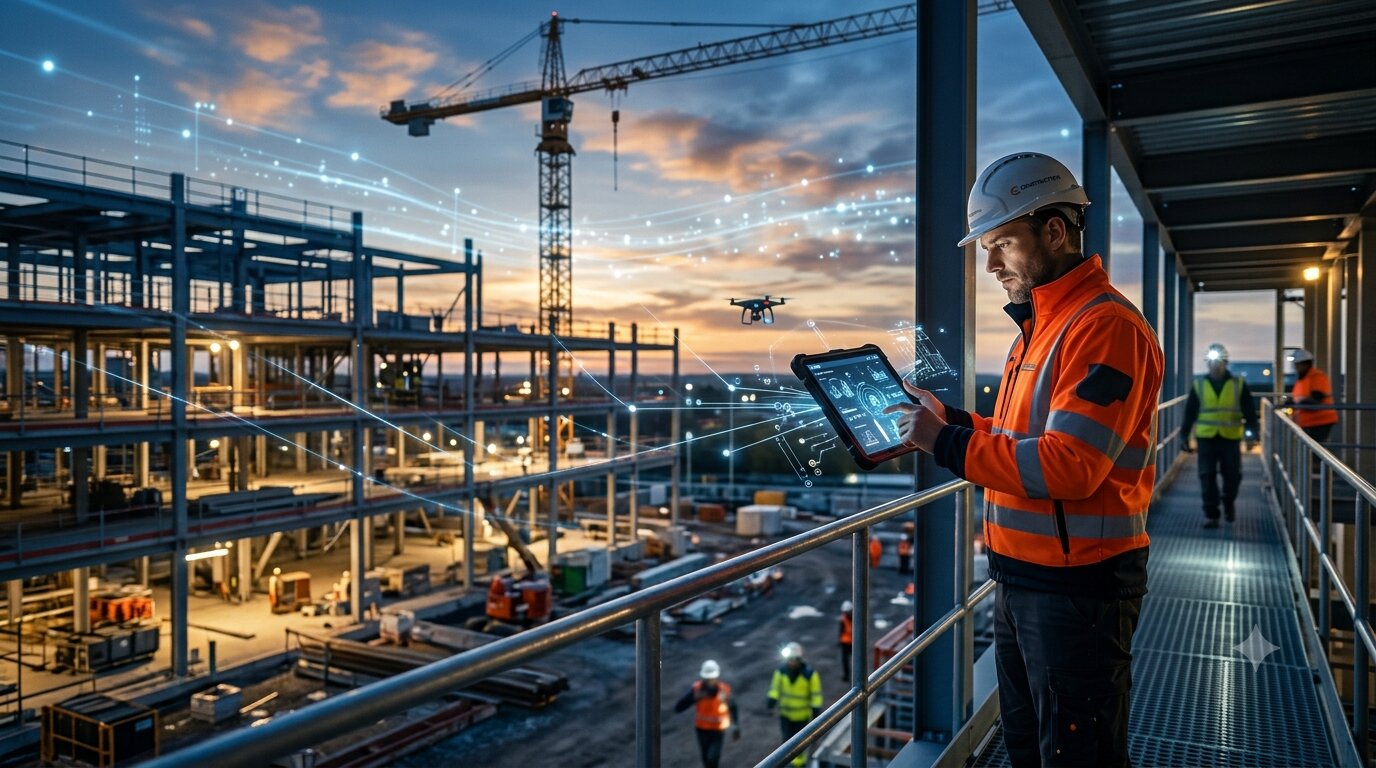
New building methods, materials, regulations, equipment, and safety standards have changed the way projects are delivered. Today, another major shift is happening: construction companies are increasingly using digital technology to manage projects, communicate with teams, analyze performance, and improve the way they do business.
But digital transformation in construction isn't simply about buying new software.
A company can have five different platforms and still struggle with poor communication, outdated information, and inefficient processes. The real opportunity comes from using technology to solve problems that are already costing your business time and money.
Done properly, digital transformation can help construction companies work more efficiently, make better decisions, provide a better client experience, and create new opportunities to win work.
So where should you start?
1. Get Everyone Working From the Same Information
Ask a project manager where the latest version of a document is, and there's a good chance the answer will involve an email, a spreadsheet, a shared folder, or a message from someone on the project team.
That's not necessarily a technology problem. It's an information problem.
Construction projects generate enormous amounts of data, from schedules and budgets to drawings, RFIs, change orders, daily reports, photographs, and invoices. When that information is spread across different systems and devices, employees spend valuable time finding it rather than using it.
Centralizing project information can change that.
A construction management platform can give project managers, field teams, office staff, and other stakeholders access to the information they need without constantly asking someone else to send it.
The result isn't just convenience. It can mean fewer mistakes, faster decisions, and less time wasted trying to determine which document, number, or update is the correct one.
2. Automate the Work Nobody Wants to Do
There are plenty of tasks in construction that require experience and judgment.
Then there are the tasks that mostly require someone to sit at a computer and repeat the same process over and over.
Think about:
- Creating recurring project reports
- Sending deadline reminders
- Updating spreadsheets
- Entering the same information into multiple systems
- Tracking approvals
- Organizing project documentation
These jobs might only take a few minutes at a time, but across a project team, those minutes add up quickly.
Construction automation can handle many of these repetitive processes in the background. That gives project managers and administrators more time to focus on coordinating work, managing risks, communicating with clients, and solving problems.
The goal isn't to automate the people out of the process.
It's to stop highly skilled people from spending their time on work that doesn't require their skills.
3. Know When a Project Is Starting to Go Off Track
Most project problems don't suddenly appear out of nowhere.
A schedule starts slipping one activity at a time. Productivity gradually falls. Costs begin moving in the wrong direction. A material delay creates a knock-on effect somewhere else.
The earlier you see those changes, the more options you have.
This is where construction data and analytics become particularly valuable. Construction analytics software can help teams bring together project information and identify trends in areas such as schedules, costs, productivity, and performance.
Instead of relying entirely on periodic reports or waiting for a problem to become obvious, project teams can use current data to understand what's happening while the work is still underway.
You might be looking at schedule performance, labor productivity, costs, resource usage, or project milestones. The specific metrics will vary from company to company, but the principle is the same: use information to spot problems while they're still manageable.
Experienced project managers will always need to make the final call. Digital tools simply give them more information to make that call with.
And that can be the difference between fixing a small problem and explaining a major delay to a client.
4. Bring the Field and Office Closer Together
Construction has always had a communication challenge.
The people in the office may be managing budgets, schedules, contracts, and client relationships, while the people on site are dealing with what is actually happening that day.
Those two perspectives need to meet somewhere.
Mobile construction technology makes that easier by allowing field teams to share updates, photos, documents, issues, and progress information without waiting until they return to the office.
Imagine a superintendent discovering a site issue in the morning and being able to document it immediately, rather than relying on a phone call or waiting for the next meeting. The project manager can see what happened, the relevant people can be notified, and a decision can be made sooner.
Business communication platforms such as Troop Messenger can help construction companies coordinate conversations between on-site teams, project managers, and office staff. Features such as group messaging, file sharing, and audio and video calls provide teams with practical ways to discuss site updates, share project information, and resolve issues without relying entirely on email or in-person meetings. This can support faster coordination across active construction projects, particularly when teams are working across multiple locations.
It's a small change in the way information moves.
But on a busy project, small improvements in communication can have a much larger effect.
5. Give Clients More Than an Occasional Project Update
There's a simple reason clients appreciate digital construction tools: they don't like being left in the dark.
A client may not need to know every detail of a project, but they want confidence that things are moving forward and that potential problems are being handled.
This is where technology can improve the customer experience without creating more work for your team.
Instead of manually preparing every update, construction companies can use digital dashboards, progress reports, project portals, photographs, and automated notifications to keep clients informed.
That transparency can become particularly valuable on large commercial projects where the client may not be on site every day.
And there's a longer-term benefit.
A client who feels informed and confident throughout a project is more likely to remember the experience positively when it's time to choose a construction partner again.
6. Learn From the Projects You've Already Built
Your completed projects contain a lot more value than the photographs you put in your portfolio.
They contain data.
How long did similar projects take? Where did delays occur? Which activities required more labor than expected? How accurate were your original estimates? Which types of projects delivered the strongest margins?
If you can answer those questions consistently, your past work can improve your future work.
Digital systems make it easier to store and analyze this historical information rather than allowing it to disappear into old project folders.
Over time, patterns start to emerge.
That can improve estimating, scheduling, resource planning, and project selection. It can also help management understand which types of work the company performs particularly well.
In other words, every completed project can become a source of intelligence for the next one.
7. Make Safety Data More Useful
Safety documentation has traditionally been something construction companies collect because they have to.
Digital transformation creates an opportunity to make it much more useful.
Instead of simply recording inspections, incidents, or corrective actions, companies can begin looking for patterns across projects. Are certain types of issues appearing repeatedly? Are particular activities generating more incidents? Are corrective actions being completed on time?
Digital safety platforms can make this information easier to capture, organize, and review.
That doesn't replace the judgment of safety professionals or the importance of good site practices. It simply gives those people better information.
There's also a business benefit. A strong safety record can influence whether clients, partners, subcontractors, and employees want to work with your company.
Safety is part of your reputation.
8. Use Technology to Improve the Way You Win Work
Digital transformation isn't just an operations issue.
It can also change the way construction companies compete for new business.
Consider what happens when a prospective client asks about your experience managing a complicated project. You could tell them that your team has handled similar challenges before.
Or you could show them.
If your project information is organized and accessible, you can build stronger proposals and case studies around actual results. You can demonstrate the types of projects you've completed, how your teams performed, and how you responded when things became difficult.
That's powerful because potential clients don't want to hear that you're capable.
They want reasons to believe you are.
Your project data can help provide those reasons.
And the more consistently you capture useful information throughout your projects, the easier it becomes to turn that experience into marketing content, sales material, and proof of expertise.
9. Don't Make Technology the Story
There's an easy mistake construction companies can make when talking about digital transformation.
They focus too much on the technology itself.
Clients don't necessarily care that you use cloud software, automated workflows, mobile applications, or real-time dashboards. They care about what those things mean for their project.
So instead of saying:
"We use real-time construction analytics."
The more useful message might be:
"Our project teams can identify schedule and performance issues earlier, giving them more time to respond."
The technology is still there.
It's just no longer the headline.
This is particularly important when using digital transformation as part of your sales and marketing strategy. Technology should support your value proposition, not become the value proposition.
Better visibility. Faster decisions. Fewer delays. More transparent communication. A smoother client experience.
Those are the things buyers care about.
10. Start With One Problem, Not Ten New Software Platforms
Digital transformation can sound expensive and complicated, especially for a construction company that has relied on the same processes for years.
It doesn't have to be.
You don't need to replace every system at once or completely redesign the way your business operates. In fact, trying to change everything simultaneously can make adoption harder.
Start with the problem that is costing you the most.
Maybe your project managers spend too much time creating reports. Perhaps your field and office teams struggle to share information. Maybe your estimating process relies on outdated spreadsheets, or your leadership team doesn't have enough visibility into project performance.
Pick one.
Find a solution. Introduce it properly. Give your team time to use it. Then measure whether it actually made things better.
If it saves time, reduces errors, improves communication, or gives managers better information, you've got something worth building on.
Digital transformation doesn't have to happen in one big leap.
It can happen one useful improvement at a time.
The Takeaway
The construction companies that benefit most from digital transformation won't necessarily be the ones with the most technology.
They'll be the ones that use technology with a clear purpose.
The right digital tools can help you bring project information together, automate repetitive work, identify problems earlier, connect the field with the office, improve client communication, and learn from the projects you've already completed.
Those improvements can have a much bigger effect than simply making everyday tasks more convenient.
Better information can lead to better decisions. Better decisions can lead to better project outcomes. Better project outcomes can lead to stronger client relationships, more referrals, better case studies, and more opportunities to win new work.
That's the real value of digital transformation for construction companies.
It's not about becoming a technology company.
It's about building a smarter construction business that works more efficiently, serves clients better, and is better positioned to win the projects that come next.