Connect with us
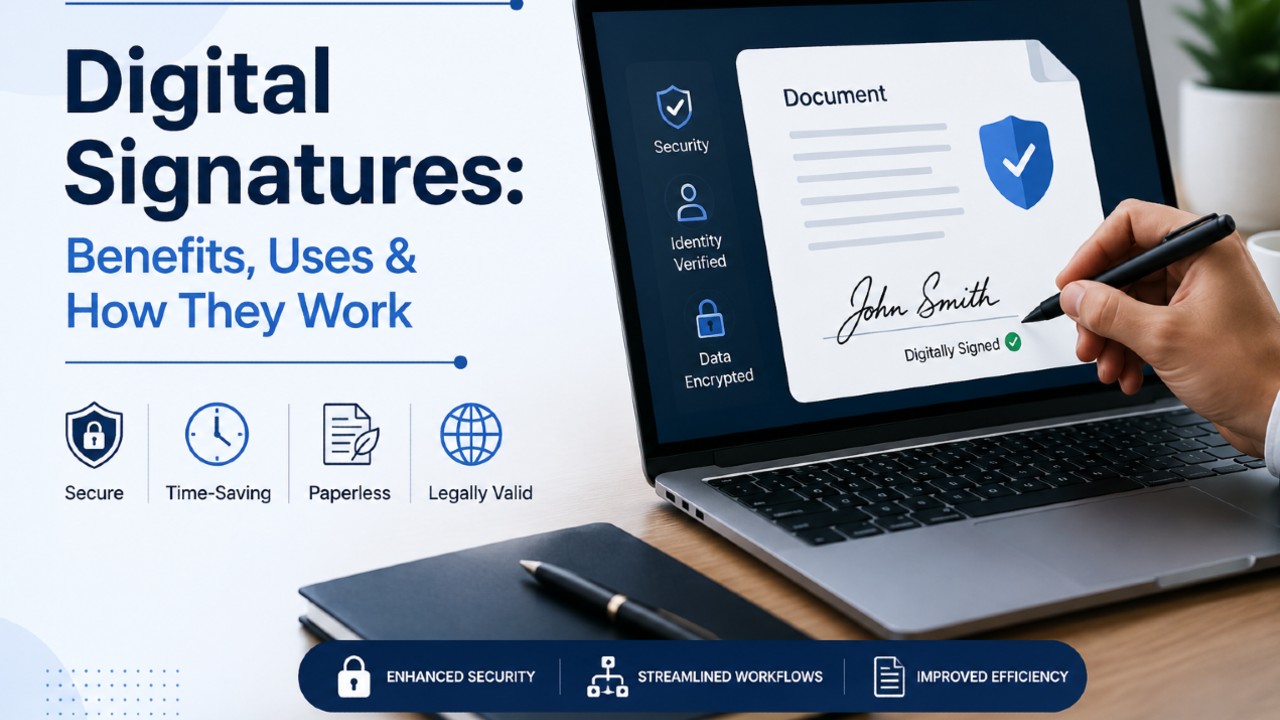
Digital Signatures: Benefits, Uses & How They Work
Digital signatures have evolved into one of the most crucial components in today's secure paperless business transactions. With companies opting for digital transformations, remote working, and online collaboration, they require efficient, safe, and compliant ways to sign and manage documents. It doesn't matter whether it concerns business contracts, employee contracts, financial documentation, government forms, etc., digital signatures allow for streamlining processes while ensuring safety of confidential data.
If you are a company owner, an IT specialist, a lawyer, or someone who is interested in secure signing of documents digitally, then knowing about digital signatures is more relevant than ever before. In this article, you will find out what digital signatures are, how they work, why businesses opt for digital signatures, their main benefits, legality, common usage examples, and best practices.
What Are Digital Signatures?
A digital signature can be referred to as one of the most reliable ways of signing online documents as it helps confirm the identity of the signer. The difference from the handwritten one lies in its uniqueness since a digital signature cannot be duplicated as it uses encryption technology to confirm the authenticity of the document.
As corporations increasingly implement various digital tools, digital signatures become an essential part of the process of data protection and fast approval of a document. No matter whether you have to sign a business contract or an invoice, a digital signature will confirm the authenticity of the document.
In contrast to the usual signature, a digital one is not just an image placed in the document, but encrypted identity that connects both the signer and the document.
Understanding Digital Signatures
Each and every digital signature consists of several encryption methods as well as digital certificates, thus creating a trust relationship between the sender and recipient of the message. Any change in the document automatically results in invalidation of the signature.
The third party called Certificate Authority (CA) verifies the user of the signature using a Digital Signature Certificate (DSC).
Why Digital Signatures Matter in a Digital World
Everyday, there are hundreds or even thousands of documents being traded through business enterprises. There is a definite need for a system that can provide identity verification and secured transmission of confidential information including client contracts, financial statements, HR documents, government paperwork, etc.
The following are some of the reasons why companies feel the need for using digital signatures:
- Identity Verification
- Security of Documents
- Rapid Approval of Documents
- Transactions online
- Legal compliance
In view of the digital revolution, digital signatures have become an integral part of the business communication process.
How Digital Signatures Work

The main misconception about digital signatures is the idea that they are complex and hard to manage. On the contrary, the signing itself is quite simple. The sophisticated encryption system operates in the background and ensures the safety of all the documents by authenticating and securing them from any alterations after signing.Signing of business contract, letter of offer or any other type of financial documents is done fast and safe.
Creating a Digital Signature
The following automatic and secure process happens during the signing of the document:
- Preparing of the document for signing.
- Making a digital fingerprint (hash) of the document.
- Encrypting the digital fingerprint with a private key of the person who signs the document.
- Embedding the digital fingerprint into the document as a signature.
The digital fingerprint is unique to this particular document, so even a change of one character will result in making a new digital fingerprint of this document.
Authentication and Verification
Once the document is signed, then the recipient's system verifies the signature with the help of the signer's public key and digital signature certificate (DSC) of an authorized Certificate Authority (CA).
While verifying the signature, the following are checked:
- The identity of the signer.
- Whether the certificate is a trusted and valid one.
- Whether there are any changes made to the document post-signing.
- Whether the signature matches the document.
When all of the above conditions are true, then the document is verified. In case of any change post-signing, the signature becomes invalid, meaning the recipient knows that the document has been modified.
The use of digital signatures for signing and sharing the document electronically is considered one of the most secure ways. This gives confidence to organizations to exchange confidential documents digitally.
Why Businesses Are Adopting Digital Signatures
Today’s office is no more bound by the limitations of an office and documents. The organization works through interacting with the customer, employees, and other related parties without being confined to the geography. In such a situation, the use of digital signatures becomes very important for streamlining the processes of approvals, security, and digital workflow.
Digital signatures are becoming popular among various organizations regardless of their sizes; be it start-ups or multinational companies.
The Shift to Paperless Workflows
The document signing procedure is always a rather complicated and lengthy one because of stages like printing, signing, scanning, sending the document via email, and storing the copy physically. However, digital signature makes all the above actions easier by letting people sign any document wherever they are and whenever they want without printing, signing, scanning, emailing, and storing the document physically.
Going paperless in terms of document management can be helpful for businesses in the following manner:
- It will allow for approving documents and doing other business processes quicker.
- It will save money on printing and courier services used for delivering documents.
- It will provide an opportunity to work remotely.
- It will help to organize documents easily.
- It will contribute to the environmental sustainability.
Why Traditional Signatures Are No Longer Enough
Though traditional handwritten signatures have a legitimate purpose, they usually do not correspond to the demands of today’s digital world in terms of speed and security. Physical papers can get lost, delivered late, and tampered with at any moment without the possibility of immediate identification.
Digital signatures, on the other hand, incorporate features such as identity authentication, security and integrity of the message, as well as protection against repudiation. They are easily integrated into modern document management systems, thus facilitating the process of monitoring approvals and keeping track of changes and compliance with regulations.
As organizations move further along the road of their digital transformation, implementing digital signatures means much more than just switching from paper to digital.
Key Benefits of Digital Signatures
The use of digital signatures helps companies automate the process of document management in an efficient manner without compromising on safety and compliance. Apart from substituting traditional signatures, it makes work easier and helps make digital transactions safe.
Improved Security
Through encryption, digital signatures authenticate the signer and ensure that documents cannot be changed by anyone other than the rightful owner. This way, any change in the signed document will render it invalid.
Legal Compliance
It takes only minutes for one to sign documents digitally and share them online without having to print and scan them, which saves much time.
Lower Costs and Better Productivity
Transitioning into digital signatures decreases paper consumption, printing, storage, and operational costs.
The benefits include:
- Increased document processing speed
- Decreased cost of operations
- Remote document signing
- Enhanced cooperation
- Improved customer and employee experience
Through merging the elements of security, efficiency, and convenience, digital signatures allow businesses to upgrade their procedures and efficiently handle documents in today’s digital environment.
Digital Signatures vs Electronic Signatures
While the two phrases “digital signature” and “electronic signature” seem to mean the same thing, the truth of the matter is that there is no similarity between the two. The two concepts are similar in the way they both allow electronic signing of documents, but there are differences in terms of authentication, security, and legal binding.
Electronic signatures encompass all forms of electronic signing methods, which include entering your name into the document, pressing an “I agree” button or pasting a scanned signature. It is easy to do, but at times it might not necessarily authenticate the identity of the signee.
The digital signature employs encryption and Digital Signature Certificates to authenticate the signer’s identity and ensure the document is secure.
Feature | Digital Signature | Electronic Signature |
| Security | High (Encryption-based) | Basic |
Identity Verification | Verified using DSC | Limited |
| Tamper Detection | Yes | Usually No |
Best Used For | Legal, financial, and official documents | Routine approvals and agreements |
Which One Should You Choose?
It depends on what type of paper you need to sign. An electronic signature is good for fast approvals when you don't care about anything else except for quick processing. But in case of contract signing, financial activities, government papers, etc., there's an option of using a digital signature.
Common Use Cases of Digital Signatures
Today digital signatures play an important role in running businesses since they allow organizations to safely process their documents without filling any paperwork. They are useful due to their ability to verify identity and ensure document integrity.
1. Business Contracts
Digital signatures help to finalize deals and make negotiations between an organization and its clients, suppliers, and business partners much faster.
2. Human Resources
HR departments use digital signatures to sign offer letters, employment contracts, onboarding forms, policy acknowledgment letters, and various agreements made between the organization and its employees to ensure a quicker process of recruitment.
3. Banking and Finance
Financial services use digital signatures to authorize loan applications, open bank accounts, fill out the investment paperwork, and perform other financial transactions in accordance with regulations.
4. Government and Healthcare
Government bodies use digital signatures for signing off on permits, licenses, tax returns, and other official papers, while healthcare uses digital signatures for patient consent forms, insurance documentation, and medical records.
5. Legal and Professional Services
Professional services such as law firms and consulting businesses use digital signatures to sign off on legal agreements and other confidential contracts and service documents.
With the further development of digital transformation in all industries, digital signatures become the obvious choice for many companies.
Are Digital Signatures Legally Valid?
Yes, digital signatures are accepted by many nations around the world and are legally acceptable for all kinds of transactions. Legal validity in the case of a digital signature is guaranteed by means of the application of encryption, identification process, and Digital Signature Certificates (DSC).
There have been many legislations made by different regions for recognizing the validity of digital signatures. These include:
- India – Information Technology (IT) Act, 2000
- USA – Electronic Signatures in Global and National Commerce (ESIGN) Act
- Europe – eIDAS Regulation
Under such acts, a digitally signed document has the same legal validity as a handwritten signature does.
Why Businesses Trust Digital Signatures
Besides being legally recognized, digital signatures offer certain characteristics that improve accountability and assurance in the process of handling documents. There is always an audit trail embedded in any signed document that contains information such as identification of the signer, the time of signing, and the document’s status.
The organization can use the audit trail for:
- Verifying the authenticity of the signed document.
- Detecting any form of tampering.
- Meeting compliance requirements.
- Maintaining accurate digital record keeping.
Best Practices for Using Digital Signatures
However, implementing digital signatures is just the start. In order to keep them secure and reliable, businesses must use certain best practices that will help to avoid any problems in handling sensitive data and comply with industry standards. Implementing a digital signing process effectively not only helps to eliminate any security problems, but it also creates trust between employees, clients, and business partners.
Here are some of those practices:
- Select a reliable provider of digital signatures that will adhere to accepted standards of security and law.
- Make sure that your Digital Signature Certificate (DSC) and private keys are safe from any kind of theft or misuse.
- Implement Multi-Factor Authentication (MFA) to provide an additional level of security during the signing process.
- Verify your certificates regularly in order to make sure that they stay active.
- Educate your employees on how to handle sensitive documents and sign them properly.
- Backup all signed documents securely and audit all processes.
These practices will help you to protect valuable documents from being misused and will keep you compliant with all laws and regulations.
Common Challenges and How to Overcome Them
Although digital signatures provide a number of benefits in terms of simplifying document management, there may be some obstacles in the process of implementation for any business. However, all of the problems listed above may be solved with proper planning, staff training, and the use of appropriate technologies.
The first problem might be the one connected to user adoption. Those employees who are not familiar with the idea of digital signing tools will definitely need time to get used to the new approach and leave the traditional ways of managing documents behind.
There might be certain issues concerning certificate management, software incompatibility, and other particular regulations that need to be followed by the business. The choice of the trustworthy digital signature solution compatible with existing systems will greatly reduce the risks.
Thus, for an efficient transition, the business should:
- Train staff about digital signing principles.
- Use only reputable and compliant digital signature vendors.
- Update the certificates regularly.
- Integrate digital signing into existing workflow.
- Review compliance requirements regularly.
The Future of Digital Signatures
Digital signature solutions will continue to evolve along with business digitization. Digital signatures will become increasingly common practice not just because of the conveniences they provide but also due to the importance of the ability to ensure workflow efficiency and security.
The development of emerging technologies will also shape the future of digital signature solutions. AI technologies will provide additional means for ensuring user identity, whereas cloud-based solutions will allow working with documents online. The ability to use mobile devices when signing documents is another trend to consider.
The main future trends in terms of digital signature solutions are:
- AI-powered identity verification
- Cloud-based document signing
- Mobile-first digital signing solutions
- Enhanced cybersecurity and Zero Trust Security
- Widely adopted by the government and regulated industries
As companies implement various processes digitally, the role of digital signatures in making these processes safe and efficient will continue to increase.
Conclusion
The introduction of digital signatures has revolutionized how individuals and companies handle documents in the digital age. With the power of strong encryption, secure identity validation, and legal acceptance, digital signatures present a reliable replacement for the old fashioned process of physically signing documents.
No matter what type of work you do, whether signing contracts, processing employee files, performing financial transactions, or working with government documents, digital signatures can save time and hassle by making the process simpler and eliminating unnecessary paperwork and costs. And most importantly, it gives your company peace of mind in carrying out secure and legally-binding digital transactions.
With the ongoing trend of digital transformation of workplaces, embracing digital signatures becomes not only necessary but also a wise choice for any forward-thinking business.
FAQs
1. What is a digital signature?
A digital signature is a type of electronic authentication technique that uses the process of encryption to ensure that both the sender of the message and the receiver are assured that the document has not been tampered with since it was signed.
2. How do digital signatures work?
The digital signature works on the basis of creating an encrypted fingerprint for a document by using the sender’s private key. This can be verified by using a public key and the Digital Signature Certificate (DSC). Any alteration to the document makes the signature void.
3. Are digital signatures legally valid?
Yes, because digital signatures are accepted legally in many nations, such as the IT Act, 2000 of India, the ESIGN Act in America, and the eIDAS Regulation in the European Union, only when these adhere to the laws.
4. Are digital signatures secure?
Yes, indeed. The digital signatures come with sophisticated means of encryption, authentication, and tampering detection that prevent any unauthorized modification of the document. Furthermore, digital signatures have an ability to track back the signature of the document along with the date.
5. What is the difference between a digital signature and an electronic signature?
An electronic signature refers to any form of electronic process for indicating agreement, like signing your name using the keyboard or pressing an approve button. A digital signature refers to a form of electronic signature that offers a higher level of security because it uses encryption.