Connect with us
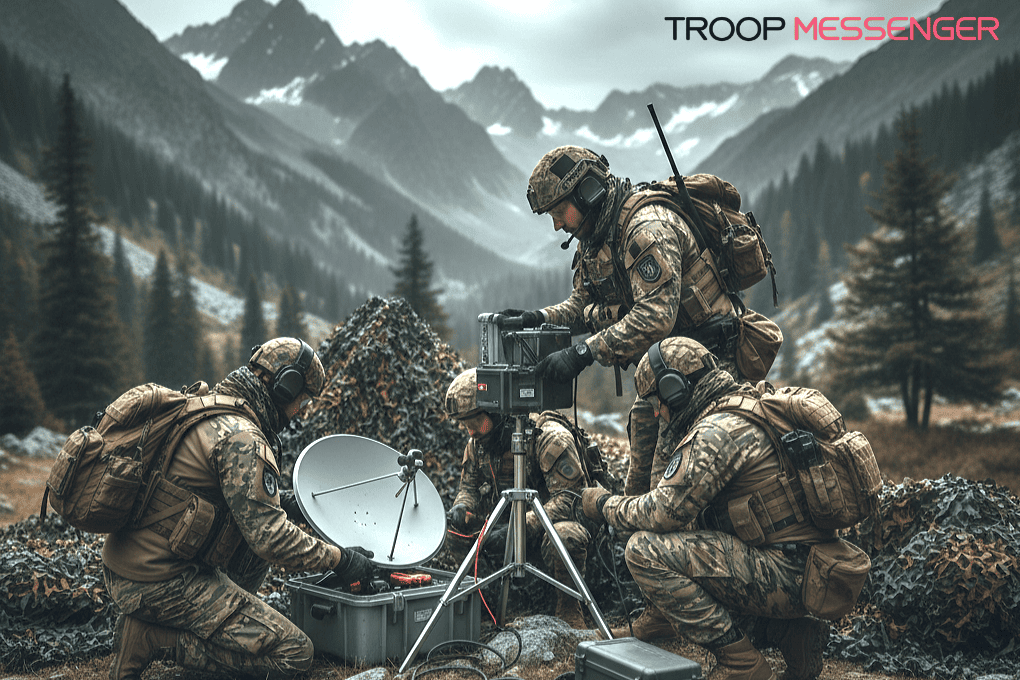
Defence Communication Systems: Military Satellites Explained part-3
What Are Military Communication Satellites?
Military communication satellites are specialized space-based systems that enable secure, long-range communication between defence forces, command centers, naval fleets, aircraft, and deployed units worldwide. Unlike commercial satellites, military satellites are designed to operate in contested environments and support encrypted communications, intelligence sharing, battlefield coordination, and strategic command operations. These systems provide resilient connectivity even when terrestrial communication infrastructure is unavailable, damaged, or under attack, making them a critical component of modern defence communication networks.
Satellite Communication Architectures in Defence
Payload Technologies
Military satellites employ sophisticated payload technologies designed for mission-critical performance:
Bent-pipe transponders: represent the traditional approach, where signals are received from ground stations, frequency-converted, amplified, and retransmitted without onboard processing.
This simple architecture offers reliability and transparency but requires extensive ground infrastructure for routing and processing.
Regenerative processors: take communications a step further by demodulating, decoding, and re-encoding signals aboard the satellite.
This approach enables error correction, signal restoration, and more efficient bandwidth utilization crucial when operating at the edge of coverage areas or under degraded conditions.
Cross-link capabilities: allow satellites to communicate directly with each other, creating a mesh network in space.
This architecture reduces dependence on ground stations, enables global coverage with fewer terrestrial facilities, and complicates adversary efforts to intercept or disrupt communications.
Spectrum Allocation
Defence communications leverage multiple frequency bands, each offering distinct advantages:
UHF band (300 MHz - 3 GHz): Provides reliable communications for mobile forces, penetrates foliage and structures, and supports legacy terminals.
Used extensively for tactical communications and submarine communications.
X-band (7-12 GHz): Reserved exclusively for military use, offering higher bandwidth than UHF with reasonable resistance to atmospheric interference. Ideal for command and control applications.
Ka-band (26-40 GHz): Delivers high-bandwidth connectivity for data-intensive applications like real-time video, ISR (Intelligence, Surveillance, Reconnaissance)data, and networked operations.
More susceptible to rain fade but offers significant capacity.
- Optical frequencies : Emerging laser communication systems promise orders of magnitude more bandwidth with inherently narrow beams that resist interception and jamming.
- Several nations are actively developing space-based optical terminals.
Ground Infrastructure and User Terminals
The space segment represents only half of a satellite communication system. Ground infrastructure and user terminals determine how effectively forces can leverage orbital assets.
Terminal Categories
Transportable terminals : serve as communication hubs for deployed units, offering high-bandwidth connectivity that can be relocated as operational requirements shift.
These systems typically require vehicles for transport and setup times measured in hours.
Maritime terminals : must operate aboard ships experiencing continuous motion, requiring sophisticated stabilization systems to maintain satellite lock.
Modern naval vessels integrate satellite communications into ship-wide networks supporting everything from fleet coordination to crew welfare.
Airborne terminals face the most challenging operating environment, maintaining connectivity while traveling at high speeds and altitudes.
These systems support command aircraft, ISR platforms, and increasingly, unmanned aerial vehicles requiring real-time control and data relay.
Man-portable terminals put satellite connectivity in the hands of small tactical units.
Weighing under 50 pounds, these systems enable special operations forces, forward air controllers, and reconnaissance teams to communicate from remote locations where terrestrial networks don't exist.
Antenna Solutions
Antenna technology directly impacts terminal size, weight, power consumption, and performance:
Parabolic dishes : Time-tested reflector antennas offer excellent gain and efficiency but require mechanical pointing systems and occupy significant space.
Phased-array antennas : Electronically steer beams without physical movement, enabling rapid retargeting between satellites and maintaining communications through platform maneuvers. Higher manufacturing costs are offset by operational advantages.
Flat panel antennas : Emerging metamaterial and electronically steered designs promise aircraft-conformal installations and vehicle-mounted systems with minimal aerodynamic impact.
Active development efforts aim to reduce costs while improving performance.
Securing the Link Resilience and Protection Measures Military satellite communications face sophisticated threats requiring multiple layers of protection.
Encryption and Key Management
- All classified military traffic employs robust encryption standards approved by national security agencies.
- Modern systems implement end-to-end encryption where signals remain encrypted throughout the transmission path, only being decrypted at authorized terminals.
- Key distribution for large, geographically dispersed forces presents significant challenges.
- Solutions include secure key distribution networks, over-the-air rekeying capabilities, and compartmentalized key hierarchies that limit compromise impact.
Anti-Jamming Strategies
Adversaries can deploy ground-based or space-based jammers to disrupt satellite communications.
Defence systems counter these threats through:
Frequency hopping rapidly changes transmission frequencies according to pseudo-random patterns known only to authorized users.
Jammers must either spread power across wide bandwidths or attempt to predict hopping patterns both significantly reducing effectiveness.
Adaptive power control monitors link quality and adjusts transmission power to maintain connectivity while minimizing the signal footprint available for interception or jamming.
Beam shaping concentrates satellite power toward specific users or regions while minimizing spillover into areas where adversaries might deploy jamming systems.
Advanced satellites can null specific interference sources while maintaining service elsewhere in the coverage area.
Mission Applications Across the Services
Joint Operations and Cooperative Engagement
- Modern military operations require seamless coordination across services.
- Satellite communications enable joint command and control architectures where air, land, sea, and space forces share a common operational picture.
- Cooperative engagement systems allow sensors on one platform to guide weapons launched from another an F-35 detecting a target that's engaged by a ship-launched missile, for example.
- These capabilities depend on low-latency satellite links carrying targeting data and coordination messages.
Non-Combat Support Functions
Beyond combat operations, military satellites support humanitarian and support functions:
Medical evacuation coordination relies on satellite communications to connect field medics with specialists who can provide remote consultation, review transmitted medical imagery, and coordinate evacuation to appropriate facilities.
Disaster relief operations often occur in regions where infrastructure has been destroyed. Military satellite terminals provide first responders with connectivity for coordination, logistics, and situation reporting.
Logistical coordination across global supply chains requires constant communication.
Satellite links enable asset tracking, route optimization, and delivery confirmation for equipment and supplies supporting deployed forces.
Looking Ahead Technology Trends and Policy Issues
Space Domain Challenges
Orbital congestion increases collision risks as more nations and commercial operators launch satellites. Military systems must implement collision avoidance while maintaining operational security about satellite locations and capabilities.
Space debris threatens all space operations. A single collision generating thousands of fragments could render orbital regimes unusable for decades.
Defence planners must consider debris mitigation in satellite design and end-of-life disposal.
Anti-satellite weapons developed by potential adversaries pose direct threats to communication satellites.
Nations are developing maneuverable satellites, distributed architectures, and rapid reconstitution capabilities to maintain communications even if individual satellites are disabled.
Interoperability and Emerging Technologies
Commercial constellation integration offers defence forces access to additional bandwidth and coverage, though security considerations limit applications.
Partnerships with commercial providers can supplement sovereign capabilities for less-sensitive applications.
Allied network interoperability enables coalition operations where forces from different nations must coordinate actions.
Standardized waveforms, cross-domain solutions, and joint frequency planning support combined operations.
Future technological advances promise revolutionary capabilities:
Optical communications : Laser links offering 100x bandwidth improvements over RF systems
Quantum communications : Un hackable encryption based on quantum key distribution
Software-defined satellites : Reconfigurable payloads adapted to changing mission requirements through software updates
Conclusion
Military satellite communications have evolved from simple voice relay to sophisticated networks supporting data-intensive operations across all domains.
The architecture combining space segments, ground infrastructure, and user terminals creates resilient systems that function globally under contested conditions.
Explore More on Defence Communication Systems
Defence Communication Systems Complete Introduction and Overview
Next-Generation Defence Communication Systems and Messaging part -1
https://www.troopmessenger.com/blogs/next-generation-defence-communication-systems-and-messaging
Defence Communication Systems and Military Radios Explained part-2
https://www.troopmessenger.com/blogs/-defence-communication-systems-and-military-radios-explained
Frequently Asked Questions
1. What are military communication satellites?
Military communication satellites are space-based communication systems that provide secure and reliable connectivity for defence organizations. They enable the transmission of voice, data, video, and command information across vast distances while supporting military operations in remote and hostile environments. These satellites help maintain communication between command centers, deployed forces, naval fleets, and aircraft, ensuring uninterrupted coordination during critical missions.
2. Why are military satellites important for defence communication?
Military satellites provide global communication coverage that is not dependent on terrestrial infrastructure. They enable secure communication across oceans, deserts, mountains, and conflict zones where traditional communication networks may be unavailable. By supporting real-time information sharing and command coordination, military satellites help improve operational effectiveness, situational awareness, and mission success while enhancing communication resilience during emergencies and conflicts.
3. How do military satellites protect sensitive information?
Military satellites use advanced encryption, authentication protocols, secure communication channels, and anti-jamming technologies to protect sensitive information. These security measures help prevent interception, unauthorized access, and signal disruption. Modern military satellite systems are designed to maintain communication integrity even when facing cyber threats, electronic warfare activities, and attempts to compromise operational security.
4. What challenges do military satellite communication systems face?
Military satellite communication systems face challenges such as signal jamming, cyber attacks, space-based threats, electromagnetic interference, and increasing demand for bandwidth. Defence organizations must continuously modernize satellite infrastructure and security measures to address evolving threats. Maintaining communication reliability while protecting sensitive information remains a major priority for military communication planners worldwide.
5. What is the future of military satellite communication?
The future of military satellite communication includes artificial intelligence, quantum-resistant encryption, low-earth orbit satellite constellations, autonomous network management, and enhanced cybersecurity capabilities. These advancements will improve communication speed, resilience, and security while supporting increasingly complex military operations. Future satellite networks are expected to provide more flexible, reliable, and secure communication capabilities for defence organizations operating across multiple domains.