Connect with us
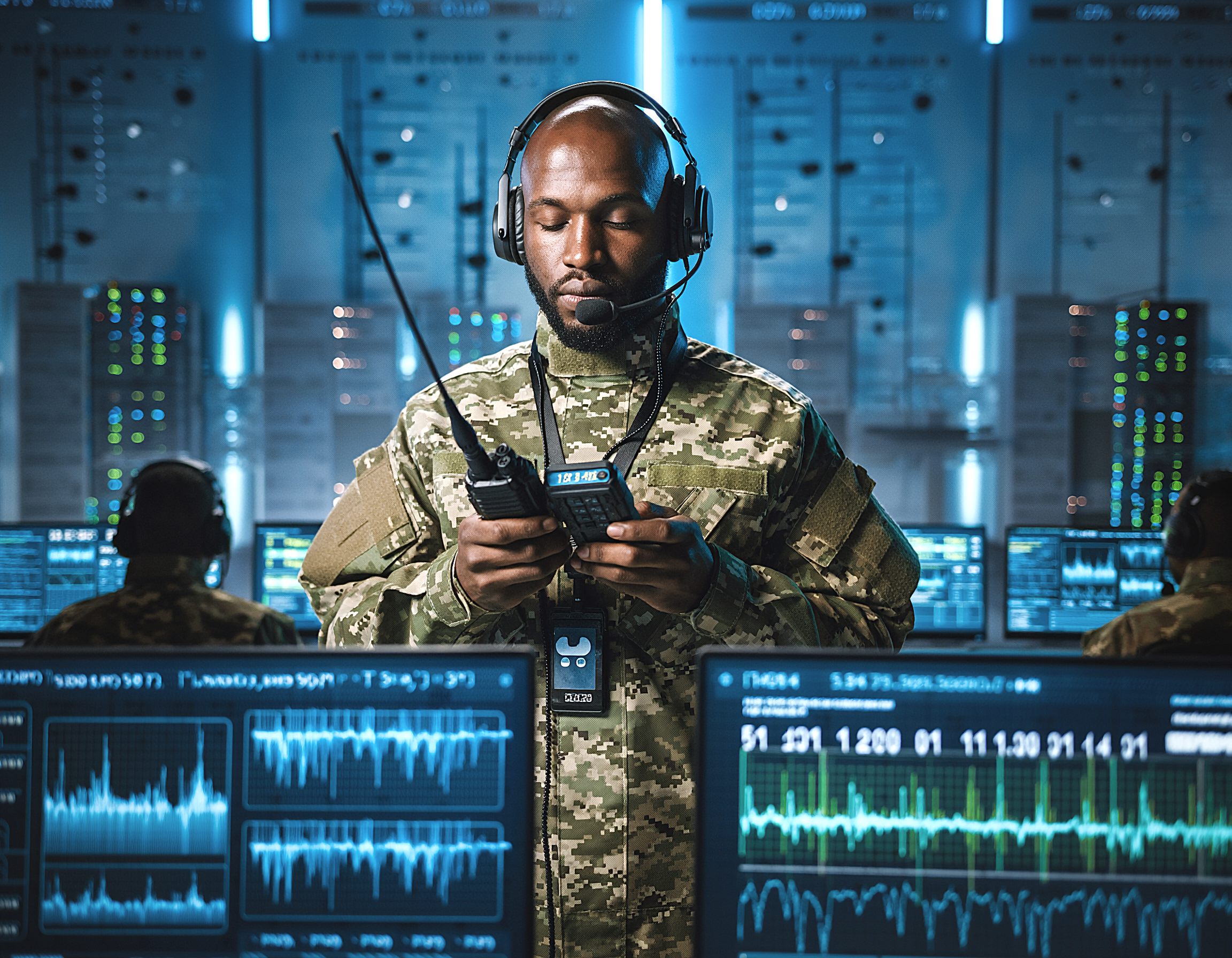
Defence Communication Systems and Military Radios Explained Part - 2
Military radio communication is the backbone of battlefield coordination and operational command.
Even in today’s era of satellites, encrypted messaging platforms, and network-centric warfare, radio communication remains one of the most reliable and resilient communication methods used by defence forces worldwide.
From tactical missions in remote terrains to real-time coordination during combat, military radio communication ensures secure, fast, and uninterrupted information flow.
This blog explains how military radio communication works, its rules, systems, types, and why it is still critical for modern defence forces.
What Are Defence Communication Systems and Military Radios?
Defence communication systems are secure technologies used by military organizations to exchange information, coordinate operations, and maintain command and control across land, air, sea, cyber, and space domains. Military radios form a critical part of these systems, enabling real-time communication between commanders, field units, intelligence teams, and support personnel. Modern defence communication systems use advanced encryption, frequency hopping, secure networking, and resilient infrastructure to ensure reliable communication even in contested or hostile environments.
Unlike civilian radios, military radios are designed to:
- Operate in hostile environments
- Resist jamming and interception
- Support encrypted communication
- Work without public infrastructure
These systems are vital during combat, disaster response, border surveillance, and training operations.
How Do Military Communicate on Radio?
Military forces communicate on radio using predefined protocols and secure procedures to avoid confusion and interception.
Key Methods Used:
- Assigned radio frequencies
- Call signs instead of real names
- Encrypted voice transmission
- Short, clear message formats
- Strict communication discipline
Messages are intentionally brief to reduce exposure time and prevent enemy interception.
Military Radio Communication Systems
Military radio communication systems consist of both hardware and software components designed for secure operations.
Core Components:
- Tactical radios (handheld, vehicle-mounted)
- Antennas
- Encryption modules
- Secure key loaders
- Command and control interfaces
These systems can operate independently or integrate with satellite and digital defence communication networks.
Types of Military Radio Communication
Military radios are classified based on range, frequency, and use case.
1. HF (High Frequency) Radios
Long-range communication
Works beyond line-of-sight
Used for strategic and backup communication
2. VHF (Very High Frequency) Radios
Short to medium range
Clear voice quality
Common in ground troop operations
3. UHF (Ultra High Frequency) Radios
Used in urban and airborne communication
Better penetration through obstacles
4. Software Defined Radios (SDR)
Programmable and flexible
Supports multiple waveforms
Used in modern defence forces
5. Tactical Radios
Rugged, portable radios
Designed for frontline soldiers
Supports encrypted voice and data
What Are the Different Types of Military Radios?
Handheld radios (soldier-level communication)
- Manpack radios (longer range for squads)
- Vehicle-mounted radios
- Naval communication radios
- Airborne communication radios
Each type serves a specific operational purpose.
Rules of Military Radio Communication
Strict rules ensure clarity, speed, and security.
The 4 Golden Rules of Radio Communication
- Be clear and concise
- Use correct call signs
- Speak slowly and clearly
- Avoid unnecessary transmissions
What Is the 3-3-3 Rule for Radio Communication?
The 3-3-3 rule is followed to maintain discipline:
- Speak for no more than 3 seconds
- Pause for 3 seconds
- Listen for 3 seconds before transmitting again
- This minimizes channel congestion and interception risk.
What Are the 5 C’s of Radio Communication?
The 5 C’s ensure effective communication:
- Clear – easy to understand
- Concise – o extra words
- Correct – accurate information
- Complete – all required details
- Controlled – disciplined transmission
Military Communication Words and Codes
Military radio communication uses standard words and phrases to avoid confusion.
Common Examples:
- Roger – Message received
- Wilco – Will comply
- Over – End of transmission
- Out – Conversation ended
- Say again – Repeat message
These terms ensure clarity even in noisy or stressful environments.
Military Radios vs Satellite Communication
FeatureMilitary | RadiosSatellite | Communication |
|---|---|---|
Range | Short to medium | Globalcoverage |
Dependency | Works without internet | Requires satellite link |
Use Case | Tactical, frontline ops | Strategic coordination |
Reliability | Strong in field conditions | Strong for long-distance |
Setup | Quick deployment | Requires infrastructure |
Best For | Real-time unit communication | Cross-region command |
Defense Communication Network in India
India operates a robust defence communication network integrating radio, satellite, and digital systems.
Key Features:
- Secure radio networks for tactical operations
- Satellite support through GSAT series
- Network-centric warfare infrastructure
- Encrypted communication platforms
- This layered approach ensures operational continuity even if one system fails.
Challenges in Military Radio Communication
Despite its reliability, radio communication faces challenges:
- Signal jamming
- Electronic warfare
- Terrain limitations
- Frequency congestion
- Cyber interception
Modern military radios address these issues using encryption, frequency hopping, and secure key management.
Conclusion
Military radios remain a critical part of modern defence communication systems, offering secure, reliable, and internet-independent connectivity during operations.
When combined with advanced encryption and digital communication platforms, military radio systems continue to support effective coordination and mission success in today’s defence environment.
(FAQs)
1. What is military radio communication?
Military radio communication is the use of secure radio frequency systems to transmit voice, data, and operational commands between military personnel, vehicles, aircraft, ships, and command centers. Unlike civilian radio systems, military radios are designed to operate in hostile environments and include advanced security features such as encryption, frequency hopping, and anti-jamming capabilities. These systems play a critical role in maintaining battlefield coordination, situational awareness, and mission success during military operations.
2. Why are military radios important in modern warfare?
Military radios remain essential in modern warfare because they provide reliable communication even when internet connectivity or satellite links are unavailable. They enable real-time coordination between commanders and field units, support tactical decision-making, and ensure uninterrupted communication during combat operations. Modern military radios are designed to withstand electronic warfare threats and operate securely in challenging environments, making them a critical component of defence communication systems.
3. How do military radios prevent signal interception?
Military radios use advanced security technologies such as encryption, frequency hopping, authentication protocols, and secure communication channels to prevent signal interception. Frequency hopping rapidly changes transmission frequencies, making it difficult for adversaries to monitor or jam communications. Combined with strong encryption standards, these technologies help ensure that military communications remain confidential, secure, and protected from unauthorized access or cyber threats.
4. What is the difference between military radios and civilian radios?
Military radios are specifically designed for secure and mission-critical communication, while civilian radios focus primarily on general communication needs. Military systems include features such as encryption, anti-jamming technology, frequency hopping, secure authentication, and operation in harsh environments. Civilian radios typically lack these advanced security capabilities. As a result, military radios provide a higher level of reliability, resilience, and protection against interception during defence operations.
5. What features should a modern military radio system include?
A modern military radio system should include end-to-end encryption, frequency hopping, anti-jamming capabilities, secure authentication, long-range communication support, and interoperability with other defence systems. Additional features such as GPS integration, data transmission, network resilience, and support for voice and video communication can further improve operational effectiveness. These capabilities help military organizations maintain secure, reliable, and real-time communication across diverse operational environments.