Connect with us
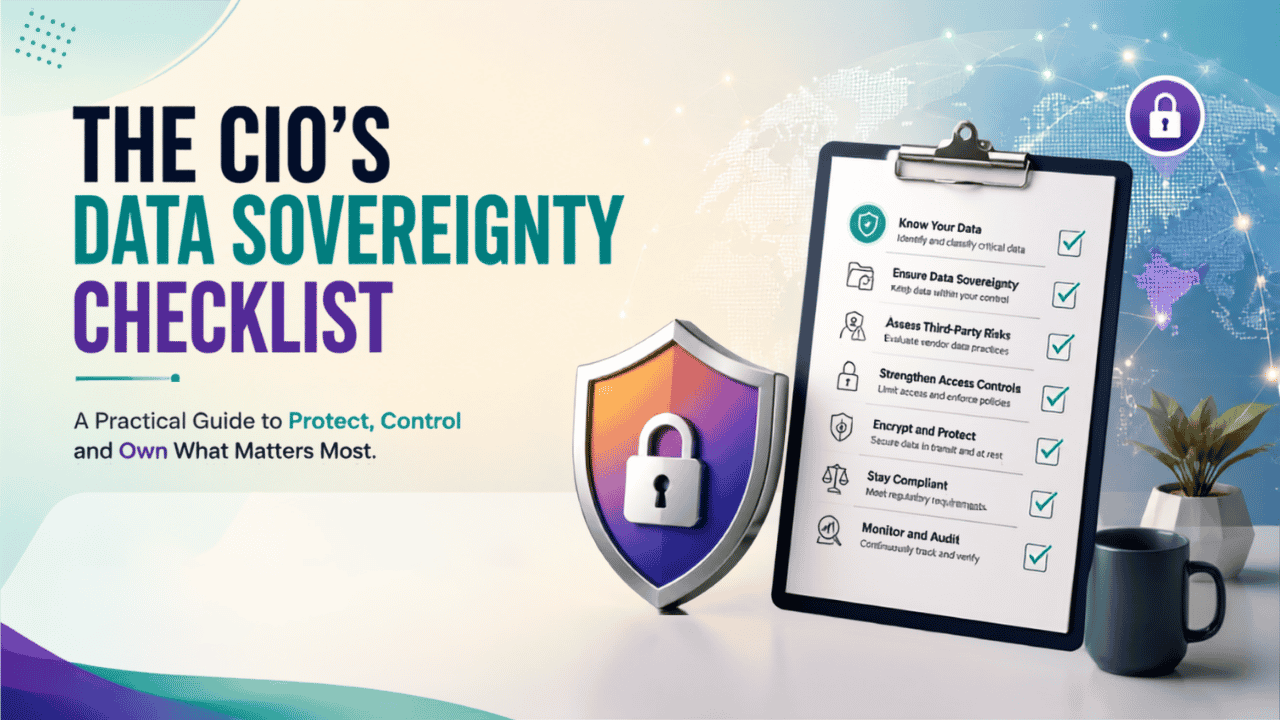
The CIO's Data Sovereignty Checklist
A data sovereignty checklist is a structured framework that helps CIOs assess whether an enterprise platform or vendor meets their organization's legal and regulatory requirements around data control before signing a contract. Sovereignty risk is not discovered during a security audit, it often surfaces when a regulator issues a fine or a vendor's terms change overnight. Organizations with strict compliance and sovereignty requirements often reduce these risks by choosing on-premise deployment for complete control over their data and infrastructure. In this guide, you'll learn how to evaluate vendors, identify sovereignty risks, and make informed procurement decision
Before You Evaluate — Define Your Sovereignty Requirements
Before evaluating any vendor, your organization must define its own sovereignty baseline. Without this, vendor assessments become subjective and inconsistent.
Work through these foundational questions internally first:
Jurisdiction mapping:
- In which countries does your organization collect, store, or process data?
- Which regulatory frameworks apply, GDPR, HIPAA, DPDP, PDPA, PCI-DSS, or government-specific standards?
- Does your organization handle classified, sensitive, or regulated data categories, including those managed by defence organizations ,that carry specific localization requirements?
Data classification:
- What categories of data does your organization hold, personal data, financial records, health information, intellectual property, classified communications?
- Which of these categories are subject to data residency or localization requirements?
- What is the consequence of a sovereignty violation for each category, regulatory fine, contract breach, national security concern?
Infrastructure position:
- Does your organization currently use cloud, on-premise, or hybrid infrastructure?
- Are there environments that must remain air-gapped or internet-restricted?
- What is your organization's appetite for vendor-managed versus self-managed infrastructure?
Compliance obligations:
- What certifications does your organization need vendors to hold?
- What audit rights does your organization require over vendor data handling?
- What contractual protections are non-negotiable before any vendor engagement?
- Use the NIST privacy framework as a baseline reference when defining your internal compliance requirements.
Answering these questions before vendor evaluation ensures every assessment is measured against a consistent, documented baseline rather than gut feel.
20 Questions to Ask Every Vendor
Use these questions in every vendor evaluation conversation. Weak or evasive answers are a red flag regardless of how polished the sales presentation is.
Data location and residency:
- In which countries are your data centers located, and can you contractually commit to storing our data only in specified regions?
- Is data replicated across multiple geographic regions by default, and can replication be restricted to a single jurisdiction?
- If we select a specific data center region, can you guarantee no data leaves that region including for support, analytics, or backup purposes?
- How do you handle data residency for backup and disaster recovery copies?
Legal jurisdiction and government access:
- Under which country's laws is your company incorporated, and how does that affect government access to data you hold on our behalf?
- Have you ever received a government order to produce customer data — particularly from government agencies in high-risk jurisdictions? What is your process for responding to such orders
- Do you have a published transparency report disclosing government data access requests — aligned with guidelines from the European Data Protection Board?
- If a government authority demands access to our data, will you notify us before complying, and under what circumstances would you not notify us?
Encryption and key management:
- Is data encrypted at rest and in transit, and what encryption standards are used?
- Who holds the encryption keys your organization or ours? Can we bring our own keys (BYOK)?
- If we terminate our contract, what happens to our encryption keys and our data?
Compliance and certification:
- Which compliance certifications do you hold — ISO 27001, SOC 2 Type II, HIPAA, FedRAMP, PCI-DSS? Can you provide current certification documentation?
- Do your certifications cover the specific data center regions where our data would be stored?
- Are subprocessors and third-party integrations covered by the same compliance certifications, or are they scoped separately?
Deployment and infrastructure control:
- Do you offer on-premise or private cloud deployment options where we retain full infrastructure control?
- Can your platform operate in an air-gapped environment with no internet connectivity?
- What access do your support and engineering teams have to our data, and how is that access logged and controlled?
Contractual protections:
- What data processing agreement do you offer, and does it include binding data residency commitments?
- What are your data breach notification timelines, and do they meet the requirements of the regulations we operate under?
- What happens to our data if your company is acquired, merges, or ceases operations?
Red Flags in Vendor Documentation
Know what to look for, and what to look out for, when reviewing vendor documentation:
Red flags that signal sovereignty risk:
- Broad subprocessor rights — terms that allow the vendor to engage any subprocessor without individual notification give the vendor latitude to move your data through jurisdictions you have not approved
- Unilateral terms of service changes — vendors that reserve the right to change data handling practices with minimal notice create ongoing sovereignty risk that cannot be managed through a one-time contract review
- Vague data location language — phrases like "data may be stored globally" or "in our cloud infrastructure" without specific geographic commitments are intentionally non-binding
- Blanket government compliance clauses — terms stating the vendor will comply with "applicable law" without specifying which jurisdiction's law applies leave you with no predictability about government access
- Limited audit rights — Limited audit rights — terms that restrict your ability to audit vendor data handling, request compliance evidence, or inspect subprocessor arrangements limit your ability to demonstrate your own compliance to regulators. Refer to CISA security guidance for baseline audit and oversight standards.
- Data retention ambiguity — unclear or vendor-controlled data retention and deletion timelines mean you cannot guarantee data is deleted when required by your compliance obligations
- Support access without logging — documentation that does not clearly describe how vendor support personnel access is controlled, logged, and audited creates an unmonitored data access risk
Green flags that signal sovereignty maturity:
- Named, contractually bound subprocessors with jurisdiction documentation
- Binding data residency commitments in the data processing agreement, not just marketing materials
- Customer-controlled encryption key options
- Transparent government access request disclosure policy
- Third-party audit reports available under NDA for customer review
- Clear, timely data deletion and export processes upon contract termination
Contractual Clauses That Actually Protect You
Marketing materials do not protect you. Contracts do. These are the specific contractual protections CIOs should require before signing any enterprise platform agreement:
Data Processing Agreement (DPA):
Every vendor handling personal data under GDPR must sign a DPA. Ensure it includes binding data residency commitments, subprocessor notification requirements, and your right to audit compliance. A vendor unwilling to sign a DPA is a vendor unwilling to accept legal accountability for your data.
Data Residency Schedule:
A specific schedule or addendum naming the exact countries and data centers where your data will be stored. "We store data in Europe" is not sufficient, the schedule should name specific AWS regions, Azure geographies, or data center locations.
Standard Contractual Clauses (SCCs):
For cross-border data transfers involving EU personal data, ensure the appropriate SCCs are executed. Verify the vendor has conducted and can provide Transfer Impact Assessments for transfers to high-risk jurisdictions.
Government Access Notification:
A contractual commitment that the vendor will notify you of any government access request before complying, to the extent permitted by law, and will challenge requests that it believes are legally invalid.
Audit Rights:
The right to request and receive third-party audit reports (SOC 2, ISO 27001) and to conduct your own audits of data handling practices with reasonable notice. Without audit rights, compliance attestations are unverifiable.
Data Deletion Guarantee:
A binding commitment that all your data, including backups and copies held by subprocessors, will be deleted within a specified timeframe upon contract termination review your vendor's pricing and contract terms carefully to understand what data deletion obligations are included in each plan tier.
Breach Notification Timeline:
Contractual breach notification timelines that meet your regulatory requirements, GDPR requires 72-hour notification to regulators, and your contract should require the vendor to notify you within a timeframe that allows you to meet that obligation.
Governing Law Clause:
Clarity on which jurisdiction's law governs the contract. A US-based vendor insisting on US governing law for a contract covering EU personal data creates immediate sovereignty tension that should be negotiated before signing.
Ongoing Monitoring After Deployment
Sovereignty compliance is not a one-time assessment, it requires continuous monitoring after deployment:
Subprocessor change monitoring:
Most DPAs require vendors to notify you of new subprocessors. Establish a process to review every notification, assess the sovereignty implications of each new subprocessor, and exercise your objection rights when new subprocessors introduce unacceptable jurisdiction risk.
Certification expiry tracking:
Vendor compliance certifications expire. Maintain a calendar of all vendor certification renewal dates and verify renewals are completed. An expired SOC 2 Type II means the vendor's compliance controls have not been audited within the certification period.
Terms of service change monitoring:
Vendors update their terms of service. Assign responsibility for reviewing vendor ToS change notifications and assessing whether changes affect your sovereignty or compliance position. A change in a vendor's privacy policy or data handling terms may require renegotiation or migration.
Audit rights exercise:
Exercise your contractual audit rights regularly, not just when a concern arises. Annual review of vendor SOC 2 reports, subprocessor lists, and data handling documentation keeps your compliance evidence current and surfaces issues before they become violations.
Incident and breach monitoring:
Monitor vendor security incident disclosures and public breach reports for platforms you use. A breach at a vendor or subprocessor may trigger your own regulatory notification obligations even if your direct data was not affected.
Data residency verification:
Periodically verify that data is actually being stored where the contract says it is. Cloud provider management consoles, data discovery tools, and periodic vendor attestation requests all provide mechanisms to validate residency commitments are being honored.
Internal access review:
Review internal user access to the platform quarterly. Ensure deprovisioned employees no longer have access, privileged access is limited to those who require it, and access logs are being reviewed for anomalous activity.
For organizations where internal communication data carries the same sovereignty requirements as other enterprise data, Troop Messenger provides on-premise deployment that eliminates vendor sovereignty risk entirely, all communication data stays within your own controlled infrastructure, subject to your own governance, with no vendor data processing agreement required.
Conclusion
Data sovereignty risk is a vendor selection problem before it is a compliance problem. CIOs who define their sovereignty requirements clearly, ask the right questions before signing, negotiate binding contractual protections, and monitor ongoing compliance after deployment consistently avoid the regulatory exposure and operational disruption that comes from discovering sovereignty gaps after the contract is signed. Use this checklist as a living document, review it when evaluating new vendors, when existing vendors change their terms, and annually as your organization's regulatory environment evolves. The organizations that treat data sovereignty as a procurement discipline rather than a legal afterthought are the ones that stay ahead of the regulatory curve rather than reacting to it.
Frequently Asked Questions
1. What is a data sovereignty checklist for CIOs?
A data sovereignty checklist is a structured evaluation framework that helps CIOs and IT leaders assess whether a vendor, cloud platform, or enterprise software meets their organization's legal and regulatory requirements around data control, residency, and jurisdiction before signing a contract.
2. What questions should I ask vendors about data sovereignty
The most important questions cover where data is stored and whether residency can be contractually committed, which government's laws govern the vendor, who holds encryption keys, what happens when governments demand data access, which compliance certifications are held and whether they cover your specific region, and what audit rights you have over vendor data handling.
3. What contractual clauses protect data sovereignty?
The most important protections are a binding Data Processing Agreement with residency commitments, a data residency schedule naming specific storage locations, Standard Contractual Clauses for cross-border EU data transfers, government access notification commitments, audit rights, data deletion guarantees, and clear breach notification timelines.
4. What are red flags in vendor documentation for data sovereignty?
Key red flags include broad subprocessor rights without notification requirements, vague data location language without geographic specificity, unilateral rights to change data handling terms, blanket government compliance clauses without jurisdiction specificity, limited or no audit rights, and unclear data deletion and retention timelines.
5. How do I monitor data sovereignty compliance after deployment?
Ongoing monitoring requires tracking subprocessor change notifications, verifying vendor certification renewals, reviewing terms of service updates, exercising contractual audit rights annually, monitoring vendor breach disclosures, periodically verifying actual data residency, and conducting quarterly internal access reviews.