Connect with us
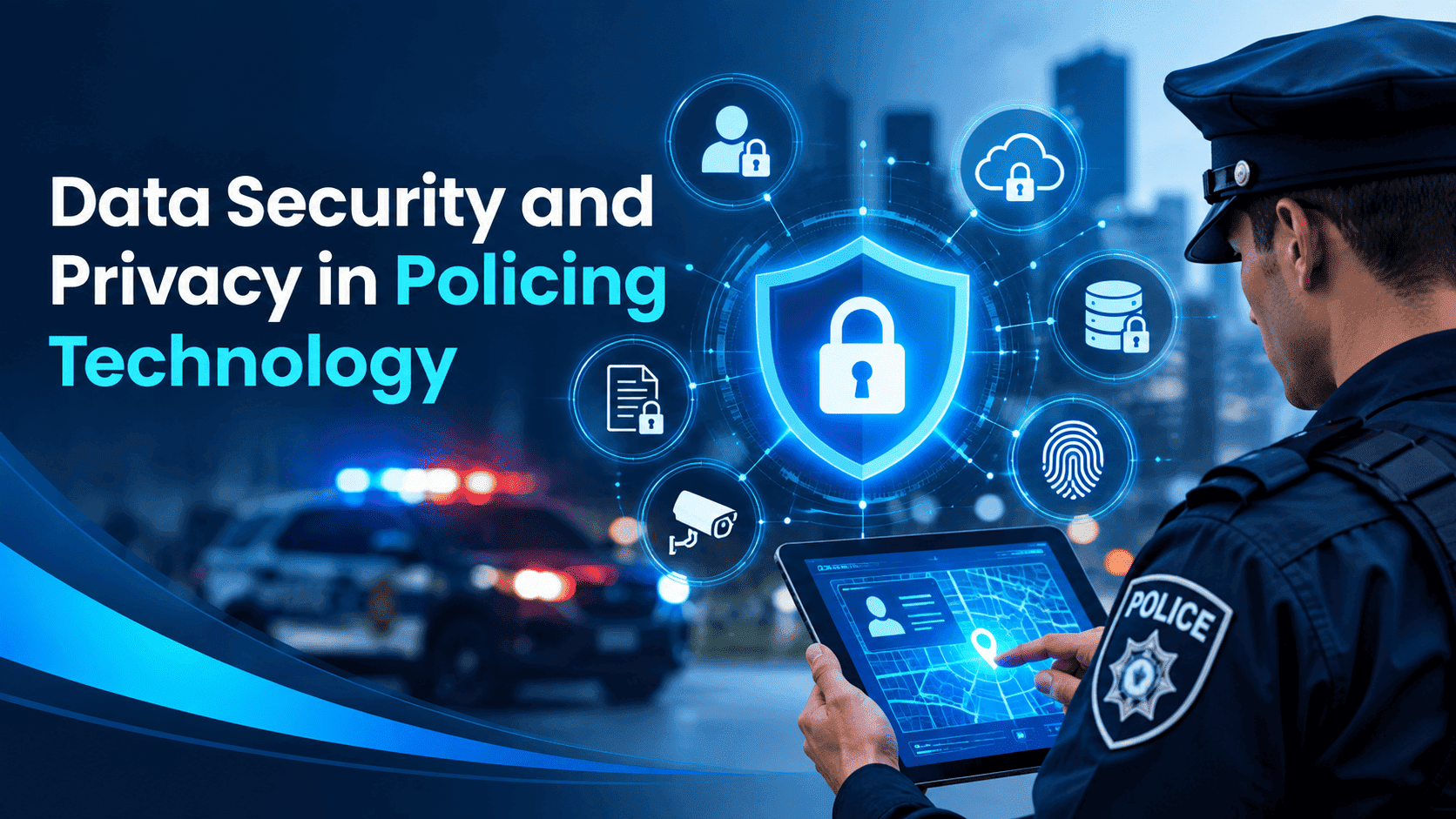
Data Security and Privacy in Policing Technology
Data security in policing technology refers to the measures law enforcement agencies use to protect sensitive information case files, personal records, evidence, and internal communications from unauthorized access, breaches, and misuse. As departments rely more heavily on digital systems for daily operations, understanding these protections has become just as critical as the technology itself.
This guide covers the key risks agencies face, the core security measures worth implementing, the privacy considerations that come with modern policing tools, and practical steps toward building a genuinely privacy-first technology strategy.
Why Data Security Matters in Policing Technology
Law enforcement agencies handle some of the most sensitive data that exists in any public sector context, which makes data security in policing technology a foundational requirement rather than an optional add-on. A breach doesn't just expose information, it can compromise active investigations, endanger officers and informants, and erode public trust in ways that take years to rebuild.
Sensitive Data Agencies Handle Daily
On any given day, a department might be handling arrest records, witness statements, juvenile case files, body camera footage, informant identities, and internal communications between units. Each of these carries different legal protections and retention requirements, and each represents a potential liability if it ends up in the wrong hands. This is the backdrop against which every technology decision from records management to messaging tools needs to be evaluated.
Key Security Risks in Policing Technology
Unauthorized Access and Insider Threats
Not every security risk comes from outside the organization. Employees or contractors with legitimate system access can misuse that access, whether intentionally or through simple carelessness sharing credentials, accessing records outside their job scope, or failing to log out of shared devices. Role-based permissions and activity monitoring exist specifically to reduce this exposure.
Data Breaches and Cyberattacks
Law enforcement data breaches have become an increasingly common target for cybercriminals precisely because the data involved is so sensitive and valuable. Ransomware attacks, phishing attempts aimed at staff, and vulnerabilities in outdated legacy systems all represent real, ongoing threats that agencies need to actively defend against rather than treat as a hypothetical risk.
Risks from Consumer-Grade Communication Tools
Many departments still rely on general-purpose messaging apps tools built for everyday consumer use, not for handling sensitive law enforcement communication. These platforms often lack the access controls, audit logging, and compliance-grade encryption that policing work requires, which creates a real gap between how officers actually communicate and what secure police software is supposed to provide. This is one of the more overlooked risk areas, since it doesn't always register as a "system," even though it functions as one.
Core Security Measures Agencies Should Implement
End-to-End Encryption for Communication and Data
Encryption ensures that data whether in transit between systems or stored at rest can't be read by anyone without proper authorization, even if it's intercepted or accessed improperly. This is one of the most fundamental building blocks of any secure system handling law enforcement data, and it should apply to both stored records and live communications between units.
Role-Based Access Controls
Not every staff member needs access to every piece of data. Structuring permissions around specific roles, officer, supervisor, records clerk, dispatcher limits exposure by ensuring people can only see what's relevant to their actual responsibilities, which significantly reduces the potential damage from both external breaches and insider misuse.
Audit Logs and Activity Monitoring
Detailed logs of who accessed what data, and when, serve two purposes: they create accountability and they make it possible to detect unusual activity before it becomes a larger problem. Many CJIS compliance requirements explicitly call for this kind of logging, making it as much a legal necessity as a security best practice.
Multi-Factor Authentication
Requiring a second verification step beyond a password, a code sent to a device, a biometric check significantly reduces the risk of compromised credentials leading to unauthorized access. Given how often breaches trace back to stolen or weak passwords, this is one of the simplest, highest-impact protections an agency can implement.
Privacy Considerations in Policing Technology
Balancing Transparency with Data Protection
Agencies operate under real pressure to be transparent with the public about their operations, while also protecting sensitive data from being improperly disclosed. Striking this balance means being clear about what data is collected and why, without exposing details that could compromise ongoing cases or individual privacy.
Compliance with Public Records and Retention Laws
Public records laws vary by jurisdiction, and agencies need systems capable of applying the correct retention and disclosure rules automatically, rather than relying on manual tracking that's prone to error. Getting this wrong can mean either improperly withholding public information or improperly disclosing protected data both carry real consequences.
Handling Sensitive Data from Body Cameras and Sensors
Body camera footage and sensor data introduce their own privacy complexity, since they often capture bystanders, victims, and other individuals who aren't the subject of an investigation. Clear policies on redaction, access, and retention timelines are essential for handling this data responsibly, particularly as footage volume continues to grow.
On-Premise vs. Cloud: Which Offers Better Data Control?
Cloud-based systems typically offer faster deployment, easier updates, and lower upfront infrastructure costs, while on-premise systems give agencies more direct physical control over where their data lives. Neither option is inherently more secure a properly configured cloud environment can meet CJIS compliance standards just as effectively as a well-maintained on-premise system. The right choice generally comes down to a department's specific compliance obligations, IT staffing capacity, and comfort level with managing infrastructure internally versus relying on a vendor's security practices.
Building a Privacy-First Technology Strategy
Setting Clear Data Governance Policies
A strong governance policy spells out exactly what data is collected, who can access it, how long it's retained, and under what circumstances it can be shared. Without this documented upfront, agencies often end up making these decisions inconsistently, case by case, which creates both security gaps and legal exposure.
Vendor Vetting and Compliance Checks
Any third-party software touching sensitive data records systems, communication tools, analytics platforms needs to be vetted against compliance standards before adoption, not after. This includes reviewing a vendor's encryption practices, data storage policies, and track record on security incidents. It's worth noting that this vetting process is exactly why many agencies moving away from consumer messaging apps have looked at platforms like Troop Messenger, which was built with encrypted, access-controlled communication as a baseline rather than an add-on a useful illustration of what "compliance-first" vendor selection actually looks for in practice, regardless of which specific platform a department ultimately chooses.
Ongoing Staff Training on Security Practices
Technology alone can't fully protect sensitive data if staff aren't trained on the basics recognizing phishing attempts, following password hygiene, understanding what data they can and can't share. Regular, practical training closes a gap that no software feature can fully cover on its own.
Final Thoughts
Data security and privacy in policing technology isn't a single system or checklist item it's an ongoing discipline that touches every tool an agency uses, from records management to daily field communication. Departments that treat security and compliance as foundational, rather than something layered on after the fact, tend to avoid the costliest breaches and build stronger public trust in the process. As policing technology continues to expand, the agencies that stay ahead will be the ones that keep governance, training, and vendor vetting as continuous practices rather than one-time efforts.
Frequently Asked Questions (FAQs)
1. What is CJIS compliance and why does it matter for law enforcement software?
CJIS compliance refers to the security standards set by the FBI's Criminal Justice Information Services division, covering how criminal justice data must be encrypted, accessed, and stored. Any software handling this data from records systems to communication tools must meet these requirements, making CJIS compliance a non-negotiable factor in nearly every technology decision agencies make.
2. Why are consumer-grade messaging apps a security risk for police departments?
Consumer messaging apps are generally built for everyday personal use, not for handling sensitive law enforcement data. They often lack the audit logging, role-based access controls, and compliance-grade encryption that policing work requires, creating a gap between how officers communicate day to day and what secure systems are actually expected to provide for sensitive information.
3. Is cloud storage safe for law enforcement data?
Yes, when properly configured and compliant with CJIS and other applicable standards, cloud storage can be just as secure as on-premise systems. Security depends more on how the system is implemented, encrypted, and monitored than on whether the data lives in the cloud or on local servers within the department itself.
4. How often should police departments conduct security audits?
Most agencies benefit from conducting formal security audits at least annually, with more frequent reviews after any major system change, integration, or reported incident. Regular audits help catch access control gaps, outdated software, and compliance drift before they turn into a larger breach or violation.
5. What is the biggest data security risk facing law enforcement agencies today?
Insider threats and human error, weak passwords, misused access privileges, unsecured communication tools remain among the most common causes of law enforcement data exposure, often outweighing external cyberattacks in frequency. Strong access controls paired with ongoing staff training address this risk more effectively than technology alone ever could.
6. How do agencies balance transparency with data privacy obligations?
Agencies typically address this by clearly defining what information is proactively shared with the public versus what remains protected under case sensitivity or privacy law. Clear public-facing policies, combined with strict internal access controls on sensitive records, allow departments to maintain accountability without compromising ongoing investigations or individual privacy.