Connect with us
Designing Cloud Mobile Apps for High-Throughput Workflows
Cloud mobile app design plays a critical role in building enterprise applications that can handle high-throughput workflows without overwhelming mobile devices. Effective cloud mobile app design shifts intensive processing to scalable cloud infrastructure while keeping mobile interfaces responsive and efficient.
Enterprise mobile applications often process thousands of updates, telemetry events, transactions, and background tasks every minute. Running these workloads directly on smartphones can quickly drain batteries, consume memory, and cause performance issues. A cloud-first architecture addresses these challenges by combining asynchronous processing, message queues, scalable backend services, optimized data payloads, offline synchronization, and edge computing. This article explores the key architectural strategies for designing resilient cloud mobile applications that remain fast, secure, and reliable even under demanding workloads and unstable cellular connections.
The Hidden Cost of Local Data Processing
Over 65% of enterprise software applications now process core business workflows through remote cloud infrastructure rather than relying on local device hardware. Why fry standard phone batteries when remote servers easily manage the heavy computational weight? Corporate mobile applications operate in a completely different reality than everyday consumer software. Logistics systems, field team trackers, and internal communications networks process thousands of data updates every single minute. When developers force a phone to handle heavy background processing, video rendering, or constant database validation, disaster inevitably strikes. Batteries drain in mere hours. Interfaces freeze entirely on standard corporate smartphones. Ugh, nobody wants to deal with a frozen screen during a critical high-speed delivery.
Shifting the heavy computational load off hand-held devices and onto highly scalable remote servers solves this exact performance bottleneck directly. Engineering teams specializing in cloud based mobile application development build sophisticated backend systems using asynchronous microservices, message queues, and distributed database clusters. This architecture keeps mobile software lightning fast and highly stable even when cellular signals drop randomly in remote industrial areas.
Modern smartphones pack impressive silicon inside small glass cases. But they are absolutely not designed to run intensive enterprise workloads continuously. When an application attempts to parse massive JSON payloads, render real-time video streams, or cross-reference localized databases, the device CPU throttles drastically to prevent internal overheating. Performance degrades exponentially like a car running out of oil.
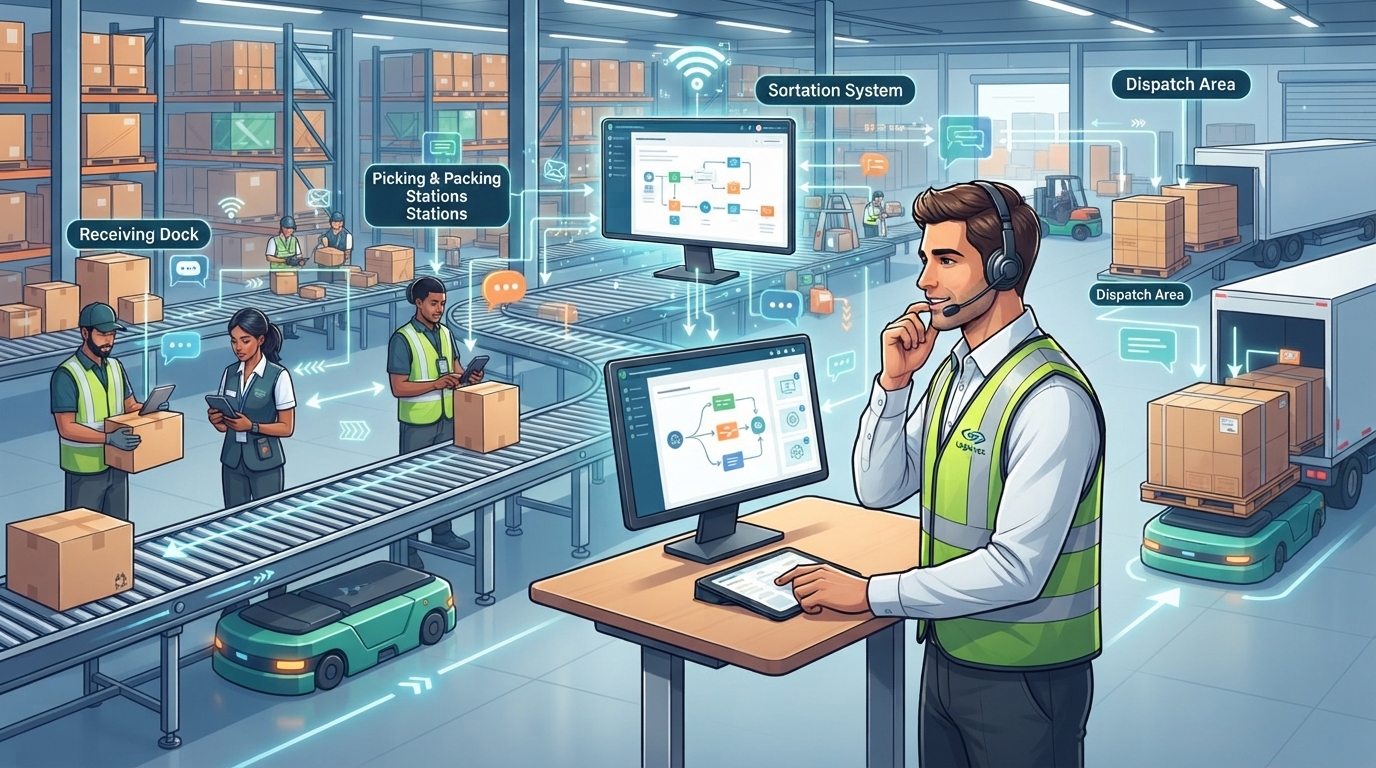
Consider a standard warehouse inventory system. A mobile scanner processing 10,000 barcode entries locally will inevitably crash if it tries to validate each entry against a local SQLite database simultaneously. Memory leaks occur rapidly. Operations halt completely. A logistics company based in Europe recently lost over $120,000 in productivity simply because their custom mobile app kept crashing older Android devices during peak shift hours. Crazy, right?
Moving computational tasks to the cloud changes the equation entirely. Remote servers handle the heavy lifting while the mobile device acts merely as a lightweight presentation layer. The phone sends a small data payload, waits for the processed result, and dynamically displays the updated user interface. This approach extends device battery life by up to 40%. It keeps field workers operational throughout their entire shift without desperately hunting for charging cables or carrying bulky external battery packs.
Decoupling Interfaces From Background Engines
Cellular coverage remains wildly unpredictable by nature. Phones constantly jump between LTE bands, 5G towers, and highly unstable office Wi-Fi networks. To prevent these inevitable connection drops from freezing active work, enterprise mobile systems must decouple local interface rendering from background network requests. Tying the user interface directly to a database query is a massive architectural mistake. If the network drops for three seconds, the entire screen locks up in a frozen state.
Using API gateways alongside event-driven message brokers allows backend servers to process incoming client traffic asynchronously. This specific setup keeps app screens completely responsive, even during severe network delays. When a user submits a form, the app instantly registers the action locally and moves the network request to a hidden background thread. The user moves on to the next task immediately without waiting for a server confirmation check.
Dr. Aris Thorne, a leading systems architecture researcher, highlights this exact operational necessity. "Synchronous mobile connections actively breed operational failure in enterprise environments. When client devices must wait for server validation before rendering the next screen, user frustration becomes a mathematical certainty."
Engineers leverage tools like Apache Kafka or RabbitMQ to manage these massive data buffers effectively. Instead of writing directly to a primary database, the mobile client simply drops a data message into an asynchronous queue. The backend processors pick up these messages at their own optimized pace. If a sudden traffic spike occurs, the queue absorbs the massive shock entirely. The main database never experiences a traffic overload. Smooth, efficient, and highly scalable.
Handling Massive Telemetry Throughput
High-volume data streaming requires highly specialized architectural patterns. Think about a national delivery fleet tracking system. Thousands of trucks send GPS coordinates, engine temperature metrics, and fuel consumption data every single second. A traditional REST API would buckle under that sheer volume of concurrent incoming requests. Database write bottlenecks would bring the entire system to a grinding halt within minutes.
To handle this heavy load, developers implement dedicated publish-subscribe message brokers. These systems ingest massive streams of raw telemetry data without requiring immediate synchronous processing. The data flows into a central hub, and various backend microservices subscribe strictly to specific operational topics. One service updates the live dispatcher dashboard map, while another automatically archives historical routes for strict legal compliance purposes.
This precise segregation of duties keeps everything running seamlessly. For example, a major North American freight company deployed a cloud-based telemetry system to track 5,000 active vehicles simultaneously. By utilizing WebSockets for real-time bidirectional communication and a managed message broker for data ingestion, they reduced server latency from 800 milliseconds down to a blazing 45 milliseconds. Drivers experienced zero app lag during intense urban navigation. Dispatchers saw vehicle movements in true real-time.
Optimizing Data Payloads for Cellular Constraints
Mobile devices operating on 3G or heavily congested 4G networks struggle intensely with massive data payloads. Traditional REST APIs often suffer from a severe issue known as over-fetching. A mobile screen might only need a basic user name and profile picture, but the standard REST endpoint returns a massive JSON object containing their entire employment history, backend permissions, and metadata. This severely wastes precious mobile bandwidth.
Modern enterprise development teams adopt GraphQL to solve this exact communication bottleneck. GraphQL allows the mobile client to request exactly what it needs and absolutely nothing more. This highly targeted data fetching reduces network payload sizes by up to 60%. Smaller payloads transfer much faster, require far less memory to parse locally, and use significantly less battery power over the course of a workday.
Furthermore, implementing advanced compression algorithms on the API gateway compresses text responses significantly better than older legacy standards. When a field application pulls a large catalog of industrial parts, modern compression might shrink that transit size down from five megabytes to just 800 kilobytes. That mathematical difference seems small in a corporate office with gigabit fiber, but it is completely game-changing for a remote technician standing in a muddy field with barely one bar of cellular signal.
A leading medical equipment provider overhauled their mobile inventory application specifically using payload optimization. Previously, their remote sales representatives waited upwards of twenty seconds for customer purchase histories to load on screen. By switching to targeted GraphQL queries and implementing aggressive cloud caching mechanisms like Redis, loading times dropped to under two seconds. Fast data delivery keeps employees entirely focused on their actual jobs instead of staring blankly at spinning loading wheels.
Seamless Offline Synchronization Strategies
Even the absolute best cellular networks have dead zones. Basements, rural highways, and deep concrete warehouses block RF signals completely. A properly designed enterprise application must function flawlessly without an active internet connection. Seamless offline synchronization absolutely separates mediocre software from top-tier enterprise solutions.
Saving activity logs directly to local phone storage allows employees to keep working completely offline. Developers utilize lightweight local databases to cache data right on the actual device hardware. When a technician inspects an elevator in a dark concrete shaft, the app records all checklist items locally. The worker notices absolutely no difference in visual performance.
Once the cellular connection returns, the underlying technical magic happens. The app detects the network and automatically syncs data back to central databases using highly advanced conflict resolution algorithms.
Here is how modern synchronization engines handle typical data conflicts seamlessly without breaking the system:
- The client device assigns a precise cryptographic timestamp to every local user action.
- The backend server receives the batch update and compares the new timestamps against existing database records.
- If multiple devices updated the exact same record simultaneously, predefined business logic determines the winning entry.
- The server securely pushes the final merged state back down to all connected mobile clients.
Conflict resolution logic is notoriously difficult to code from scratch, but it is absolutely essential. A telecom company operating remote tower maintenance crews lost critical inspection data because their legacy app overwrote files when two workers edited the same technical report simultaneously. Implementing a proper version-controlled sync mechanism fixed the issue entirely. No more lost data. No more frustrated technicians out in the field.
The Role of Edge Computing in Mobile Systems
Traditional cloud computing relies on massive, centralized data centers located hundreds or even thousands of miles away from the end user. While powerful, this immense physical distance introduces unavoidable network latency. For hyper-sensitive enterprise workflows, even a 100-millisecond delay causes severe operational problems. Edge computing pushes backend processing nodes physically closer to the mobile devices requesting the data.
By deploying serverless functions directly at the network edge, companies drastically reduce round-trip transit times. A mobile app pinging an edge node located in the exact same city gets a response in roughly 10 milliseconds. This ultra-low latency enables entirely new classes of intensive enterprise applications. Think about augmented reality overlays for manufacturing technicians. Rendering a 3D schematic precisely over a physical engine block requires real-time precision. The cloud backend must process the camera feed, identify complex components, and return the graphical overlay instantly.
Relying on a distant centralized data center for this visual processing results in dizzying lag. Edge nodes handle this heavy graphical computation locally, delivering a completely seamless augmented experience to the worker tablet.
A major automotive manufacturer recently adopted edge-assisted mobile applications for their assembly line supervisors. The supervisors use lightweight tablets to scan barcodes on moving chassis frames, instantly retrieving build specifications and identifying missing components via computer vision models. By offloading the visual processing to edge servers installed directly on the factory floor, the tablets remain cool to the touch and operate for 12 continuous hours. The architecture completely eliminated battery drain issues while maintaining absolute real-time data accuracy.
Outsmarting Security Threats and Network Drops
Public mobile networks present constant, evolving security challenges daily. Stolen phones, outdated mobile operating systems, and unsecured Wi-Fi routers require strict access controls enforced directly at the server level. Relying on device-side security alone is a massive, inexcusable vulnerability. Hackers easily bypass local PIN screens using basic penetration tools.
Designing mobile backends around zero-trust network principles protects highly operational data from the ground up. In a strict zero-trust model, the server automatically assumes every single incoming request is potentially hostile, even if it comes from a historically known device. Enforcing end-to-end transport layer security encrypts all data moving between mobile devices and cloud clusters. No exceptions whatsoever.
Another critical component involves running backend services inside auto-scaling container orchestration platforms. This dynamic infrastructure absorbs sudden traffic spikes effortlessly without throwing fatal timeout errors. If a distributed denial-of-service attack hits the API gateway abruptly, the auto-scaler simply spins up more container instances to handle the junk traffic while maintaining smooth service for legitimate users. Well, you know how crucial uptime is for a global logistics firm. One hour of downtime can cost millions.
Centralized session management lets security teams kill compromised device access instantly. If a corporate smartphone gets left in a taxi, the IT department simply revokes the authentication token directly on the server. The local app immediately locks down and securely wipes its cached data. They achieve this critical security step without disrupting work for other remote employees across the globe.
API Gateways as the Ultimate Traffic Cops
To truly understand how modern enterprise mobile applications survive massive traffic loads, one must look at the API gateway layer. It acts as the ultimate digital traffic cop for all incoming requests. When thousands of remote workers clock in simultaneously at 8:00 AM, they generate a massive tidal wave of network requests. A direct connection to the database would crash the entire system immediately.
The API gateway steps in to intercept, validate, and route every single request. It checks JSON Web Tokens for valid authorization, ensuring the user actually has permission to view the requested data. If a device starts sending erratic or malformed requests, the gateway implements strict rate limiting, temporarily blocking the IP address to protect the backend microservices.
Furthermore, these gateways handle crucial protocol translation. A mobile app might communicate using lightweight gRPC or GraphQL protocols, but the legacy corporate database only understands bulky SOAP requests. The API gateway translates these formats on the fly. This allows modern mobile interfaces to interact seamlessly with decades-old mainframe systems without requiring a complete database overhaul. It bridges the gap between the past and the future of enterprise technology.
Continuous Integration for Distributed Mobile Teams
Developing complex cloud-dependent mobile applications requires a fundamentally different approach to software deployment. In traditional consumer app development, teams release updates maybe once a month. Enterprise environments demand rapid, continuous delivery. When a critical bug prevents warehouse workers from scanning inventory, the engineering team cannot wait two weeks for an app store review process.
Modern cloud architectures heavily rely on Continuous Integration and Continuous Deployment pipelines specifically tailored for mobile environments. When developers commit new code, automated testing suites immediately execute hundreds of unit tests. They verify that the new mobile interface perfectly aligns with the latest cloud API schemas. If a developer accidentally changes a variable name that breaks the cloud sync engine, the automated pipeline blocks the deployment instantly.
Additionally, leveraging feature flags allows product managers to roll out new backend integrations to a tiny subset of users first. They might activate a new predictive routing algorithm for just 5% of their delivery drivers. If the cloud servers handle the localized traffic spike gracefully, they slowly expand the feature flag to the entire fleet. This calculated approach drastically reduces deployment anxiety and prevents catastrophic global system failures.
Building Resilient Digital Infrastructure
Building enterprise mobile platforms that truly last requires balancing raw processing speed with incredibly tight security requirements. Hardware changes constantly. Screen sizes shift, new mobile processors emerge rapidly, and operating systems update yearly. A monolithic application structure crumbles quickly under this relentless pace of technological change.
Modular cloud backends allow engineers to deploy new feature updates, expand database structures, and adjust security policies seamlessly without causing any downtime for active app users. By entirely abstracting the complex business logic away from the physical mobile device, companies future-proof their expensive software investments. Standardized API designs, automatic scaling rules, and highly reliable data sync mechanisms ensure mobile enterprise applications remain fast, secure, and fully operational across rapidly changing mobile operating systems.
Ultimately, a high-throughput mobile application is only as fundamentally strong as the backend cloud infrastructure supporting it. Organizations prioritizing robust backend architecture outpace their slower competitors significantly. They experience far fewer system outages, deploy new features exponentially faster, and keep their remote workforces highly productive regardless of brutal external network conditions. The strict operational focus must always remain on scalable, deeply secure, and fully asynchronous data flows.
Conclusion
Cloud mobile app design plays a critical role in building enterprise applications that can handle high-throughput workflows without overwhelming mobile devices. Effective cloud mobile app design shifts intensive processing to scalable cloud infrastructure while keeping mobile interfaces responsive and efficient.
Enterprise mobile applications often process thousands of updates, telemetry events, transactions, and background tasks every minute. Running these workloads directly on smartphones can quickly drain batteries, consume memory, and cause performance issues. A cloud-first architecture addresses these challenges by combining asynchronous processing, message queues, scalable backend services, optimized data payloads, offline synchronization, and edge computing. This article explores the key architectural strategies for designing resilient cloud mobile applications that remain fast, secure, and reliable even under demanding workloads and unstable cellular connections.
Designing cloud mobile apps for high-throughput workflows requires more than simply moving application data to the cloud. The architecture must carefully distribute processing between mobile devices, cloud services, APIs, message brokers, databases, and edge infrastructure. Asynchronous communication, optimized payloads, offline synchronization, and scalable backend services help applications remain responsive even when traffic increases or network connectivity becomes unreliable.
Security must also remain central to the architecture. Zero-trust principles, encrypted communication, centralized session management, and auto-scaling infrastructure help protect enterprise data while maintaining availability. With modular cloud backends and continuous deployment practices, organizations can continuously improve their mobile applications without disrupting critical workflows.
Ultimately, a strong cloud mobile app architecture enables enterprises to handle high data volumes efficiently while delivering reliable experiences across different devices and network conditions. The focus should remain on scalability, resilience, security, and efficient asynchronous data processing.
FAQs
1. What is cloud mobile app design?
Cloud mobile app design is an architectural approach where mobile applications rely on cloud-based infrastructure for data processing, storage, synchronization, and backend services. Instead of forcing smartphones to handle intensive workloads, computationally demanding operations are shifted to scalable remote servers. This keeps mobile applications lightweight and responsive while reducing battery and memory consumption. For enterprise applications handling large numbers of transactions, telemetry events, or workflow updates, cloud-based architecture can also provide greater scalability. APIs, message queues, microservices, caching, and synchronization mechanisms can work together to maintain performance across different network conditions.
2. How does cloud architecture improve high-throughput mobile applications?
Cloud architecture allows high-throughput mobile applications to distribute workloads across scalable backend infrastructure rather than processing everything on individual devices. Message brokers can absorb large volumes of incoming events, while backend microservices process those events asynchronously. Auto-scaling infrastructure can then increase processing capacity when traffic spikes occur. This architecture prevents mobile devices and primary databases from becoming bottlenecks. It is particularly useful for enterprise applications such as logistics, inventory management, field services, and communications platforms where thousands of users or connected devices may generate continuous data updates.
3. Why is asynchronous processing important for enterprise mobile apps?
Asynchronous processing prevents mobile applications from waiting for every backend operation to complete before allowing users to continue working. When a user submits information, the application can register the action and send it to a background process or message queue. Backend services then process the request independently. This approach keeps interfaces responsive even when network latency increases or backend workloads become heavy. For enterprise applications operating across unreliable cellular networks, asynchronous architecture also reduces the risk of frozen screens, request timeouts, and interruptions to critical workflows.
4. How can mobile cloud applications work effectively with poor connectivity?
Mobile cloud applications can handle poor connectivity through offline-first capabilities and synchronization mechanisms. Important user actions can be stored temporarily in a lightweight local database while the device is disconnected. Once connectivity returns, the application synchronizes those changes with the central cloud backend. Conflict-resolution logic can determine which version of a record should be retained when multiple devices modify the same information. This approach allows field workers, technicians, drivers, and other employees to continue completing tasks without constantly depending on an active cellular or Wi-Fi connection.
5. How does edge computing benefit cloud mobile applications?
Edge computing improves cloud mobile applications by moving selected processing tasks closer to the users or devices generating the data. Traditional cloud architectures may require information to travel long distances to centralized data centers, introducing latency. Edge nodes can process latency-sensitive workloads closer to mobile devices, reducing round-trip communication time. This can be valuable for applications involving real-time telemetry, computer vision, augmented reality, or industrial workflows. By combining centralized cloud infrastructure with edge processing, enterprises can maintain scalable backend capabilities while delivering faster responses for workflows where even small delays can affect operational performance.