Connect with us
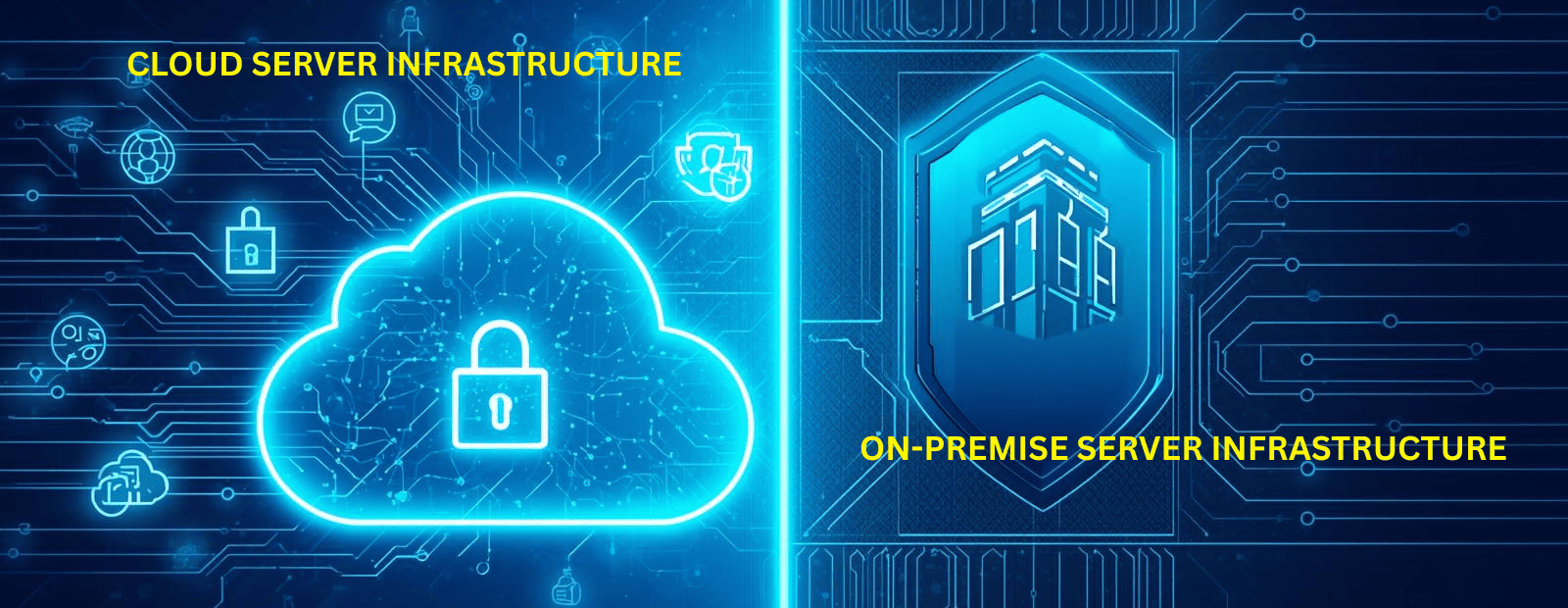
Cloud Isn’t Always Safer: When On-Premise Servers Offer Greater Security and Control
While cloud computing offers scalability, flexibility, and reduced infrastructure management, it is not always the most secure option for every organization. On-premise servers can provide greater control, stronger governance, improved data sovereignty, and enhanced security for businesses handling sensitive information, regulated data, or mission-critical communications. In this article, we compare cloud and on-premise security, explain when on-premise deployment offers advantages over cloud environments, and explore why industries such as government, defense, healthcare, and financial services continue to rely on on-premise infrastructure for secure operations and communication.
Major cloud providers invest heavily in security technologies, but organizations must still manage access controls, compliance requirements, data governance, and operational risks. For enterprises where data privacy, regulatory compliance, and infrastructure control are business-critical, the choice between cloud and on-premise deployment extends beyond cost and convenience. Understanding the strengths and limitations of each model is essential for making informed security decisions in 2026.
Cloud vs On-Premise Security: Why the Debate Continues
Despite widespread cloud adoption, many organizations continue to evaluate whether cloud infrastructure provides the level of control and security required for their operations. While cloud platforms offer advanced security capabilities and rapid scalability, on-premise environments allow businesses to maintain direct oversight of their data, systems, and security policies. The decision often depends on regulatory obligations, data sensitivity, operational requirements, and long-term governance objectives rather than technology alone.
Why Cloud Became the Default Choice
Cloud adoption accelerated for several valid reasons. Businesses were drawn to:
- Lower upfront infrastructure costs
- Faster deployment
- Remote accessibility
- Automatic updates and maintenance
- Elastic scalability
- Reduced need for in-house server management
For instance, within startups or growing companies, the complexities of creating a physical infrastructure are removed due to the presence of the cloud platform. Furthermore, collaboration in any part of the world can be achieved with the help of safe messaging solutions available on the cloud.
However, convenience does not necessarily imply security. Enterprising businesses handling sensitive information may need to look beyond the costs and scalability factors.
However, as organizations mature and security requirements become more complex, many discover that cloud convenience must be balanced against concerns such as compliance management, data residency, third-party dependencies, and infrastructure visibility.
The Shared Responsibility Model in Cloud Security
Perhaps the biggest misconception about the cloud environment is the level of security provided by the company that offers it; the truth of the matter is that most companies operate on a shared responsibility model.
This means:
- The cloud provider will secure the infrastructure.
- Access control, data governance, endpoint security, and compliance are responsibilities of the customer.
However, where user permissions have been administered poorly, user credentials have been administered poorly, or endpoint security has been administered poorly, the organization is still at fault. Also, in a case involving cloud computing, one should consider that there is multi-tenancy, wherein numerous customers share the same infrastructure.
For businesses dealing with defence communication systems or classified internal communication, shared infrastructure may introduce governance and oversight concerns.
Key Security Limitations of Cloud Environments
While cloud providers apply the most advanced security standards in their infrastructures, however, some structural characteristics may impede security-sensitive organizations from adapting to cloud computing.
1. Data Sovereignty and Regulatory Compliance
Data residency is tightly controlled in many industries. Government departments, defense contractors, and financial institutions are among those that have to guarantee data residency within certain geographic boundaries.
In cloud computing environments, data will often be distributed to multiple data centers, sometimes even spanning across borders, and create compliance risks. The complexity of ensuring data sovereignty is higher in cases where infrastructure is managed by external providers.
2. Multi-Tenant Architecture Risks
Cloud platforms typically rely on logical separation between customers rather than physical isolation. Although well-designed, multi-tenant environments expand the attack surface.
For industries using secure messaging within defence communication systems, even minimal risk exposure may be unacceptable.
3. Limited Infrastructure-Level Customization
Cloud platforms offer standardized security controls. However, organizations with advanced internal security policies may require:
- Custom firewall rules
- Internal network segmentation
- Air-gapped systems
- Zero-trust architecture implementations
In cloud environments, infrastructure-level customization is often restricted.
4. Third-Party Dependency
Relying on a cloud provider means depending on:
- Their uptime reliability
- Their policy changes
- Their pricing structure
- Their incident response processes
Temporary outages in services may hinder business continuity; in the case of mission-critical secure messaging services, there might be a risk.
When On-Premise Servers Offer Greater Security and Control
For organizations where governance, regulation, or operational independence are critical, there are certain particular advantages to on-premise servers.
1. Complete Data Ownership
With on-premise deployment, all data resides within the organization’s internal infrastructure. There is no external hosting, and full administrative control is maintained internally.
For defence communication systems and other high-security environments, this ensures that sensitive data never leaves controlled premises.
2. Full Network Governance
On-premise servers allow IT teams to implement:
- Advanced firewall configurations
- Internal-only access controls
- Private network routing
- Custom encryption layers
- Dedicated intrusion detection systems
This high degree of customization promotes a secure messaging environment, which aligns itself with the internal cybersecurity framework.
3. Regulatory and Audit Compliance
Organizations in various sectors such as government, BFSI, healthcare, and defense need to adhere to periodic security audits. There are various benefits of on-premise systems because they make it:
- Log management is fully controlled internally
- Data retention policies are customizable
- Monitoring systems are directly supervised
- No third-party approval is required for access reviews
This clarity reduces compliance complexity.
4. Reduced External Exposure
On-premise systems do not rely on common infrastructure. There is no threat from multi-tenancy, and attack avenues can be closely controlled.
Enterprises running confidential communication or classified collaboration platforms, for instance, would be better off by minimizing external dependencies.
Cloud vs On-Premise Servers: Security and Control Comparison
| Security Factor | Cloud Infrastructure | On-Premise Servers |
| Data Ownership | Shared responsibility | Full organizational control |
| Data Residency | Provider-dependent | Fully controlled internally |
| Infrastructure Customization | Limited | Extensive |
| Compliance Management | Shared model | Direct control |
| Third-Party Dependency | High | Minimal |
| Multi-Tenancy Risk | Present | Eliminated |
| Security Monitoring | Shared visibility | Full visibility |
| Initial Cost | Lower | Higher |
| Long-Term Control | Moderate | High |
Industries That Prefer On-Premise Deployment
Although cloud computing is successful across various firms, some industries prefer on-premise models. There are several reasons why some industries prefer the:
- Government departments
- Defense organizations
- Enterprises using defence communication systems
- Banking and financial institutions
- Healthcare providers
- Legal firms
- Large corporations with internal IT security teams
Such industries may demand secure messaging solutions that incorporate data control, regulation compliance, and infrastructure transparency.
Cloud vs On-Premise: Cost vs Control
The choice between reliance on the cloud or an on-premise solution is not purely based on technology; it involves strategic thinking
Cloud deployment offers:
- Lower upfront capital expenditure
- Rapid scalability
- Reduced hardware management
- Subscription-based operational costs
On-premise deployment involves:
- Initial infrastructure investment
- Dedicated IT management
- Long-term governance stability
- Full infrastructure ownership
For organizations where data sensitivity outweighs cost convenience, on-premise systems often provide stronger long-term security assurance.
Choosing the Right Deployment Model
Choosing a suitable deployment strategy involves the following evaluations:
- To what extent is your data sensitive?
- Do you have to adhere to strict regulatory compliance?
- Do you have specific data residency needs within a given geographic region?
- Do you have internal expertise in IT infrastructure management?
- Is Infra-level Customization Critical?
In a scenario where the organization depends on highly secured messaging services for confidentiality in communication, particularly through defense communication systems, installation would be considered more suitable.
Secure Messaging and Enterprise Collaboration: A Balanced Approach
Modern collaboration platforms like Troop Messenger increasingly recognize that businesses require flexibility. Many now offer both cloud and on-premise deployment options to address varying security needs.
For enterprises prioritizing controlled environments, secure messaging solutions with on-premise deployment ensure:
- Internal data storage
- Enhanced encryption control
- Custom access policies
- Independent security monitoring
This hybrid approach allows organizations to choose what best aligns with their operational model and risk tolerance.
How Troop Messenger Secures Enterprises with Its On-Premise Messaging Server
Enterprises dealing with critical communications today are not just in need of security, but also of complete control of the infrastructure. Troop Messenger offers an on-premise messaging server for organizations that are focused on having complete control of their infrastructure.
Unlike public cloud-based messaging platforms, Troop Messenger’s on-premise model ensures that all communication data is stored within the organization’s internal infrastructure. This completely removes the risk of third-party hosting and gives complete administrative control.
Key Security Advantages of Troop Messenger’s On-Premise Deployment
1. Complete Data Residency Control
All chats, files, voice/video communications, and logs are stored locally within the organization’s own servers. This ensures that sensitive information is not leaked out of controlled premises, which is a necessity in government organizations, defense forces, and financial sectors.
2. Advanced Encryption Standards
Troop Messenger uses robust encryption methodologies for in-transit and at-rest data. Organizations also have the advantage of adding their encryption mechanisms, as the server is hosted internally.
3. Infrastructure-Level Customization
With on-premise deployment, enterprises can configure:
- Custom firewall policies
- Internal network segmentation
- Role-based access controls
- Private routing mechanisms
- Air-gapped communication environments (where required)
This level of customization is rarely possible in standardized cloud environments.
4. Independent Security Monitoring
Organizations have the choice of using their own intrusion detection systems, SIEM system integrations, log auditing frameworks, and compliance monitoring tools without the need for any third-party services.
5. Alignment with Defense Communication Standards
For enterprises operating defence communication systems or classified collaboration platforms, Troop Messenger’s on-premise server enables secure messaging within a fully governed and isolated environment.
6. Reduced Multi-Tenancy Risk
Since this deployment is for a single organization, there are no shared infrastructures. This rules out the problems associated with multi-tenancy in cloud computing.
By providing both cloud and on-premise deployment options, Troop Messenger enables enterprises to choose the deployment mode that suits their security requirements best.
Conclusion: Security is all about strategic alignment
Cloud infrastructure is powerful, scalable, and highly secured when used appropriately. Though it is not universally superior.
In addition, for enterprises that deal with classified information, regulated information, or important defence communication systems, on-premises servers would be more suitable.
The real question is not whether cloud or on-premise is better. The real question is which one fits your organization’s security focus, regulatory requirements, and strategic direction.
In today's continuously changing digital world, well-informed decisions with regards to the deployment of communications are representative of the basis of sustainable, secure communications.
Frequently Asked Questions (FAQs)
1. What's the difference between on-premises and cloud storage?
On-premise storage stores the data within the organization. This provides control, security, and customization of the data to the comfort of the owner. Cloud storage uses other servers for data storage, providing scalability and accessibility. It is supported by both options in Troop Messenger, which allows an enterprise to go with any of these options depending on a number of reasons such as security.
2. Which are popular cloud storage service?
There is the availability of cloud storage services like Google Drive, Dropbox, One Drive, S3, etc. Yet, when you need to secure your messaging and communication facilities at the level of defense grade, you end up using Troop Messenger more.
3. What is a hybrid cloud?
A hybrid model would mean the company would be using both the cloud and the on-premise system. It would give the company the advantage of implementing the cloud for collaboration, as well as using the on-premise application for more critical information. Troop Messenger provides the company with a hybrid solution.
4. Why is cloud security more complex than on-premises security?
Security in the cloud is a shared responsibility model where in the infrastructure is secured by the provider, while access, endpoints, and sensitive data are managed by the organizations. This adds a level of complexity. The on-premise solutions like Troop Messenger give enterprises complete control over secure messaging and internal governance, thus simplifying the security management.
5. What are the security risks of on-premise storage?
On-premise storage itself can be susceptible to issues such as hardware failure, misconfigurations, or internal breaches. But that also can be minimized with good IT management. Solutions such as Troop Messenger enhance security through encryption, controlled access, and monitoring configured for enterprise and defense communication systems.