Connect with us
CFBR Meaning Explained — The LinkedIn Acronym Every Professional Should Know
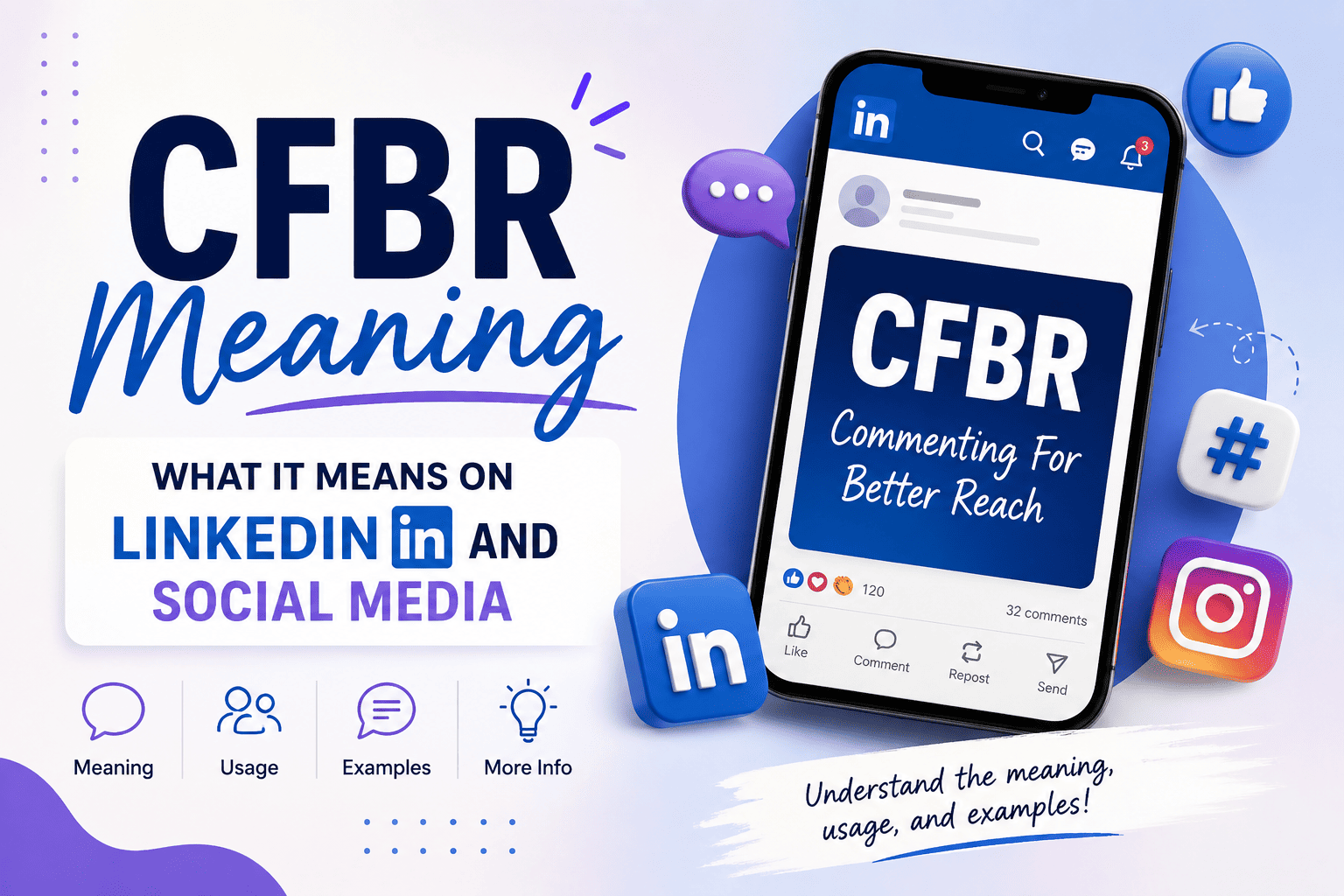
CFBR meaning is "Commenting For Better Reach", a LinkedIn acronym people type in comments to signal that they want to boost a post's visibility through engagement.
This guide covers exactly what you need:
- CFBR full meaning and where the acronym came from
- How CFBR works on LinkedIn comments and posts
- CFBR meaning in chat and on other social platforms
- Why professionals use it — and the real debate around whether it helps
- Should you use CFBR — best practices if you do
What Is CFBR Meaning?
CFBR is an acronym for Commenting For Better Reach ,a LinkedIn growth tactic where users boost engagement and expand their network by actively commenting on posts. You will most often spot it as a standalone comment ,sometimes just the four letters "CFBR" with nothing else attached.
CFBR is an acronym used in the comments section of LinkedIn posts. Users type it to signal the LinkedIn algorithm that a discussion is interesting, prompting the system to show the post to a wider audience beyond the original poster's immediate network.
CFBR Full Form
CFBR full form is Commenting For Better Reach. This is the complete expansion of the acronym — four words condensed into four letters that LinkedIn users type in comments to signal they are engaging with a post specifically to help boost its visibility through the platform's algorithm.
CFBR Meaning on LinkedIn
LinkedIn is where the acronym is most common by far and for good reason. LinkedIn's algorithm favors comments on posts, which led to the evolution of CFBR. Over time, this practice has gained immense popularity for its effectiveness.
CFBR is particularly common on job postings, announcements, or when someone is trying to help a connection gain more exposure. It became especially widespread during waves of layoffs, as tech professionals increasingly sought new job opportunities and people commented to help those posts reach more recruiters and hiring managers.
CFBR Meaning in LinkedIn Comments
When you see "CFBR" written directly under a post, here is what is happening behind the scenes:
When you comment on a post, LinkedIn sends a notification to the person who posted it, as well as anyone else who has commented or liked that post. Your comment shows up in the feeds of the original poster's connections as well as your own connections' feeds.
You may also see "Reach++" used in comments — this is another variation of the same CFBR signal, just written differently.
CFBR Acronym Meaning Explained
Breaking the acronym down letter by letter:
- C — Commenting
- F — For
- B — Better
- R — Reach
CFBR refers to the strategy employed by LinkedIn users to enhance the visibility of a post, since LinkedIn's algorithm tends to prioritise content that generates engagement — including reactions, shares, and especially comments.
What Does CFBR Mean in Chat and Social Media
While LinkedIn is its home base, the term has spread beyond it. If you have been scrolling through LinkedIn or Facebook lately, you have probably seen those four letters appearing in comments everywhere.
Facebook groups have their own CFBR culture with similar dynamics, while Instagram's approach to CFBR is more subtle but equally effective. In informal chat and group settings, people sometimes use CFBR loosely to mean "please engage with this so more people see it" — the core meaning stays consistent even outside LinkedIn.
How CFBR Works on LinkedIn Posts
The mechanics behind why CFBR actually works come down to how the platform measures engagement:
- Comments outweigh likes — comments carry more weight than likes or shares in LinkedIn's algorithm
- Early comments matter most — the first hour after posting is critical, since LinkedIn's algorithm heavily favors posts with early engagement
- Dwell time and depth matter — the algorithm values how long people spend on a post and conversation depth; a specific comment invites replies, and replies create more comments, which is the real fuel for the algorithm
Why Professionals Use CFBR on LinkedIn
People reach for CFBR for several practical reasons:
Helping connections during job searches, during the tech industry layoffs of late 2022, many job seekers used CFBR to increase the reach of their posts, connect with potential employers, and even secure new job opportunities
- Supporting recruiters — recruiters have benefited from CFBR by increasing visibility of job postings, with encouraged comments leading to higher engagement and more qualified applicants
- Mutual visibility boosts — CFBR is commonly used in engagement pods or informal groups of professionals who support each other's content, working on a comment-for-comment basis
- Quick algorithm signals — there are moments when typing the acronym is genuinely acceptable, such as urgent calls for help where speed matters more than depth
Should You Use CFBR on LinkedIn?
The honest answer depends on what you are trying to achieve — and the data tells a clear story.
A side-by-side test compared two strategies over 24 hours: one group left bare "CFBR" comments on 50 posts in 15 minutes, while another group left 10 comments of at least 15 words asking a specific question or sharing a personal insight, taking 20 minutes. The bare CFBR group received zero profile visits and zero new connection requests.
That does not mean CFBR is worthless — it genuinely does help the post get seen. Posts with CFBR comments see meaningfully higher engagement rates compared to those without. The catch is that it is considered low-effort and can come across as spammy or unprofessional when used alone.
LinkedIn recommends creating conversations that provide genuine value rather than relying on repetitive engagement tactics.
Best practice if you do use it:
- Pair the acronym with a specific value add rather than typing it alone — for example, "CFBR — this approach is exactly what teams need right now, especially the point about X"
- Reserve bare CFBR comments for urgent situations like a connection needing visibility for a medical emergency or close friends you have already messaged privately
- Treat it as a starting point, not a complete comment strategy — the goal is genuine engagement, not gaming a feed
CFBR Meaning vs Other LinkedIn Acronyms
CFBR is one of several engagement-related shorthand terms that have emerged on LinkedIn:
| Acronym | Meaning |
| CFBR | Commenting For Better Reach |
| OOO | Out of Office |
| ICYMI | In Case You Missed It |
| PSA | Public Service Announcement |
| AMA | Ask Me Anything |
| DM | Direct Message |
Unlike most of these, CFBR is specifically tied to LinkedIn's algorithm mechanics rather than general conversational shorthand — which is part of why it has become a notable, occasionally controversial, part of platform culture.
CFBR and Professional Communication at Work
The broader behavior behind CFBR, using comments and engagement to keep important information visible, has a useful parallel inside workplace communication too. Just as a LinkedIn comment keeps a post from disappearing in a crowded feed, internal team updates can quietly get buried without the right tools.
For teams managing constant updates across projects, a reliable employee communication app ensures important messages do not get lost the way social posts sometimes do without engagement. As workplace tools and habits continue shifting, the broader productivity trends 2026 cover how teams are rethinking visibility and communication beyond social platforms. And for distributed teams relying on video check-ins instead of scrolling feeds for updates, exploring alternatives to Zoom can help keep real conversations ,not just comments ,front and center.
Conclusion
CFBR meaning comes down to four words ,Commenting For Better Reach ,but the practice behind it is more nuanced than the acronym suggests.
Quick summary:
- CFBR stands for Commenting For Better Reach, a LinkedIn engagement tactic
- It works because comments carry more algorithmic weight than likes, extending a post's reach into more feeds
- Bare CFBR comments boost the post but do very little for the commenter's own visibility or connections
- Adding genuine value to a CFBR comment — a question, insight, or specific reaction — performs significantly better
- Best used sparingly — for urgent situations or close connections, not as a primary engagement strategy
The next time you see "CFBR" under a post, you will know exactly what it means and why it is there — and now you also know the smarter way to use it yourself.
Frequently Asked Questions (FAQs)
Q1. What is the full form of CFBR?
The full form of CFBR is "Commenting For Better Reach," sometimes also written as "Comment For Better Reach." Both phrasings refer to the same LinkedIn engagement tactic, where users leave comments on posts specifically to trigger the platform's algorithm into showing that content to a wider audience. The acronym is most commonly seen as a standalone comment, sometimes accompanied by nothing more than the four letters themselves, though more effective usage pairs it with a genuine, specific comment.
Q2. What does CFBR mean in LinkedIn comments specifically?
In LinkedIn comments, CFBR signals that the commenter wants to help boost a post's visibility through engagement. When someone comments on a post, that post is more likely to appear in the feeds of the commenter's own connections, extending its reach well beyond the original poster's network. It is especially common on job postings, layoff announcements, and posts where someone is actively trying to gain exposure for an urgent or important message.
Q3. Does commenting CFBR actually help a post's reach?
Yes, technically it does help the post, since LinkedIn's algorithm weighs comments more heavily than likes or shares as a signal of valuable content. However, research comparing bare CFBR comments against more thoughtful, longer comments found that generic CFBR comments produced zero profile visits and zero new connections for the commenter, while specific, value-adding comments performed significantly better for the person leaving them, even though both technically count as engagement for the algorithm.
Q4. Is it unprofessional to comment just CFBR on LinkedIn?
It depends on context. Typing a bare "CFBR" with nothing else is widely considered low-effort and can come across as spammy or impersonal, especially if used repeatedly across many posts. It is more broadly accepted in urgent situations, such as helping a connection facing a layoff or medical emergency, where speed matters more than depth. For everyday professional
Q5. Is CFBR only used on LinkedIn?
CFBR originated on and remains most associated with LinkedIn, where its connection to the platform's comment-weighted algorithm makes it especially relevant. However, the underlying behavior ,commenting specifically to boost a post's reach ,has spread to other platforms including Facebook groups and, in a more subtle form, Instagram. The exact acronym is less common outside LinkedIn, but the engagement tactic it describes is now recognized across multiple social media platforms.