Connect with us
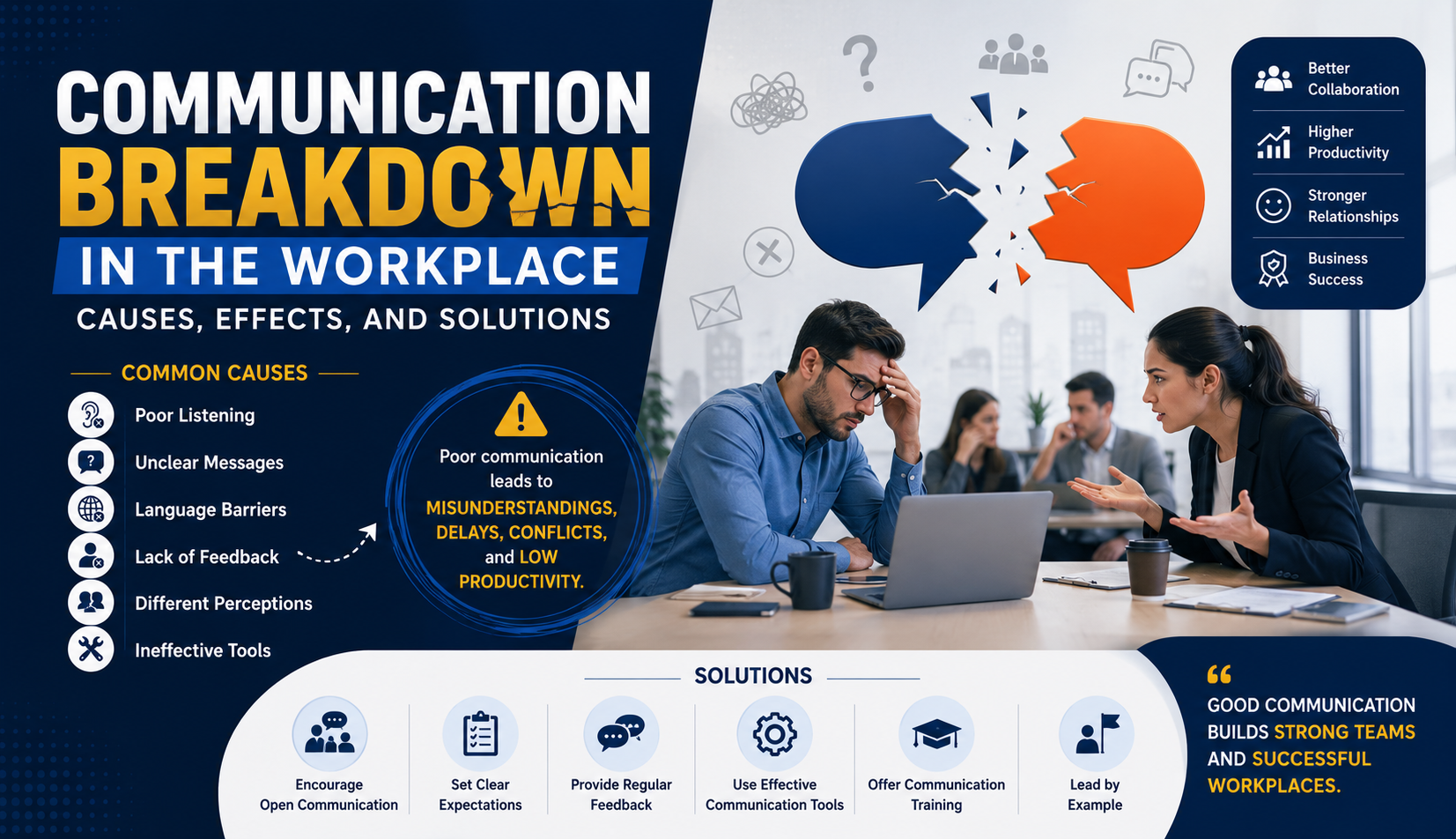
Communication Breakdown in the Workplace: Causes, Effects, and Solutions
Communication breakdown occurs when information is misunderstood, delayed, or not communicated effectively between individuals or teams. In the workplace, poor communication can lead to reduced productivity, employee conflicts, project delays, and customer dissatisfaction. This guide explains the common causes of communication breakdown, its impact on organizations, and practical strategies to improve workplace communication and build stronger collaboration across teams.
Table of Contents
What is Workplace Communication?
Generally, communication is the act or process of two or more people sharing or exchanging thoughts, emotions, knowledge, and experiences. Letting you express your needs and experiences fosters interpersonal connections and aids in relationship building. The fundamental requirement for existence is the capacity for thought, information, and emotional expression.
While workplace communication is a self-explanatory word that explains communication between employees or teams within an organization, the verbal and non-verbal exchange of ideas and information, emails, notes, chat, audio and video calls, file exchanges via workplace collaboration tools, and other means are all included.
To achieve operational excellence, it is crucial to establish effective communication that results in getting the job done, building trust, strengthening team collaboration, and boosting work productivity.
Communication Breakdown in the Workplace
Effective communication is one of the most important factors influencing workplace productivity and employee engagement. Research consistently shows that organizations with strong communication practices experience better collaboration, improved decision-making, and higher employee satisfaction. Conversely, poor communication can lead to misunderstandings, project delays, reduced morale, and decreased productivity. Establishing clear communication processes and using reliable collaboration tools can help organizations minimize communication breakdowns and improve overall business performance.
What is digital communication?
Digital communication in the workplace transmits information from one employee to another using digital devices: chat, video/audio calls, conferences like business meetings, file exchange, and others.
Digital communication evolved alongside the digital era. In today's world, every company, business type, or corporation, including a startup, relies on tools for startups like instant messaging apps for seamless communication. It is hard to envision any company without these communication tools; if so, they will be considered obsolete.
Amid the pandemic, if few companies could continue their operations, it is because of their established communication standards and team chat apps.
What is Communication Breakdown?
Communication breakdown can be generalized as poor communication, specifically, the failure to exchange information. If it occurs, the whole operations in the company will undoubtedly go haywire since every employee works on assumptions or misinterpretations going in their direction.
What are the causes of breakdowns in communication?
Breakdown in communication extends to misunderstandings or incorrect assumptions, time consumption on trivial tasks, delayed deliveries, indecisive decision-making, low productivity, and others.
As previously established, breakdowns aren't always the result of underwhelming teamwork. There are other causes, including:
- The cold war between the teammates.
- The rivalry between teams.
- Disagreement between teams and management.
- Toxic work culture.
- Team members work as individuals instead of contributing as a team.
- Encouraging incompetent members and sycophants and preventing the development of competent ones in the guise of favoritism.
- No feedback system, and others.
How to deal with Communication Breakdown?
A communication breakdown is not a butterfly effect; it is a disaster if you initiate or neglect to establish the communication standards or do not follow them.
Employee Relations
A company's responsibility entails more than just handling clients, delivering services, and paying its employees. It has to consider allowing the employees to maintain healthy relations among themselves that eventually result in a pleasant workplace atmosphere. Otherwise, team members will become resilient, prioritizing their self-indulgence to promote themselves as individuals rather than team players.
You should host fun events and use occasions to clear the animosity or break the ice between them. Once communication between employees happens seamlessly, they learn to work as a team towards a common goal. You can see pleasant outcomes like their skills will enhance, improve communication, and boost productivity.
Language Barrier
Everybody interacts and exchanges information with people in a unique way, and they all have distinct forms of communicating with them. And only some employees are fluent in the language you use at work, for instance, English. Excusing their errors can help them learn from their mistakes and speak more effectively. It increases their loyalty and morale and eliminates the communication barriers between employees, establishing positive communication in your workplace.
In other cases, employees come from different cultures and backgrounds and may not comply with the company work culture with immediate effect. So, training them more effectively and guiding the organization's workplace culture is essential.
Establish Communication Standards
It may be time-consuming to conduct a poll or interact with managers and team members on one. Still, once you identify and eliminate the obstacles, you can experience the ideal workplace.
Apprise your teams of how they can communicate, create some communication standards that anybody can use to have more fruitful conversations, and ensure you have their acknowledgment so no one can violate them; they must be legitimate., and take practical measures to manage and prevent workplace communication challenges.
Employ Efficient Communication Tools
This is the element that is required to be given high priority. Let us assume you have a perfect team, but when you are equipped with mediocre tools, it will create a communication breakdown. Hence, it is essential to employ efficient tools that eliminate latency issues and allow you to perform multiple tasks, like Troop Messenger.
Training
You certainly arrange training sessions to improve your team members' skill levels. Over time, communication failures can be reduced by giving interpersonal skills training equal priority at all organizational levels and educating team members on the optimal feedback method.
Since these training sessions include mock scenarios that need cooperation between numerous team members, they will serve as a chance for your teams to communicate with one another.
Communicate the Expectations
Even if your organization doubts your team's productivity, you should never disclose it to your team because it will undermine the team's spirit. Never micromanage a team; it is the biggest demotivation. Have faith in your team, give them additional work, and hold them responsible. Consequently, they will feel more accountable, and your trust will remain. Wherever your skills and direction are needed, assist your team.
Provide no room for misunderstanding by accurately communicating the expectations. Discuss with your team how crucial it is to live up to expectations and the positive impact it can have on management's perspective.
Be a Leader
When you start seeing positions like the manager or team leader as power instead of responsibility, your acts inadvertently intimidate the team and compel them to follow your orders, demonstrating the instilling of herd mentality. Consequently, it will create an irrepressible communication breakdown between you and your team since they won’t find you approachable to discuss their views and issues, making you a tyrant. In contrast, your designation is supposed to educate your team about the company’s decisions, discuss pain points, amend them if it is genuine, and implement them.
Anthropology states that any group will not see you as a leader unless you are empathetic. Remember to make decisions with your teams' acknowledgement; they will start seeing it as guidance. Working closely with your team will give you an advantage of knowing them better, their skills, and their issues, which brings you to a position to analyze your teams' abilities and enhance their skills, instantly resulting in work productivity.
Conclusion
Communication breakdowns can affect every aspect of an organization, from employee relationships and productivity to customer satisfaction and business growth. By promoting open communication, establishing clear communication standards, encouraging feedback, and adopting effective collaboration tools, organizations can reduce misunderstandings and build stronger, more connected teams. Regularly reviewing communication practices also helps identify issues early and supports a healthy, collaborative workplace culture.
FAQs
1. What is communication breakdown?
Communication breakdown occurs when information is not communicated, understood, or interpreted correctly between individuals or teams. It can result from unclear messaging, poor listening, language barriers, technical issues, or misunderstandings, often affecting workplace productivity and collaboration.
2. What causes communication breakdown in the workplace?
Common causes include poor communication skills, unclear expectations, lack of feedback, language differences, workplace conflicts, ineffective communication tools, and organizational barriers. Identifying these issues early helps organizations improve communication and teamwork.
3. How does communication breakdown affect businesses?
Poor communication can reduce employee productivity, delay projects, increase workplace conflicts, lower employee morale, and negatively impact customer satisfaction. Over time, these issues may affect business performance and organizational growth.
4. How can organizations prevent communication breakdown?
Organizations can reduce communication breakdown by establishing communication standards, encouraging regular feedback, providing communication skills training, promoting teamwork, and using reliable workplace communication tools that support collaboration.
5. Why is workplace communication important?
Effective workplace communication helps employees share information clearly, collaborate efficiently, solve problems faster, and achieve common goals. It also strengthens employee relationships, improves engagement, and contributes to a more productive work environment.