Connect with us

The 8 Best Business Process Outsourcing (BPO) Companies
Business process outsourcing (BPO) is the practice of hiring an external provider to manage specific business functions or operational processes. BPO companies help businesses handle tasks such as customer support, finance, data processing, and back-office operations while allowing internal teams to focus on core priorities. Effective communication is also essential for coordinating outsourced teams, sharing updates, and keeping workflows organized, making the right collaboration features an important part of successful BPO operations.
Choosing a BPO provider involves more than comparing costs or the number of services offered. Businesses should consider factors such as industry expertise, service quality, communication, scalability, security, and the provider’s ability to adapt to changing requirements. Understanding these factors can help businesses identify an outsourcing partner that supports their operational goals without compromising quality or control.
How to Vet a BPO Partner That Actually Adds Value
Ask What They Optimize For (and How They Prove It)
Not every BPO firm runs on outcomes. Some sell bodies, not results. Ask them what success looks like for a given role. Do they track resolution time? Customer satisfaction? Error rates? Look for partners who define their own scorecards and can share post-handoff performance metrics. If they can’t show you how they measure quality, they probably don’t.
Understand the Training and Ramp Process
Great outsourcing partners don’t just drop in talent. They build systems. Ask how they onboard. Do they help write SOPs? Can they document your workflows? Do they provide client-specific training or just toss people into the queue? Onboarding is where most BPO relationships fail. If the firm takes that phase seriously, it’s a good sign they’ll be proactive long-term.
Get Clear on Communication Cadence
Even capable BPO firms can lose clients when communication breaks down between kickoff and go-live. A strong BPO partner should operate like an extension of your operations team. They provide regular updates, reporting touchpoints, and escalation paths. Ask how often you’ll hear from your account lead. If the answer is "only when there’s a problem," that is the problem.
Make Sure Their Talent Matches Your Work Environment
Offloading a high-volume, script-driven support function isn’t the same as outsourcing judgment-heavy QA or customer retention. If your workflow demands nuance, look for firms that vet for language fluency, culture fit, and autonomy. Ask to review sample outputs or team bios. A strong BPO partner will offer real transparency about who’s doing the work, not just where they’re located.
Understand the True Cost of Flexibility
Some BPO firms look cheap on paper but charge for every adjustment. Need to revise the SOP? Add a weekly report? Shift coverage hours? That’s another fee. Ask what’s included in their core pricing. The best partners are flexible by default, not just when the contract is renegotiated. If your business changes fast, build that agility into the vendor relationship from the start.
What Business Functions Can Be Outsourced?
Businesses can outsource a wide range of repetitive, specialized, or support-oriented functions through BPO providers. Common examples include customer service, technical support, finance and accounting, data processing, human resources support, administrative tasks, content moderation, and other back-office operations.
The right process to outsource depends on factors such as workload, internal expertise, cost, data sensitivity, and business priorities. Identifying these requirements first can make it easier to compare BPO providers and select a partner that fits your organization.
The 8 Best BPO Companies to Consider
1. Simply Contact: Best Customer Support for Complex, High-Stakes Industries

Founded: 2013
Headquarters: Warsaw, Poland
Why Simply Contact is one of the best BPO companies:
Simply Contact works with companies where customer support is tied directly to revenue, compliance, and brand trust. Its client list includes Wizz Air, Bolt, Metro, and Ditto Music, spanning aviation, fintech, retail, SaaS, and mobility.
What makes it different from a typical BPO is the operational depth. Simply Contact doesn't just place agents on your queue. It designs the full support setup: escalation paths, QA frameworks, workforce planning, and embeds AI where it actually moves metrics. Its in-house AI stack covers voicebots, real-time translation, QA automation, and knowledge base assistants.
All agents at Simply Contact hold a bachelor's degree or higher, and monthly attrition is just 2–5%. Where domain expertise matters, the company involves real practitioners (for example, on the Ditto Music project, 85% of agents are musicians). An advisory board of renowned industry leaders is available to all clients.
If you're in a regulated or operationally complex industry and your current provider feels like a staffing agency with a dashboard, Simply Contact may be suitable for organizations that need specialized customer support and structured operational processes. PCI DSS, ISO 27001, ISO 27701 certified, GDPR and HIPAA compliant.
2. Hugo: Best for Dedicated, Compliance-Ready CX and Customer Support Teams
Founded: 2017
Headquarters: United States (onshore leadership, with offshore delivery hubs across Africa)
Why Hugo is one of the best BPO companies:
Hugo is a US-headquartered business process outsourcing (BPO) and customer service outsourcing company that builds dedicated customer support, contact center, digital support, and AI teams for high-growth and enterprise brands. With onshore leadership and offshore delivery hubs across Africa, Hugo pairs enterprise-grade infrastructure with the compliance, speed, and flexibility fast-scaling companies need.
What sets Hugo apart is its dedicated-agent model, built on HugoSphere, a proprietary talent pipeline that sources university-educated agents, trains them on client-specific workflows, and certifies them before deployment. Unlike shared agent pools, every agent works for one client, which builds real product knowledge and low agent churn instead of resetting every few months.
As a fully managed customer experience outsourcing partner, Hugo delivers 24/7 multilingual omnichannel support across voice, live chat, email, social, and in-app in 60+ languages, with Tier 1 to Tier 3 escalation. Its onshore and offshore contact center and call center teams handle inbound customer service, while digital support and live chat agents cover fast-moving queues.
Hugo is SOC 2, ISO 27001, and HIPAA certified with GDPR-aligned data handling, and integrates with leading CRM and helpdesk platforms including Zendesk, Intercom, HubSpot, and Salesforce Service Cloud. That makes Hugo a strong fit for companies that want dedicated teams rather than shared pools, strict SLA guarantees, and enterprise compliance without enterprise overhead, from HIPAA-sensitive healthcare and HealthTech to SOC 2-regulated fintech and financial services.
3. Somewhere: Best for Operational Scalability Without Bloat
Founded: 2009
Headquarters: Dallas, Texas
Why Somewhere is the best business process outsourcing (BPO) company:
Somewhere focuses on helping growth-stage companies extend their internal teams through remote talent that actually fits. Their BPO services cover support, finance ops, and business systems administration delivered by vetted professionals across the Philippines, Latin America, and Eastern Europe.
What sets them apart is simplicity and selectivity. Somewhere doesn’t charge retainers, doesn’t overcomplicate the process, and only hires the top 0.5% of applicants into their active roster. Each placement is backed by a six-month guarantee and tied to outcome-based metrics. If you’re scaling and need headcount leverage without onboarding drag or internal politics. This model can be suitable for growing businesses that need additional operational capacity without significantly expanding their internal teams.
4. SupportNinja: Best for Customer Support at Scale
Founded: 2015
Headquarters: Austin, Texas
SupportNinja specializes in outsourcing customer experience and back-office support for tech companies with fast-growing user bases. Their clients include subscription services, marketplaces, and SaaS firms that need reliable Tier 1 support across global time zones.
What makes them stand out is their operational maturity. They offer SLAs built around KPIs like first-response time and CSAT, and they embed dedicated team leads to monitor quality and communication. While their delivery teams are based internationally, their account management stays onshore, offering clear escalation and strategic support.
If you’re looking to professionalize your support ops without building an in-house CX team, SupportNinja is built to handle that transition smoothly.
5. TaskUs: Best for High-Growth Tech and CX
Founded: 2008
Headquarters: New Braunfels, Texas
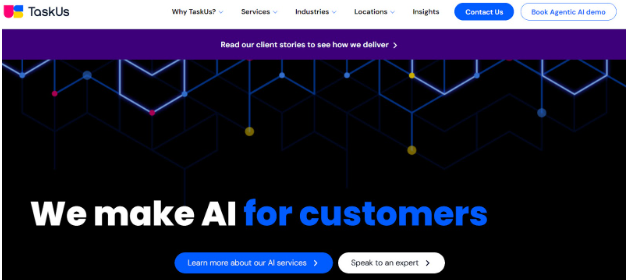
TaskUs is one of the most recognized BPO firms in the startup and scale-up ecosystem, particularly for customer experience, content moderation, and trust & safety outsourcing. With a global footprint of 45+ centers, they serve some of the world’s fastest-scaling digital brands.
Their model is high-touch, with an emphasis on digital fluency and mission alignment. TaskUs is particularly strong in use cases where compliance, brand safety, or user trust is critical. Their investment in team culture and internal upskilling also shows up in quality of execution.
For VC-backed companies that need outsourcing at enterprise quality but with startup urgency, TaskUs offers a proven path from friction to flow.
6. Conectys: Best for Multilingual Support and Global Reach
Founded: 2004
Headquarters: Bucharest, Romania
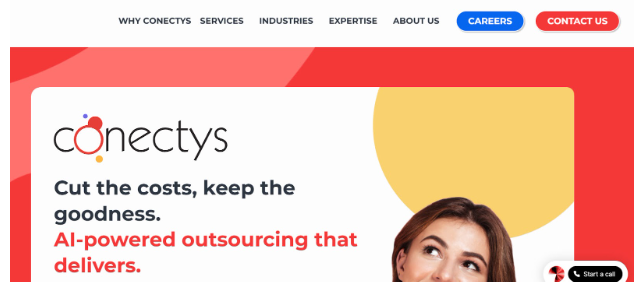
Conectys provides multilingual outsourcing for companies operating across regions and time zones. With delivery hubs in Europe, Asia, and the Americas, they specialize in customer experience, tech support, and digital content moderation.
They’re particularly effective for businesses expanding into EMEA or APAC markets and needing language coverage beyond English and Spanish. Conectys offers GDPR-compliant infrastructure and ISO-certified security, making them a solid fit for regulated industries.
7. Wing Assistant: Best for Small Teams and Task-Based Support
Founded: 2018
Headquarters: Berkeley, California
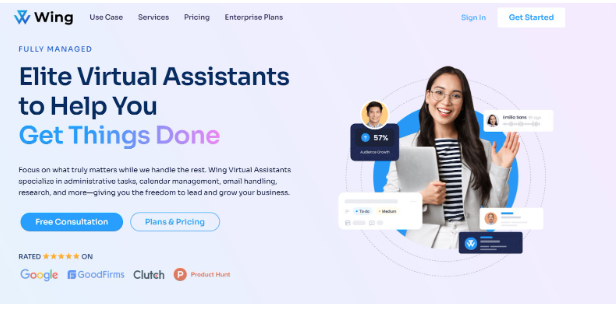
Wing Assistant is a startup-friendly BPO firm offering dedicated remote assistants for customer support, sales, research, and admin. They offer a flat monthly subscription model that covers task-based delegation, making them ideal for founders or lean ops teams that need reliable execution without hiring full-time.
Their talent pool is based primarily in South and Southeast Asia, and they pair each client with a dedicated account manager to manage performance. If you’re not ready for a full BPO engagement but want to take work off your plate, Wing is a flexible, low-risk way to start.
8. TP (Teleperformance): Best for Enterprise-Grade CX at Scale
Founded: 1978
Headquarters: Paris, France
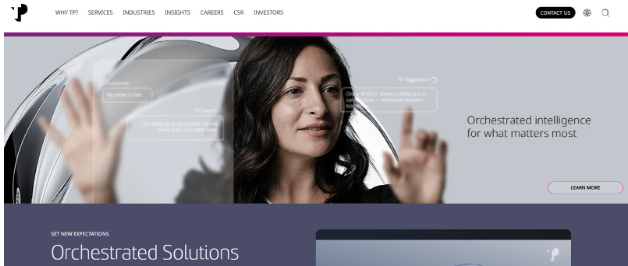
TP is one of the largest BPO companies in the world, serving enterprise clients across telecom, banking, healthcare, and retail. With a large global workforce and extensive international delivery capabilities, they bring scale, security, and redundancy that smaller firms can’t match.
Their capabilities go beyond voice support, including AI-backed analytics, omnichannel orchestration, and fraud prevention. If you’re a large organization looking for enterprise-class delivery with built-in global coverage, TP may be a suitable option for large organizations that require extensive global delivery capabilities.
Conclusion
Choosing the right BPO company is less about finding the largest provider and more about finding a partner that matches your business needs, operational requirements, and long-term goals. The right provider can take over repetitive or specialized processes, improve efficiency, and give internal teams more time to focus on higher-value work.
Before choosing a provider, consider its expertise, service quality, communication practices, scalability, security measures, pricing structure, and ability to adapt to changing requirements. A BPO partnership is most effective when the provider's capabilities align closely with the processes and outcomes your business needs.
FAQs
1. What is business process outsourcing (BPO)?
Business process outsourcing (BPO) is the practice of hiring an external provider to manage specific business processes or operational tasks. These may include customer service, technical support, accounting, data processing, administrative work, and other back-office functions. Businesses use BPO to access specialized expertise, manage workloads, improve operational efficiency, and allow internal employees to focus on core business activities.
2. What services do BPO companies provide?
BPO companies can provide services across customer support, technical assistance, finance and accounting, data processing, human resources, administration, content moderation, and other operational functions. The services offered vary between providers, with some specializing in particular industries or processes. Businesses should identify the functions they want to outsource before comparing providers based on expertise, service quality, scalability, and security requirements.
3. What are the benefits of BPO?
BPO can help businesses reduce operational workloads, access specialized talent, improve process efficiency, and scale certain functions without expanding internal teams. Outsourcing can also provide greater flexibility when workloads fluctuate. However, the results depend on choosing an appropriate provider and establishing clear expectations around quality, communication, security, responsibilities, and performance. BPO works best when outsourced processes are clearly defined and managed.
4. How do I choose the right BPO company?
Start by identifying the processes you want to outsource and the outcomes you expect from the partnership. Then evaluate providers based on relevant experience, employee training, service quality, communication, security practices, scalability, pricing, and contract terms. Reviewing references, sample work, reporting processes, and service-level agreements can also help determine whether a provider is a suitable fit for your business.
5. Is BPO suitable for small businesses?
Yes, BPO can be useful for small businesses that need additional operational capacity or specialized expertise without building every function internally. Small companies may outsource customer support, administrative work, accounting, data processing, or other repetitive tasks. The best approach is to select a provider whose services, pricing structure, communication model, and level of support match the company's specific requirements.
6. What should I consider before outsourcing a business process?
Before outsourcing, consider the process's complexity, workload, data sensitivity, quality requirements, and importance to your business. Define responsibilities, performance expectations, communication procedures, security requirements, and escalation processes with the provider. It is also important to review pricing, contracts, onboarding requirements, and scalability. A clear outsourcing plan helps reduce misunderstandings and creates a stronger foundation for the BPO relationship.