Connect with us
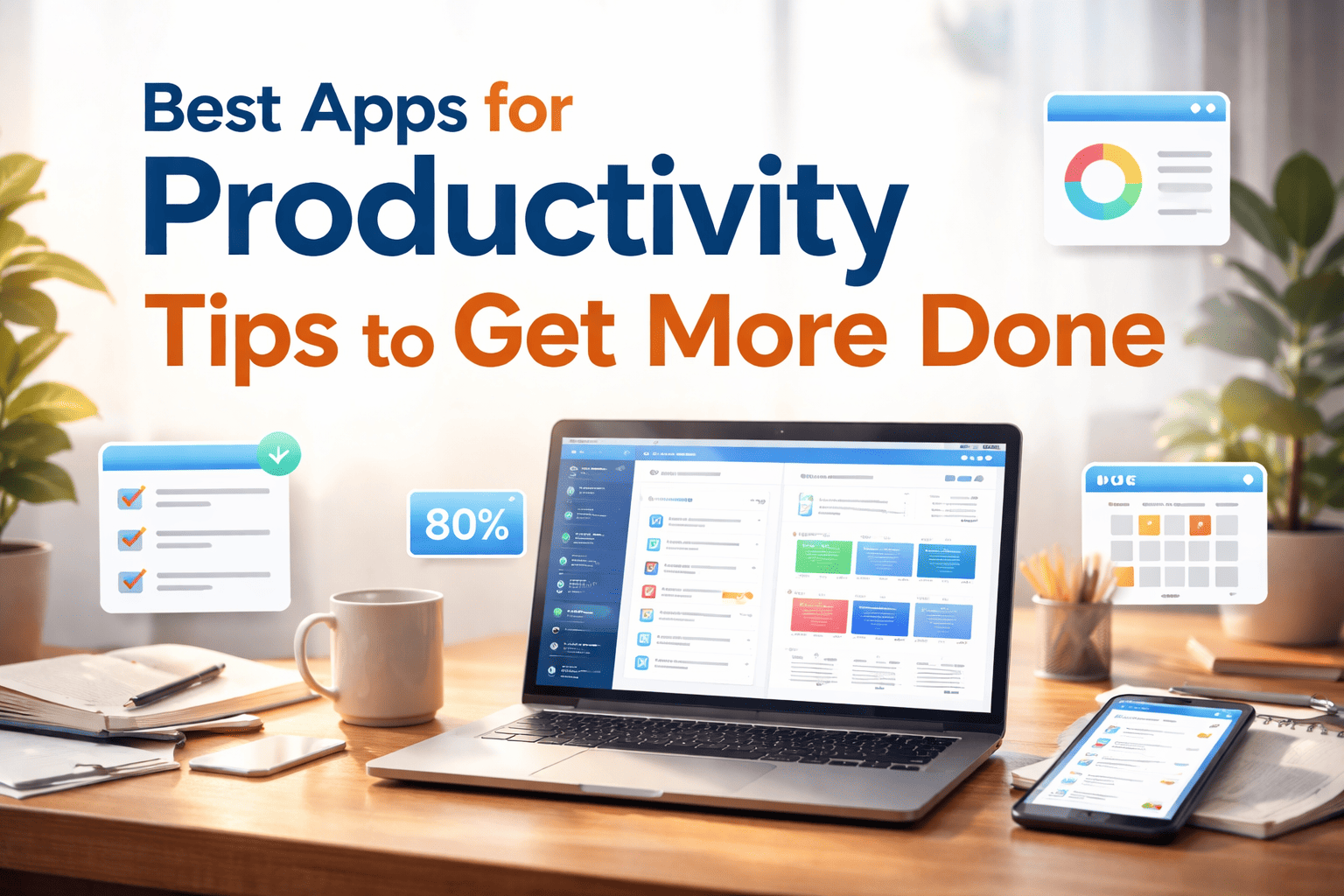
Best Apps for Productivity Tips to Get More Done
Most teams are not struggling because they work too little. They are struggling because the tools they use make work harder than it needs to be. Too many apps, too many notifications, too much time switching between platforms and somehow still not enough getting done.
The right apps for productivity do not add more complexity to your day. They remove it. They give your team one clear place to communicate, organize, and execute so energy goes into actual work instead of managing the tools meant to help with it.
In this guide we cover the best productivity apps for teams and businesses right now. We have evaluated each tool on real criteria ease of use, collaboration features, pricing, and how well it fits different types of teams. Whether you are a startup, a growing business, or an enterprise looking to improve how your teams work, there is a right tool on this list for you.
Let us get into it.
What Are Productivity Apps?
Productivity apps are software tools designed to help individuals and teams organize work, manage tasks, improve communication, automate repetitive processes, and collaborate more effectively. Modern productivity applications combine features such as messaging, project management, documentation, time tracking, and workflow automation to help users accomplish more in less time. Businesses use productivity apps to streamline operations, reduce inefficiencies, improve team coordination, and maintain visibility across projects while supporting both remote and in-office work environments.
What Makes a Productivity App Actually Worth Using
Before jumping into the list, it is worth understanding what separates a genuinely useful productivity tool from one that just adds noise to your workflow. The best productivity tools help individuals and teams stay focused, aligned, and efficient without adding unnecessary complexity.
Here is what to look for before choosing:
- Ease of adoption If your team needs weeks of training before they can use it effectively, it is already working against productivity
- Communication integration The best productivity apps either include communication features or connect seamlessly with your messaging platform
- Task and project visibility Everyone on the team should be able to see what is being worked on, by whom, and when it is due
- Automation capability Modern tools automate repetitive steps assigning tasks, sending reminders, updating project statuses, and syncing information between apps which reduces admin work and gives teams more time for high-value tasks.
- Security and data control For regulated industries, where your data lives and who can access it matters as much as any feature
With these in mind, here are the best apps for productivity tips for teams and businesses.
Best Apps for Productivity for Teams and Businesses
1. Troop Messenger - Best for Secure Team Communication and Productivity
When your team communicates better, everything else gets faster. Decisions happen quicker. Projects move forward with less back and forth. Misunderstandings that cost hours of rework simply stop happening. This is why a secure, reliable team communication platform belongs at the very top of any genuine productivity stack.
Troop Messenger is purpose-built for business teams that need more than a basic chat app. Available as a fully cloud-based SaaS platform, it gives teams quick setup with zero infrastructure overhead so you are up and running in hours, not weeks. For organizations that need more control, it also supports on-premise and self-hosted deployment, which means your data stays where you decide it should.
What makes Troop Messenger genuinely different from generic messaging apps is its set of unique productivity-focused features. Burnout Messaging lets users have confidential conversations that self-destruct after being read keeping sensitive discussions clean and compliant. The Forkout feature lets managers send a single message to multiple individuals simultaneously without creating a group, saving significant time when coordinating across teams. The Respond Later flag lets team members mark messages they cannot address immediately so nothing important falls through the cracks.
Key Features:
- One-on-one and group messaging with unlimited history
- Audio and video calling with screen sharing
- Burnout Messaging self-destructing messages for sensitive conversations
- Forkout send one message to multiple users without creating a group
- Respond Later flag messages to follow up when available
- Live location tracking for field teams
- End-to-end encryption across all channels
- Available as SaaS or on-premise deployment
- Works on Windows, Mac, Linux, iOS, Android, and browser
- Role-based access controls and admin oversight
Best for: Business teams, enterprises, remote teams, and organizations in regulated industries that want secure, reliable communication as the foundation of their productivity stack.
Pricing: SaaS plans starting from affordable per-user monthly pricing with 7days free trial available.
2. Notion - Best for Knowledge Management and Team Documentation
Notion centralizes everything notes, docs, databases, and task lists into one customizable workspace. It is ideal for teams that want a unified place to think, plan, write, and organize information.
For teams that live and work across documents, wikis, and shared knowledge bases, Notion removes the chaos of scattered files and disconnected notes. Everything lives in one searchable, linkable workspace that your whole team can contribute to and reference.
Key Features:
- Flexible pages that combine docs, databases, and task boards
- Team wikis and knowledge bases built into the same workspace
- Real-time collaboration multiple team members edit simultaneously
- Database views table, board, calendar, gallery, and timeline
- AI writing assistant for drafting, summarizing, and translating content
- Template library with thousands of ready-to-use setups
- Integrations with Slack, GitHub, Jira, and major productivity tools
Best for: Teams that heavily rely on documentation, internal wikis, and shared knowledge particularly content teams, product managers, and remote teams managing complex information.
Pricing: Free plan available. Notion paid plans start from $10 per user per month.
3. Asana - Best for Project and Workflow Management
Asana centers on tasks and projects with clear ownership, due dates, and multiple views creating a shared, visible roadmap that everyone can follow.For teams running multiple projects simultaneously, Asana provides the structure that keeps everything moving without things slipping through the cracks.
Its real strength is in cross-functional project management. Marketing campaigns, product roadmaps, hiring pipelines, and client deliverables can all live in Asana with clear ownership at every step. Timelines, portfolios, and workload views give managers the visibility they need to spot bottlenecks before they become problems.
Key Features:
- Task management with assignees, due dates, and priority levels
- Project timelines, Kanban boards, and list views
- Portfolio view for tracking multiple projects at once
- Workload management to balance team capacity
- Rules and automation for repetitive task workflows
- Goal tracking connecting daily tasks to business objectives
- 200+ integrations with tools your team already uses
Best for: Marketing teams, product teams, and cross-functional teams managing multiple projects who need clear ownership and deadline visibility across everything in flight.
Pricing: Free plan available for up to 10 users. Asana paid plans start from $10.99 per user per month.
4. Todoist - Best for Personal and Team Task Management
Todoist remains a favorite for individuals who want task management without the bloat. The app uses natural language processing so you can type meeting with John tomorrow at 3pm and it automatically creates a task with the correct date and time.
For teams that find tools like Asana overpowering, Todoist strikes the right balance. It is clean, fast, and focused on getting tasks done rather than configuring a complex system. The shared project features make it workable for small teams, while the simplicity keeps individual contributors from feeling overwhelmed.
Key Features:
- Natural language task creation type naturally, tasks appear correctly formatted
- Karma points system for tracking personal productivity habits
- Shared projects and task delegation for team use
- Priority levels, labels, and filters for organizing work
- AI-powered suggestions for organizing tasks and setting due dates
- Integrations with Google Calendar, Slack, and other tools
- Available on all platforms including mobile
Best for: Individuals, freelancers, and small teams that want clean, fast task management without the configuration overhead of enterprise project tools.
Pricing: Free plan available . Todoist paid plans start from $4 per user per month.
5. ClickUp - Best for Teams Wanting Everything in One Platform
ClickUp packs project management, docs, whiteboards, time tracking, and goals into a single product. If a workflow exists, ClickUp probably has a feature for it.
For teams frustrated by constantly switching between separate apps for tasks, documents, and collaboration, ClickUp is genuinely compelling. It is the most feature-complete option on this list which is both its greatest strength and its biggest challenge. New users need time to configure it properly before it pays off, but for teams that commit to the setup, it can genuinely replace multiple subscriptions.
Key Features:
- Tasks, subtasks, dependencies, and custom workflows
- Docs and wikis built directly alongside task management
- Whiteboards for visual brainstorming and planning
- Time tracking built into tasks no separate tool needed
- Goals feature for connecting daily work to business objectives
- Dashboards with custom reporting views
- Generous free plan for teams evaluating the platform
Best for: Growing businesses and teams running complex, multi-stage projects who want to consolidate their entire productivity stack into a single platform.
Pricing: Free plan available. Paid plans from $7 per user per month.
6. Google Workspace - Best All-in-One for Small and Medium Teams
Google Workspace provides an integrated product experience with access to email, AI assistance, and more within a unified interface with tools like Gmail, Drive, and Meet seamlessly managing communications, storage, and virtual meetings while enhancing collaboration and maintaining strong security.For teams that want productivity tools without the complexity of managing multiple vendors, Google Workspace wraps email, video meetings, document collaboration, and file storage into a single subscription. The real-time collaboration in Docs and Sheets alone eliminates the version control problems that slow so many teams down.
Key Features:
- Gmail for professional email with powerful search and filtering
- Google Drive for centralized file storage and sharing
- Google Docs, Sheets, and Slides with real-time multi-user editing
- Google Meet for video conferencing built directly into your workflow
- Google Calendar for team scheduling and meeting management
- Gemini AI integrated across apps for drafting, summarizing, and organizing
- Strong security and admin controls for business accounts
Best for: Small to medium businesses that want a clean, reliable all-in-one productivity suite without managing multiple separate tools.
Pricing: Google Workspace plans start from $6 per user per month.
7. Taskity – Best for Smart Task Organization and Team Productivity
Most productivity tools make you adapt to their system. Taskity is built the other way around. It fits into how your team already thinks and works, giving everyone a clean, intelligent space to capture tasks, set priorities, and move work forward without the friction of complicated setups or steep learning curves. For teams that want something more powerful than a basic to-do list but less overwhelming than a full enterprise platform, Taskity hits the right spot.
What sets Taskity apart is its focus on simplicity without sacrificing depth. You get smart task organization, real-time collaboration, and meaningful productivity insights all wrapped in an interface that team members actually enjoy using. Less time configuring the tool means more time actually getting things done.
Key Features:
- Smart task creation with priority levels, due dates, and labels for instant organization
- Team boards for shared visibility across all active tasks and projects
- Progress tracking with status updates that keep everyone aligned in real time
- Recurring tasks for automating repetitive work without manual re-entry
- Productivity insights showing individual and team output over time
- Integrations with popular tools like Slack, Google Calendar, and cloud storage platforms
- Available on web, desktop, and mobile so your team stays connected on any device
Best for: Small to mid-sized teams, project managers, and remote teams that need a clean, easy-to-adopt task management solution that scales with their workload without adding unnecessary complexity.
Pricing: Free plan available for individuals and small teams. Paid plans start from $5 per user per month for advanced team features and integrations.
8. Clockify - Best Free Time Tracking App for Teams
Time is the one resource every productivity system is ultimately trying to protect. Understanding where your team's hours actually go not where you think they go is one of the most actionable insights any business can have. Clockify makes time tracking genuinely accessible by offering its core features completely free regardless of team size.
Key Features:
- Unlimited time tracking completely free for unlimited users
- Project-based time logging with client and task categorization
- Visual reports showing time distribution across projects and team members
- Billable hours tracking for client-facing teams and agencies
- Integrations with Asana, Trello, Jira, and major project tools
- Desktop and mobile apps for tracking on any device
- Kiosk feature for teams that need shared clock-in stations
Best for: Agencies, consultancies, freelancers, and any team that needs to understand how time is being spent or that bills clients based on hours worked.
Pricing: Free plan available with unlimited users and projects. Paid plans from $3.99 per user per month for advanced features.
Best Free Productivity Apps for Teams
Not every team has the budget for premium tools across the board. The good news is that several of the best productivity apps on this list have genuinely useful free plans not watered-down trials but real working tools:
- Troop Messenger Free trial available with access to core communication and collaboration features
- Notion Free plan includes unlimited pages and blocks for individuals and small teamsAsana Free for up to 10 users with core task and project management features
- Todoist Free plan with up to 5 active projects and basic task management
- ClickUp Very generous free plan covering tasks, docs, and collaboration for unlimited users
- Clockify Completely free for unlimited users with full time tracking capability
- Google Workspace Free tier available through Gmail and Google Drive for basic us
For teams on tight budgets, starting with free plans and upgrading only what you genuinely use is always the smarter approach.
How to Choose the Right Productivity App for Your Team
The right productivity tool is the one your team will actually use consistently not the one with the most features. Here is a simple decision guide:
For small teams and startups Start with tools that are fast to set up and easy to adopt. Todoist for tasks, Notion for documentation, and Troop Messenger for team communication covers most needs without overwhelming your team with complexity.
For remote and distributed teams Prioritize tools with strong async communication, unlimited message history, and searchable archives. Troop Messenger's Respond Later feature and Notion's shared knowledge base both directly address remote work challenges.
For growing businesses managing multiple projects Asana or ClickUp provide the project visibility and workflow automation that teams need as work gets more complex. Pair either with a dedicated communication platform to avoid losing context between tasks and conversations.
For enterprises and regulated industries Security and data control become the primary filter. Troop Messenger's on-premise and air-gapped deployment options make it the strongest choice for industries where data sovereignty is a compliance requirement.
For teams focused on time and billing Clockify's free time tracking gives immediate visibility into how hours are being spent without adding cost to your stack.
Why Communication Is the Foundation of Every Productivity System
You can have the best project management tool, the most organized knowledge base, and the cleanest task list in the world and still lose hours every week to miscommunication.
Without data, it is hard to improve. Productivity tools provide visibility into performance time spent on tasks, project progress, workload distribution, bottlenecks, and efficiency trends. But all of that visibility is only useful if your team can act on it through clear, fast communication.
This is why the communication layer of your productivity stack deserves the most careful attention. A team that communicates well resolves blockers faster, makes decisions with fewer meetings, and keeps projects moving even when people are working across time zones and schedules.
Troop Messenger is designed specifically for this. Whether your team uses the cloud-based SaaS version for quick setup or the on-premise version for complete data control, it gives every member of your organization a single, reliable place to communicate without the noise and compliance risks of consumer messaging apps. You can explore the full range of if you are currently evaluating communication platforms as part of building your productivity stack.
Conclusion
The best productivity apps are not the ones with the most features. They are the ones that remove friction from how your team actually works. The best productivity system is the one you will actually use consistently not the one with the most features. Your specific needs, work style, and team dynamics matter more than any general recommendation.
If your team struggles with communication and missed context start with Troop Messenger. If project visibility is the problem Asana or ClickUp will change how your team works. If scattered documents and knowledge are slowing you down Notion brings everything into one place. If you need to understand where time is going Clockify makes that insight free and accessible.
Pick one problem, choose the right tool, give your team two weeks to actually use it, and evaluate from there. That approach will always outperform adopting five tools at once and using none of them well.
Frequently Asked Questions (FAQs)
Q1. What are productivity apps and why are they important?
Productivity apps are digital tools that help individuals and teams manage tasks, communicate efficiently, organize information, and streamline workflows. They are important because they reduce manual work, improve collaboration, and help teams stay focused on high-value activities. Modern productivity apps often combine messaging, task management, documentation, automation, and reporting features that enable businesses to improve efficiency, reduce delays, and maintain better visibility across projects and daily operations.
Q2. Which productivity app is best for team collaboration?
The best productivity app for team collaboration depends on the organization's needs. Teams that prioritize communication may prefer Troop Messenger, while project-focused teams often choose Asana or ClickUp. Organizations that rely heavily on documentation may benefit from Notion, and businesses seeking an all-in-one workspace often consider Google Workspace. The ideal collaboration tool should support communication, task visibility, file sharing, and integration with existing workflows while remaining easy for employees to adopt and use consistently.
Q3. Can productivity apps improve remote team performance?
Yes. Productivity apps play a critical role in helping remote teams stay connected, organized, and productive. Features such as instant messaging, video conferencing, shared task management, document collaboration, and automated workflows help reduce communication gaps and improve accountability. By providing a centralized workspace where employees can coordinate work and track progress, productivity apps help remote teams maintain visibility, collaborate effectively, and achieve business goals regardless of location or time zone.
Q4. What features should businesses look for in a productivity app?
Businesses should look for features such as team communication, task management, project tracking, workflow automation, file sharing, reporting, integrations, and security controls. The best productivity apps are easy to adopt, scalable as the organization grows, and capable of reducing administrative work. Companies should also evaluate deployment options, data security, user experience, and integration capabilities to ensure the platform supports both current requirements and future business growth.
Q5. How do I choose the right productivity app for my business?
Choosing the right productivity app starts with identifying the biggest challenge your team faces. Some organizations need better communication, while others struggle with project visibility, documentation, or time management. Evaluate ease of use, pricing, security, integrations, scalability, and employee adoption before making a decision. Running a trial with a small team can help determine whether the platform improves productivity in real-world scenarios before committing to a company-wide rollout.