Connect with us
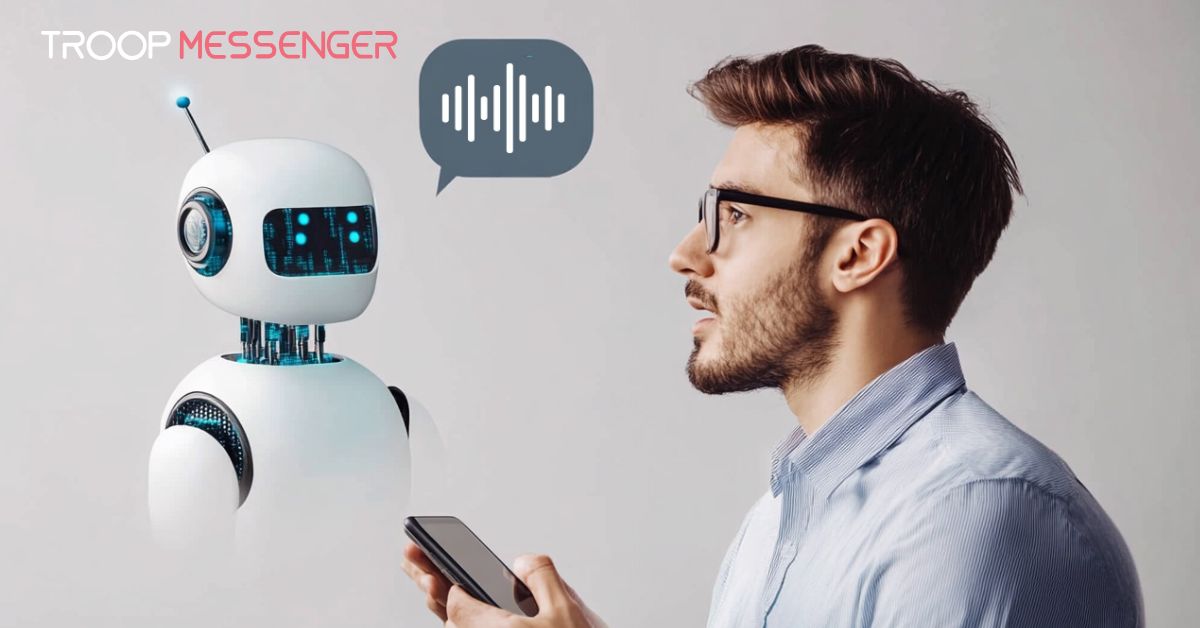
10 Best AI Voice Bots for Sales & Productivity
AI voice bots are AI-powered software systems that understand spoken language and respond to people through natural voice conversations, helping businesses automate calls, customer interactions, and sales tasks. They can handle activities such as answering inbound calls, qualifying leads, scheduling appointments, conducting follow-ups, and routing conversations to human agents when needed.
For sales teams, these capabilities can reduce repetitive calling work and allow sales representatives to spend more time on qualified prospects and customer relationships. However, AI voice bots differ in their features, integrations, languages, scalability, and ability to handle outbound calls.
In this article, we’ll explain what AI voice bots are, how they can support sales and team productivity, and compare 10 AI voice bot solutions worth considering for business use.
The growing adoption of conversational AI is also reflected in customer service. Gartner reported that 85% of customer service leaders planned to explore or pilot customer-facing conversational GenAI, highlighting the increasing role of AI-powered interactions in business communication.
What Is an AI Voice Bot?
So, what exactly are voice bots? Voice bots (also known as AI voice agents or AI voice assistants) are AI-powered software systems that can understand spoken language and engage with users in a natural, human-like dialogue. They are able to do that by leveraging technologies like:
- Automatic Speech Recognition (ASR)
- Natural Language Processing (NLP)
- Natural Language Understanding (NLU)
- Natural Language Generation (NLG)
- Text-to-speech (TTS) Synthesis
- Machine Learning (ML)
But not all AI voice bots are actually suitable for sales purposes. Some can only answer inbound calls and handle basic customer support interactions. If you’re looking for a voice bot to enhance your sales processes, you’ll benefit most from a voice bot solution that can initiate and handle outbound calls, too – and these are often referred to as AI calling systems or AI calling bots.
How Can AI Voice Bots Help Increase Sales and Team Productivity?
So, how can AI-powered voice bots increase your sales team’s productivity and help you accelerate your sales processes? By simply automating a range of tasks and operations that were previously done manually and freeing your sales reps to focus more on building relationships with prospects and closing deals. Overall, here’s what today’s AI voice agents/ voice calling bots are capable of in the context of sales:
- 24/7 lead engagement: AI voice bots can answer your inbound calls and engage inbound leads automatically. Unlike your human sales reps, they can operate around the clock, ensuring no sales opportunity slips through the cracks.
- AI cold calling:Cold calling has always been challenging and extremely time-consuming for sales agents. AI calling bots can handle outbound cold calls independently, so your reps don’t have to spend time interacting with cold prospects who aren’t likely to convert.
- Automated lead qualification: AI-powered voice bots can automate the entire process of lead qualification. They can ask your prospects a set of pre-qualification questions, filter out unqualified ones, and ensure your sales agents only interact with high-potential leads.
- Personalized upselling/ cross-selling: AI voice bots can personalize each interaction based on context and previous engagements and help you increase sales by offering highly personalized product recommendations.
- Appointment scheduling: When integrated with calendar software systems, AI voice bots can help your clients or prospects schedule appointments/ book demo calls, saving your sales reps a bunch of time and effort.
- Follow-ups and reminders: Voice bots can reach out to your prospects or customers proactively and automate follow-up interactions. For example, they can remind them of upcoming appointments/ meetings to help you reduce no-shows.
Top 10 AI Voice Bot Solutions Worth Your Attention
1. VoiceSpin
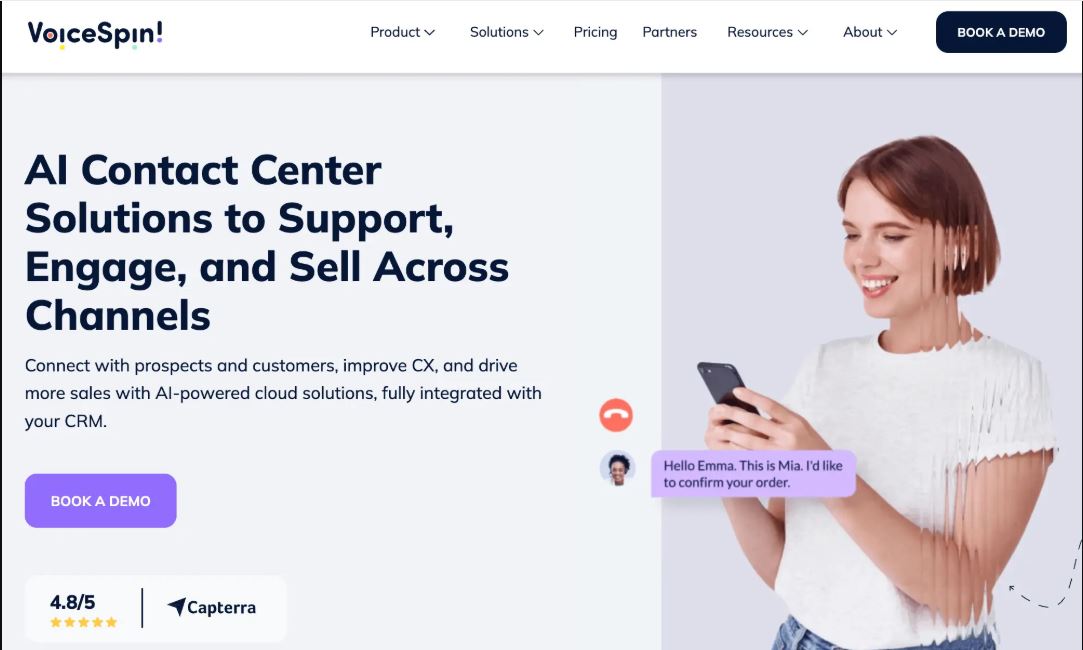
VoiceSpin’s conversational AI voice bot can answer inbound calls and initiate outbound calls so you can reach out to your prospects proactively. It can qualify your leads based on your criteria through a set of targeted questions, filter out unqualified ones, and automatically create new lead records in your integrated CRM for those prospects who show interest and meet your qualification criteria. Plus, it can help you automate the process of scheduling appointments and demo calls.
Key features:
- Multilingual capabilities
- Seamless transition to human agents
- Automated lead capture and qualification
- Integrations with third-party systems
2. Convin
Convin offers an enterprise-grade AI voice bot that can handle both inbound and outbound calls independently and engage with your customers and prospects in multiple languages, making it a solid solution for lead generation and sales purposes. Convin’s AI voice bot can help you qualify leads by assessing their intent and prioritizing high-value opportunities – and it can automatically transfer the call to a live rep when the lead shows interest. Additionally, the bot can schedule appointments and automate follow-ups with personalized calls.
Key features:
- Multiple language support
- Seamless handoff to a live agent
- Automated entity extraction, CRM updates, and follow-ups
- AI conversation summarization

3. Synthflow
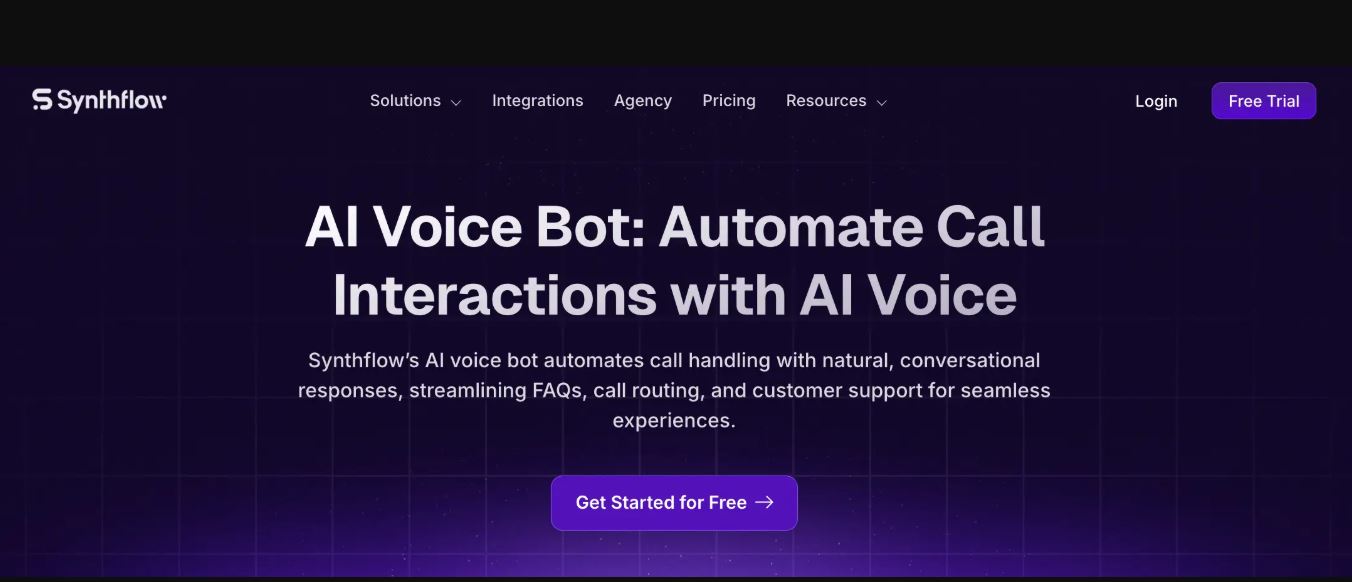
With Synthflow’s AI voice bot, you can automate both inbound and outbound calls. You can either create your AI voice bot from scratch or pick a ready-made template and adapt it to your needs with custom prompts. You can also choose a language and a voice or even clone your own voice. The bot can qualify your leads, book meetings, and perform other actions. What’s great about Synthflow is that it offers 200+ integrations and APIs, so you can easily connect it to your existing tech stack.
Key features:
- Support for 20+ languages
- Ready-made templates
- Native and custom integrations
- Security and compliance features
4. Regal
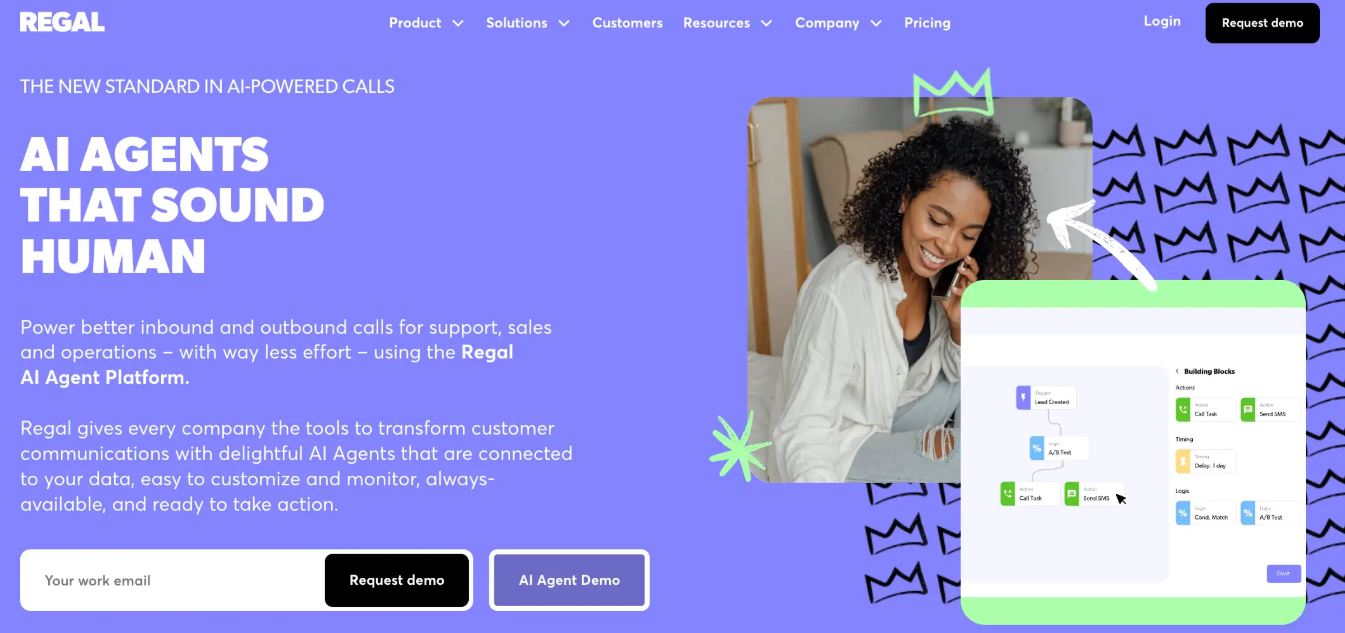
Regal’s AI phone agent can automatically handle your inbound calls, qualify your leads, schedule appointments, and make outbound phone calls. It speaks multiple languages, can be customized for your brand voice, and escalates to human agents when needed. What’s distinctive about Regal is that it offers robust compliance features (including HIPAA and SOC2), making it a suitable solution for highly regulated industries like finance, legal, and healthcare.
Key features:
- Support for over 20 languages
- Automated QA scorecards
- 40+ native integrations with third-party tools
- Industry-specific compliance features
5. Tovie
An AI-powered voice bot from Tovie can handle both inbound and outbound interactions with your customers or prospects. The bot is easily adaptable to call centers of all sizes and operational volumes, which makes it suitable for both small teams and large enterprises with 10,000+ agents. You can use it for appointment scheduling automation, promotional campaigns, loyalty program updates, debt collection, and other use cases.
Key features:
- Multi-language support
- 200+ simultaneous dialed calls
- Integrations with third-party systems
- Continuous learning from past interactions
6. Chatsimple
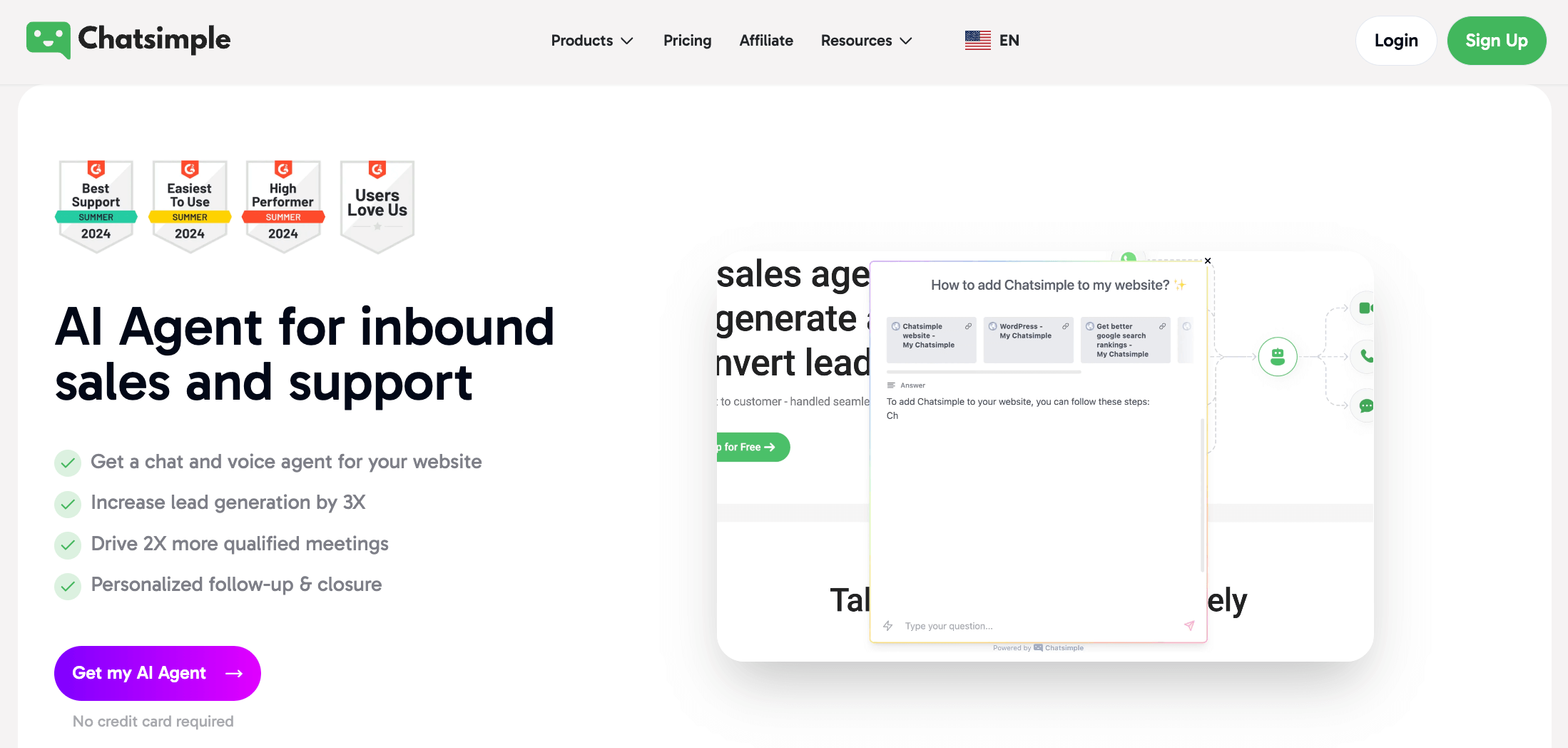
Unlike other voice bot solutions listed here, Chatsimple’s voice AI agent works in a different way. It literally calls your website visitors while they are browsing your site and engages them proactively. It supports multiple languages and offers a range of male and female voices to choose from. Chatsimple’s AI agent improves user engagement, captures inbound leads, collects lead details, qualifies leads, and helps you improve website conversions through personalized recommendations.
Key features:
- Support for 175+ languages
- Customized to match your brand voice
- Security and compliance features
- Integrations with CRM and third-party apps
7. VoiceGenie
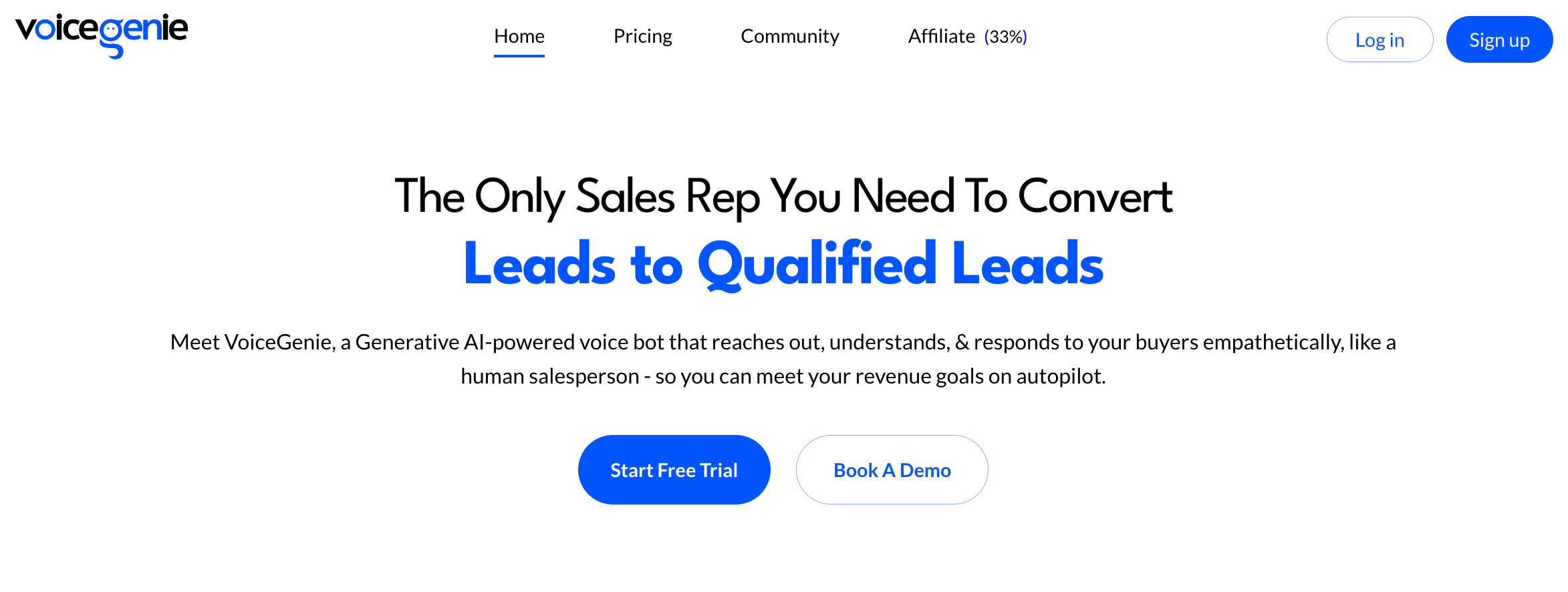
VoiceGenie is a gen AI-powered voice bot that is specifically built for sale purposes. It can call your prospects, provide relevant information about your products or services, qualify leads based on their buying intent, identify cross-selling and upselling opportunities during interactions to offer tailored deals, and schedule appointments. VoiceGenie can also answer your inbound calls and process inbound leads. You can try all the features by signing up for a 7-day free trial.
Key features:
- Unlimited outbound campaigns
- Seamless human agent handover
- Support for 100+ languages
- Sentiment analysis
8. Cognigy
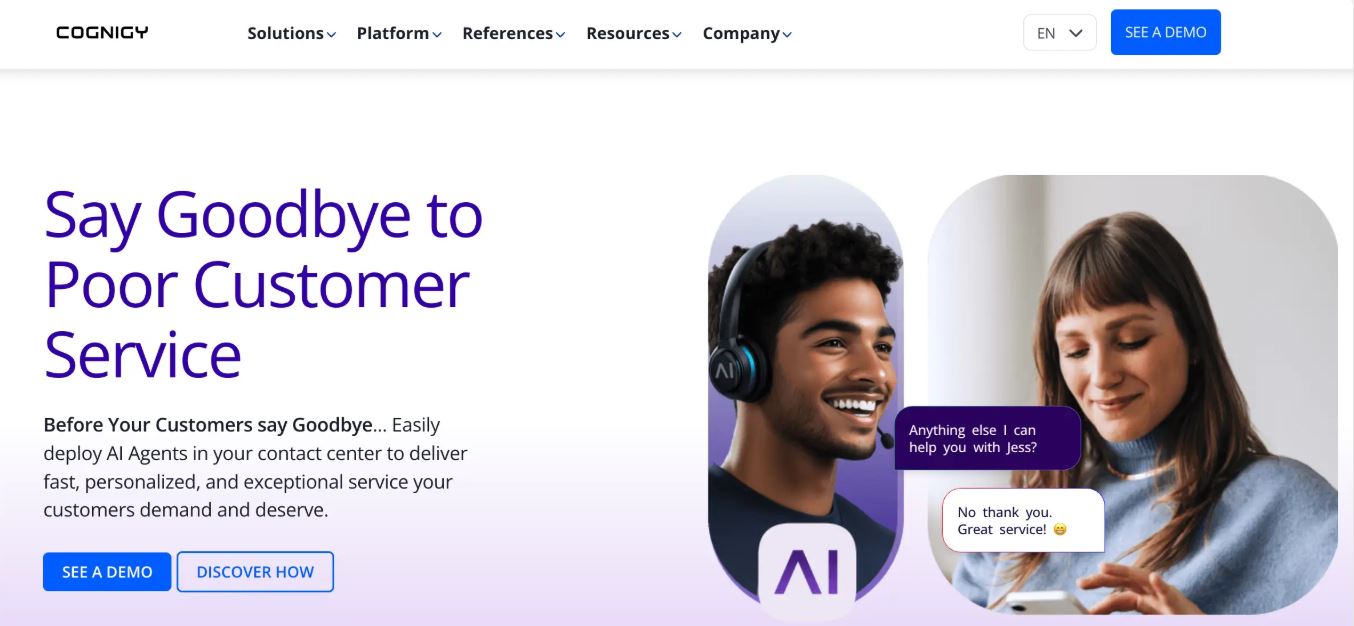
Cognigy’s voice AI agent can be effectively used in sales and customer service environments. The bot can interact with your prospects and customers in their preferred language and supports 1000+ synthetic voices. With deep integrations with the leading contact center providers and other third-party systems and the ability to support 25K+ concurrent conversations, Cognigy’s AI agents are best-suited for large-scale businesses and enterprises.
Key features:
- Support for 100+ languages
- Seamless call routing to human agents
- Integrations with third-party apps
- Extensive training materials
9. Floatbot
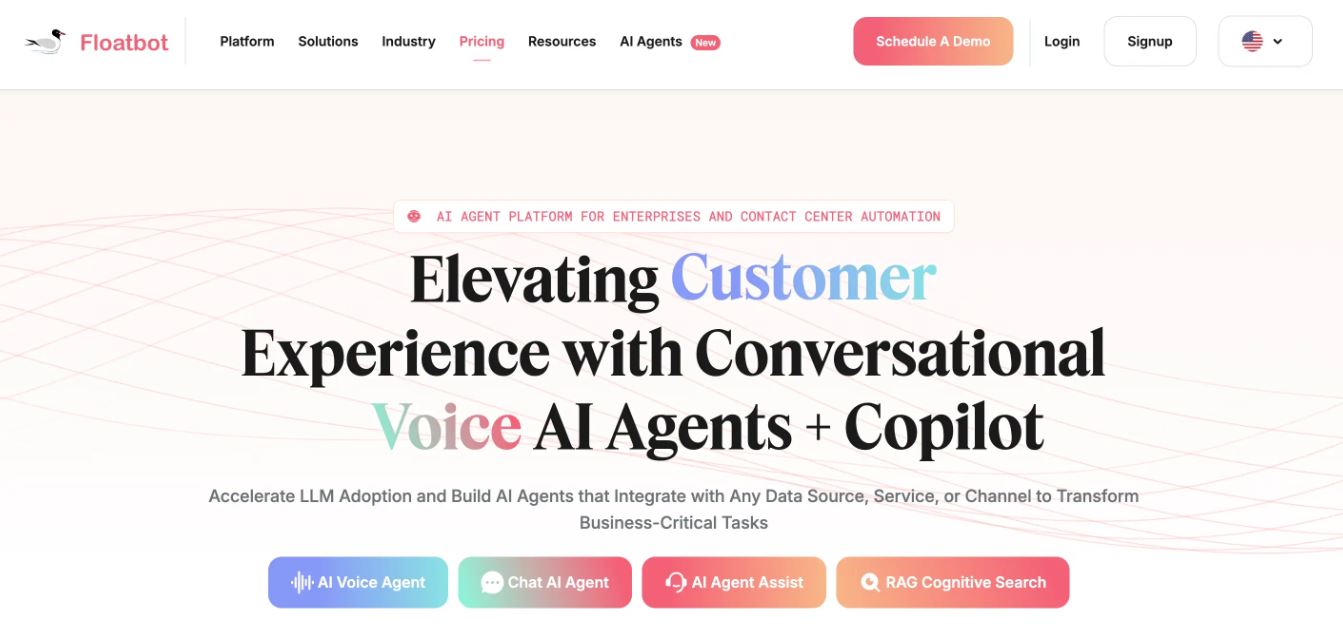
With Floatbot, you can either choose its VoiceGPT or integrate your own LLM. Floatbot’s AI-powered voice bot can help your customers or prospects schedule appointments or reservations. It can also send automated reminders to reduce no-shows, qualify leads by asking relevant questions and capturing lead information, and provide personalized product recommendations based on customer preferences. Plus, the bot can seamlessly transition between voice, chat, and text/ SMS channels.
Key features:
- No-code/ low-code voice bot builders
- Bot interruption management
- Support for 150+ languages
- Third-party integrations
10. JustCall
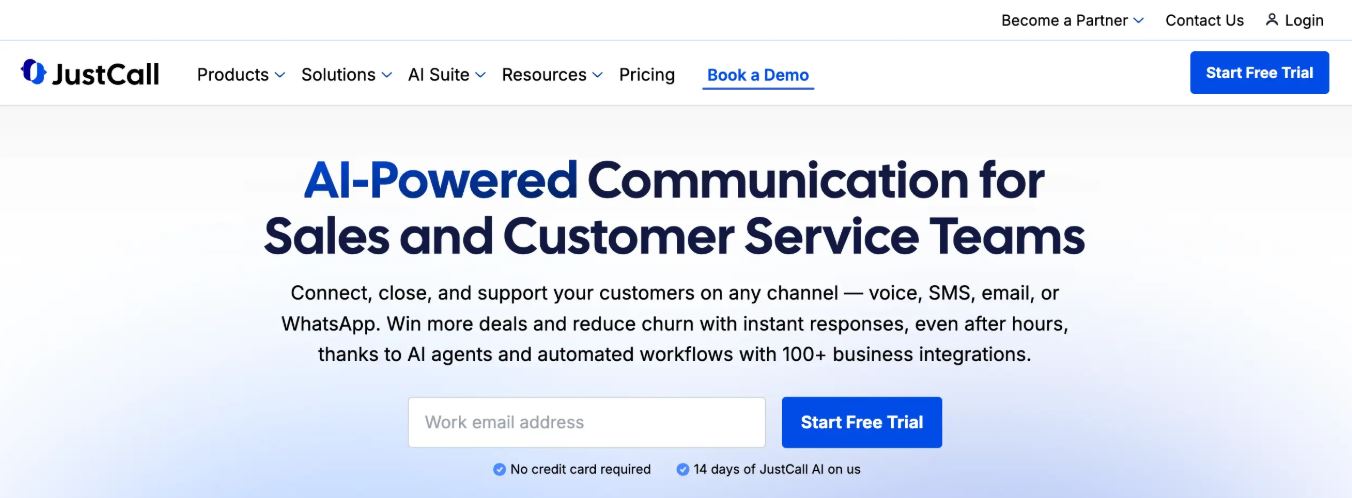
JustCall’s AI voice agent can only handle inbound calls but it can still be effectively used for sales purposes. Apart from resolving customer service queries, the bot can pitch your products or services, qualify inbound leads, capture lead information, and book appointments automatically, thanks to Google Calendar integration. It speaks multiple languages and can transfer complex queries to your human reps when needed.
Key features:
- Smooth transfer to a live agent
- Support for multiple languages
- Automated callback handling
- Integrations with CRM systems
How to Choose the Right AI Voice Bot for Your Business
Choosing the right AI voice bot starts with understanding your business requirements. Different platforms are designed for different use cases, such as lead qualification, outbound sales calls, appointment scheduling, customer support, or inbound call handling. Selecting a tool that aligns with your primary objective will help you achieve better results.
When evaluating AI voice bots, consider the quality of conversations they can deliver. The platform should understand natural speech, respond accurately, maintain context, and provide a smooth user experience. It is also important to check whether the solution integrates with your CRM, help desk, calendar, and other business applications to streamline workflows and reduce manual work.
Businesses should also evaluate security, privacy, and scalability. Review how the platform handles customer data, call recordings, and access controls. If you serve customers across different regions, assess its multilingual capabilities and ability to understand different accents and speaking styles.
Finally, look for solutions that support human handoff when a conversation requires human expertise. Before full deployment, test the platform using real business scenarios and measure factors such as lead qualification accuracy, appointment bookings, customer satisfaction, and overall operational efficiency. The best AI voice bot is not necessarily the one with the most features, but the one that fits your business needs and delivers consistent results.
Conclusion
AI voice bots can help businesses automate repetitive calling and customer interaction tasks such as lead qualification, appointment scheduling, follow-ups, and initial sales conversations. By handling these routine activities, they can give sales teams more time to focus on qualified prospects, customer relationships, and higher-value conversations.
However, the right AI voice bot depends on your business requirements. Before choosing a solution, consider its calling capabilities, CRM integrations, language support, human handoff, security, scalability, and overall cost.
The goal should not be to replace your sales team, but to use AI voice automation where it can reduce repetitive work and make sales processes more efficient.
FAQs
1. What is an AI voice bot?
An AI voice bot is software that uses artificial intelligence and speech technologies to communicate with people through spoken conversations. It can understand what a caller says, process the request, and respond using a synthetic or AI-generated voice. Businesses can use AI voice bots for tasks such as answering calls, qualifying leads, scheduling appointments, providing basic customer support, and routing conversations to human agents when a situation requires additional assistance.
2. How do AI voice bots work?
AI voice bots typically combine automatic speech recognition, natural language processing, language models, and text-to-speech technology. The system first converts a caller's speech into text, analyzes the request and conversation context, determines an appropriate response, and then converts that response back into spoken language. Depending on the platform, the bot can also connect with CRM systems, calendars, help desks, and other business applications to complete actions during the conversation.
3. How can AI voice bots improve sales productivity?
AI voice bots can reduce repetitive sales work by handling activities such as initial lead qualification, outbound follow-ups, appointment scheduling, reminders, and basic customer questions. This allows sales representatives to spend more time on qualified prospects and complex conversations that require human judgment. Voice bots can also operate outside regular business hours, helping businesses respond to potential customers sooner. Their effectiveness depends on conversation design, data quality, integrations, and appropriate human handoff.
4. Can AI voice bots make outbound sales calls?
Yes, some AI voice bot platforms support automated outbound calling for activities such as lead qualification, follow-ups, appointment reminders, surveys, and customer notifications. However, businesses should consider applicable telecommunications, consent, privacy, and marketing regulations before using automated calls. Outbound voice bots are generally more suitable for structured conversations with clear objectives than highly complex sales negotiations. Human representatives should remain available when prospects require detailed explanations, negotiation, or personalized assistance.
5. Can AI voice bots qualify sales leads?
Yes. AI voice bots can qualify leads by asking predefined questions and evaluating responses against criteria established by the business. For example, a bot can collect information about a prospect's requirements, budget, location, timeline, or interest level before passing qualified leads to a sales representative. This can reduce the amount of time sales teams spend on initial screening. However, businesses should regularly review qualification rules to ensure leads are not incorrectly filtered.