Connect with us
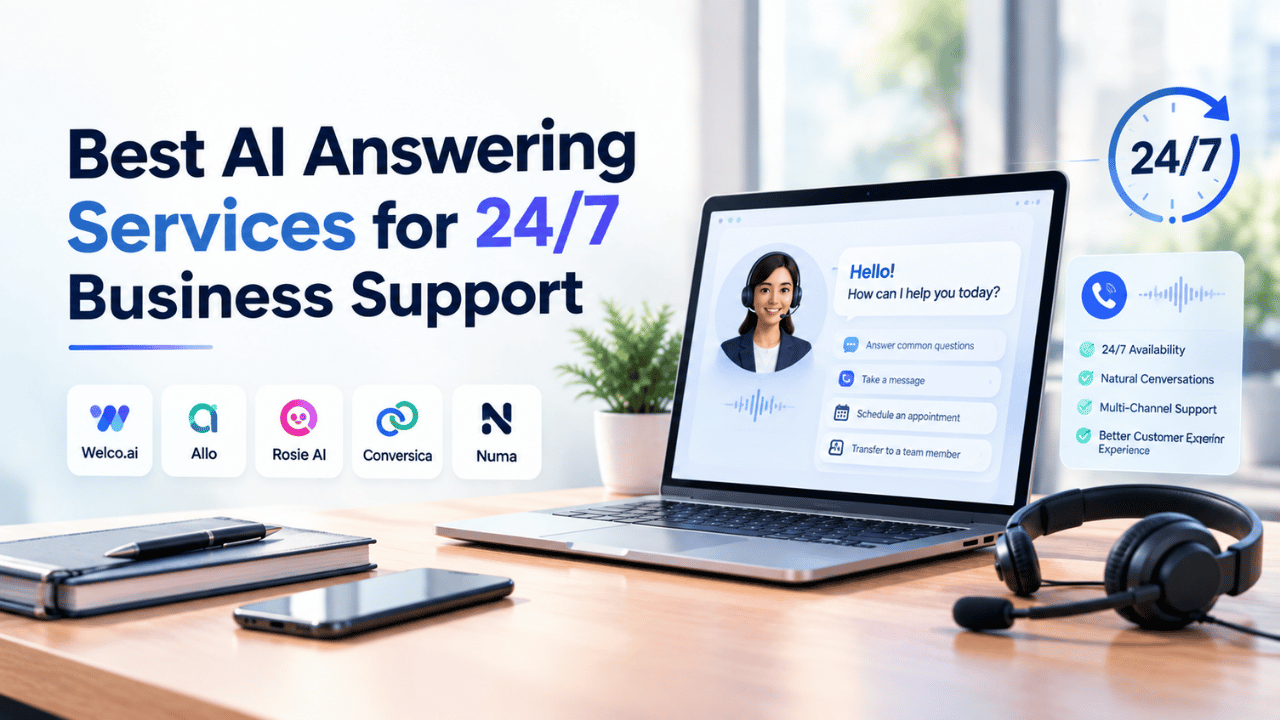
5 Best AI Answering Services for 24/7 Business Support
An AI answering service is a technology that uses artificial intelligence to answer business calls, handle routine inquiries, capture caller information, schedule appointments, and route conversations when human assistance is needed. It gives businesses a way to provide consistent phone coverage without relying entirely on a full-time receptionist.
For businesses that depend on phone calls for leads, appointments, customer support, or client intake, missed calls can quickly become missed opportunities. Modern AI answering services can respond around the clock, connect conversations with business tools, and keep important caller information organized.
However, not every service offers the same voice quality, integrations, automation, or human escalation options. The right choice depends on your business needs, call volume, workflows, and the level of human involvement you require.
This guide compares some of the best AI answering services available today and explains what to look for when choosing one for your business.
| AI Answering Service | Best For |
| Welco.ai | Multilingual small businesses |
| Allo | AI-powered business phone communication |
| Rosie AI | Human-sounding reception |
| Conversica | Automated lead engagement |
| Numa | Local and multi-channel support |
What to Look for in an AI Answering Service
1. Natural Voice and Conversation Quality
If the AI sounds robotic, you’ve already lost the caller’s trust. Voice quality is the first impression, and it needs to hold up under real-world conditions: interruptions, accents, background noise, and mid-sentence redirects. The best platforms use adaptive speech models that adjust tone and pacing like a trained receptionist. Before you commit, request live call demos or recordings. A polished voice should feel human enough that no one asks, “Am I talking to a robot?”
2. Business and CRM Integrations
An AI that can’t talk to your systems just creates new admin work. Your answering service should sync natively with the tools that already run your operations: CRMs like HubSpot or Salesforce, scheduling platforms like Calendly, or practice tools like Clio. When calls automatically update your pipeline or calendar, your team gains time and accountability instead of more manual steps.
3. AI Automation and Human Handoff
No system can automate empathy. Many routine inbound calls can be handled by AI, but sensitive, complex, or high-value conversations may still require human judgment. The best solutions let you define escalation triggers. For example, when certain keywords, urgency, or tone shifts are detected. Hybrid services that hand off gracefully to human agents protect both efficiency and reputation.
4. Reliable 24/7 Call Coverage
Plenty of vendors promise “24/7 availability,” but some simply queue after-hours calls. If your audience spans time zones or weekends matter in your business cycle, confirm that every call (regardless of the hour) is answered live, whether by AI or human support. This distinction makes the difference between a business that appears responsive and one that actually is.
5. Security, Privacy, and Compliance
If you operate in healthcare, law, or finance, compliance is survival. Ask about encryption standards, data storage, and access controls. Look for explicit certifications like HIPAA, GDPR, or PCI DSS. Even for non-regulated industries, secure data handling signals professionalism and builds client confidence.
5 Best AI Answering Services
1. XBert by Nextiva: Best for On-Brand Reception and Human Handoff


Founded: 2006
Headquarters: Scottsdale, Arizona
XBert by Nextiva is an AI employee that answers calls, texts, and live chat around the clock and handles each conversation from start to finish: answering questions, scheduling appointments, updating records, and handling follow-ups. It starts like a new hire, except faster: it interviews you about your business, writes its own instructions from what you tell it, and is ready to test before you finish your coffee, so there is no configuration panel to work through and no technical skills required.
The part customers notice is that XBert remembers them. Every call, message, and purchase is threaded into one continuous story, so when someone rings for the fiftieth time, XBert already knows the previous forty-nine while they are still on the line. That memory comes from NEXT.IQ, Nextiva's proprietary intelligence layer. You set the boundaries: the topics, actions, tone, and escalation triggers it can use.
When a request does need a person, XBert hands it over with full context and shifts into coaching mode, feeding the team member suggested responses and next steps mid-call.
It supports 23+ languages, and integrations cover Salesforce, HubSpot, Housecall Pro, Epic, Google and Outlook calendars, Calendly, QuickBooks, Zendesk, Slack, Shopify, and custom APIs.
2.Welco.ai: Best for Multilingual Small Business Receptionist

Welco.ai was built from the ground up to solve a specific pain point for small business owners: never missing another call, regardless of time zone or language. This AI receptionist provides 24/7 phone answering services, handling customer questions, booking appointments, and capturing leads in over 40 language variants.
The platform connects to more than 8,000 apps through Zapier, feeding call data directly into your CRM, calendar, or project management stack. A control center dashboard lets you view recent calls, monitor key metrics like calls answered and intake forms, and quickly access call recordings and transcripts so your team always has context. Real-time transcription and smart analysis to keep everyone aligned between shifts without manual note-taking.
Pricing starts at $39 per month for 60 minutes of call handling, with higher tiers unlocking SMS notifications, call recordings, custom workflows, and unlimited knowledge sources. For service-based businesses that need reliable, multilingual coverage without the overhead of live staff, Welco.ai delivers consistent call handling at a fraction of the cost.
3. Allo: Best for AI-Powered Business Phone Communication
![]()
Founded: 2024
Headquarters: Miami, with operations in Paris and Buenos Aires
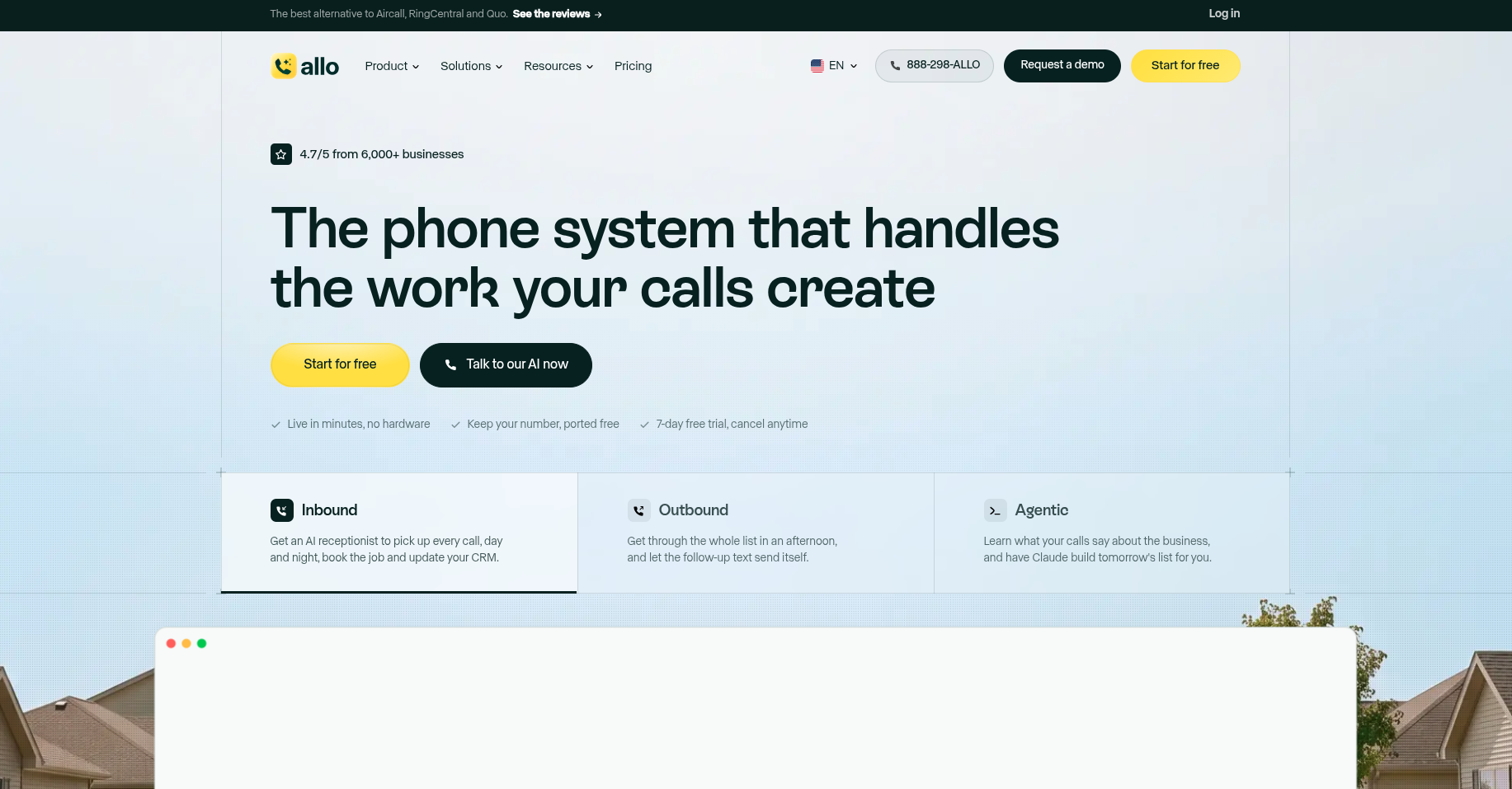
Allo is an AI phone system designed for businesses to place and receive calls and send and receive text messages. Unlike traditional phone systems, Allo uses AI natively to make business communication more efficient.
Its AI receptionist can answer calls when your team is unavailable, respond to FAQs using training documents, take messages, and collect prospect details. Allo also provides call recording, transcription, and AI-generated summaries, including support for mobile calls.
Another useful feature is its AI assistant, which lets users ask questions about previous calls and messages. Allo also offers deep CRM integrations with platforms such as Salesforce, HubSpot, Attio, Pipedrive, Streak, and Apollo.io, syncing call details, transcripts, and summaries while surfacing CRM information when prospects call.
Allo is the first product of The Mobile-First Company, an AI-focused company founded in Paris in 2024. For businesses looking for an AI-powered phone system with an AI receptionist, call intelligence, and CRM integrations, Allo offers a modern alternative to traditional business phone systems.
4.Rosie AI: Best for Human-Sounding Reception
Founded: 2024
Headquarters: Remote
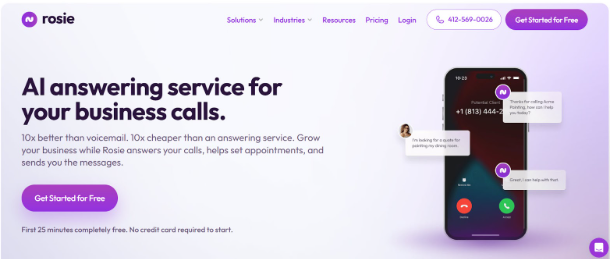
Why Rosie AI is the best AI answering service: Rosie AI turns call handling into a proactive, strategic asset for growing businesses. Its proprietary voice engine uses advanced speech synthesis that reacts to tone, pauses, and interruptions in real time, designed to provide more natural conversations and respond to interruptions and follow-up questions. Callers can interrupt mid-sentence, change topics, or ask clarifying questions, and Rosie AI responds naturally.
Rosie AI doesn’t just log messages. It books meetings, qualifies inquiries, and updates CRMs like HubSpot, Salesforce, and Pipedrive instantly. Every interaction is stored, transcribed, and synced automatically, so there’s no manual data entry. Businesses can also configure rules to route VIP clients or urgent leads directly to a team member.
The platform’s strength lies in its operational fit: clean integrations, customizable prompts, and a dashboard that non-technical teams can manage easily. For startups, agencies, and service-based firms, Rosie AI delivers enterprise-grade responsiveness and a consistent brand voice, without hiring or managing reception staff. In practice, it’s like adding a 24/7 front desk that never drops a call, forgets a message, or sounds robotic.
5. Conversica: Best for Automated Lead Engagement
Founded: 2007
Headquarters: San Mateo, CA
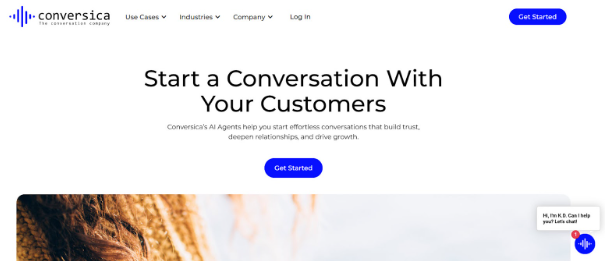
Conversica built its reputation around AI assistants that act like trained sales development reps, persistent, polite, and context-aware. Its virtual agents engage leads across channels (voice, SMS, and email), continuing outreach until the conversation is ready for a human handoff.
Unlike basic voicemail-to-email systems, Conversica detects lead intent and sentiment, then triggers specific follow-up sequences. It automatically books meetings or demos, qualifies opportunities, and syncs outcomes back to your CRM. Sales and marketing teams use it to revive dormant leads, nurture inbound prospects, and maintain consistent engagement without additional headcount.
Its real power lies in multichannel fluency. A customer who starts with a missed call can be followed up via email or SMS automatically. Conversica’s analytics layer also identifies which campaigns generate the best response rates, giving teams data-backed insight into what converts.
For sales-driven organizations, it’s a scalable way to stay on top of every inquiry while letting reps focus on closing deals, not chasing callbacks.
6. Numa: Best for Local and Multi-Channel Support
Founded: 2016
Headquarters: Oakland, CA
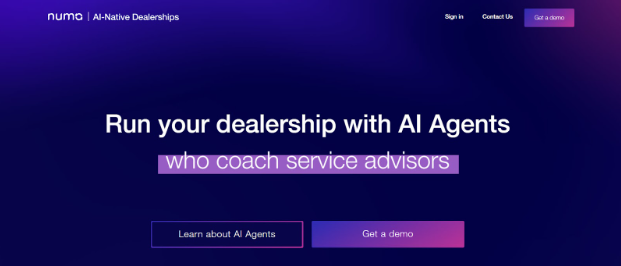
Numa is designed for small, service-oriented businesses that need to connect calls, texts, and web chats into one seamless flow. When a customer calls after hours or during peak times, Numa’s AI answers immediately, captures details, and can continue the conversation via SMS, something most competitors can’t do natively.
Its cross-channel approach means no inquiry gets lost, regardless of when or how it comes in. A caller asking about a haircut appointment or HVAC quote can be transferred to text and confirmed instantly. This reduces missed connections and enables small teams to handle customer requests asynchronously.
Numa integrates with POS systems and calendars, making it a good fit for salons, clinics, auto shops, and home service providers. It’s lightweight, affordable, and designed for teams that can’t justify a full-time receptionist but still want to sound professional.
The real value is how Numa turns chaotic inbound communication into structured workflows, without requiring anyone to “check messages” or juggle multiple devices.
Conclusion
AI answering services give businesses a practical way to manage calls, respond to routine questions, capture leads, schedule appointments, and provide coverage outside traditional business hours. Their value goes beyond simply answering the phone; the right solution can also connect conversations with calendars, CRMs, and other business workflows.
The best choice depends on what your business needs most. Some platforms focus on natural AI conversations, while others emphasize multilingual support, lead engagement, multi-channel communication, or human-assisted reception. Before choosing a service, evaluate voice quality, integrations, call handling, escalation options, security, and pricing.
A well-configured AI answering service can help reduce missed calls and administrative work while keeping customers and prospects connected to your business. The goal is not to automate every conversation, but to make sure every call is handled appropriately and reaches the right outcome.
FAQs
1. What is an AI answering service?
An AI answering service uses artificial intelligence to answer business phone calls, respond to common questions, collect caller information, schedule appointments, and route calls when human assistance is needed. It can provide coverage outside regular business hours and reduce the number of missed calls. Depending on the provider, it may also integrate with CRMs, calendars, help desks, and other business systems.
2. How does an AI answering service work?
An AI answering service typically connects to a business phone number and uses speech recognition and conversational AI to understand callers. It can follow predefined instructions, access approved business information, collect details, schedule appointments, and transfer calls based on configured rules. Some services also record or transcribe conversations and send summaries or captured information to connected business tools.
3. Can AI answering services handle calls 24/7?
Yes, many AI answering services are designed to provide 24/7 call coverage, including evenings, weekends, and holidays. However, the exact level of coverage depends on the provider and plan. Before choosing a service, confirm whether calls are answered by AI at all hours, whether human escalation is available, and how urgent or complex calls are handled outside normal business hours.
4. Can an AI answering service transfer calls to a human?
Yes, many AI answering services support human call transfers or escalation. Businesses can usually define rules for situations that require personal assistance, such as urgent requests, complex questions, high-value leads, or specific callers. The AI can collect initial information before transferring the conversation, helping the employee understand the caller's needs and reducing the need to repeat basic details.
5. Can AI answering services integrate with CRMs and calendars?
Many AI answering services integrate with CRMs, calendars, scheduling platforms, help desks, and automation tools. These integrations can allow the system to create or update contacts, schedule appointments, record call information, and trigger follow-up workflows. Available integrations vary by provider, so businesses should check whether the service works with the specific CRM, calendar, or business software they already use.
6. Are AI answering services secure for business calls?
AI answering services can be secure, but protection levels vary between providers. Businesses should review how calls, transcripts, and customer information are stored, transmitted, and accessed. Companies handling sensitive information should also verify relevant privacy and compliance requirements before selecting a provider. Look for appropriate encryption, access controls, data retention policies, and compliance commitments that match your industry's requirements.