Connect with us
Best Agentic Pentesting Tools for Developer-Centric Security
Developer-centric security platforms meet the same demands as rapid software development by fitting within each team's workflow. These developer-focused platforms help prevent vulnerabilities early in the development process and make sure all security checks are automated. They also give engineers clear information about their code's security posture and do not slow down the development pipeline.
Secure development also depends on how engineering teams share information, coordinate tasks, and protect sensitive project discussions, making secure team communication an important part of the broader development workflow.
In this article, we will provide an overview of the best platforms focused on protecting developers from security issues, identify how each of them works, and describe each of their main functions to help a team decide which is the best fit for developing in a secure way.
Best Developer Security Picks
Engineering teams in modern development environments rely upon tools that fit seamlessly into an engineer's workflow for coding, review, and deployment.
Each of the following products was built with the focus of being on the side of the engineer, not overwhelming them; therefore, they will allow your team to be secure while still having the ability to deliver new features rapidly.
1. Aikido: All-in-One Developer
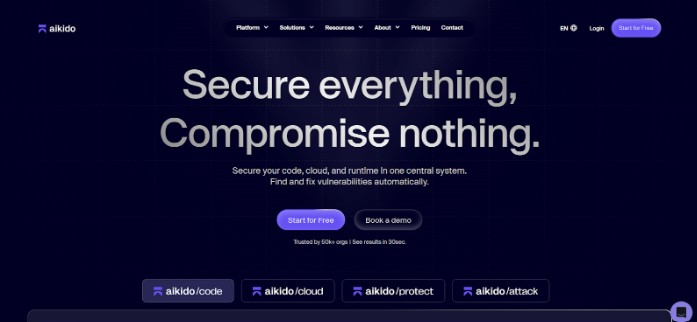
Aikido.dev has quickly become one of the best agentic pentesting tools for developers. This is because it provides a developer-centric experience, unlike other enterprise suites requiring setup, and broad security coverage using an intuitive interface in a noise-free model.
Developers can immediately see what is going on at all levels of their application stack via repo integration and CI/CD pipeline integration to provide actionable feedback.
Security tools are only one part of an efficient development workflow; teams also need reliable ways to coordinate coding tasks, reviews, and project updates through collaboration tools for development teams
Key features:
- Full-scan security tools - scan code, dependencies, IaC, and secrets all at once.
- Quiet and non-verbose vulnerability reporting - prioritizes actionable, exploitable vulnerabilities.
- Quick and easy, no-agent setup - instant connection to your repositories.
- Step-by-step remediation - provides practical solutions for developers.
- Checks for Cloud and Kubernetes configurations - identify misconfigured services early in development.
- Scans continuously in real-time - scans each commit and change in near-real time.
- Notify of CVEs - notifies you immediately when a new threat is identified.
- Easy-to-use developer interface - clean, simple, and user-friendly.
Aikido.dev delivers a clear and easy-to-use complete security solution for organizations that need high levels of security protection but do not want to deal with the typical high complexity levels associated with most other enterprise security solutions. The Aikido dev platform brings together into one place all the key security functions that matter to you:
- code
- cloud
- dependencies
- secrets, containers, etc.
These reduce the number of products and dashboards your teams have to manage.
With ease of use and clarity of purpose at its core, Aikido provides teams the ability to rapidly identify, focus on, and resolve actual risks as opposed to just noise, confusion, and steep learning curves. As such, it is an ideal choice for startups, growing businesses, and any organization that wants to deliver strong security with low overhead.
2. Snyk
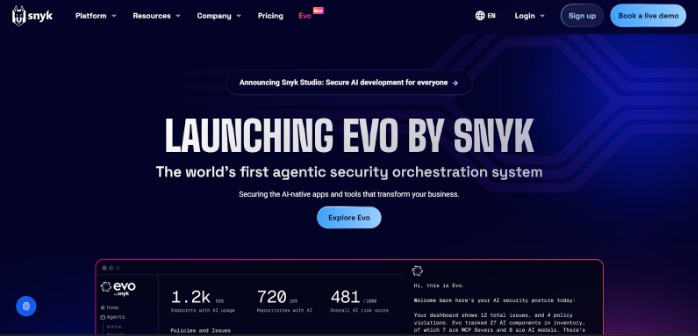
Snyk has become well-known for delivering security directly into the developer’s workflow, particularly when it comes to open source dependencies as well as container images. Snyk is able to integrate into many different tools, including but not limited to IDEs, pipelines, and Git platforms.
As such, Snyk is an extremely popular tool for teams that require quick insight into their current vulnerability status.
Key Features
- Quickly scans dependencies - provides fast and correct answers.
- Checks container images - ensures safe base images.
- Integrates with IDEs - repairs in the editor.
- Generates automatic fix pull requests - patches will be generated automatically in a pull request.
Teams using large open-source code bases can find Snyk to be helpful as it offers immediate information on issues and will generate auto-fixes; however, in the case of large projects, it may introduce noise.
3. GitGuardian

GitGuardian is a reliable tool to find secret exposures in your codebase or in any public repository you may have access to. GitGuardian can be especially useful for remote teams or for organizations that are concerned with inadvertently exposing their credentials due to careless mistakes.
Git Guardian is a reliable tool to find secret repositories you may have access to. Git Guardian can be especially useful
Key Features
- Detection of leaks in Secrets — Finds Keys that are exposed
- Monitoring Repositories Wide — Scans Code History
- Alerts Incident Real Time — Instant Notifications
- Guidance Remediation Developer — Provides Steps to Fix Issues
GitGuardian helps prevent actual world breaches due to leaked Credentials, making it a must-have for all development teams regardless of the size of the team.
Development teams can also use team collaboration tools to coordinate security reviews, development tasks, and project updates.
Conclusion
Developer security platforms help engineering teams integrate security checks into their existing development workflows without making security a separate or disconnected process. Tools such as Aikido, Snyk, and GitGuardian focus on areas including vulnerability detection, dependency security, code security, and secret exposure.
The right platform depends on your team's development environment, security requirements, existing tools, and preferred workflow. Teams should consider factors such as integration capabilities, vulnerability prioritization, automation, reporting, and ease of remediation when evaluating developer security solutions.
By introducing security checks earlier in the development process and maintaining them throughout the software development lifecycle, teams can identify potential issues sooner and build more secure applications while continuing to deliver new features efficiently.
Alongside security tooling, organizations can improve development workflows by using custom software for team collaboration that aligns with their specific communication and workflow requirements.
FAQs
1. What are developer security platforms?
Developer security platforms are tools that integrate security checks into software development workflows. They can help developers identify vulnerabilities in areas such as source code, dependencies, containers, infrastructure, and exposed secrets.
2. Why should security checks be integrated into the development workflow?
Integrating security checks into development workflows allows teams to identify and address potential vulnerabilities earlier instead of waiting until later stages of the software development lifecycle. NIST's Secure Software Development Framework recommends integrating secure development practices throughout the software development lifecycle.
3. What should developers look for in a security platform?
Developers can consider integration with their existing repositories and CI/CD tools, vulnerability prioritization, automated scanning, remediation guidance, reporting, and ease of use. The right features depend on the team's development environment and security requirements.
4. How do developer security platforms help with vulnerability management?
These platforms can scan different parts of an application environment and identify potential security issues. Depending on the platform, this may include code, open-source dependencies, containers, infrastructure configurations, and secrets.
5. What is the OWASP Top 10?
The OWASP Top 10 is an awareness document covering critical web application security risks. The current released version is OWASP Top 10:2025, which includes risks such as broken access control, security misconfiguration, software supply-chain failures, and injection.