Connect with us
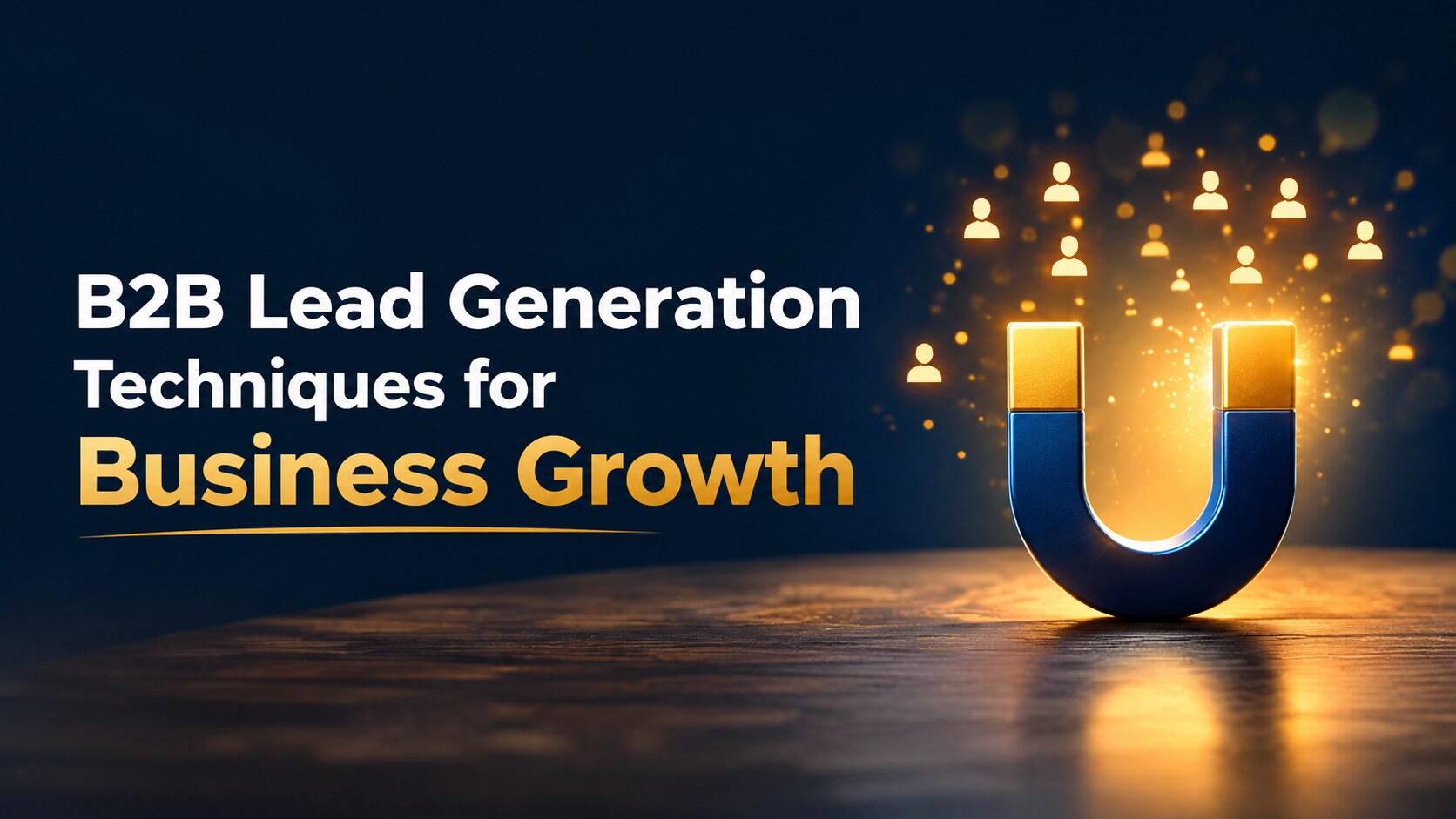
B2B Lead Generation Techniques for Business Growth
A B2B lead generation strategy must include methods such as content marketing, social media campaigns, automated emails, SEO, webinars, and optimization based on data analysis. The most effective organizations will integrate all these lead generation methods, optimizing them through analytics, building a relationship of trust through personalization, and using advanced technologies including AI.
In the highly dynamic sphere of B2B marketing, being at the cutting edge of trends is a vital aspect of efficient lead generation. The methods that you choose to generate B2B leads are very important for your business development.
Content Marketing
As far as lead generation for B2B enterprises goes, it is important not to ignore the power of content marketing. The creation of content targeted to the specific issues your future clients have is crucial. Providing them with high-quality and appropriate content is a way not only to attract their attention but also to become a useful source for them.
A good lead generation company will provide you with multimedia content including videos and infographics among others, which will engage your audience. Besides, gating your content in a strategic manner will help you collect important lead data making visitors into potential clients of your B2B company.
Gated vs. Ungated Content
Combining free ungated content with gated such as white papers or templates will help you gain trust at the very beginning and get necessary leads' data from prospects willing to exchange something.
Content Mapped to the Buyer's Journey
Mapping blog posts, case studies, and comparison articles to the different stages of the buyer's journey guarantees that prospects will find content that is relevant to them at any stage, from preliminary research to vendor selection.
Social Media Outreach
The use of social media for B2B lead generation can be quite efficient. For example, LinkedIn provides opportunities for LinkedIn social selling and sales prospecting. Furthermore, Twitter offers opportunities for advertising and promoting products through targeted campaigns. Build relationships with your target audience by engaging with them.
Establishing long-term relationships via social media can be a great way of obtaining useful B2B leads. With the help of such a platform, you have a chance not only to attract more customers but also to create strong relationships that can help in B2B lead generation.
LinkedIn Social Selling
Using LinkedIn features, the sales team can search for decision makers, interact with their posts, and initiate conversations that seem personal and sincere, not transactional.
Employee Advocacy Programs
By having your employees share their company’s content through their personal social media network, you can get more traction organically as individuals’ posts are usually believed to be more credible than posts from brand accounts.
Email Marketing Techniques
In the business-to-business world, email is always the bedrock of successful lead generation. In order to make a significant connection with potential customers, personalized email campaigns play an essential role.
Automating will provide you with timely follow-ups and proper lead nurturing all through the sales process. You will be able to refine your email marketing techniques using A/B testing in real-time. When done in the right manner, email marketing can be an important tool that allows building a relationship with your B2B audience.
Drip Campaigns and Lead Nurturing
Using drip campaigns is important for automating the process of sending a particular message to move the cold lead into educational, consideration, and decision-making stages.
Personalization at Scale
With the help of dynamic fields, behavior triggers, and lists segmentation, you can easily personalize your emails even when reaching several thousand contacts at once.
Influencer Partnerships
With the current digital influence era, you can use partnerships with industry influencers to enhance your B2B lead generation activities. Partnering with influencers who understand your brand will make you credible.
Not only will you increase your audience through the partnership, but the influence of the influencer will also build trust. Successful influencer partnerships have the ability to create a positive image about your brand which translates to good B2B leads.
Choosing the Right Industry Voices
Select thought leaders whose audience matches your ideal customers rather than following followers blindly, since relevancy is what brings in conversions.
Co-Created Content
Partnering on webinars, articles, or research reports by the influencer gives both parties credibility and creates an opportunity for each audience to connect with the other brand.
Webinars and Virtual Events
Learning is one of the greatest motivators for B2B lead generation. Conducting webinars gives you an opportunity to communicate your expertise to your audience. Virtual events should be done strategically to connect with your prospects. Webinars and virtual events are not only a means through which you reach out to prospects; they help you position your business as an industry leader that attracts quality leads because of your industry authority.
Live Q&A and Interactive Segments
The inclusion of live polls and Q&A sessions helps keep the attendees active while also providing your sales team with the opportunity to understand the problem the prospects need to solve.
Repurposing Webinar Content
The recorded webinar material can be turned into clips or blog posts and distributed for many more weeks of generating leads.
Search Engine Optimization (SEO)
Nowadays, it is vital to make sure that your website is optimized to show up in search engine results as it is the core strategy for generating B2B leads. The optimization of your website through using relevant keywords and niche targeting makes your website searchable.
Backlink Strategies
Through using backlink strategies, you will add to the authority of your website. Through SEO, you ensure that your B2B business is easily discoverable.
Technical SEO Foundations
High-speed webpages, good site architecture, and mobile optimization guarantee that the crawlers will have no difficulty crawling and ranking your site and all of its content.
Topic Clusters and Pillar Pages
Creating topic clusters with pillar pages and links to supporting articles shows search engines that you’re an expert in a particular niche and makes it easy for people to find content they need.
Analytics and Data-Driven Insights
Numbers speak a clear language, and B2B marketing and lead generation is one business where numbers are your friend. With proper analytics and tracking implemented, you’ll be able to measure the effectiveness of all your strategies.
Using this valuable information, you’ll be able to fine-tune all your strategies to fit your audience better. Ongoing analysis and adjustment of your efforts using numbers are vital for successful B2B lead generation.
Attribution Modeling
Understanding what touchpoints really make prospects take action, not just what touchpoint was the last one, lets you direct budget to those channels.
Lead Scoring
Giving scores depending on the level of engagement and fit will help the sales team concentrate on the most promising leads first, instead of treating all the leads the same in terms of being ready to buy.
Emerging Technologies
Keeping track of the emerging technologies is crucial for having the competitive advantage in B2B lead generation. Learning about the uses of AI and machine learning technologies will bring new ideas of how you could improve your methods. Using chatbots for personal interaction with customers will add a modern approach to working with your potential clients.
Thus, by paying attention to the emerging technologies, you will ensure that your B2B company stays on the cutting edge of technology.
AI-Powered Lead Qualification
The machine learning algorithms can evaluate the firmographic and behavior data and make predictions of which leads have more chances of becoming customers.
Conversational Chatbots
Using chatbots on your website for qualifying your visitors, answering their questions and booking meetings instantly will help you capture their attention when they are still interested.
Sales Funnel Optimization
Moving potential customers through the sales funnel effectively is essential in the process of lead generation in business to business. An optimized sales funnel guarantees a smooth flow for potential clients through awareness to conversion.
Content personalization, CTAs, and user behavior analysis are some of the tools used in this process. An optimized sales funnel helps to increase the effectiveness of your lead generation process and convert potential clients into loyal customers.
Reducing Funnel Friction
By making your forms simpler, CTAs clear, and eliminating all unneeded steps in the process of converting an interested potential customer into a sale will prevent the client from dropping out during the process.
Sales and Marketing Alignment
An agreement on what a qualified lead is and frequent communication between teams guarantee that marketing passes to the sales team those leads that have real chances to be converted into sales.
Strategic Partnerships and Alliances
Strategic partnerships and alliances in your industry may greatly assist you in your B2B lead generation process. You will be able to get access to new networks through collaboration with other companies.
Join ventures, co-hosted marketing events or even promotional campaigns can help to widen your scope and enhance your credibility. The strategic alliances are useful not only to widen the scope of the leads that you receive but also to offer a mutual referral network that benefits the lead generation process.
Channel Partner Programs
Partner programs that come with incentives make sure that complimentary vendors start referring you to their customers and prospects and in return get something valuable out of it.
Co-Marketing Campaigns
Campaigns where both companies collaborate, such as research reports or joint offers, can cut down on costs and double the scope of leads each company will be able to receive.
Interactive Content Strategies
Adding interactive content into your lead generation strategy is another way to generate leads in an interesting and creative manner. Interactive content not only draws your customer’s attention but also helps to involve them into the process of lead generation. Use of special software for interactive content creation makes it possible to obtain insights about your leads and offer them a unique and fun experience.
Assessment Tools and Calculators
ROI calculators or self-assessment tests will provide a personalized result while discreetly gathering data about their requirements, budget, and where they are in the buying process.
Interactive Product Demos
Online click-through demos allow the prospect to get an idea about your product without ever meeting with a salesperson, making the buyer’s journey much more convenient for those buyers that like to do independent research.
Localized Targeting and Personalization
Tailoring your lead generation efforts to suit different geographical areas and personalizing your message to fit your various target groups is an important way to enhance your results. Localized targeting means being familiar with the regional idiosyncrasies, preferences, and trends in the particular region. Use personalized communication and address the individual needs of the various segments in your B2B audience.
Regional Campaign Customization
Tailoring your message, currency used, references about compliance and even cases studies based on region will make the prospect realize you know their market well, and are not sending a generalized message.
Segment-Based Messaging
Categorizing your prospects based on industry, size of the company or position will enable you to tailor pain points and value propositions much more specifically compared to general campaigns.
Customer Advocacy Programs
Using the potential of your customers can be an effective B2B lead generation strategy. Setting up customer advocacy programs will make your clients promote your brand through various channels. Encourage your clients to use testimonials, cases studies or participate in referral programs.
Creating a brand advocate community will increase your credibility and establish a network of recommendations, which will result in organic B2B lead generation. Lead generation consultants usually help set up such programs for companies.
Referral Incentive Structures
Offering some kind of reward for referrals will motivate your satisfied clients to promote your company actively.
Case Studies and Success Stories
Dedicated case studies which show results quantitatively will persuade your prospects much better than all marketing messages from you.
Mobile Optimization for Lead Capture
Given the prevalence of mobile technology today, making sure that your lead capture process is mobile optimized is a must. It would make it more likely that your target audience accesses your content using their mobile phones and tablets.
This is made easier with mobile-friendly forms, responsive landing pages, and easy navigation on mobile devices. Through mobile optimization, you eliminate obstacles in the way of any leads who may be interested in interacting with your B2B brand.
Optimizing your lead capture process for mobile devices is consistent with the behavior of consumers nowadays.
Streamlined Mobile Forms
Using shorter forms, supporting auto-fill, and having large tap targets makes it less difficult for consumers to convert through mobile devices, since everything else will just make them more likely to abandon the process.
Mobile Page Speed
Slow-loading pages disproportionately hurt mobile conversions, so compressing images and minimizing scripts is essential to keep prospects from bouncing before a form even loads.
Diversification of Content Formats
In addition to content in writing form, diversification of your content formats makes sure that your business appeals to everyone and caters to their needs. Using podcasts, webinars, interactive e-books, and visual storytelling helps in engaging different portions of your B2B audience.
This is because each of the formats provides a unique way to present information and make your content a complete experience. Through diversified content formats, not only do you provide something for different learning styles, but you also expand the reach of your leads across all the platforms.
Podcasts and Audio Content
Audio content gives you an opportunity to share your expertise with your potential customers even if they are busy commuting or resting.
Visual Storytelling
Infographics and videos allow you to communicate complex ideas in a simple, scannable and sharable way and engage audiences who like visuals more than writing.
Competitor Analysis and Benchmarking
Constant analysis of your competitors and benchmarking against industry norms is important in order to create effective B2B lead generation strategies. You will also need to ensure that you can be benchmarking against industry standards all the time. This will give you valuable insight into metrics such as performance, thus allowing you to be able to set realistic goals as well as track your progress in generating leads.
By being proactive about learning about industry trends as well as competitor activities, you will put yourself in a position where your B2B business will always be improving and innovating when it comes to lead generation.
Competitive Content Gap Analysis
Analyzing the topics that your competitors rank for but which you do not gives you ideas about the type of content you can produce to steal their search traffic.
Benchmarking Key Metrics
Benchmarking against the conversion rate, cost per lead, and funnel velocity in the industry allows you to identify underperforming aspects early on.
Conclusion
Lead generation in B2B space requires flexibility and proactiveness. Utilizing these techniques will help you to achieve success in the world of constant innovations and constant changes. Keep in mind that techniques you use now, will define the type of leads you generate in future. Follow our updates, become proactive and watch how your B2B lead generation becomes successful.
Each of the techniques we have analyzed - be it content marketing and social media outreach, or email tactics, influencer relations, webinars, SEO, analytics and other cutting edge technologies – will play a critical part in building your lead generation system.
FAQ’s
1. What is the most effective B2B lead generation technique?
It depends on the industry, audience and sales cycle of your business. However, content marketing together with SEO can provide you with the best compounding results, while LinkedIn outreach and email nurturing are the fastest ones. The most successful B2B companies use multiple channels and through analytics find the one that provides the most valuable leads to them.
2. How long does B2B lead generation typically take to show results?
This varies depending on the method being used. Advertising and outbound emails can provide results within days or weeks, but organic methods such as SEO or content marketing may take between three to six months to yield any tangible results. On the other hand, webinars and referral marketing can be seen to take about one to two months once there is momentum. Companies that use both quick and slow generating leads have a smoother flow of leads compared to those that focus on one.
3. What is the difference between lead generation and demand generation?
While lead generation entails collecting the details of the potential customers that have shown interest, demand generation involves creating an awareness of interest among potential customers in your category. In other words, you are filling up the top of the funnel with informed and interested customers, but then lead generation is getting hold of these customers at the right time and qualifying them.
4. How do I qualify a B2B lead effectively?
An effective qualification process uses both company fit and behavior-based qualifications. Company fit includes firmographics (size, industry, budget), whereas behavior qualification relies on web page visits, content downloads, email interaction. There are different tools that will allow you to implement this process, such as BANT framework (budget, authority, need, timeline) or lead scoring. This will prevent you from wasting efforts on non-converted leads, making sure that your sales department works with qualified prospects only.
5. Do small B2B businesses need the same lead generation strategies as large enterprises?
No, it is not always the case. For small B2B businesses, it is more profitable to focus on several key channels, such as LinkedIn, referrals and quality content. Meanwhile, enterprises usually have a budget for implementing multi-channel campaigns, using paid media, events, influencers and other tools at once. Smaller companies should concentrate on what works faster and cheaper for them in particular.