Connect with us
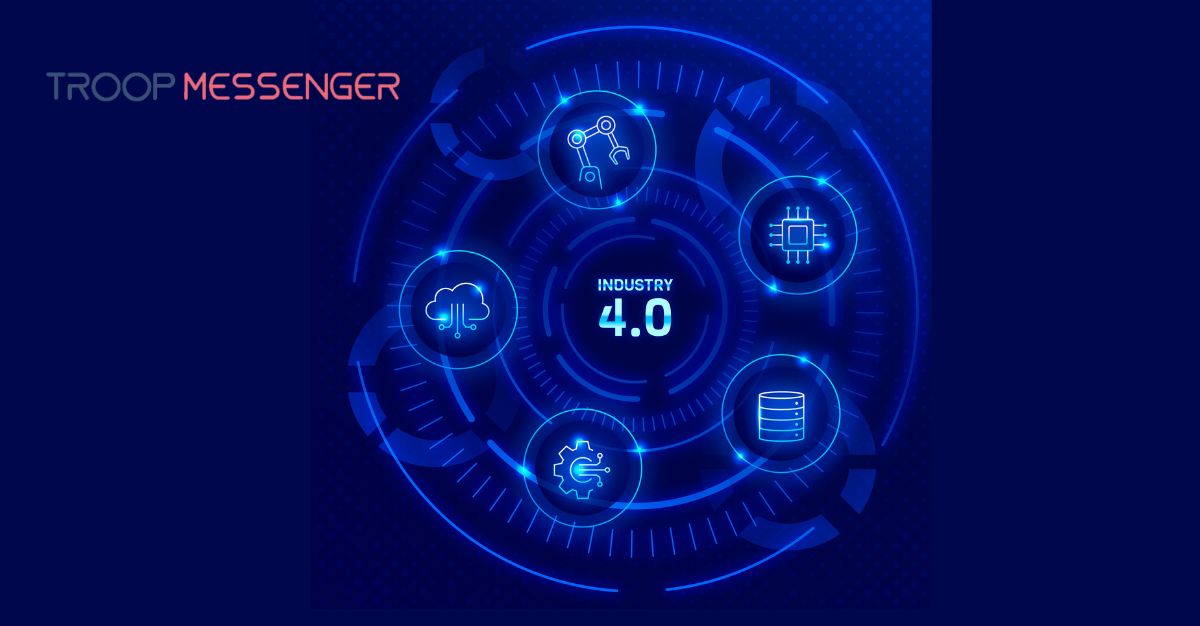
Automation 4.0: Disruptive Technologies Reshaping Industrial Systems
Automation 4.0 is the integration of AI, IoT, robotics, data analytics, and connected digital systems to create smarter, more flexible, and more efficient industrial operations. It represents the evolution of industrial automation toward systems that can monitor processes, analyze data, automate decisions, and respond to changing production requirements.
Modern manufacturers increasingly rely on connected machinery, intelligent software, robotics, and real-time data to improve productivity and reduce operational inefficiencies. These technologies can support predictive maintenance, automated quality control, optimized supply chains, and more responsive production processes.
This guide explores the key technologies driving Automation 4.0, its applications across industrial systems, the benefits it can provide, and the integration and cybersecurity challenges organizations should consider when adopting these technologies.
Key Technologies Driving Automation 4.0
Automation 4.0 combines connected technologies to improve industrial productivity, visibility, flexibility, and decision-making. The following technologies form the foundation of many modern industrial automation environments.
Artificial Intelligence and Machine Learning
Artificial intelligence (AI) and machine learning (ML) are key drivers behind the Fourth Industrial Revolution. AI processes large volumes of data in seconds, enabling decisions to be made faster than humans can. Machine learning adjusts systems for improved performance over time. Businesses adopt these technologies to enhance production lines, predict equipment failures, and reduce downtime costs. For example, predictive maintenance powered by AI can help manufacturers identify equipment issues earlier, reduce unplanned downtime, and schedule maintenance based on equipment conditions. Organizations implementing these technologies should also evaluate system integration, infrastructure requirements, data security, and operational compatibility before deployment.
AI also improves industrial automation through intelligent robots and decision-making algorithms. Machine learning tools refine supply chain efficiency by accurately forecasting demand patterns. These technologies help minimize waste while improving energy utilization across factories. As industries continue advancing toward digital transformation and smart manufacturing, integrating AI is no longer optional—it’s vital for maintaining a competitive edge.
Advanced Robotics and Automation
Machines now work smarter and faster than ever before. Advanced robotics helps factories automate repetitive tasks with precision. Robotic arms assemble products, inspect quality, and even package goods efficiently. Automation reduces human error and speeds up production lines. Businesses can expand operations without increasing labor costs.
Self-learning robots are changing manufacturing floors. These machines adapt to changes in real time using artificial intelligence (AI) and sensors. For instance, collaborative robots—or cobots—work alongside staff safely, handling heavy lifting or dangerous tasks. Such advancements improve safety while increasing productivity within technology-driven factories across industries worldwide.
Internet of Things (IoT) in Industrial Systems
Factories connect devices, sensors, and machinery to enhance operations. IoT helps monitor equipment performance in real time. Organizations implementing industrial IoT should prioritize secure device connectivity, reliable data collection, network visibility, and appropriate access controls when connecting machines and sensors. Sensors identify inefficiencies or failures promptly. This prevents costly downtime while enhancing decision-making. Advanced technologies like IoT reduce waste and energy use. Manufacturers save money by closely observing resource consumption. Digitized systems support predictive maintenance instead of reactive fixes. These improvements guide industries toward smarter manufacturing and predictive maintenance practices.
Emerging Applications of Automation 4.0
Automation 4.0 technologies are being applied across manufacturing, maintenance, logistics, product development, and supply chain operations. These applications demonstrate how connected and intelligent systems can improve industrial processes.
Smart Manufacturing and Predictive Maintenance
Smart manufacturing integrates digital tools to enhance efficiency. Sensors monitor equipment, gather data, and send alerts for any irregularities. This approach helps factories anticipate problems before they happen. Engineers can fix machines quickly without halting production lines. Artificial intelligence (AI) analyzes trends in real-time, avoiding costly breakdowns. Automation 4.0 drives businesses toward highly efficient operations with fewer interruptions. Predictive maintenance saves both time and money for industries relying on heavy machinery. Companies apply big data analytics to track wear-and-tear patterns across systems. For example, connected devices in turbines or robotics provide instant updates through Internet of Things (IoT) networks. Instead of reacting to failures after they occur, predictive models aid in scheduling repairs early. Downtime decreases while productivity significantly improves across the factory floor.
3D Printing and Additive Manufacturing
Factories now create intricate parts layer by layer using 3D printing. This process reduces waste and accelerates production. Additive manufacturing allows businesses to create and produce tailored components efficiently, which saves time. For example, aerospace companies use it to manufacture lightweight yet durable airplane parts. Small-batch manufacturing becomes more cost-effective with this technology. Companies can test prototypes before mass production without significant expenses or delays. It also supports on-demand production models, reducing warehouse costs for inventory storage.
Autonomous Logistics and Supply Chain Operations
Smart technologies in logistics reduce downtime and errors. Big data analytics combined with artificial intelligence turns supply chains into faster, real-time systems. Internet of Things (IoT) sensors monitor shipment conditions like temperature or delays, ensuring improved planning. For instance, connected fleets anticipate vehicle maintenance before breakdowns occur. High-tech robotics handles warehouse tasks such as sorting and packaging goods at rapid speeds. Automated guided vehicles (AGVs) move items independently, conserving both time and costs in the delivery process. Digital twins simulate operations to enhance supply chain workflows without risks or interruptions.
Benefits and Challenges of Automation 4.0
Automation 4.0 can improve productivity, flexibility, and operational visibility, but its implementation also introduces integration, cybersecurity, workforce, and infrastructure challenges.
Increased Efficiency and Productivity
Smart technologies like advanced robotics and artificial intelligence (AI) can reduce manual errors. They allow faster manufacturing processes without compromising quality. Digital factories using automation can operate around the clock, leading to higher output in less time. Internet of Things (IoT) devices track equipment in real-time, preventing unplanned downtime. Predictive maintenance reduces disruptions while enhancing machinery longevity. Businesses implementing industrial automation often experience lower costs and better workflows across their operations.
Integration and Cybersecurity Concerns
Integrating AI, IoT, robotics, and other connected technologies can introduce significant technical and operational challenges. Each system must communicate reliably while maintaining performance, availability, and security. Poor integration can lead to downtime, inefficiencies, or even expensive malfunctions in digital factories. Coordination mishaps may arise when cloud computing tools misalign with legacy equipment still running on outdated software.
Cybersecurity risks loom large over factory automation efforts. Hackers target IoT-connected devices within smart manufacturing setups to steal data or disrupt operations. A single breach could expose sensitive company information or halt production entirely. Industrial environments also require protection for operational technology (OT) and industrial control systems (ICS), which can have different security and availability requirements from traditional IT environments. Organizations should apply network segmentation, access controls, secure remote access, continuous monitoring, vulnerability management, and incident response procedures appropriate to their industrial systems. Preventing attacks requires constant monitoring of cyberphysical systems and frequent updates to security protocols. As these technologies evolve, their applications extend far beyond manufacturing floors into autonomous logistics and supply chain networks, where such threats remain equally persistent.
Conclusion
Automation 4.0 is transforming industrial operations by connecting AI, IoT, robotics, analytics, and intelligent automation. These technologies can improve productivity, predictive maintenance, quality control, resource utilization, and supply chain visibility while enabling more responsive manufacturing environments.
Successful adoption requires more than deploying new technologies. Organizations should evaluate integration requirements, cybersecurity risks, infrastructure readiness, workforce capabilities, and long-term scalability. By combining intelligent automation with strong security and operational planning, manufacturers can build more efficient, resilient, and adaptable industrial systems.
FAQs
1. What is Automation 4.0?
Automation 4.0 refers to the integration of artificial intelligence, Internet of Things (IoT), robotics, data analytics, connected systems, and advanced automation technologies within industrial environments. It enables machines and software to collect and analyze data, automate processes, monitor equipment, and support operational decisions. The goal is to create more connected, flexible, efficient, and responsive industrial systems.
2. What technologies are used in Automation 4.0?
Key Automation 4.0 technologies include artificial intelligence, machine learning, industrial IoT, advanced robotics, predictive analytics, digital twins, additive manufacturing, cloud computing, edge computing, and autonomous systems. These technologies can work together to monitor equipment, automate processes, analyze operational data, optimize resources, and improve decision-making. The specific technology combination depends on an organization's production requirements and existing infrastructure.
3. How does Automation 4.0 benefit manufacturing?
Automation 4.0 can improve manufacturing by increasing process efficiency, reducing manual errors, supporting predictive maintenance, improving quality control, and providing greater visibility into production operations. Connected machines and sensors can generate real-time information that helps teams identify problems earlier and optimize resources. Automation can also support flexible production environments that adapt more easily to changing workloads and operational requirements.
4. What are the challenges of implementing Automation 4.0?
Common challenges include integrating new technologies with legacy systems, managing cybersecurity risks, handling large volumes of industrial data, developing workforce skills, and maintaining reliable connectivity. Organizations may also face significant infrastructure and implementation requirements. A phased approach can help businesses evaluate technology compatibility, security requirements, operational impact, and expected benefits before expanding Automation 4.0 across larger industrial environments.
5. How does Automation 4.0 affect industrial cybersecurity?
Automation 4.0 increases the number of connected devices, machines, networks, and software systems within industrial environments, which can expand the attack surface. Organizations should protect operational technology and industrial control systems through network segmentation, access controls, secure remote access, continuous monitoring, vulnerability management, and incident response planning. Security measures should be designed around the availability and operational requirements of industrial systems.
6. What is the role of AI in Automation 4.0?
AI supports Automation 4.0 by analyzing industrial data, identifying patterns, predicting equipment problems, optimizing processes, and assisting automated decision-making. Machine learning models can use historical and real-time data to identify conditions that may indicate equipment failure or production inefficiencies. When combined with sensors, robotics, and connected systems, AI can help organizations create more responsive and data-driven industrial operations.