Connect with us
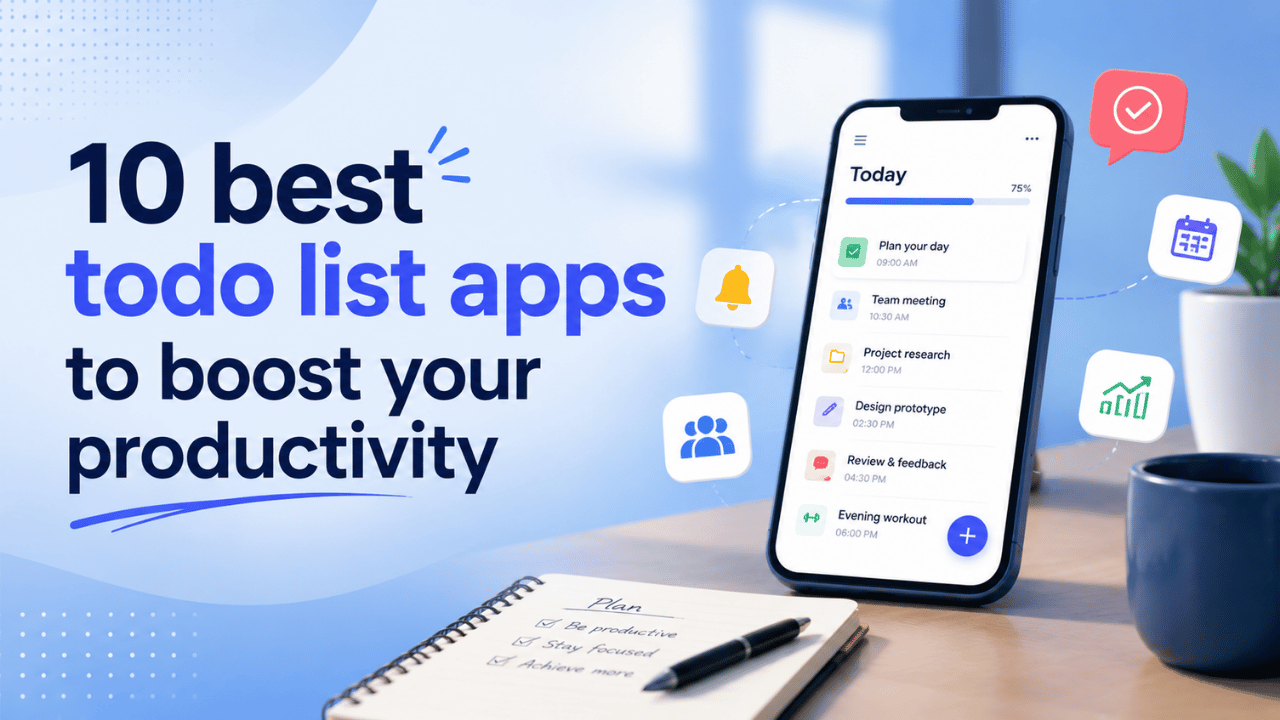
10 Best To Do List Apps in 2026 to Boost Productivity
Managing daily tasks has become more challenging as work, personal responsibilities, and team collaboration continue to grow. Whether you're an individual planning your day or a business managing multiple projects, a reliable to-do list app helps organize tasks, prioritize work, meet deadlines, and improve productivity.
Modern task management apps offer much more than simple checklists. Features such as recurring tasks, reminders, calendar synchronization, cross-device access, collaboration tools, automation, and AI-powered suggestions help users manage work more efficiently. The right app can reduce missed deadlines, improve accountability, and simplify both personal and professional workflows.
In this guide, we've reviewed the 10 best to-do list apps, comparing their key features, strengths, pricing, and ideal use cases. Whether you need a simple personal planner or a collaborative task management solution for your team, this list will help you choose the right productivity app for your requirements.
According to Asana's Anatomy of Work Index, knowledge workers spend more than 50% of their workweek coordinating work instead of performing skilled tasks, making productivity and task management software increasingly valuable.
Why Use a To-Do List App?
A to-do list app is not just a digital note of things to do but an organized way of doing them. It comes with reminders and deadlines that make sure you don't miss any assignments or meetings. Thus, a well-organized list will eventually minimize the feeling of stress, increase focus, and prompt the proper utilization of time.
More complex apps, though, include features like automation, recurring tasks, and collaboration, making them highly suitable for either individuals or groups. All personal planners and all-inclusive team management apps fit various styles and needs.
Key Features to Look for in a To-Do List App
Before choosing a task management app, consider the features that best support your workflow. The right combination of functionality can improve productivity while making task organization much easier.
Look for features such as:
- Task prioritization
- Due dates and reminders
- Recurring tasks
- Calendar integration
- Cross-device synchronization
- Team collaboration
- File attachments
- Notifications
- Automation
- Offline access
- AI-powered suggestions
- Progress tracking
- Third-party integrations
- Data security
- Custom workflows
1. Todo App by Troop Messenger is Best for Team Collaboration
Todo App by Troop Messenger is one of the best intuitive task management tools that can be worked parallel with their messaging platform. Users and teams, including lead generation consultants, can create, track, or even manage tasks without bouncing between applications.
Key Features:
- Create tasks with priority
- In-app chat allows for instant live updates
- Facility of File sharing & Attach documents
- Tasks can be Recurring as a scheduled event.
- Customizable Dashboard
Best for:
The Todo App by Troop Messenger has the perfect amalgamation of task management for professionals as well as teams. The answer to the perfect workflow without needing an extra application lies here.
2. Todoist- Best for simplicity & smart automation
Todoist is simply a favorite for its clean design and AI-powered automation. Easy to use yet with powerful features to aid users in staying current on their tasks.
Key Features:
- Quick task creation from natural language
- Smart filters to organize the task list efficiently
- Works with Google Calendar, Slack and Outlook
- Gamified productivity with "Karma points"
Best for:
Whoever is seeking an easy, minimalistic app that would upgrade their productivity through automation.
3. Microsoft To Do - Best Free Task Manager for Windows Users
This is the perfect to-do list app for you if you work within the Microsoft ecosystem. It will integrate with other Microsoft apps very smoothly, so task management will be effortless.
Key Features:
- Personalized daily task recommendations
- Cloud synchronization with OneNote, Teams, and Outlook
- Available on Windows, Android, and iOS
Best For:
Microsoft users who need a free and reliable task manager.
4. TickTick – Best for Habit Tracking & Productivity
TickTick is more than a task manager as it comes with habit tracking and time management features, like the Pomodoro technique.
Key Features:
- Built-in Pomodoro timer for focused work sessions
- Smart reminders with custom notifications
- Team collaboration features
- Calendar view for scheduling tasks
Best For:
Users who want a single application that can be used to monitor habits and accomplish tasks efficiently
5. Any.do – Best AI-Driven Daily Organizer
Any.do simplifies planning with AI-powered suggestions and location and time-based smart reminders.
Key Features:
- Voice assistant integration to create new tasks
- Location and time-based smart reminders
- Two-way syncing with Google Calendar and Outlook
Best For:
Users who need an intuitive AI-driven planner for effectively planning their day.
6. Google Tasks – Best for Google Users
For all those users who are majorly dependent on Google apps, Google Tasks offers the most simple tool that perfectly fits with Gmail and Google Calendar.
Key Features:
- Drag-and-drop task reordering
- Accommodates all synchronization with Google services
- Tasks in breaking bigger tasks into smaller chunks
Best for:
Those Google Workspace users who need an easy-to-use task management application
7. Notion – Best for Custom Workflows
The notion is more than just a task management application. It's an all-in-one workspace where users can build their unique workflows.
Key Features:
- Completely customizable databases
- Kanban boards, calendars, checklists
- Collaboration tools for teams
Best For:
Users who desire a flexible application that works with their workflow.
8. Trello – Best for Visual Task Organization
Trello is an application based on the Kanban board, which makes it fantastic for tracking projects and organizing tasks.
Key Features:
- Drag-and-drop movement of tasks
- Visual board-based task management
- Butler-based workflow automation
Best For:
Teams and professionals managing complex projects with lots of moving parts.
9. Habitica – Best for Gamified Productivity
If you need a little motivation, Habitica makes productivity fun by turning task management into a game.
Key Features:
- Reward system to complete tasks
- Customizable challenges and goals
- Habit tracking for personal growth
Best For:
Users who need an extra push to stay productive.
10. Evernote – Best for Note-Taking & Task Lists
Evernote unites advanced note-taking with task management, and this makes it a very powerful tool for information organization.
Key Features:
- Task checklists within notes
- Cloud-based document storage
- Advanced search and tagging
Best For:
People who want to integrate note-taking with task management.
How to Select the Best To-Do List App?
Selecting among many options offered is based solely on your criteria. Here is what to think about:
- Ease of Use – Having an easy-to-use interface makes task management relatively effortless.
- Collaboration Tools – Shared checklists, updates in real-time, and integration for team-based communication are ideal for group use.
- Automation Features- Intelligent reminders for repetitive tasks with automatic scheduling abilities powered by Artificial Intelligence save hours of time in a day.
- Cross-Device Sync – A perfect to-do app must seamlessly work across mobile, desktop, and web.
- Budget – Free vs. premium features - establish the best value for money.
According to Atlassian, employees use an average of 9–10 different workplace applications every day, increasing the need for centralized task management solutions.
Benefits of Using a To-Do List App
A good to-do list application offers several advantages beyond organizing daily tasks.
Some of the major benefits include:
- Improves productivity
- Reduces missed deadlines
- Enhances team collaboration
- Keeps projects organized
- Supports better time management
- Reduces mental workload
- Helps prioritize important work
- Enables remote collaboration
- Tracks task progress
- Increases accountability
Recommendations
- Best for Teams: Troop Messenger's Todo App (seamless team collaboration)
- Best for Individuals: Todoist (versatile and user-friendly)
- Best Free App: Microsoft To-Do (simple yet effective)
- Best for Habit Building: TickTick (includes Pomodoro timers)
- Best for Gamification: Habitica (makes productivity fun)
The perfect task manager can simply flip your daily tasks upside down, make sure you never miss a deadline, and stress less over things.
Conclusion
A reliable to-do list app does much more than help you remember tasks—it improves organization, increases productivity, and keeps personal and professional work on track. Whether you're managing daily responsibilities, collaborating with a team, or overseeing complex projects, choosing the right task management app can simplify workflows and improve efficiency.
The best choice depends on your specific needs. Individuals may prefer lightweight apps focused on simplicity, while businesses often benefit from collaborative platforms that combine communication and task management in one place. Before making your decision, compare features such as reminders, automation, integrations, security, cross-device synchronization, and collaboration capabilities to ensure the app supports your current and future workflow.
Frequently Asked Questions
1. What features should you look for in a to-do list app?
The best to-do list apps include task prioritization, reminders, recurring tasks, calendar integration, cross-device synchronization, collaboration tools, file attachments, notifications, and reporting features. Many modern apps also offer AI-powered suggestions, automation, and integrations with popular workplace applications. Choosing an app with these features helps improve organization, streamline daily workflows, reduce missed deadlines, and support both personal productivity and team collaboration.
2. Can a to-do list app improve productivity?
Yes. A to-do list app helps users organize tasks, prioritize important work, set deadlines, and track progress from one place. Features such as reminders, recurring tasks, automation, and calendar synchronization reduce manual effort while keeping projects on schedule. For teams, collaborative task management improves communication, accountability, and visibility, making it easier to complete projects efficiently and meet deadlines consistently.
3. Are to-do list apps suitable for teams?
Many modern to-do list apps are specifically designed for team collaboration. They allow managers to assign tasks, set priorities, share files, monitor progress, and communicate within a shared workspace. Features such as activity tracking, notifications, comments, and integrations with communication platforms help teams stay aligned, improve transparency, and complete projects more efficiently, whether working remotely or from the office.
4. What is the difference between a to-do list app and project management software?
A to-do list app primarily focuses on organizing personal or team tasks using lists, reminders, deadlines, and recurring activities. Project management software includes broader capabilities such as resource allocation, workflow automation, Gantt charts, budgeting, reporting, and team collaboration. Businesses managing complex projects often use project management software, while individuals and smaller teams may find dedicated to-do list apps sufficient.
5. Are free to-do list apps enough for businesses?
Free to-do list apps are suitable for individuals, freelancers, startups, and small teams with basic task management requirements. They usually include essential features such as reminders, task lists, deadlines, and limited collaboration. Growing businesses often benefit from premium plans that provide advanced automation, reporting, integrations, role-based permissions, increased storage, enhanced security, and improved team management capabilities.