Connect with us
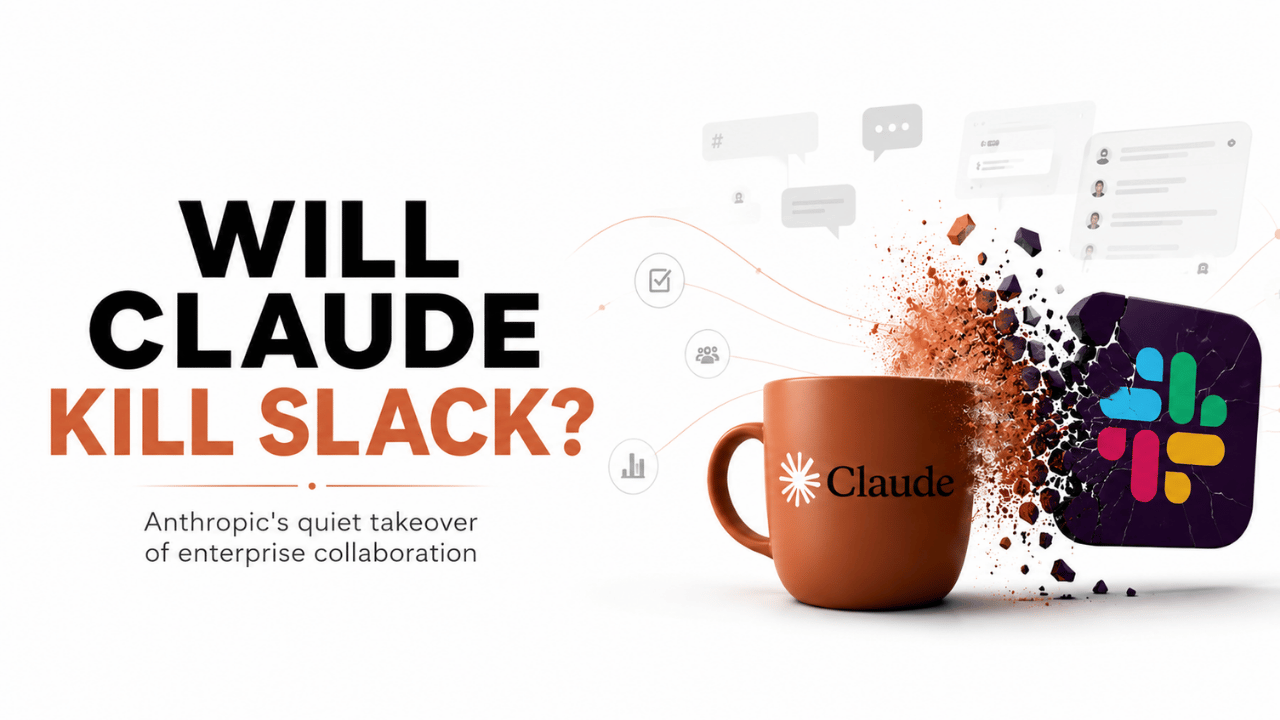
Claude Tag: Anthropic's Slack Takeover?
On June 23, 2026, Anthropic launched a product that should keep Slack’s leadership awake at night, and it launched it inside Slack itself.
Claude Tag lets any employee mention @Claude in a Slack channel and hand it real work: watch threads, draft documents, fix code, chase forgotten follow-ups. It doesn’t behave like a bot. It behaves like a colleague, one that never sleeps, never forgets what was said in the channel last Tuesday, and never needs to be trained twice.
Which raises the question nobody at Salesforce wants to ask out loud: if Claude can already see every conversation, every file, and every workflow inside your workspace, how long before Anthropic decides it doesn’t need Slack at all?
What Claude Tag Actually Is
As Fortune reported at launch, Claude Tag takes a task, breaks it into stages, works through them on its own, and delivers the result back to the team in Slack. Cat Wu, Anthropic’s head of product for Claude Code and Cowork, called it the “multiplayer” version of Claude. Claude Code and Cowork were single-player tools — one person, one AI. Claude Tag works in the open, in the channel, where everyone can see it, steer it, and pass tasks to each other through it.
Three things make it different from every chatbot that came before it:
- It remembers. Claude Tag builds memory over time, channel by channel. It slowly collects your company’s institutional knowledge, who decided what, why, and when.
- It acts on its own. It doesn’t wait to be asked. It surfaces updates, follows up on dropped threads, and flags things that might affect your day.
- It is shared. The whole company works with one Claude. Half-finished tasks pass from employee to employee through the agent itself.
VentureBeat called it what it is: Anthropic’s most aggressive move yet to “colonize the enterprise collaboration layer”, the place where decisions get made, work gets assigned, and company knowledge piles up in real time.
The Pattern: This Was Never About One Slack App
Look at Anthropic’s releases over the last eighteen months and a clear strategy shows up:
- August 2025: Claude Code bundled into enterprise plans — owning the developer workflow.
- January–February 2026: Claude Cowork desktop apps ship — an agent that reads and edits your local files, runs your browser, and connects to Google Drive, Slack, Salesforce, and Microsoft 365. The launch reportedly wiped $285 billion off enterprise software stocks.
- April 2026: Claude Managed Agents — APIs for running AI agents at scale in the cloud, picked up early by Notion, Asana, and Rakuten.
- May 2026: Microsoft 365 add-ins go live — Claude sitting inside Excel, PowerPoint, and Word.
- June 2026: Claude Tag replaces the old Claude Slack app, and Anthropic openly says it will expand to Microsoft Teams, email, and project management tools “in the coming weeks.”
Each release takes Claude one layer deeper into the enterprise: from code, to files, to documents, and now to the conversation itself. The conversation layer is the last one, and the most valuable. It is where all the context lives.
Why Slack Should Be Worried: The Data Is the Product
Here is the uncomfortable part of what happens when an AI agent becomes a standing member of every team channel.
Claude Tag reads the conversations. It reads the shared files. It watches how tasks move from person to person, how decisions get escalated, how projects live and die. Over months, it builds something no product team at Slack has ever had: a working model of how enterprise collaboration actually happens, learned from the inside, across thousands of companies.
And once you understand the workspace that deeply, building the workspace is the easy part. Channels, threads, reactions, calls, that’s solved engineering. What Slack really sells is habit and accumulated context. Claude Tag is quietly absorbing both. The day Anthropic ships its own collaboration app, employees won’t feel like they’re switching tools. They’ll feel like they’re following their most productive “colleague” to its new office.
The Information (via The Next Web) reported that this risk is already visible: once teams get comfortable using Claude inside Slack every day, the cost of leaving Slack drops sharply, in Anthropic’s favour. Anthropic gains distribution, data, and daily habits, all inside a platform someone else owns.
The Salesforce Paradox
Salesforce paid $27.7 billion for Slack in 2021. It reportedly pays Anthropic around $300 million a year under their partnership. And in June 2026, it found itself promoting Claude Tag on social media while its own employees, per reporting from The Information, privately asked why the company was celebrating a product that competes head-on with Slackbot and Agentforce.
Slack customers can now pick between Slackbot, Agentforce agents, and Claude Tag in the same workspace. Meanwhile, the partner Salesforce is paying is building the ability to be useful without Slack at all, Claude Tag’s roadmap openly extends to Teams, email, and beyond. In effect, Salesforce is funding and distributing its own disruption.
Enterprise software history rhymes here. HipChat thought Slack was just a feature. Skype thought Teams was just a bundle. Both are gone — Microsoft retired Skype itself in 2025. Platforms rarely die from a direct attack. They die when something more useful moves in, learns the terrain, and makes the host optional.
The “We’re Just a Layer” Defense — and Why It Won’t Hold
Anthropic’s official position is that it wants to be everywhere work happens — an agent layer across Slack, Teams, and email — not the owner of the pipes. And yes, building a messaging network from scratch is hard: network effects, long enterprise sales cycles, compliance approvals that took Slack a decade to earn.
But we’ve heard the “just a layer” line before. Facebook was “just a layer” on the open web. Amazon was “just a marketplace” for its own sellers. Every platform that later swallowed its host started by insisting it was only a guest.
And strategy follows incentives. Anthropic is heading toward a likely IPO and needs durable enterprise revenue. The agent that already holds your organization’s memory, workflows, and habits has every incentive — and, soon enough, every capability — to become the destination rather than the guest. This fear is not paranoia. It is pattern recognition.
What This Means for Enterprises — Especially Regulated Ones
Whether or not Anthropic ships a “Slack killer,” one thing has already changed: the conversation layer is now an AI data layer. Every organization adopting an always-on AI teammate should be asking:
- Where does the collected memory of our conversations physically live, and who controls it?
- What happens to that knowledge if we change vendors — or if our vendor becomes our competitor’s platform?
- Can a cloud AI agent that reads every channel ever be acceptable for defence, government, BFSI, or air-gapped environments?
For most businesses, convenience will win, and Claude Tag will feel like magic. But for organizations where data sovereignty is non-negotiable — defence forces, ministries, banks, critical infrastructure, this launch teaches the opposite lesson: your collaboration platform should answer to you, not to an AI lab’s roadmap. Self-hosted and air-gapped messaging platforms exist for exactly this reason — so that when you do add an intelligence layer, it runs on your terms, inside your own walls.
That is the world we build for at Troop Messenger — on-premise, air-gapped, and white-label deployments trusted in defence and government environments where conversations can never become someone else’s training ground.
The Bottom Line
Is Anthropic planning to build Slack? It doesn’t need to, yet. Claude Tag is doing something smarter: learning everything Slack knows, from inside Slack, with Slack’s owner cheering it on. When the day comes that Anthropic offers teams a native place to work with Claude, the move won’t feel like switching platforms. It will feel like going home.
Slack survived Microsoft Teams by being better. Surviving a colleague that lives inside you, remembers everything, and works for someone else — that is a very different fight.
Sources & credits
- Fortune — “Anthropic releases Claude Tag, a virtual employee that works within Slack” (June 2026), incl. comments by Cat Wu, Anthropic
- VentureBeat — “Anthropic launches Claude Tag, replacing its Slack app with a persistent AI teammate” (June 2026)
- The Information (via The Next Web) — reporting on internal Salesforce reaction to Claude Tag (June 2026)
- [Add: YouTube video titles, channel names, and speaker credits for the three referenced videos]
https://www.youtube.com/watch?v=IwKuv4LrCVk
https://www.youtube.com/watch?v=F5DXjhBqV9I
https://www.youtube.com/watch?v=zm9hptD_eRk
FAQs
Q1. What is Claude Tag?
Claude Tag is an AI teammate launched by Anthropic in June 2026 that works inside Slack channels. Team members tag @Claude to assign it tasks; it builds memory over time, follows up on threads proactively, and works asynchronously like a standing team member.
Q2. Is Anthropic building a Slack alternative?
Anthropic hasn't announced a standalone collaboration platform. However, its product timeline, Claude Code, Cowork, Microsoft 365 add-ins, and now Claude Tag with planned expansion to Teams and email, shows a steady move into the enterprise collaboration layer, which many analysts see as groundwork for one.
Q3. Why are Salesforce employees concerned about Claude Tag?
Salesforce owns Slack ($27.7B acquisition) and has its own AI products, Slackbot and Agentforce. Per reporting from The Information, some employees see Claude Tag as a direct competitor operating inside Salesforce's own platform.
Q4. Is Claude Tag safe for regulated industries like defence and banking?
Claude Tag is a cloud-based agent that reads channel conversations and builds persistent memory on the vendor's infrastructure. Organizations with strict data sovereignty requirements, defence, government, BFSI, typically require self-hosted or air-gapped platforms where conversation data never leaves their perimeter.
Q5. What is the best Slack alternative for data-sovereign organizations?
Platforms offering on-premise or air-gapped deployment, such as Troop Messenger, allow organizations to run enterprise messaging entirely within their own infrastructure, used by defence and government organizations where cloud AI agents are not permissible.